
Why ear health matters: Your expert guide to safe care in Scotland

Nearly one in three UK adults are deaf, have hearing loss, or experience tinnitus, yet ear health remains one of the most overlooked aspects of everyday wellbeing. Many people assume that blocked ears or muffled hearing are minor inconveniences that will resolve on their own. They rarely do. In Scotland, thousands of adults are living with preventable ear problems that affect their communication, confidence, and quality of life. This guide cuts through the confusion, explains the real risks of untreated ear conditions, and gives you clear, expert-led advice on what to do next.
Key Takeaways
Point | Details |
Ear health impacts wellbeing | Untreated problems affect mental, social and general health at any age. |
Recognise symptoms early | Muffled hearing, tinnitus, and balance changes should prompt professional help. |
Choose safe methods | Microsuction is the safest, most effective option with expert supervision. |
Private clinics mean faster relief | Private, regulated clinics in Scotland offer immediate access and NHS-level safety. |
Why ear health is more important than you think
Ear health is not simply about hearing clearly. It touches nearly every aspect of daily life, from holding a conversation with a friend to staying safe on your feet. Hearing loss is linked to cognitive decline, social isolation, and depression in older adults, making it a significant public health concern rather than a personal inconvenience. The RNID 10-year plan has placed hearing health firmly on the national agenda, recognising the scale of the challenge ahead.
As Scotland’s population ages, the number of people affected by ear and hearing conditions will only grow. But this is not exclusively an older person’s issue. Adults of all ages experience ear wax build-up, tinnitus, and related problems that go unaddressed for months or even years. Understanding private ear care trends shows a clear shift: more people are seeking prompt, specialist care rather than waiting for symptoms to worsen.
Unaddressed ear problems can affect your life in ways you might not immediately connect to your hearing. These include:
Difficulty following conversations, leading to withdrawal from social situations
Increased risk of falls due to balance disruption caused by inner ear pressure
Heightened anxiety and low mood linked to persistent tinnitus or hearing loss
Reduced performance at work due to communication difficulties
Greater risk of cognitive decline when hearing loss goes untreated over time
Proactive ear care at any age is not a luxury. It is a straightforward step that protects your long-term health and independence.

Understanding ear wax build-up and its risks
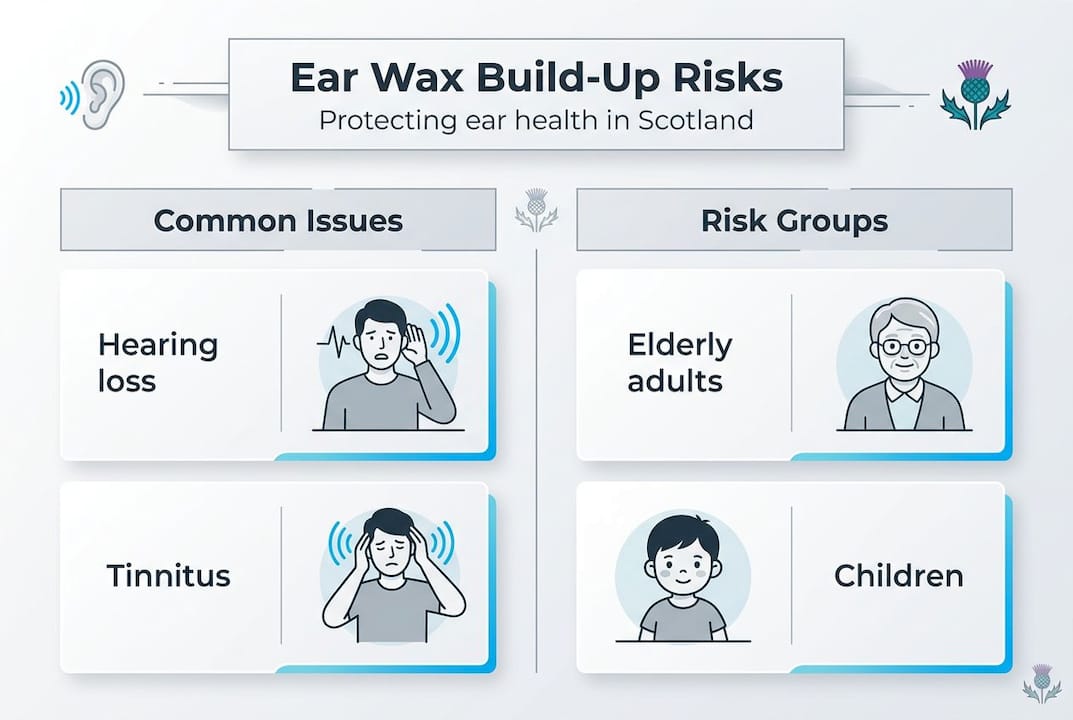
Ear wax, known medically as cerumen, is a natural substance produced by the ear canal to protect and lubricate the ear. In most people, it migrates out of the ear naturally. For many others, it accumulates and causes a blockage, a condition called cerumen impaction. This is far more common than most people realise.
Group | Prevalence of ear wax build-up |
General adult population | Approximately 18.6% |
Elderly adults | Approximately 32% |
Hearing aid users | Up to 35% |
Cerumen impaction affects roughly 18.6% of adults and 32% of elderly individuals, and it is one of the most common reasons people seek ear care. Visiting regulated ear clinics ensures that any build-up is assessed and treated safely, without the risks associated with self-treatment. Understanding ear wax removal costs in advance also helps you plan your care without surprises.
The symptoms of cerumen impaction are often gradual, which is why many people dismiss them for too long. Common signs include:
Muffled or reduced hearing in one or both ears
A sensation of fullness or pressure in the ear
Ringing or buzzing sounds, known as tinnitus
Dizziness or mild vertigo
Earache or discomfort
An itching sensation inside the ear canal
Ignoring ear wax build-up, particularly in older adults, carries real risks. Blocked ears can worsen balance problems, increase the likelihood of falls, and create conditions where infection is more likely to take hold. The longer symptoms are left untreated, the more difficult and uncomfortable removal can become. If you are experiencing any of the above symptoms, seeking safe ear care for the elderly or professional assessment is always the right course of action.
When to seek help: Recognising the signs and what not to do
Knowing when to act is half the battle. Some symptoms suggest a straightforward wax build-up, while others may indicate something that requires more urgent attention. Either way, professional assessment is always the safest route.
Warning signs that you should seek professional ear care include:
Sudden or rapidly worsening hearing loss in one or both ears
Persistent pain or discomfort inside the ear
Dizziness, vertigo, or problems with balance
Ringing, buzzing, or other sounds that do not go away
Discharge or fluid coming from the ear
A feeling that the ear is completely blocked
It is worth noting that symptoms can present differently depending on age. Older adults may experience more pronounced balance issues, while younger adults might notice tinnitus or muffled hearing first. If you are unsure whether your symptoms are serious, consulting a professional ear cleaning provider is always the right first step. Acting promptly also reduces the risk of complications, as prompt ear care consistently leads to better outcomes.
Pro Tip: Never insert cotton buds, hairpins, or any other object into your ear canal. Cotton buds cause 78% of emergency ear injuries, most often by pushing wax deeper into the canal or causing direct damage to the eardrum. The ear canal is delicate, and what feels like a quick fix can result in a painful, costly problem.
Home remedies such as ear candles are equally unreliable and carry their own risks, including burns and wax deposits from the candle itself. Over-the-counter drops can soften wax and may help in mild cases, but they are not a substitute for professional removal when a blockage is already present.
Your treatment options: NHS, private clinics, and safety standards explained
When it comes to getting your ears treated, you have two main routes: NHS care or a private clinic. Both have their place, but understanding the differences helps you make the right choice for your situation.
NHS ear wax removal is free at the point of need, but availability varies significantly across Scotland. NHS Scotland waiting times for ear wax removal and ENT referrals range from two to eight weeks for routine cases, and can extend to six months or more in some areas. For someone experiencing significant hearing loss or balance problems, that wait can feel very long indeed.
Factor | NHS care | Private clinic |
Cost | Free | £60 (adults), £75 (under-18s), £180 (home visit) |
Waiting time | 2 to 8 weeks or more | Same or next-day appointments |
Regulation | NHS standards | HIS-registered (Healthcare Improvement Scotland) |
Home visits | Not routinely available | Available |
Specialist access | GP referral often required | Direct booking |
Private clinics such as EARS Clinics offer a faster, more flexible alternative. As a Healthcare Improvement Scotland registered provider, EARS Clinics operates to the same rigorous safety standards as NHS services, with the added benefit of immediate access. You can explore NHS vs private ear treatments in more detail, or review the full range of ear wax removal procedures available. For a broader comparison, the NHS vs private evidence is clear: private care consistently delivers faster resolution.
Pro Tip: If you are elderly, have a balance disorder, or have a history of ear surgery, choosing a HIS-regulated private clinic for your ear care is particularly advisable. The combination of specialist expertise and immediate access significantly reduces your risk of complications.
Microsuction: The gold standard for safe and effective ear wax removal
Microsuction is now widely regarded as the safest and most effective method for removing ear wax. Unlike older techniques such as ear syringing or irrigation, microsuction uses a fine, low-pressure suction device under direct visualisation with a microscope or loupe. This means the specialist can see exactly what they are doing at all times.
The key advantages of microsuction include:
Direct visualisation throughout the procedure, reducing the risk of accidental damage
Suitable for patients with perforated eardrums or a history of ear surgery
No water is introduced into the ear, eliminating the risk of infection from irrigation
Comfortable and quick, typically completed within 30 minutes
Effective even in complex cases where other methods have failed
Current Scottish clinical guidelines and specialist consensus support microsuction as the preferred method for cerumen removal. Microsuction achieves over 90 to 95% success rates with a complication rate of less than one to two percent, making it significantly safer than irrigation for the vast majority of patients.
Irrigation, by contrast, carries a higher risk of complications including ear infections, perforations, and dizziness, and is not suitable for patients with certain ear conditions. Understanding the advantages of microsuction makes it clear why it has become the method of choice for trained Aural Care Specialists. If you want a thorough explanation of the process, what is microsuction covers everything you need to know before your appointment. For those in Scotland specifically, the microsuction guide Scotland provides locally relevant detail on accessing this treatment.
Microsuction is suitable for adults, children aged two and over, and those with complex ear histories. It is the method used by EARS Clinics across their Glasgow and Edinburgh locations, performed exclusively by NHS-accredited Aural Care Specialists.
Next steps: Get expert support for your ear health
If you have been experiencing muffled hearing, a blocked feeling, tinnitus, or any of the symptoms described in this guide, the most important thing you can do is act sooner rather than later. Waiting rarely improves the situation, and the longer a blockage is left, the more uncomfortable and complex removal can become.
EARS Clinics offers safe, regulated ear wax removal in Glasgow and Edinburgh, with same-day appointments available and home visits for those who need them. As one of the few Healthcare Improvement Scotland registered ear clinics in Scotland, we treat patients from two years of age using microsuction and other clinically approved methods. Explore your private ear wax removal options and book directly through the Ear Health Service homepage. For healthcare professionals interested in developing their skills, we also offer a specialist microsuction training programme. Your hearing matters. Take the first step today.
Frequently asked questions
What are the earliest signs I need ear wax removal?
Muffled hearing, a sudden loss of clarity, ringing, or a feeling of fullness in the ear are the most common early indicators of wax build-up. Ear wax build-up causes tinnitus, dizziness, and increased infection risk if left unaddressed.
Is microsuction painful or suitable for everyone?
Microsuction is generally comfortable and well-tolerated, with most patients reporting only mild sensation during the procedure. Microsuction succeeds in over 90% of cases and is safe for patients with perforations or a history of ear surgery.
Why avoid cotton buds and home treatments for blocked ears?
Cotton buds are one of the most common causes of ear injury, and home remedies rarely resolve a genuine blockage. Cotton buds cause 78% of emergency ear injuries, typically by pushing wax further into the canal.
How long are NHS vs private clinic wait times in Scotland?
NHS waiting times for ear wax removal in Scotland typically range from two to eight weeks, with some cases waiting considerably longer. Private clinics offer same or next-day appointments, making them a practical choice when symptoms are affecting your daily life.
Recommended