
NHS vs Private Ear Treatment: Making Informed Choices
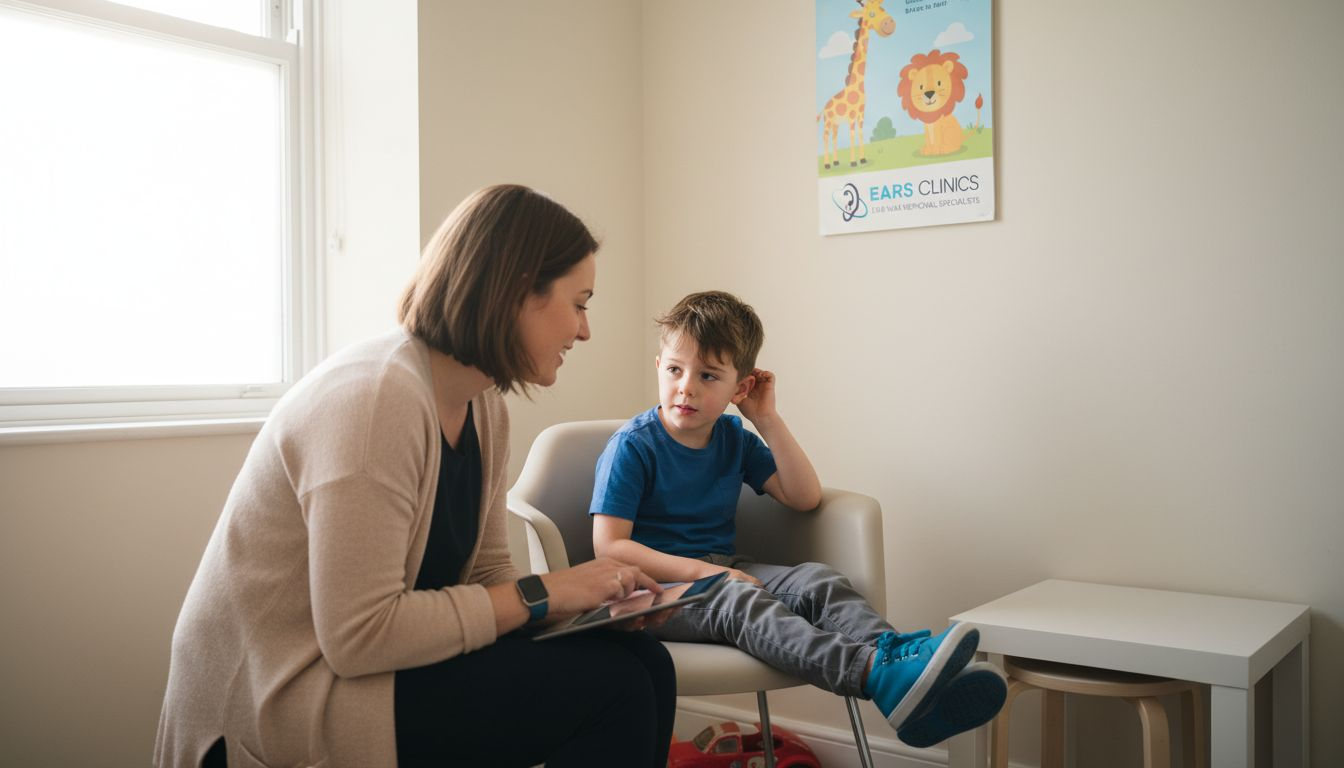
Every parent knows the frustration of seeing their child’s hearing and comfort affected by stubborn ear wax buildup. In Glasgow and Edinburgh, urgent care matters—especially when delays could impact school or daily wellbeing. This guide explains the safest ways to handle impacted cerumen, highlights professional options available for families, and helps you understand the differences between NHS and private clinics so you can make informed decisions that restore your child’s hearing quickly and safely.
Key Takeaways
Point | Details |
Professional Care is Safer | Professional ear wax removal prevents injury and complications, unlike at-home methods. Techniques like microsuction and irrigation are preferred for safety. |
NHS vs Private Options | NHS treatments are free but can involve long waiting times, whereas private clinics offer immediate access with transparent costs. |
Child Eligibility is Important | Children require professional assessment for symptoms like hearing loss; private clinics accept children from age 2 without referral. |
Understanding Costs is Key | NHS services cost nothing at the point of care, while private services charge upfront fees ranging from £60 to £180, depending on age and service type. |
What Is Ear Wax Removal Care?
Ear wax removal care involves safe, professional methods to clear impacted cerumen from the ear canal when buildup occurs. It’s a straightforward procedure that restores hearing and comfort when wax blocks the ear naturally.
Your ears produce wax to protect the canal and trap debris, which normally migrates outward and falls out on its own. However, excess wax production or blockages from hearing aids and earbuds can cause problems.
About 5% of adults experience impacted earwax, leading to muffled hearing, earache, and itching. Attempting to remove wax yourself with cotton swabs or other objects risks injury to the delicate ear canal.
Professional ear wax removal is the safest option. Healthcare professionals use specialised techniques to clear buildup without damage:
Microsuction uses gentle suction under magnification to extract wax safely
Irrigation involves warm water flow to soften and flush wax out
Manual instrumentation uses precision curettes to carefully remove wax
These specialised removal techniques are evidence-based and far safer than at-home attempts. Your clinician selects the most suitable method based on your ear canal anatomy and wax type.
Professional removal takes minutes and provides immediate relief without risk of perforation or infection.
For children particularly, professional care is vital. A trained clinician has the expertise and appropriate equipment to work safely with younger patients, preventing discomfort and complications.
EARS Clinics provide NHS-accredited ear wax removal performed by trained Aural Care Specialists in Glasgow and Edinburgh. Our services include microsuction, irrigation, and manual instrumentation for patients aged 2 and above.
If your child has hearing difficulty, discomfort, or visible wax buildup, professional assessment determines whether removal is needed and which method suits their situation best.
Pro tip: Don’t wait for symptoms to worsen—early professional assessment prevents complications and restores hearing quickly, especially important for children’s development and school performance.
NHS vs Private Treatment: Key Differences
Choosing between NHS and private ear wax removal depends on your priorities: cost, waiting time, or flexibility. Both provide safe, professional care, but the experience differs significantly.
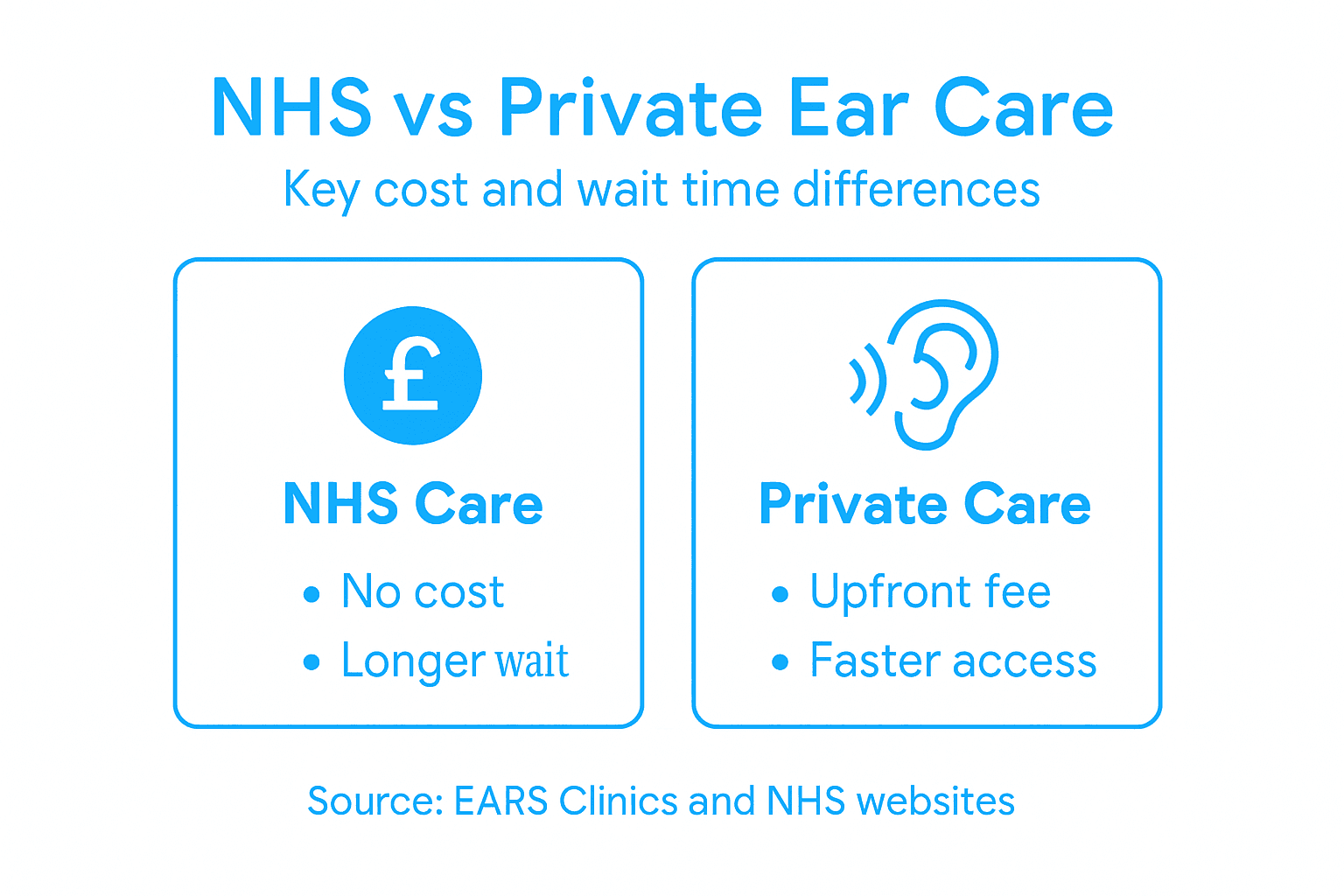
The NHS funds ear care through taxation, meaning no direct charge at point of treatment. You don’t pay per appointment or procedure. Private care requires upfront payment, typically between £60 and £180 depending on age and whether you need a home visit.
Waiting times present the biggest practical difference. NHS waiting lists for ear wax removal can stretch weeks or months, depending on your area and clinical priority. Private clinics like EARS Clinics offer same-day and next-day appointments in Glasgow and Edinburgh, meaning your child gets relief quickly.
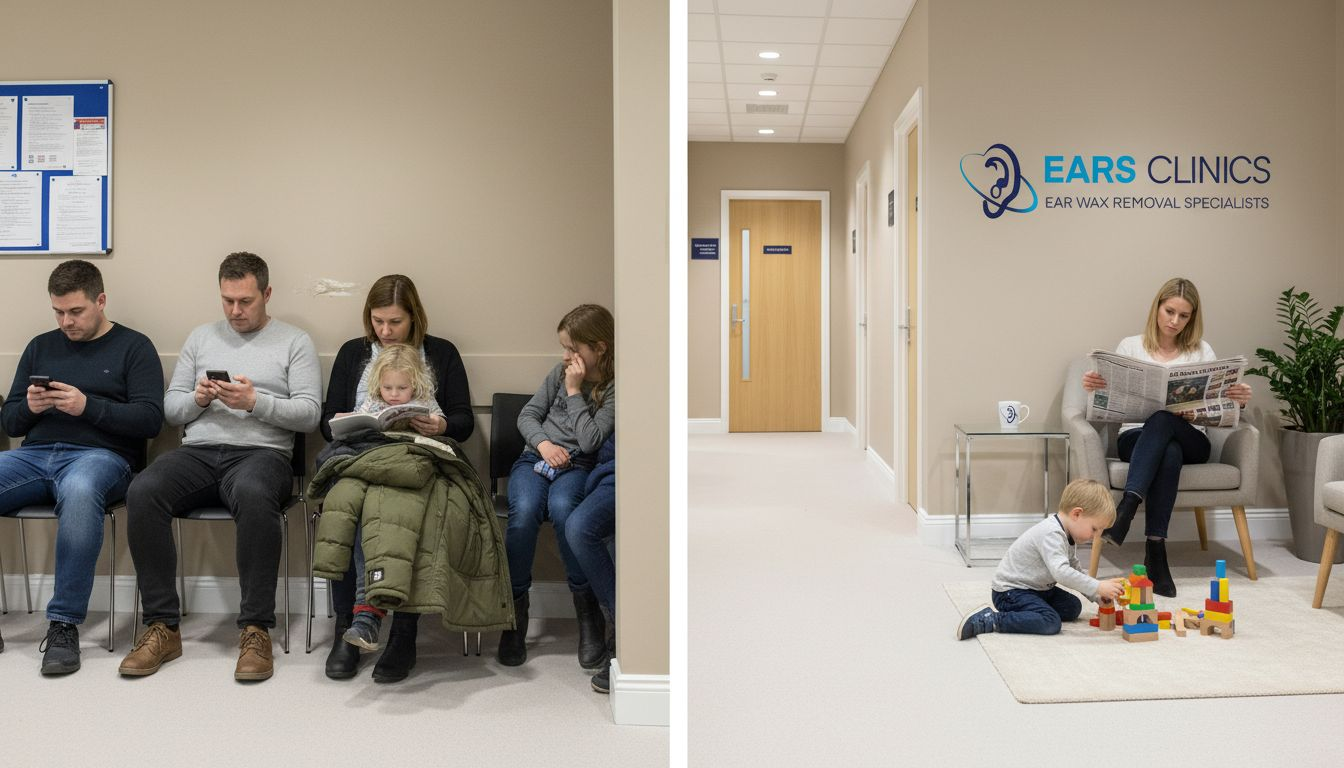
NHS treatment eligibility follows clinical guidelines with set criteria. Private providers operate with greater flexibility, accepting patients regardless of referral requirements or pre-existing conditions.
Here’s how they compare:
NHS: Free at point of care, longer waits, clinician assigned based on availability
Private: Immediate or quick access, you choose your appointment time, transparent upfront costs
NHS: Standardised procedures, limited appointment flexibility
Private: Same professional techniques (microsuction, irrigation, instrumentation), often more personalised attention
Private clinics aren’t “better”—they’re simply faster and more convenient when waiting isn’t an option.
For children experiencing discomfort or hearing loss affecting school performance, waiting weeks may feel impossible. Private care eliminates this stress. Both NHS and private clinicians are trained professionals following safety guidelines.
EARS Clinics are Healthcare Improvement Scotland registered and licensed to treat children from age 2. Our Aural Care Specialists use the same evidence-based techniques available on the NHS, but with appointments suited to your family’s schedule.
Consider your situation: Can you wait? Does your child need urgent relief? Is cost the main concern? Your answers determine which path suits you best.
Pro tip: If your child’s hearing impacts their schoolwork or confidence, book a private appointment immediately—same-day relief prevents disruption to their learning and development.
Procedures, Safety Protocols, and Practitioner Expertise
Safe ear wax removal depends on three factors: the procedure chosen, rigorous safety protocols, and clinician expertise. Professional care protects your child’s hearing and prevents complications.
Three main procedures exist for ear wax removal, each suited to different clinical situations. Your practitioner selects the safest method based on your child’s ear anatomy, wax type, and medical history.
Microsuction uses gentle suction under magnification to extract wax safely. It’s the preferred approach when appropriate. Irrigation involves warm water flow to soften and flush wax out. Manual instrumentation uses precision curettes for careful removal. All three are valid when performed by trained professionals.
Here is a summary of the main ear wax removal procedures and their ideal use cases:
Procedure | How It Works | Best For | Key Safety Considerations |
Microsuction | Gentle suction under magnification | Dry or tough wax, narrow ear canal | Performed by trained specialist |
Irrigation | Warm water flushes wax out | Soft wax, no ear infection | Assess eardrum integrity beforehand |
Manual Instrumentation | Precision tools extract wax | Small, accessible wax deposits | Direct vision and sterile equipment |
Microsuction requires skilled practitioners trained in otology and strict safety protocols. Clinicians assess eardrum integrity before treatment and work under direct vision to avoid injury.
Safety protocols protect your child throughout treatment:
Pre-treatment assessment of ear canal and eardrum condition
Infection control and sterilised equipment
Patient monitoring during the procedure
Clear aftercare instructions
Documentation of findings and treatment provided
Practitioner expertise matters significantly. EARS Clinics employs NHS-accredited Aural Care Specialists trained in all three techniques. Our staff follow Healthcare Improvement Scotland guidelines and maintain competency standards throughout their careers.
Trained clinicians working under direct vision can safely remove wax without damaging the delicate ear canal.
Not all clinicians are equally qualified. Look for practitioners registered with HIS or the Care Quality Commission. They’ve completed formal training, maintain professional standards, and follow evidence-based protocols.
Your child’s safety depends on choosing a regulated clinic. Untrained individuals attempting removal risk perforation, infection, or incomplete clearance requiring repeat visits.
EARS Clinics are licensed to treat children from age 2 and follow the strictest ear healthcare guidelines. We explain the procedure to your child beforehand, ensuring they feel comfortable and informed.
Pro tip: Always ask clinics about their practitioner qualifications and regulatory registration—this single question ensures your child receives safe, competent care from start to finish.
Access, Wait Times, and Child Eligibility
Getting your child ear wax removal on the NHS versus privately involves different eligibility criteria, waiting periods, and access routes. Understanding both pathways helps you choose what works for your family.
NHS eligibility is based on clinical need. Your child must have symptoms like hearing loss, discomfort, or infection caused by impacted wax. A GP referral typically starts the process, though some areas allow direct self-referral to audiology services.
NHS waiting times vary significantly by region and clinical priority. Some areas have waits of several weeks or months for ear wax removal appointments. NHS waiting times for treatment vary by condition severity and region, with urgent cases prioritised.
Private clinics remove the waiting barrier entirely. EARS Clinics in Glasgow and Edinburgh offer same-day and next-day appointments without referral requirements or eligibility criteria. Your child simply books when convenient for your family schedule.
Child eligibility differs between NHS and private:
This table highlights differences in child eligibility, access, and booking between NHS and private care:
Aspect | NHS Care | Private Clinic |
Minimum Age | All ages with clinical need | From 2 years old upwards |
Booking | GP referral needed | Direct self-referral possible |
Appointment Timing | Wait several weeks or months | Same-day or next-day availability |
Cost | No charge at point of care | £75 for under-18s, upfront fee |
NHS: Available to all children with clinical need; GP assessment required first
Private: Licensed from age 2 upwards; no pre-assessment or referral needed
NHS: Waiting lists based on clinical urgency
Private: Immediate availability; you choose appointment timing
NHS care is free but involves waits. Private care costs upfront but eliminates delays that can affect your child’s hearing and school performance.
For young children under 12 months, urgent GP appointments or NHS 111 advice are recommended if ear problems develop. EARS Clinics treat children from age 2, making us suitable for older toddlers and school-aged children.
Consider your child’s situation: Is the wax causing hearing difficulty during school? Does your child have discomfort affecting sleep or concentration? Private access means relief within hours rather than weeks.
Both pathways are clinically sound. NHS care follows evidence-based guidelines. Private clinics like EARS Clinics are regulated by HIS and employ the same professional standards.
Pro tip: Book a private appointment if your child’s ear wax is affecting their schoolwork, confidence, or comfort—same-day relief prevents academic disruption and restores their hearing immediately.
Costs and Booking, Plus Common Misconceptions
Costs and booking processes differ significantly between NHS and private ear wax removal. Clearing up misconceptions helps you make the right choice for your family.
NHS costs nothing at point of care. The service is funded through taxation, so you pay nothing for the appointment or procedure. No hidden charges exist.
Private costs are transparent and upfront. EARS Clinics charge £60 for over-18s, £75 for under-18s, and £180 for home visits. You know the exact cost before booking.
Booking pathways differ too. NHS typically requires a GP referral, which involves contacting your doctor first. Private clinics like EARS allow direct self-referral—you book online or by phone without any referral step.
NHS treatment is free at the point of use funded through taxation, whilst private treatment involves direct payment or insurance coverage.
Common misconceptions cloud decision-making:
“NHS care is always slower and lower quality” – False. Both systems employ trained professionals following evidence-based protocols.
“Private automatically means better outcomes” – False. Quality depends on practitioner expertise, not payment method.
“All earwax must be removed” – False. Some wax is healthy and protective; only impacted wax causing symptoms needs removal.
“Cotton buds are safe for home removal” – False. Cotton buds push wax deeper and risk perforation.
Booking privately doesn’t mean better clinical outcomes—it means faster access and flexibility around your family’s schedule.
Another misconception: that private clinics use different or superior procedures. EARS Clinics use the same microsuction, irrigation, and manual instrumentation available on the NHS. The difference is appointment availability, not clinical technique.
When booking with EARS Clinics, simply visit www.earhealthservice.co.uk or call to select your preferred date and time. No waiting lists. No referral delays.
Consider your family’s priorities. If cost is the only factor, NHS is free. If your child needs urgent relief affecting school or wellbeing, private access eliminates weeks of waiting.
Pro tip: Don’t assume private is “better”—compare wait times, your child’s symptoms urgency, and your budget, then choose the pathway matching your family’s actual needs.
Choose Faster, Safer Ear Wax Removal with EARS Clinics
Struggling to decide between NHS and private ear treatment? The challenge lies in balancing waiting times, costs, and ensuring your child or yourself receive safe, expert care without delay. NHS ear wax removal offers no cost but often involves long waits and referral steps. Private care like at EARS Clinics provides immediate access to NHS-accredited Aural Care Specialists using advanced techniques such as microsuction and irrigation, helping you avoid prolonged hearing discomfort or school disruption.
Experience the confidence that comes with treatment at one of Scotland’s few regulated private ear healthcare providers. We cater to patients from 2 years old with transparent pricing, flexible booking options including same-day appointments and home visits, and the highest safety standards. Learn more about our approach on the EARS Clinics website and understand how our services compare to NHS pathways in the NHS vs Private Ear Treatment guide.
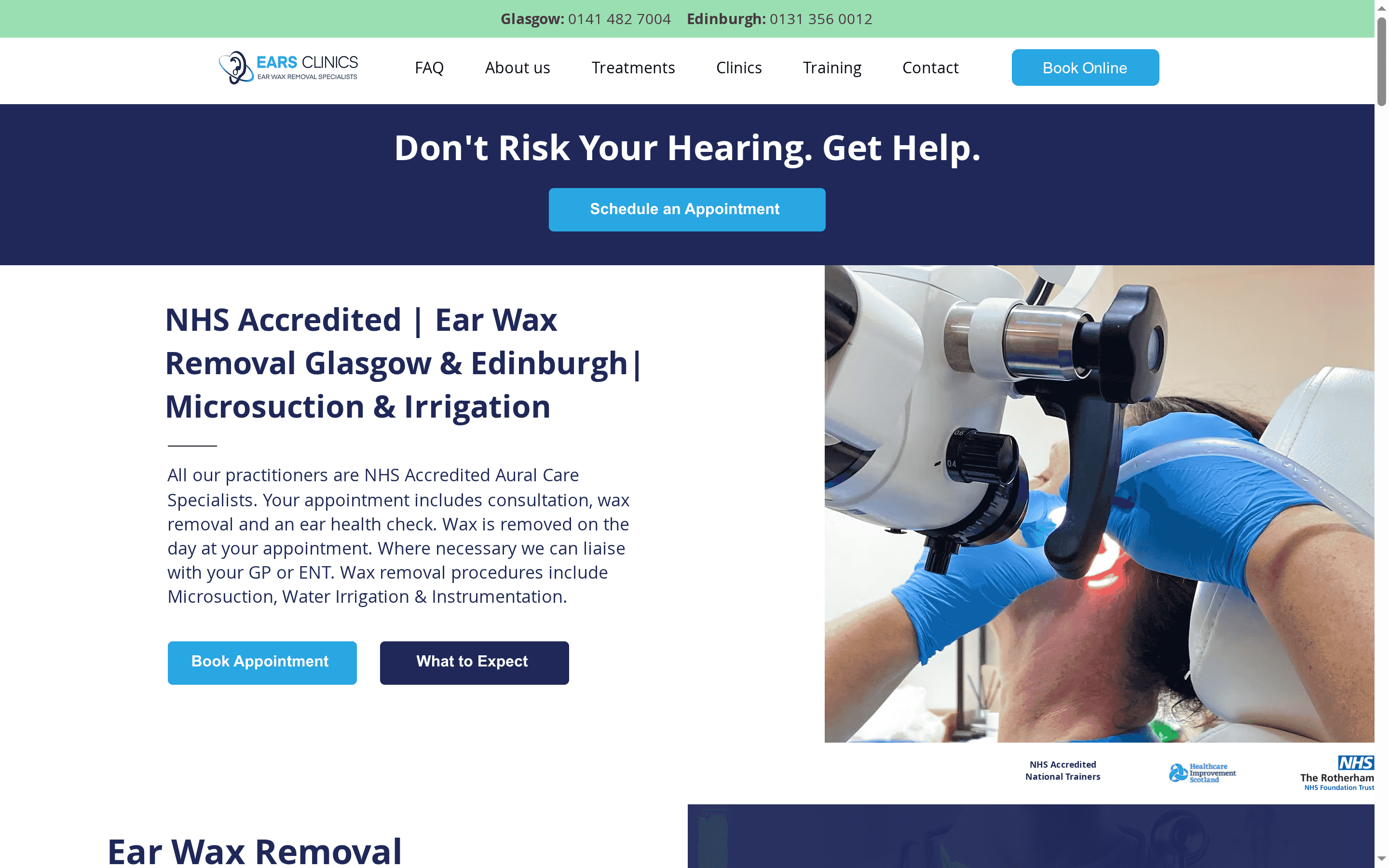
Take control of your ear health today. Visit EARS Clinics to book a quick and professional ear wax removal appointment that fits your schedule and prioritises your child’s hearing and wellbeing.
Frequently Asked Questions
What are the key differences between NHS and private ear wax removal treatment?
NHS treatment is free at the point of care but can involve long waiting times and requires a GP referral. Private treatment allows for same-day or next-day appointments with upfront costs, providing quicker access without referral requirements.
What costs can I expect for private ear wax removal?
Private clinics typically charge between £60 and £180, with prices depending on age and whether home visits are required. For under-18s, the cost is usually £75.
Can my child receive ear wax removal treatment at any age?
Yes, private clinics like EARS Clinics treat children from age 2 and above. NHS treatment eligibility is also based on clinical need and requires a GP assessment for children presenting with symptoms.
How long does the ear wax removal procedure take?
The professional ear wax removal procedure typically takes just a few minutes. Methods like microsuction and irrigation ensure immediate relief without the risk of injury.
Recommended