
Why regulation matters for safe ear clinics in Scotland

TL;DR:
Unregulated ear wax removal providers can cause serious ear injuries due to minimal training.
Regulation through HIS registration and NHS accreditation ensures safer, professional ear care services.
Patients should verify clinic credentials and practitioner qualifications before undergoing ear wax removal.
Ear wax removal might seem straightforward, but there is a surprising and largely unknown reality facing patients across Scotland: anyone can offer ear wax removal services after completing a short course, with no mandatory registration required. This means the person treating your ears could have minimal training and face little to no oversight. For patients already dealing with discomfort, muffled hearing, or a sense of fullness in the ear, choosing the wrong provider could make things considerably worse. This article explains why regulation matters, how Scottish ear clinics are currently overseen, what risks come with unregulated providers, and how you can make a confident, informed choice.
Key Takeaways
Point | Details |
Check clinic accreditation | Only choose ear clinics that are NHS-accredited or HIS-registered for safer care. |
Regulation reduces risks | Regulated clinics use safer techniques, lowering your chance of injury or infection. |
Training matters | Ask about staff training and avoid providers offering ear wax removal after short, non-specialist courses. |
Private is not always regulated | A higher price or fancy website does not guarantee proper regulation; always verify before booking. |
Why is regulation important in ear clinics?
Regulation in healthcare exists for one fundamental reason: to protect patients. When a practitioner is properly trained, accredited, and subject to oversight, you can trust that they will follow safe procedures, use appropriate equipment, and respond correctly if something goes wrong. In ear care, where the ear canal and eardrum are delicate structures, this matters enormously.
Without regulation, there is no guarantee that a provider has the knowledge to distinguish between simple wax build-up and a more serious condition such as a perforated eardrum or infection. A practitioner without proper training may attempt removal using an unsuitable method, causing pain, injury, or lasting damage. Following patient safety protocols is not optional in a well-run clinic; it is the foundation of every appointment.
The risks are well documented. Dangers of unregulated providers, including beauticians who have completed only a one-day course, include ear canal damage, infections, and perforated eardrums. These are not rare worst-case scenarios; they are reported outcomes from real patients who assumed they were in safe hands.
Data on injury rates from improper techniques confirm that injuries from ear wax removal are more common than most people realise, particularly when performed by those without specialist training.
The benefits of choosing a regulated clinic extend beyond safety alone. Regulated clinics are also more likely to:
Use clinically recommended methods such as microsuction or irrigation
Conduct a thorough ear examination before any procedure
Refer patients to a specialist if a more serious issue is identified
Maintain accurate records and follow infection control standards
Employ practitioners with ongoing professional development
“Regulation is not a bureaucratic formality. It is the difference between a practitioner who knows when not to proceed and one who does not.”
Pro Tip: Always ask a clinic which regulatory body they are registered with before booking. A confident, straightforward answer is a good sign. Hesitation or vague responses should prompt further investigation.
How are ear clinics regulated in Scotland?
Understanding the ‘why’ leads us to the practical: how Scottish ear clinics are actually regulated, and where gaps remain.
In Scotland, the main regulatory markers for ear clinics are accreditation by NHS health boards and registration with Healthcare Improvement Scotland (HIS). HIS is the body responsible for inspecting and regulating independent healthcare services, and registration with them signals that a clinic meets defined standards of safety and quality. NHS accreditation, meanwhile, indicates that a clinic has been assessed against the rigorous standards expected of NHS-contracted providers.
However, private clinics that are not NHS-accredited or HIS-registered can still operate legally. There is no universal law requiring private ear wax removal providers to hold any specific accreditation. This creates a significant gap in patient protection.
Training quality also varies widely. Some providers may have completed only a brief online or weekend course, while qualified Aural Care Specialists undergo extensive clinical training. The difference in skill level between these two groups is substantial, yet both may present themselves as ear wax removal practitioners.
NHS provision across Scotland is more consistent, with 11 out of 14 health boards offering ear wax removal through community services. However, NHS waiting times and eligibility criteria can lead patients to seek private alternatives, making it even more important to know what to look for.
Here is a summary of how different types of providers compare in terms of regulatory oversight:
Provider type | HIS registered | NHS accredited | Training standard |
NHS community clinic | N/A | Yes | High (specialist nurses) |
HIS-registered private clinic | Yes | Possible | High (audiology or aural care) |
Unregistered private clinic | No | No | Variable or unknown |
Beauty salon or spa | No | No | Often minimal (one-day course) |
When comparing NHS vs private care, the key distinction is not cost but accountability. A registered private clinic is subject to inspection and must maintain standards. An unregistered one is not.
Steps to understand how a clinic is regulated:
Ask directly whether the clinic is registered with HIS or holds NHS accreditation
Request information about the qualifications of the practitioner who will treat you
Check whether the clinic is listed on the HIS register of independent healthcare services
Confirm that the clinic uses clinically recommended removal methods
Look for evidence of ongoing professional development or specialist training
Risks of unregulated ear wax removal providers
Now it is clear how regulation works; it is time to see what happens when it is missing: the tangible dangers of unqualified providers.
The ear canal is approximately 2.5 centimetres long and ends at the eardrum, a thin membrane that is easily damaged. Any instrument or water pressure applied incorrectly can cause immediate harm. Yet many unregulated providers use methods such as ear syringing with excessive pressure, or attempt manual removal without adequate visualisation of the canal.
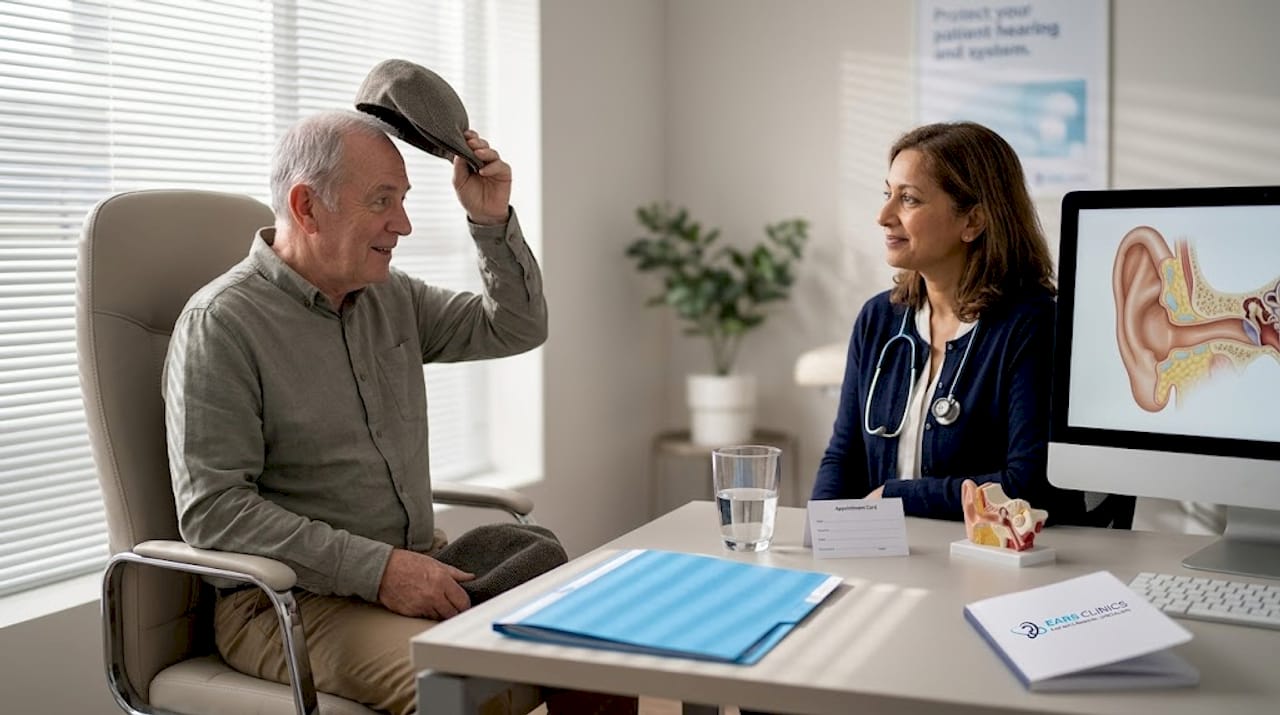
Case examples of injury from unqualified practitioners, including beauticians after one-day courses, include ear canal abrasions, perforated eardrums, and secondary infections. These injuries can result in temporary or permanent hearing loss if left untreated.
The most common risks associated with unregulated ear wax removal include:
Eardrum perforation: Caused by excessive pressure or instruments inserted too deeply
Ear canal infection: Introduced through unsterilised equipment or water left in the canal
Incomplete wax removal: Leaving wax fragments that worsen blockage or cause irritation
Tinnitus: A persistent ringing or buzzing sound triggered by trauma to the ear
Dizziness or vertigo: Resulting from disturbance to the inner ear during treatment
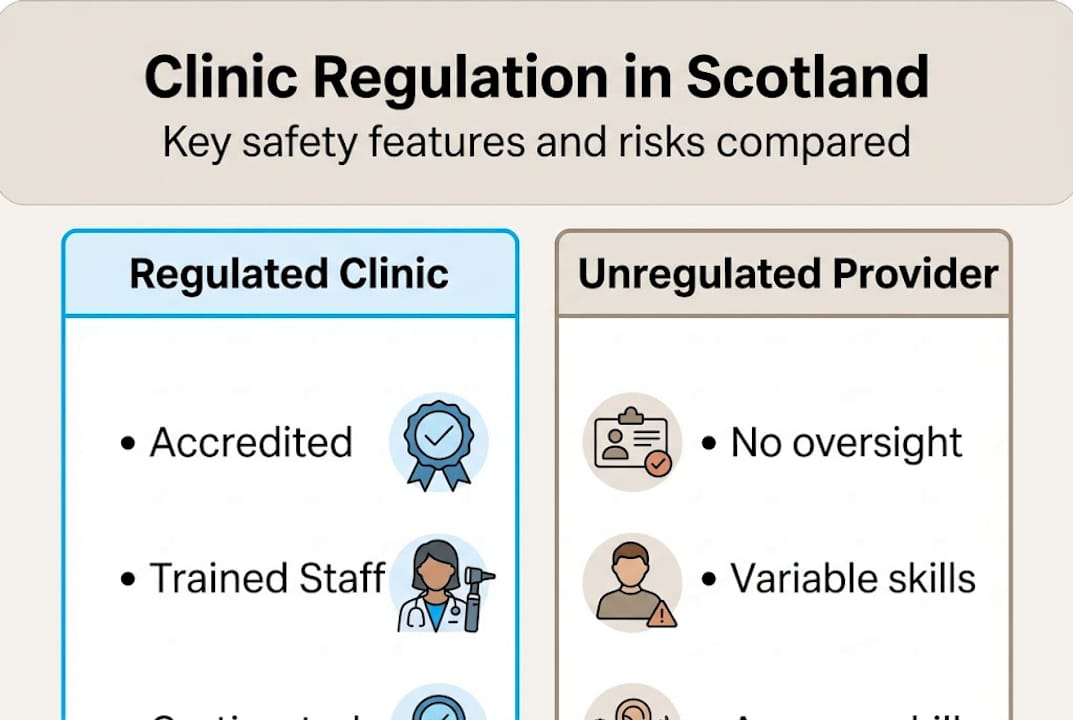
Comparing regulated and unregulated providers helps illustrate the difference in approach:
Feature | Regulated clinic | Unregulated provider |
Pre-treatment ear examination | Always | Rarely |
Use of microsuction or safe irrigation | Standard | Often not available |
Infection control protocols | Mandatory | Not guaranteed |
Referral pathway for complex cases | In place | Usually absent |
Practitioner qualifications | Verified | Unknown |
When comparing private and NHS providers, regulated private clinics align closely with NHS safety standards. The real divide is between regulated and unregulated, not between NHS and private.
Most patients who experience harm from unregulated providers report that they simply did not know the risks beforehand. Awareness is the first line of defence.
How patients can identify regulated, safe ear clinics
Finally, knowing the risks, here is how you can protect yourself and choose clinics that meet the highest standards.
The most important step is to verify registration. For private clinics in Scotland, check whether they appear on the HIS register of independent healthcare providers. Clinic accreditation advice consistently points to HIS registration and NHS accreditation as the most reliable indicators of a safe private clinic. These are not marketing claims; they are verifiable credentials.
Here is a step-by-step approach to identifying a safe, regulated ear clinic:
Check HIS registration: Visit the Healthcare Improvement Scotland website and search for the clinic by name
Confirm the practitioner’s qualifications: Ask specifically whether they are an Aural Care Specialist or hold equivalent clinical training
Ask about the method used: Microsuction is the most widely recommended technique; a reputable clinic will be happy to explain their approach
Read patient reviews carefully: Look for consistent mentions of thoroughness, professionalism, and clear communication
Ask about their referral process: A regulated clinic will have a clear pathway for referring patients with complex conditions
If you are exploring free or NHS ear wax removal options, check your local health board’s eligibility criteria first. If waiting times are a concern, a regulated private clinic is the next safest option.
Beware of the following warning signs:
Very low prices with no explanation of the method used
Ear wax removal offered as an add-on at a beauty salon or spa
No mention of a pre-treatment examination
Practitioners who cannot name their regulatory body or training provider
“A trustworthy clinic welcomes your questions. If a provider seems reluctant to discuss their credentials or methods, that reluctance tells you something important.”
Pro Tip: Before booking, call the clinic and ask two simple questions: ‘Are you registered with Healthcare Improvement Scotland?’ and ‘Which method do you use for wax removal?’ The answers will tell you a great deal about the clinic’s standards.
What most people get wrong about regulation and private ear clinics
Armed with practical checks, let us step back for a candid look at the real state of regulation in Scotland.
Many patients assume that paying more for a private clinic automatically means receiving a higher standard of care. This is not always true. Price reflects many things, including location and marketing, but it does not guarantee regulatory compliance. A clinic charging a premium may still be unregistered and operating without meaningful oversight.
The uncomfortable truth is that, until policy changes create universal mandatory registration for ear wax removal providers, the responsibility for due diligence falls partly on patients. Reputable private clinics, including those with regulated clinic advantages, often set their own high standards precisely because there is no universal rule compelling them to do so. That voluntary commitment to quality is itself a positive signal.
Patient questioning genuinely raises standards. When more people ask about credentials, methods, and registration, clinics that cannot answer well lose business. That market pressure, combined with campaigning for stronger legislation, is currently the most effective force for improvement in Scottish ear care.
Get safe, expert ear wax removal at a regulated clinic
If this article has made one thing clear, it is that where you go for ear wax removal matters as much as going at all.
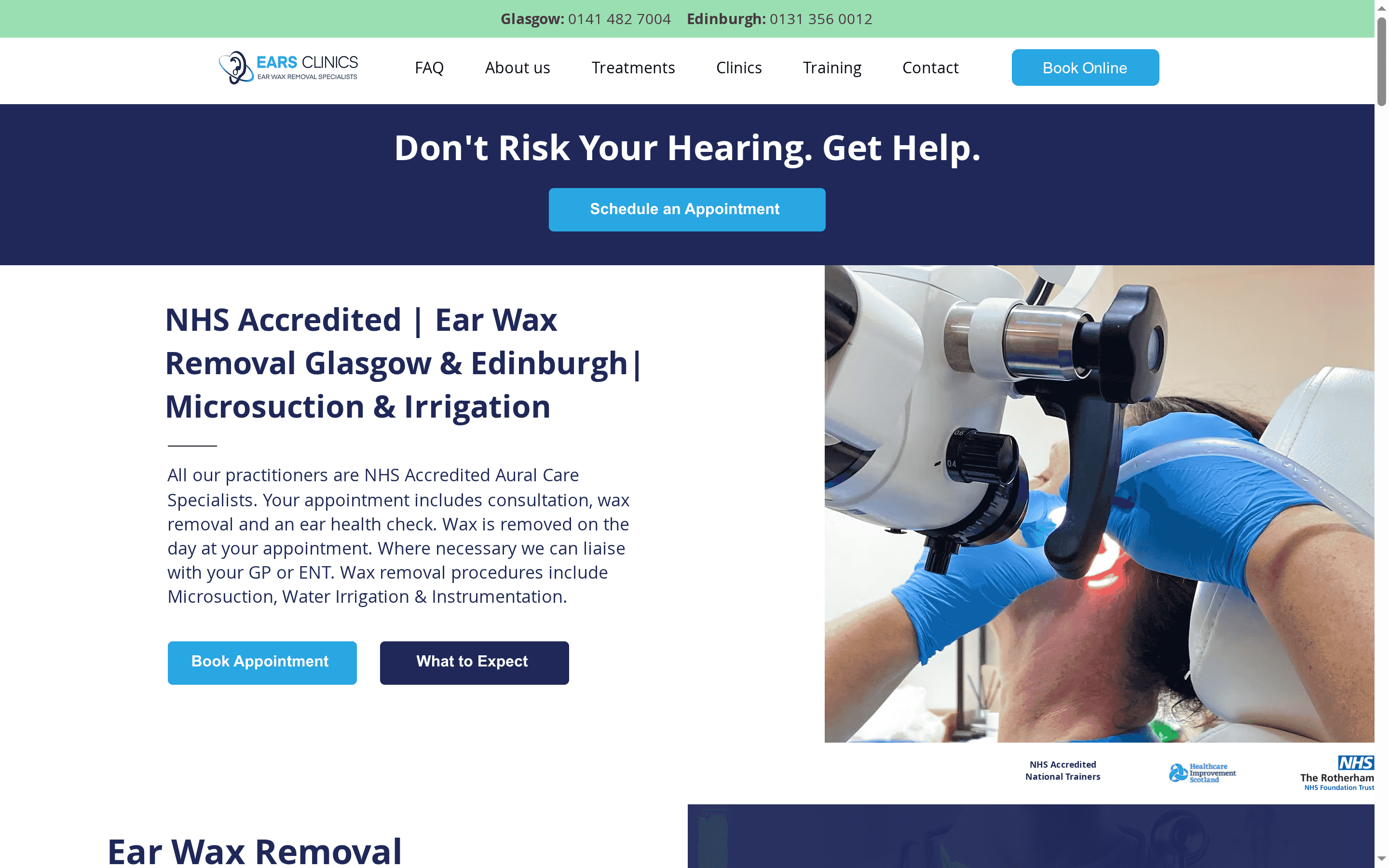
At EARS Clinics, we are Healthcare Improvement Scotland registered and NHS-accredited, serving patients in Glasgow and Edinburgh with the highest standards of aural care. Our trained Aural Care Specialists use safe wax removal options including microsuction, irrigation, and instrumentation, tailored to your individual needs. Appointments are available in clinic, with same-day options and home visits for those who need them. To find out what to expect at regulated clinics and to book your appointment, visit our website today. Treatments start from £60 for adults.
Frequently asked questions
What is the safest ear wax removal method available?
Microsuction is recommended as the safest and most effective method for ear wax removal, offering precise, controlled removal without the risks associated with water-based syringing.
How can I tell if an ear clinic in Scotland is properly regulated?
Look for HIS and NHS accreditation as the key regulatory markers, and ask to see evidence of your practitioner’s specialist training credentials before your appointment.
Why are some ear wax removal providers unregulated?
Current regulatory gaps mean that ear wax removal is not subject to mandatory registration requirements in the UK, allowing anyone who has completed a basic course to offer services commercially.
Are there safer private alternatives if the NHS restricts ear wax removal?
Yes. NHS and private options both exist in Scotland, and patients can access HIS-registered or NHS-accredited private clinics that use recommended methods such as microsuction for a safe and effective alternative to waiting for NHS treatment.
Recommended