
Ear care workflow for sensitive ears in Scotland 2026

TL;DR:
Microsuction is the safest and most effective method for sensitive and complex ear cases.
Proper assessment and regulation are essential to avoid risks like perforation or infection.
Private clinics in Scotland offer same-day, specialist ear care with high success rates.
Sensitive ears need more than just careful handling. They need a structured, evidence-based approach delivered by practitioners who understand the risks involved. Whether you are an adult managing a perforated eardrum, a parent worried about your child’s hearing, or someone with a history of ear surgery, the wrong intervention can cause real harm. In Scotland, private HIS-regulated clinics now offer immediate, specialist-level care that sidesteps the long NHS waits many families face. This guide walks you through exactly what to do, what to avoid, and how to keep ears safe at every stage.
Key Takeaways
Point | Details |
Sensitive ears need specialist care | Complex conditions require HIS-regulated, expert-led ear care to avoid serious risks. |
Microsuction is safest | Microsuction delivers over 90% success and minimal complications, especially for adults and children with sensitive ears. |
DIY can be dangerous | Avoid home removal tools and cotton buds—professional assessment keeps sensitive ears safe. |
Fast, private options available | Private ear clinics in Scotland offer same-day, NHS-standard care when urgent action is needed. |
Prepare properly for best results | Use softening drops only with guidance and follow expert advice for aftercare and follow-up. |
What makes ear care for sensitive ears different?
Not all ears are the same, and not all wax removal is straightforward. The term sensitive ears covers a wide range of conditions that make standard ear care approaches risky or completely unsuitable. These include:
Perforated eardrums (a hole or tear in the eardrum)
Grommets (small ventilation tubes inserted surgically)
Previous ear surgery or mastoid cavity
Chronic or recurring ear infections
Narrow or unusually shaped ear canals
Hearing aid users prone to wax build-up
Children under 6, whose ear canals are smaller and more delicate
For people in any of these categories, conventional methods carry serious risks. Ear irrigation, which uses a pressurised stream of water, can force water past a perforation and into the middle ear, causing infection or further damage. Cotton buds push wax deeper and can scratch the canal lining. Over-the-counter home irrigation kits are designed for healthy ears and carry no safeguards for complex anatomy.
This is why the choice of removal method matters so much. Microsuction safety explained in detail shows why this technique, which uses gentle suction under direct microscopic vision, is widely regarded as the gold standard. The NHS ear treatments in Glasgow and Edinburgh 2026 data confirms that microsuction achieves over 90% success with a complication rate below 1%, even in sensitive and complex cases.
“Microsuction is the safest method for ear wax removal in sensitive ears and complex cases, with under 1% complication rate and over 90% success rate.”
It is also worth noting the no symptoms, no removal principle. Wax that is not causing any blockage, hearing loss, or discomfort does not need to be removed. Unnecessary intervention in sensitive ears always carries more risk than benefit. Seeking care from a regulated ear clinic ensures that practitioners apply this principle correctly, rather than removing wax simply because it is visible. For a fuller picture of what complex ear care involves, the complex ear care guide provides thorough clinical context.
Preparing for safe ear care: assessment and prerequisites
Once you understand the risks, the next step is proper assessment before any intervention takes place. Rushing into treatment without this stage is one of the most common mistakes people make.
Here is a stepwise approach to assessing whether specialist care is needed:
Review symptoms and history. Note any hearing loss, fullness, tinnitus (ringing), pain, or discharge. Flag any history of surgery, perforations, or infections.
Visual examination (otoscopy). A trained practitioner uses an otoscope to look inside the canal and confirm the type and severity of wax build-up before deciding on any method.
Decide on the appropriate method. If there is any uncertainty, professional care is essential. Do not proceed with home methods.
For softening the wax beforehand, olive or almond oil drops used 3 to 5 days prior can help loosen wax and make removal easier. Sodium bicarbonate drops are another option. However, these should never be used if a perforated eardrum or active infection is suspected, as drops entering the middle ear can worsen the situation significantly.
Preparation step | Suitable for? | Avoid if… |
Olive or almond oil drops | Most adults and older children | Perforation or infection suspected |
Sodium bicarbonate drops | Adults and children over 6 | Perforation, grommets, or infection |
No drops (dry ear) | Perforated eardrum, grommets | N/A |
Professional otoscopy | All patients | N/A |
For children, preparation also involves reassurance and choosing a calm environment. Paediatric wax guidance from specialist sources recommends involving children in the process to reduce anxiety, which makes the procedure far smoother. Reviewing patient safety protocols before attending a clinic is also worthwhile, especially if your child has never had ear care before.
Pro Tip: Never use cotton buds or home irrigation kits on sensitive ears or in children. The risk of pushing wax deeper, perforating the eardrum, or causing canal trauma is high, and the damage can be lasting.
Staying informed about private care trends in Scotland shows a clear shift toward microsuction as the preferred first-line method, even for routine cases, precisely because it avoids so many of these preparation-related risks.
The step-by-step ear care workflow for sensitive cases
With preparation complete, here is the structured workflow that HIS-regulated Scottish clinics follow for sensitive and complex ear cases.
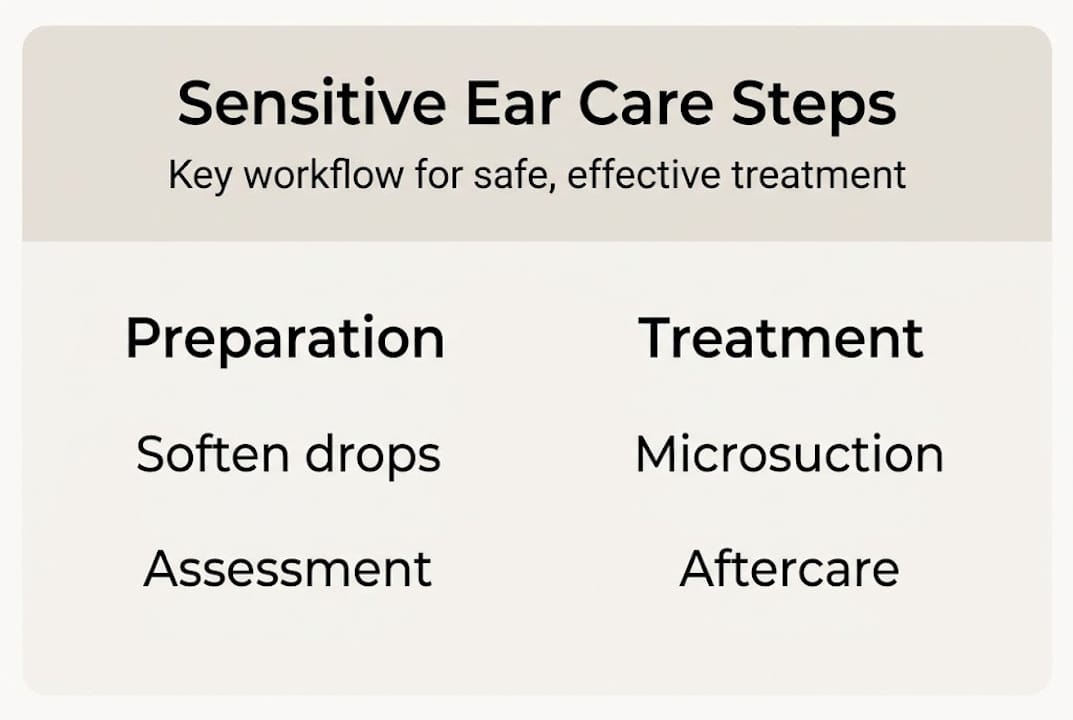
Symptom assessment and history. The practitioner reviews all relevant history, including previous ear conditions, surgeries, and current symptoms.
Otoscopy or video-otoscopy. The ear canal and eardrum are examined visually. Video-otoscopy allows the patient to see what the practitioner sees, which is particularly helpful for parents of young children.
Method selection. Based on the assessment, the safest removal method is chosen. Microsuction is nearly always preferred for sensitive ears.
Wax removal. The chosen method is applied carefully, with the practitioner maintaining direct vision throughout.
Post-care advice. Clear guidance is given on aftercare, signs to watch for, and when to return.
This evidence-based workflow is consistent across well-regulated clinics and ensures nothing is skipped.

Method | Suitable for sensitive ears? | Safe for children? | Notes |
Microsuction | Yes | Yes (from age 2+) | Gold standard; no water used |
Irrigation | No | No (under 6s) | Contraindicated with perforations or grommets |
Softening drops only | Sometimes | Yes (with caution) | Best as preparation, not standalone removal |
Instrumentation | Sometimes | With specialist only | Used alongside microsuction |
For children aged 2 and above, the microsuction procedure guide recommends starting with softening drops for several days, followed by microsuction if wax persists. Irrigation should never be used in children under 6 due to the risk of trauma and infection.
Pro Tip: Always confirm that your chosen clinic is HIS-regulated and that practitioners hold recognised aural care qualifications. This is not a formality; it is the difference between safe, accountable care and an unregulated service with no clinical oversight.
Common pitfalls and troubleshooting for sensitive ear care
Even with the best intentions, mistakes happen. Knowing what to avoid and how to respond if something goes wrong is just as important as following the correct workflow.
The most common pitfalls include:
Using cotton buds. These compact wax further into the canal and can cause micro-abrasions that increase infection risk.
Over-the-counter irrigation kits. These are not designed for sensitive ears and offer no clinical safeguards.
Excessive use of softening drops. More is not better. Prolonged use can macerate (soften and break down) the skin of the canal, making it more vulnerable.
Ignoring symptoms of infection. Pain, discharge, fever, or sudden hearing loss after any intervention require prompt attention.
As confirmed by complex ear care guidance, irrigation is contraindicated in ears with perforations, grommets, previous surgery, active infections, or narrow canals, due to the risks of trauma and introducing water into vulnerable structures.
“Only symptomatic wax needs removal. Wax that is not causing problems is best left alone, particularly in sensitive ears where intervention always carries some risk.”
If symptoms persist after professional removal, a blocked or full sensation can be normal for a day or two as the ear adjusts. However, increasing pain, discharge, or a significant drop in hearing should prompt a return visit or contact with the clinic. For hearing aid users, re-accumulation is common and regular monitoring appointments are advisable. Checking NHS ear care wait times reinforces why private care is often the more practical route for those needing prompt follow-up. For broader context on safe removal, Bupa’s earwax removal advice also supports seeking professional care over home methods.
What to expect: results, safety, and next steps
Understanding what happens after ear wax removal helps you know whether your recovery is on track or whether something needs attention.
For most adults and children, the results are immediate. Hearing improves noticeably, the sensation of fullness lifts, and any associated tinnitus often reduces. The microsuction success rate exceeds 90% across sensitive and complex cases, with complications occurring in fewer than 1 in 100 procedures.
What is normal after care:
Mild sensitivity or slight soreness in the canal for 24 to 48 hours
A temporary echo or change in how your voice sounds
Occasional minor dizziness immediately after the procedure
When to seek help:
Persistent or worsening pain beyond 48 hours
Visible discharge or bleeding
Sudden or significant hearing loss
Fever or swelling around the ear
Patient group | Expected outcome | Aftercare note |
Adults (standard) | Immediate hearing improvement | Avoid water in ear for 24 hours |
Adults (complex) | Improvement after 1 to 2 sessions | Follow-up appointment recommended |
Children (age 2 to 17) | Good improvement; may need reassurance | Monitor for re-accumulation |
Hearing aid users | Clear canal; better device performance | Regular monitoring advised |
On cost and access, NHS waits in Scotland range from 2 to 16 weeks, whereas HIS-regulated private clinics offer same-day microsuction at £60 for adults and £75 for children. For those who cannot travel, home visits are available at £180. A detailed NHS vs private ear care comparison outlines the full differences in access, cost, and clinical standards. The NHS child ear care guide also provides useful supplementary guidance for parents.
Expert perspective: why regulated, immediate care matters for sensitive ears
There is a persistent misconception that private ear care is purely a convenience, chosen by those who simply do not want to wait. In reality, for people with sensitive ears or complex conditions, timely access to regulated care is often a clinical necessity, not a lifestyle preference.
Waiting weeks for NHS treatment when a child has significant wax build-up affecting their speech development or school performance is not a neutral outcome. Delays carry real consequences. HIS-regulated private clinics in Scotland, such as those operating in Glasgow and Edinburgh, match NHS clinical standards while filling the access gap that NHS waiting lists create.
Microsuction under direct vision is now the gold standard precisely because it removes the guesswork. The practitioner sees exactly what they are doing at every moment. Irrigation and OTC kits offer no such assurance. Challenging the routine acceptance of these older methods is not contrarian; it is simply following the evidence. Regulated, immediate care is not a luxury for sensitive ears. It is the responsible choice.
Get immediate, regulated ear care for sensitive ears in Scotland
If you or your child has sensitive ears, a complex ear condition, or simply cannot afford to wait weeks for relief, EARS Clinics provides the regulated, specialist care you need. Our NHS-accredited Aural Care Specialists use proven techniques including microsuction, irrigation (where appropriate), and instrumentation, all within HIS-registered clinics in Glasgow and Edinburgh.
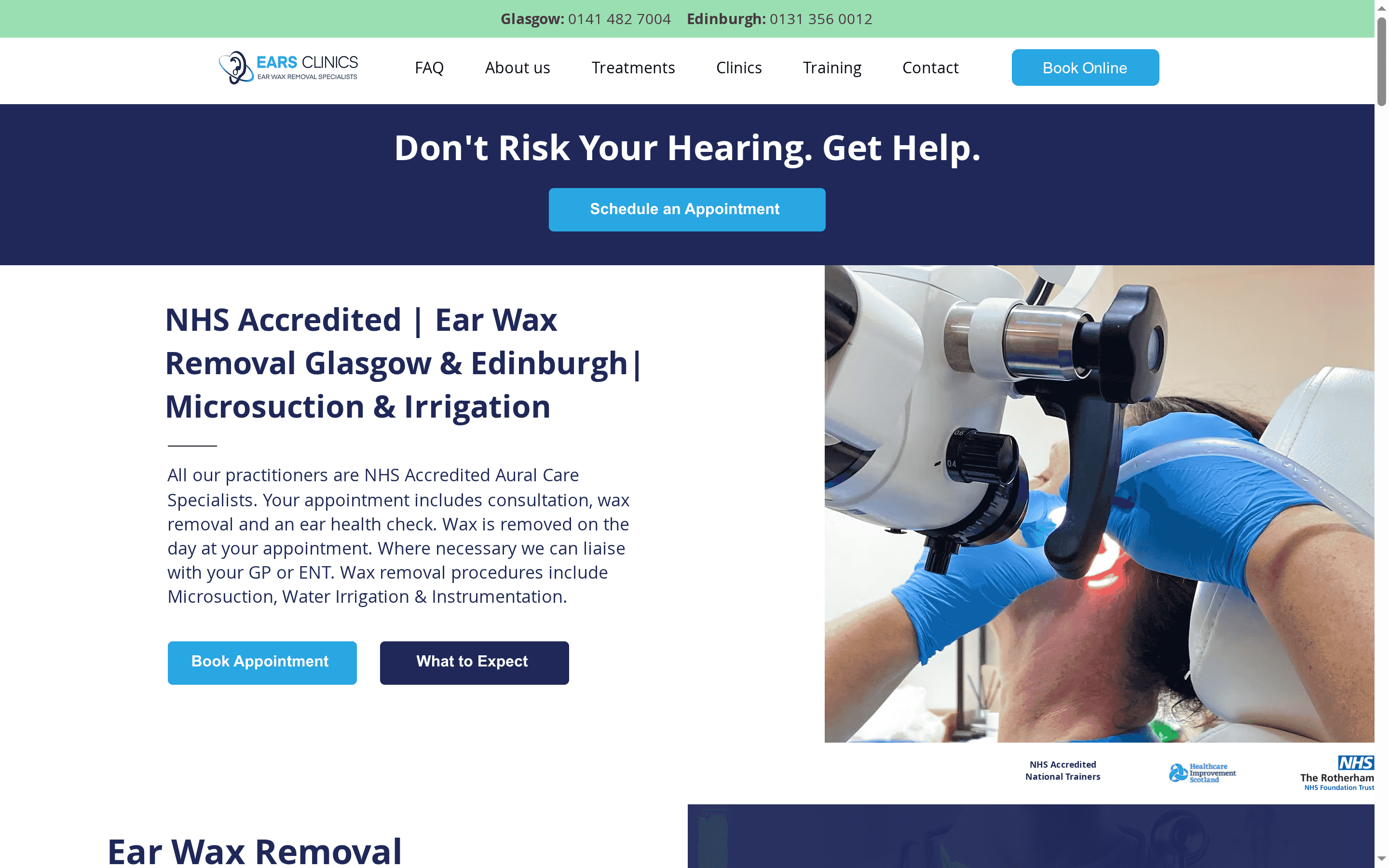
We are licensed to treat patients from 2 years of age and offer same-day appointments for both adults and children. Explore our full range of ear wax removal procedures to understand which method suits your situation, then book your appointment online today. Safe, immediate, and compassionate ear care is available right now.
Frequently asked questions
Can I safely remove ear wax at home if I have sensitive ears?
Home removal methods such as cotton buds or irrigation kits are not safe for sensitive ears and carry a real risk of injury or infection. As confirmed by complex ear care guidance, irrigation is contraindicated in these cases, and specialist care should always be sought instead.
What ear wax removal method is best for children?
Softening drops are a good starting point if no infection is present, followed by professional microsuction if wax persists. As paediatric wax guidance confirms, microsuction is safe from age 2+ and irrigation should be avoided entirely in children under 6.
How quickly can I get ear wax removed privately in Scotland?
Most HIS-regulated private clinics offer same-day appointments, making them far faster than the NHS. NHS waits range from 2 to 16 weeks, whereas private clinics can see you the same day.
Is microsuction safe for complex ear conditions?
Yes. Specialist microsuction carries a complication rate below 1% and achieves over 90% success even in complex and sensitive cases, making it the safest available option.
Are softening drops always recommended before wax removal?
Not always. Softening drops should be avoided if a perforated eardrum or active infection is suspected, as drops entering the middle ear can cause further harm.
Recommended