
Hearing in business productivity: the manager's guide

TL;DR:
Poor communication costs businesses $37 billion annually, with ineffective hearing at the core. Hearing quality directly influences workplace performance, team cohesion, and safety, making hearing health a crucial productivity factor. Investing in hearing care and fostering a hearing-aware culture can reduce errors, absenteeism, and turnover, resulting in measurable organizational improvements.
Most managers would not list hearing health on their list of productivity levers. Yet poor communication costs businesses an estimated $37 billion annually, with ineffective listening sitting at the centre of that figure. The role of hearing in business productivity is not a fringe occupational health concern. It is a direct driver of performance, team cohesion, and commercial outcomes. This article explains precisely how hearing quality shapes what happens in your meetings, on your shop floor, and inside your organisation’s decision-making, and what you can do about it.
Key takeaways
Point | Details |
Hearing underpins communication | Clear hearing enables accurate processing of instructions, feedback, and collaborative dialogue at every level of a business. |
Hearing loss is a hidden cost driver | Undiagnosed hearing issues increase absenteeism, error rates, and cognitive fatigue long before they appear in performance data. |
Advanced devices outperform basic aids | Cochlear implants and bimodal devices produce measurably better work engagement than standard hearing aids alone. |
Managers often misread the signs | Communication failures caused by hearing loss are frequently attributed to disengagement or poor attitude, delaying appropriate support. |
Investment in hearing health pays back | Businesses that prioritise hearing care see measurable reductions in turnover, errors, and absenteeism over time. |
The role of hearing in effective workplace communication
Hearing is not simply the passive receipt of sound. In a professional context, it is the mechanism through which every instruction, piece of feedback, and collaborative exchange becomes useful. When hearing works well, employees absorb verbal briefings accurately, pick up on tone and nuance in conversations, and follow the thread of complex discussions in meetings. When it does not work well, those same interactions become sources of error, confusion, and frustration.
The impact of hearing on teamwork is particularly telling. Teams rely on a constant exchange of informal verbal cues. A misheard comment in a project meeting, an unclear instruction passed across a noisy open-plan office, or a missed point during a client call are not simply isolated slip-ups. They compound. Over weeks and months, they erode the trust and reliability that effective teams depend on.
Active listening sits at the heart of this. The importance of listening in business goes well beyond politeness or management training. Research shows that top-performing leaders consistently prioritise genuine listening over quick decision-making, creating environments where honest information flows freely and where better decisions get made. Hearing quality is the physiological foundation that makes active listening possible.
Clear hearing enables real-time comprehension of fast-paced dialogue in meetings and negotiations
Accurate auditory processing reduces the need for repetition and clarification, saving time across every interaction
Good hearing supports the detection of tone, urgency, and emotional register in spoken communication
Employees who hear well are more confident contributors in group settings, improving collaborative output
Pro Tip: When assessing communication breakdowns in your team, consider whether the issue is behavioural or physiological. A brief hearing screen can rule out auditory causes before you invest in behavioural training.
How hearing loss reduces performance and raises costs
The financial and operational consequences of undiagnosed hearing loss are often invisible until they have already done significant damage. Workers with hearing loss accumulate two to four additional absence days per year compared to colleagues with typical hearing, largely due to comorbidities such as tinnitus-related insomnia and anxiety. That figure, multiplied across a workforce, represents a material operational cost.
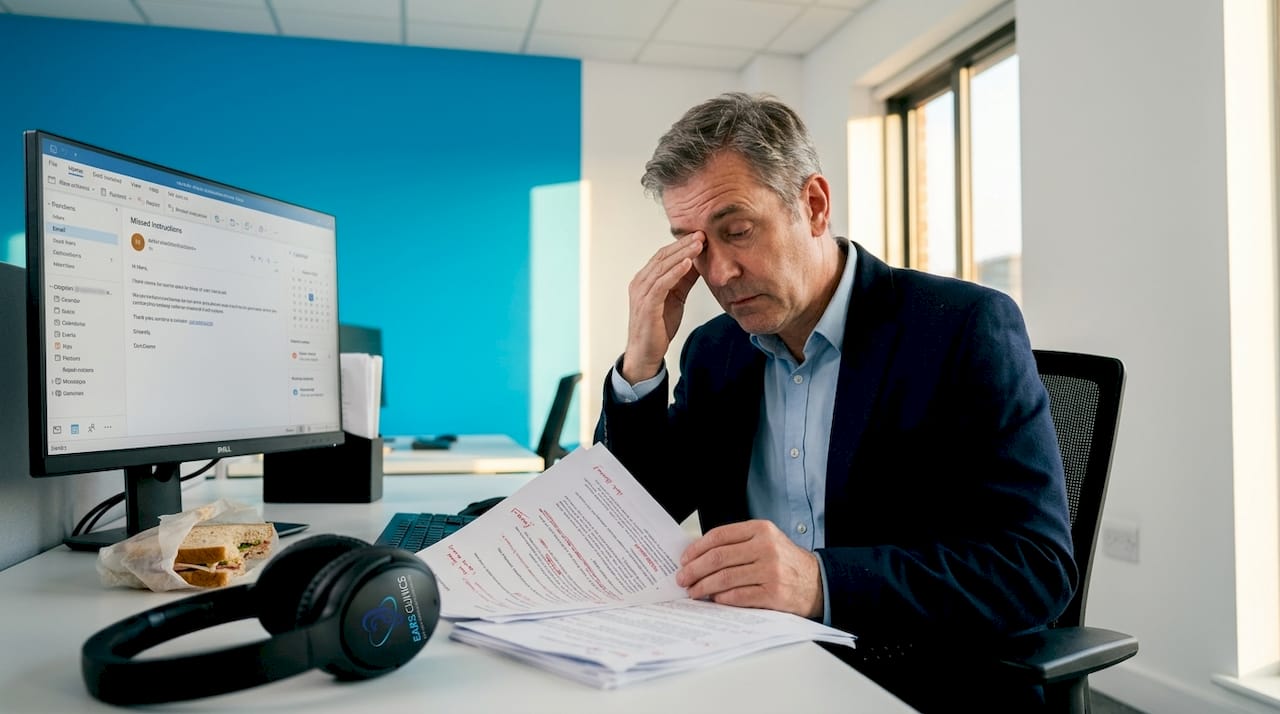
The concept of listening fatigue deserves particular attention from managers. When an employee cannot hear clearly, their brain works harder to fill in the gaps. It draws on cognitive reserves that would otherwise be used for problem-solving, decision-making, and concentration. Compensating for hearing deficits depletes those reserves progressively throughout the working day, causing measurable performance decline in the afternoon hours precisely when many critical decisions are made.
The consequences extend beyond individual performance. Consider how hearing affects employee performance in safety-critical environments. An employee who cannot reliably hear an auditory warning signal, a verbal safety instruction, or the sound of approaching machinery is at greater risk. The consequences range from near misses to serious incidents.
Increased error rates arising from misheard instructions or missed information
Greater risk of occupational burnout as employees develop exhausting compensatory strategies to mask their hearing difficulties
Reduced safety compliance in environments that rely on auditory alerts and verbal communication
Declining engagement in meetings and group discussions, often misread as disengagement or poor attitude
One important pattern that managers consistently miss: hearing-related performance declines appear in productivity metrics months or even years after the underlying hearing deterioration has taken hold. By the time absenteeism or error rates flag the issue, the damage is already embedded in the organisation’s operational rhythm.
Hearing interventions and their impact on work engagement
Not all hearing solutions deliver the same outcomes at work. Understanding the differences helps managers and occupational health teams make informed decisions when supporting employees with hearing loss.
Device type | Work engagement benefit | Limitations |
Standard hearing aids | Improved speech clarity in quiet settings | May struggle in complex, noisy environments |
Cochlear implants | Significantly improved workplace participation and performance | Require surgical intervention and rehabilitation period |
Bimodal devices (aid + implant) | Superior vigour, absorption, and reliability at work | Greater cost and fitting complexity |
Research published in Nature demonstrates that cochlear implants and bimodal devices produce measurably superior work engagement and performance compared to standard hearing aids alone, across metrics including vigour, absorption, and on-the-job reliability. For employees in communication-intensive roles, this distinction matters considerably.
The device alone, however, is not the complete answer. Advanced hearing interventions require workplace accommodations and professional training to deliver their full benefit. Loop systems, captioning tools, flexible seating in meeting rooms, and clear communication protocols all amplify the positive impact of a hearing device. Without these environmental adjustments, even the most sophisticated device underperforms in a demanding workplace setting.
Managers should also be aware of the workplace hearing care guide for adults that sets out best practices for supporting hearing-impaired employees across sectors in Scotland. Knowing what accommodations are reasonable and effective removes much of the uncertainty for both employer and employee.
Pro Tip: When an employee discloses hearing loss, treat the conversation as an opportunity to review your entire team’s communication environment. What helps one person hear clearly tends to improve communication quality for everyone.
Building a hearing-aware workplace culture
Business managers are in a stronger position to address hearing-related productivity losses than they might realise. The following steps provide a practical framework for creating a workplace where hearing health is treated as a legitimate performance concern.
Introduce active listening training. Formal listening skills for productivity training improves team output by up to 25% and signals to employees that communication quality is a leadership priority. It also creates a vocabulary for discussing hearing challenges without stigma.
Review your physical communication environment. Open-plan offices, hard surfaces, and background noise all increase the cognitive load of listening. Acoustic improvements are among the most cost-effective investments in workplace efficiency.
Offer regular hearing health checks. Incorporating hearing screening into your occupational health programme allows early identification of issues before they translate into performance decline. Early detection is the single most effective intervention available.
Reduce stigma actively. Employees with hearing difficulties frequently conceal them for fear of professional consequences. Leaders who model openness about communication challenges create the psychological safety that allows people to seek support.
Adopt flexible communication protocols. Written follow-ups after verbal briefings, agenda documents ahead of meetings, and the use of assistive technologies all reduce the barriers to full participation for employees with any degree of hearing difficulty.
Pro Tip: Ask your occupational health provider whether hearing screening is already part of your annual health assessment programme. In many organisations, it is absent not by design but simply by oversight.
Measuring hearing health’s impact on productivity
Investing in hearing health without tracking outcomes is a missed opportunity. Businesses that measure the right indicators can demonstrate concrete returns and build the internal case for sustained investment.
The most relevant metrics to monitor include absenteeism rates segmented by health category, error logs in roles with high verbal communication demands, and employee engagement survey scores. Pairing these with pre- and post-intervention data gives a clear picture of progress.
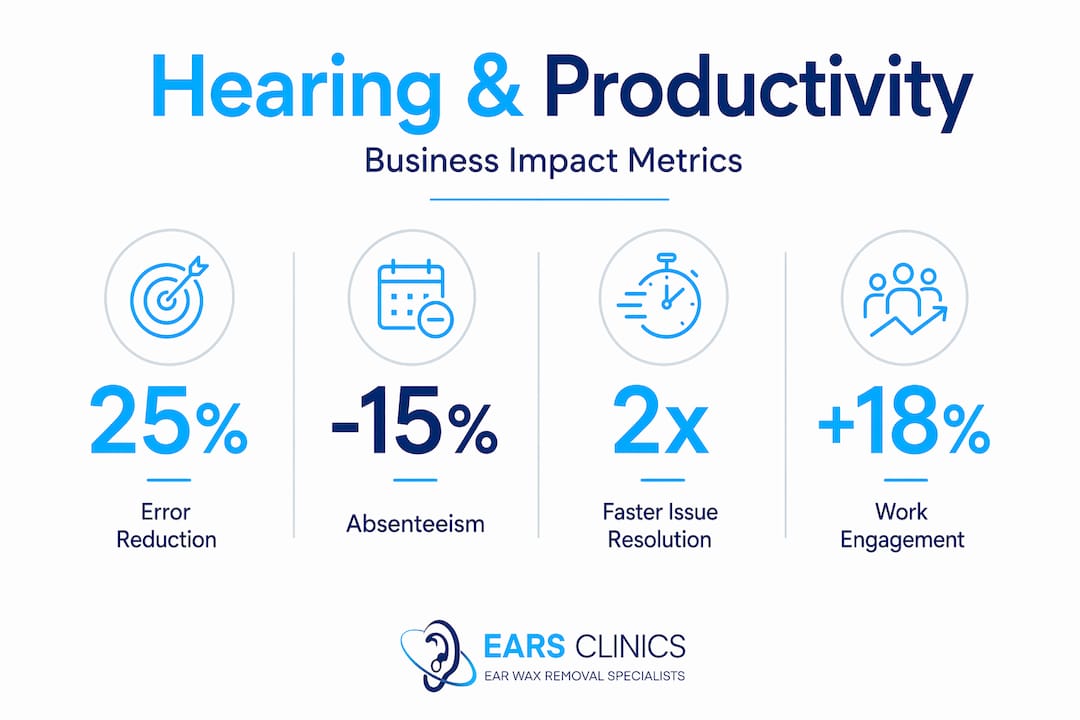
The long-term business case is compelling. Investing in hearing health reduces absenteeism, error rates, and workplace injuries while improving employee retention. Given that replacing a mid-level employee typically costs between 50% and 200% of their annual salary, any intervention that measurably reduces turnover has a quantifiable return on investment.
There is also an innovation argument. Listening-led culture transforms feedback into operational intelligence, improving organisational speed and decision quality in complex markets. Employees who feel genuinely heard contribute more ideas, raise concerns earlier, and stay longer. Hearing health is the physical precondition for all of it.
For managers seeking a starting point, our guide to workplace ear health in Scotland provides a structured approach to assessing and improving hearing-related outcomes across your organisation.
My view on hearing as a productivity issue
In my experience working with patients across occupational settings, the most persistent problem is not the hearing loss itself. It is the delay. Managers see someone withdrawing from meetings, making more errors, or seeming disengaged, and they look everywhere except at hearing. They attribute it to motivation, attitude, or personal problems. Months pass. Sometimes years.
What I have learned is that hearing difficulties are extraordinarily good at disguising themselves as something else entirely. An employee who asks for things to be repeated is labelled as inattentive. Someone who misses details in a briefing is considered careless. The individual knows something is wrong but often has no framework for raising it professionally. The result is a silent productivity drain that neither party addresses.
My take is straightforward. If you manage people, hearing health belongs in your occupational health framework alongside vision checks and mental health support. The evidence on employees with superior listening demonstrates a direct link to earnings, output, and career trajectory. That is not a health metric. It is a business metric. Treating it as one changes everything.
— EARS
How EARS Clinics support workforce hearing health
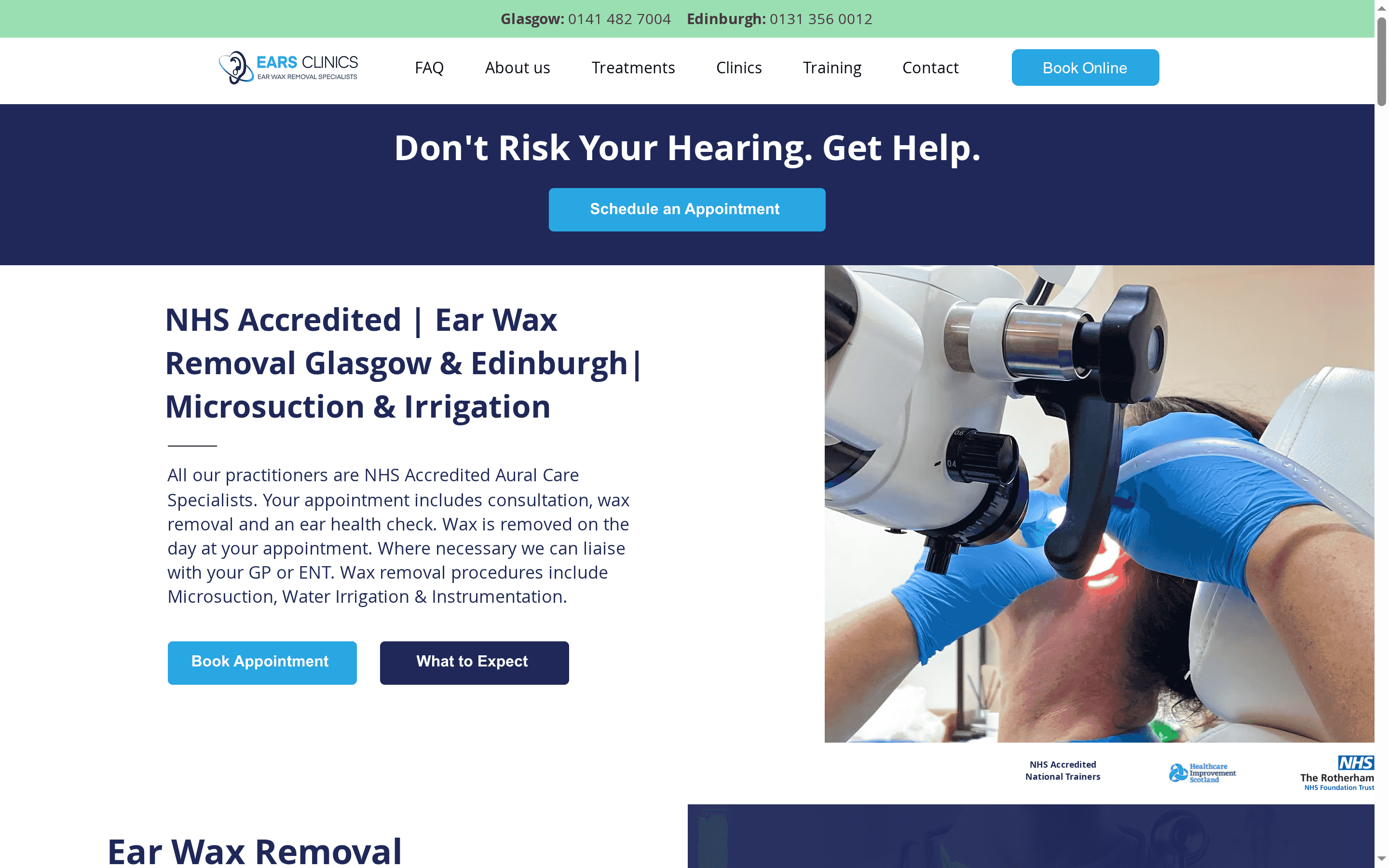
If this article has prompted you to consider whether hearing health is affecting your team’s performance, EARS Clinics offers professional, NHS-accredited ear care services across Glasgow and Edinburgh that are genuinely accessible to working adults.
Our trained Aural Care Specialists carry out clinically appropriate procedures, including microsuction (the method recommended by current NICE guidelines), irrigation, and manual instrumentation, selecting the safest approach based on each patient’s individual history and presentation. Appointments are available with same-day options and no requirement for pre-treatment softening drops, making them straightforward to fit around a working schedule.
You can review our full range of ear wax removal procedures and what to expect at an appointment on the EARS Clinics website. Consultations start from £60 for adults. Addressing something as manageable as earwax build-up could be the first practical step towards restoring clear hearing and the productivity that depends on it.
FAQ
How does hearing loss affect productivity at work?
Hearing loss reduces the accuracy of verbal communication, increases cognitive fatigue, and raises error rates. Workers with occupational hearing loss also accumulate additional absence days annually compared to colleagues with typical hearing.
What is listening fatigue and why does it matter for managers?
Listening fatigue occurs when employees expend excessive cognitive effort to compensate for impaired hearing, leaving fewer mental resources for decision-making and problem-solving. It typically worsens throughout the working day and can be mistaken for low motivation or disengagement.
Can hearing aids fully restore an employee’s work performance?
Standard hearing aids improve clarity in quieter environments but may not be sufficient in complex, noisy workplaces. Research shows that bimodal devices and cochlear implants produce significantly better work engagement and performance outcomes for many individuals.
What workplace changes help employees with hearing difficulties?
Acoustic improvements, assistive listening technology, written briefing summaries, and flexible seating in meeting rooms all support employees with hearing challenges, and these adjustments tend to improve communication quality for the whole team.
How often should employees have hearing checks?
Annual hearing screening is advisable as part of an occupational health programme, particularly in noisy or communication-intensive work environments. Early detection of hearing deterioration prevents the slow productivity drain that undiagnosed hearing loss creates.
Recommended