
Benefits of NHS-accredited clinics for ear care
TL;DR:
NHS-accredited ear care clinics meet strict standards for safety, hygiene, and staff competence, reducing risks for patients.
These clinics offer shorter waiting times, often within 2 to 6 weeks, compared to extensive NHS delays.
When you are searching for ear care, the sheer range of providers can feel overwhelming. The benefits of NHS-accredited clinics are not always clearly explained, and many patients assume that accreditation is simply a badge rather than a meaningful marker of safety and quality. In reality, accreditation shapes everything from the training your clinician has received to the hygiene protocols in the treatment room. This article unpacks what NHS accreditation genuinely means for ear care, how it affects your waiting times, and why it matters when choosing where to have ear wax removed safely.
Key takeaways
Point | Details |
Accreditation signals real standards | NHS-accredited clinics meet assessed criteria covering clinical governance, hygiene, and staff competence. |
Waiting times are significantly shorter | Accredited private clinics can offer appointments within 2 to 6 weeks compared to 6-month national averages. |
Microsuction is the NICE-recommended method | Practitioners in accredited clinics select the safest technique based on each patient’s clinical history. |
Accreditation is not permanent | Patients should verify current regulatory reports rather than relying solely on past ratings. |
Regulated clinics reduce patient risk | Emergency protocols and rigorous hygiene standards directly lower the chance of complications during ear care. |
What NHS accreditation means for ear clinics
Accreditation is often misunderstood. It is not simply a matter of a clinic registering with a body and receiving a certificate. For ear care clinics operating in the UK, accreditation from recognised bodies such as the Care Quality Commission (CQC), Healthcare Improvement Scotland (HIS), or the United Kingdom Accreditation Service (UKAS) means the clinic has undergone a formal, external assessment of its practices.
That assessment typically examines clinical governance frameworks, emergency response protocols, infection prevention and control, staff qualifications, and the adequacy of equipment. These are not box-ticking exercises. They represent a structured review of whether a clinic can actually deliver care safely. Understanding UKAS accreditation in diagnostics makes clear that externally accredited services differ meaningfully from those that rely solely on internal verification, even if both feel similar from the outside.
The difference between accredited and non-accredited clinics becomes most apparent when something goes wrong. Accredited clinics must have documented emergency protocols and staff trained to follow them. Non-accredited providers may operate responsibly, but there is no independent verification that they do.
Clinical governance requires documented procedures, complaint handling, and clinical audit.
Infection control standards mandate sterilisation protocols and single-use equipment policies where applicable.
Staff competence must be evidenced through recognised qualifications, not just self-reported experience.
Emergency preparedness means clinicians know precisely what to do if a patient experiences an adverse reaction.
One important nuance: accreditation is not a permanent status. CQC inspection ratings are point-in-time assessments, and even highly rated clinics can face scrutiny if governance practices slip. The NHS clinic advantages you gain from choosing an accredited provider are real, but you should always check the most recent inspection report rather than assuming a past rating still holds.
Pro Tip: When researching any ear care clinic, search the provider’s name on the CQC or HIS register directly. This takes two minutes and gives you a current, independent view of their regulatory standing rather than relying on what the clinic states about itself.
Reduced waiting times and improved access
One of the most immediately practical NHS clinic benefits for patients is the reduction in waiting time. Under the NHS Patient Choice Programme, patients in England have the right to choose their provider for elective care, and this includes selecting accredited community clinics. The impact is significant. Average waits for elective procedures nationally exceed six months, while accredited clinics can typically offer treatment within two to six weeks.
The data on community-based and ‘Hospital at Home’ models reinforces this. These are care models where accredited clinics deliver services in the community rather than within a traditional hospital setting, reducing the administrative and logistical burden on the patient considerably. Hospital at Home models save patients an average of 2.8 days in care compared to hospital stays, with one study recording net savings of £1.33 million over 12 months at a single NHS trust.
For ear care specifically, this translates to a meaningful difference. Waiting weeks rather than months for ear wax removal or an aural assessment can prevent a temporary hearing difficulty from becoming a prolonged one. Blocked ears affect concentration, communication, and quality of life in ways that are often underestimated until the problem is resolved.
Factor | Standard NHS hospital pathway | NHS-accredited community clinic |
Average waiting time | 6 months or more | 2 to 6 weeks |
Appointment setting | Hospital outpatient department | Community or private clinic |
Same-day appointments | Rarely available | Often available |
Home visits | Not standard | Available at some providers |
Continuity of care | Variable | Specialist-led, with GP communication |
Pro Tip: If you live in Scotland, check whether your chosen clinic is registered with Healthcare Improvement Scotland rather than the CQC. These are separate regulatory bodies, and registration with HIS is the relevant standard for Scottish patients.
NHS-accredited clinics versus traditional hospital ear care
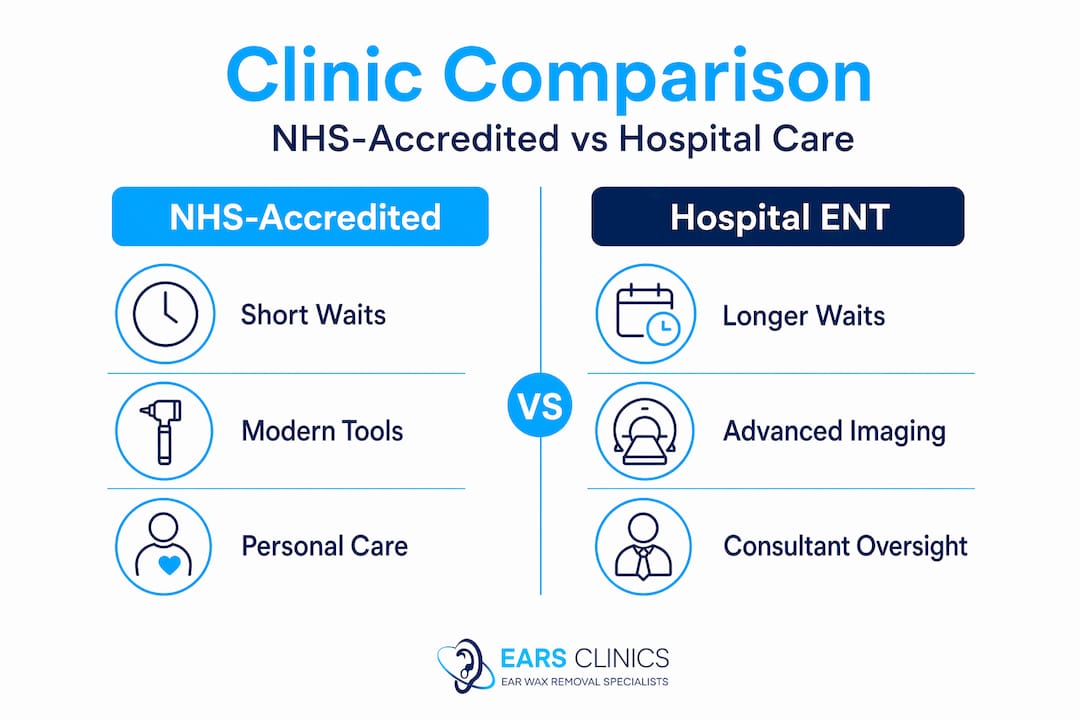
It would be misleading to suggest that NHS-accredited private clinics are superior in every respect to traditional NHS hospital ear departments. Both settings have genuine strengths, and the right choice depends on your individual circumstances.
Traditional NHS hospital ear, nose and throat (ENT) departments benefit from specialist consultant oversight, imaging facilities, and the ability to manage complex presentations including suspected tumours or perforated eardrums. They are the appropriate setting when a patient’s ear problem extends beyond wax build-up into structural or neurological territory.
Where accredited community clinics hold a clear advantage is in access, environment, and speed for straightforward presentations. Technician-led clinic models with remote specialist oversight offer shorter appointment times, accessible locations, and patient-reported satisfaction for routine ear care. Patients consistently note the difference in atmosphere between a busy hospital corridor and a calm, purpose-built clinic room.
Both settings share systemic challenges. NHS-affiliated clinics can still experience delays driven by staffing shortages and referral volumes, and accreditation does not fully insulate a clinic from the pressures affecting the wider health system. This is worth knowing before you book, particularly if your need is genuinely urgent.
The quality of NHS-accredited clinics shines through most clearly in their communication protocols. Accredited clinics are expected to share clinical findings with your GP, maintaining the care record that ensures nothing is missed if you later need onward referral. This continuity is something less regulated providers may not offer consistently.
Key factors to weigh when comparing your options:
Complexity of your ear presentation (routine wax removal versus potential infection or structural issue)
Speed of access you require
Whether a home visit would be more appropriate for your mobility needs
Whether the clinic communicates results back to your GP as standard practice
Current CQC or HIS inspection status of any provider you are considering
Exploring the broader picture of NHS versus private ear care can help you make a genuinely informed decision rather than defaulting to the most familiar option.
Ear care benefits in accredited clinic settings
The NHS clinic advantages become especially concrete when you look at what happens inside the treatment room during an ear wax removal appointment. In accredited settings, the clinician’s first step is always a thorough case history, covering your medical background, any previous ear surgery, whether you have a perforated eardrum, and what symptoms you are currently experiencing.
This matters because the treatment method is chosen based on your individual presentation. Microsuction is the NICE-recommended method for ear wax removal, but irrigation and manual instrumentation remain clinically valid and safe alternatives when the patient’s history or anatomy makes microsuction less appropriate. An accredited clinician does not simply perform the same procedure on every patient. They assess and adapt.
The benefits of accredited healthcare extend to the physical environment as well. Regulated clinics use clinical-grade equipment that is maintained, calibrated, and replaced according to schedule. Single-use instruments are disposed of after each patient. The room itself meets infection control standards. These protocols are routine in accredited settings and represent the baseline that every patient deserves.
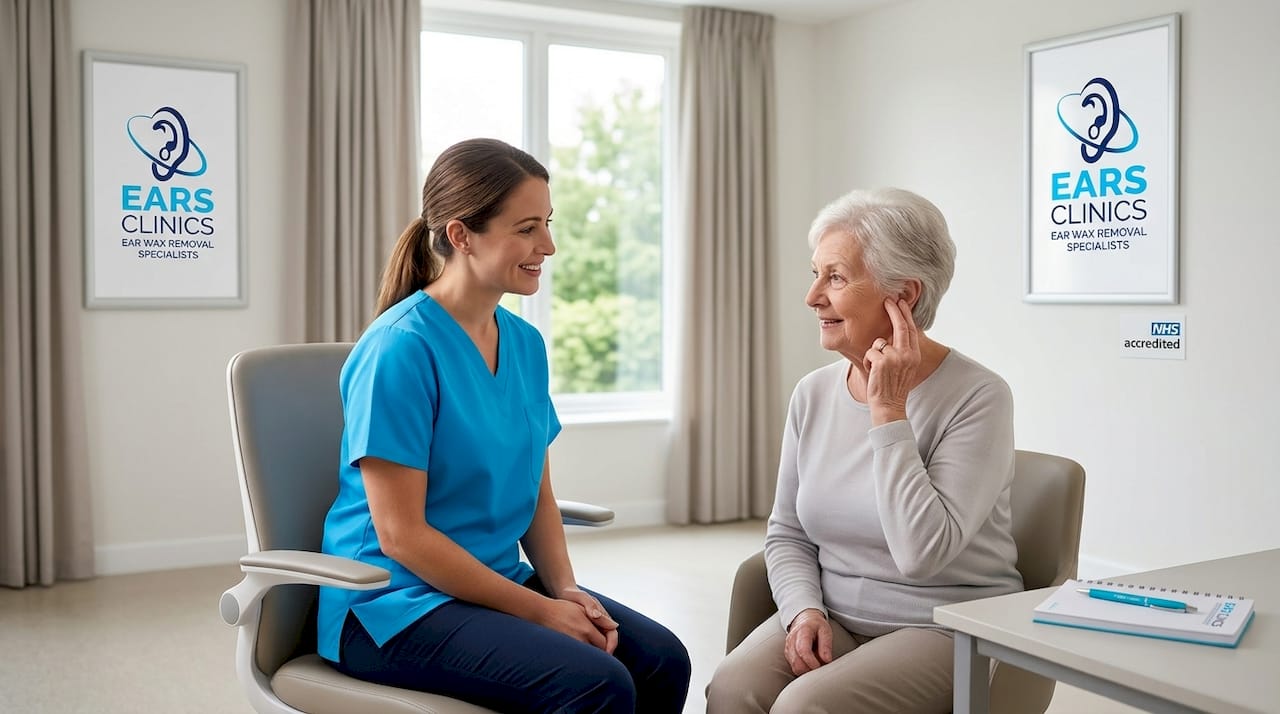
Patient outcomes in accredited ear care settings reflect this. When a trained aural care specialist conducts your procedure using properly maintained equipment in a regulated environment, the risk of complications such as canal abrasion, infection, or tympanic membrane trauma is substantially reduced compared to unregulated providers.
The benefits for NHS clinic patient trust are also worth naming explicitly. Patients who understand that their clinician holds recognised qualifications, that the clinic has passed an independent inspection, and that their GP will receive a report of the findings are far more likely to engage honestly with their clinician and to return for follow-up care if needed. Trust is not a soft outcome. It shapes whether patients seek care at all.
For children and patients with complex presentations, the regulatory framework becomes even more protective. Safe ear care for children in accredited settings requires specific competencies and age-appropriate equipment, and regulated clinics must demonstrate they can meet these requirements before treating younger patients.
My perspective on NHS accreditation in ear health
I have seen patients arrive at clinics with ears that have not been professionally assessed for years, partly because they could not get an appointment and partly because they were not sure where to go or whom to trust. That combination of delayed access and uncertainty about quality is genuinely harmful, and it is one of the clearest reasons why accreditation matters in ear health today.
What I find most important is not the certificate on the wall but what it represents. When a clinic achieves and maintains accreditation, it signals that the people running it take governance seriously enough to submit to external scrutiny. That culture of accountability shapes how every clinician in the building approaches their work.
I am also honest about the limitations. Accreditation does not make a clinic perfect, and ongoing transparency between clinic clinicians and NHS GPs is what sustains good outcomes over time, not the initial registration alone. My practical advice is always the same: check the current regulatory status, ask whether findings are routinely shared with your GP, and confirm that the clinician treating you holds a recognised qualification in aural care. If a clinic cannot answer those three questions clearly, keep looking.
— EARS
Ear care you can trust at EARS Clinics
If you are weighing up your options for ear wax removal in Scotland, EARS Clinics offer exactly the kind of regulated, NHS-accredited care this article has described. Registered with Healthcare Improvement Scotland, EARS Clinics are among the few regulated ear healthcare providers in Scotland, and they are licensed to treat patients from the age of two.
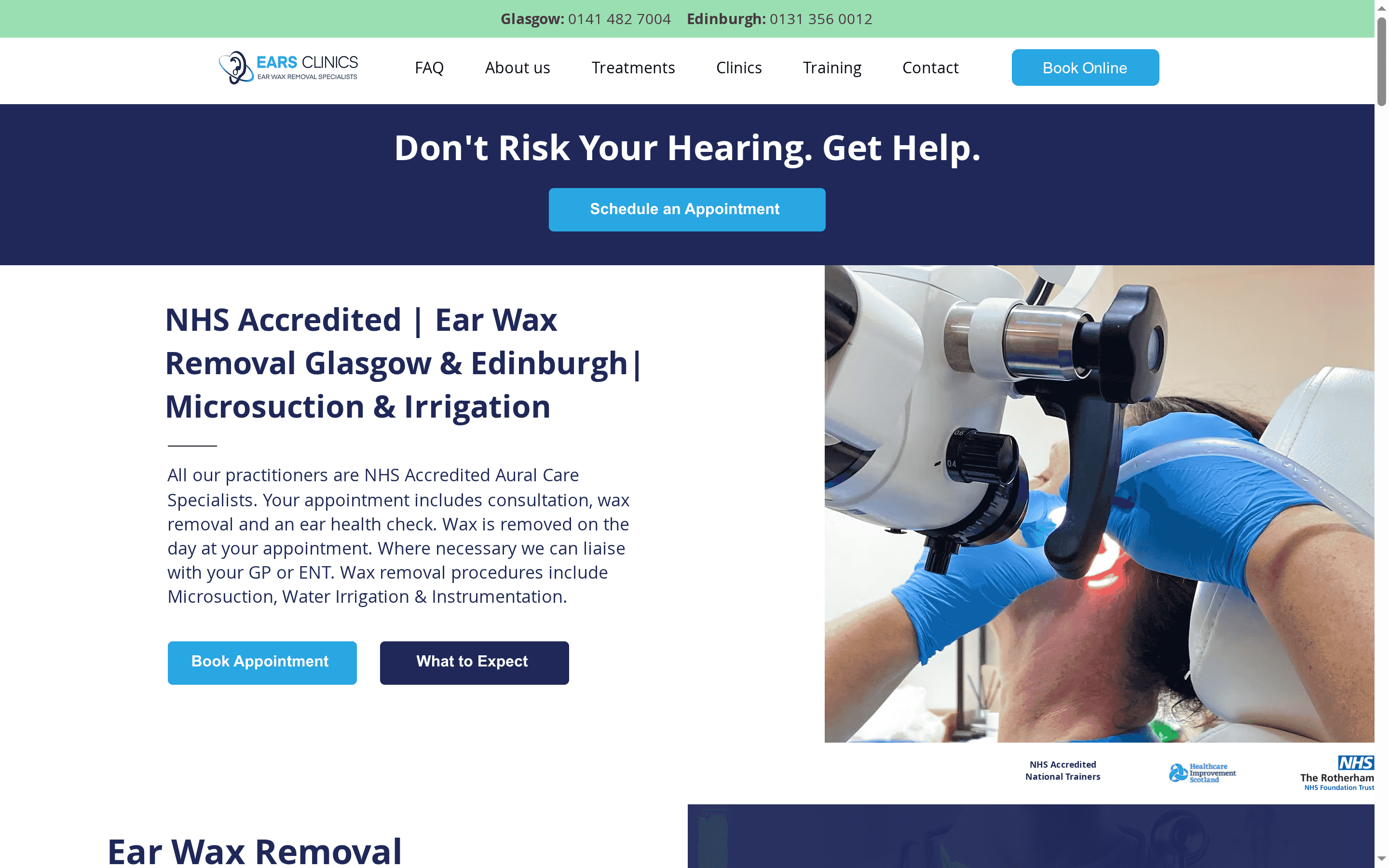
Their Aural Care Specialists are NHS-accredited and trained to assess each patient individually before selecting the most appropriate method, whether that is microsuction, irrigation, or manual instrumentation. Appointments are available in clinic in Glasgow and Edinburgh, with same-day options and home visit services for those who need them. Pricing is straightforward: £60 for adults, £75 for under-18s, and £180 for home visits. There are no pre-treatment softening requirements and no lengthy referral pathways. Clinical findings are communicated back to your GP as standard. To book with confidence, visit earhealthservice.co.uk.
FAQ
What does NHS accreditation mean for an ear clinic?
NHS accreditation means an independent regulatory body such as the CQC or Healthcare Improvement Scotland has assessed the clinic’s clinical governance, hygiene, staff qualifications, and emergency protocols. It is an external verification of quality, not a self-reported claim.
How much shorter are waiting times at accredited clinics?
Nationally, NHS elective care waits exceed six months on average, while accredited community clinics typically offer appointments within two to six weeks, and some provide same-day bookings for ear wax removal.
Is microsuction safer than other ear wax removal methods?
Microsuction is currently the NICE-recommended method and is widely considered the safest option for most patients. However, irrigation and manual instrumentation remain clinically valid and safe when chosen appropriately by a qualified aural care specialist based on the patient’s individual history.
Should I check a clinic’s accreditation before booking?
Yes. Accreditation ratings are point-in-time assessments, so it is worth checking the clinic’s current status directly on the CQC or HIS register rather than relying on the clinic’s own marketing materials.
Can children be treated at NHS-accredited ear clinics?
Yes, but only at clinics specifically licensed and regulated to treat younger patients. EARS Clinics, for example, are licensed to treat patients from two years of age and hold the appropriate accreditation to do so safely.
Recommended