
Hearing improvement tips 2025: what actually works

TL;DR:
Hearing decline affects millions in the UK, making professional assessment and tailored strategies essential for effective improvement. Combining advanced hearing aids, auditory training, and regular ear care offers the best outcomes, while professional oversight safeguards safety and long-term success. Regular ear checks and safe wax removal are crucial maintenance steps to optimize hearing health and device performance.
If you have noticed conversations becoming harder to follow, or find yourself asking people to repeat themselves more often, you are far from alone. Hearing decline affects millions of adults across the UK, and the range of available solutions has grown considerably. From the latest hearing aids 2025 has brought to market, to structured auditory training and professional ear care, knowing where to start matters. These hearing improvement tips 2025 are designed to cut through the noise and give you a clear, practical path forward, grounded in clinical evidence and real patient experience.
Key takeaways
Point | Details |
Professional oversight still matters | OTC devices and self-care tools cannot replace a trained clinician’s assessment of your hearing and ear health. |
Adjustment takes weeks, not days | Expect a 45 to 100 day period to fully acclimatise to new hearing aids before judging their effectiveness. |
Auditory training adds measurable benefit | Structured training can improve speech perception in noise by 7 to 8 dB over as few as 20 sessions. |
Ear wax can block progress | Unaddressed wax build-up reduces hearing aid effectiveness and should be managed by regulated professionals. |
Combine strategies for best results | Pairing hearing aids with auditory training and regular ear care delivers better outcomes than any single approach alone. |
1. Know what makes hearing improvement tips 2025 worth following
Not every piece of advice circulating online is grounded in evidence. When evaluating ways to improve hearing, the most reliable tips share a few defining qualities.
The method should match the degree and type of your hearing loss. Strategies suited to mild or moderate hearing loss will not adequately address complex or severe conditions. Professional assessment helps you avoid spending time and money on approaches that are simply not appropriate for your situation.
Regulation and clinical oversight are non-negotiable. In Scotland, clinics managing ear health should be registered with Healthcare Improvement Scotland (HIS). Elsewhere in the UK, Care Quality Commission (CQC) registration applies. These standards protect patients from unsafe practice.
Key criteria to look for in any hearing improvement strategy:
Suitability confirmed by a qualified professional, not just a product label
Evidence base drawn from peer-reviewed research or established clinical guidelines
Realistic timelines for improvement rather than promises of instant results
Clear safety protocols, especially for any procedure involving the ear canal
Ongoing support, whether through a clinician, audiologist, or well-regulated remote service
Pro Tip: Before investing in any device or programme, ask whether it has been assessed by an audiologist or recommended within current NHS or NICE guidelines. That question alone will filter out a great deal of unhelpful noise.
2. Understanding the latest hearing aids in 2025
Modern hearing aids have advanced considerably, and understanding their features helps you make better choices. OTC hearing aids are now available for adults aged 18 and over with perceived mild to moderate hearing loss, with device labelling and built-in volume limits designed to prevent over-amplification.
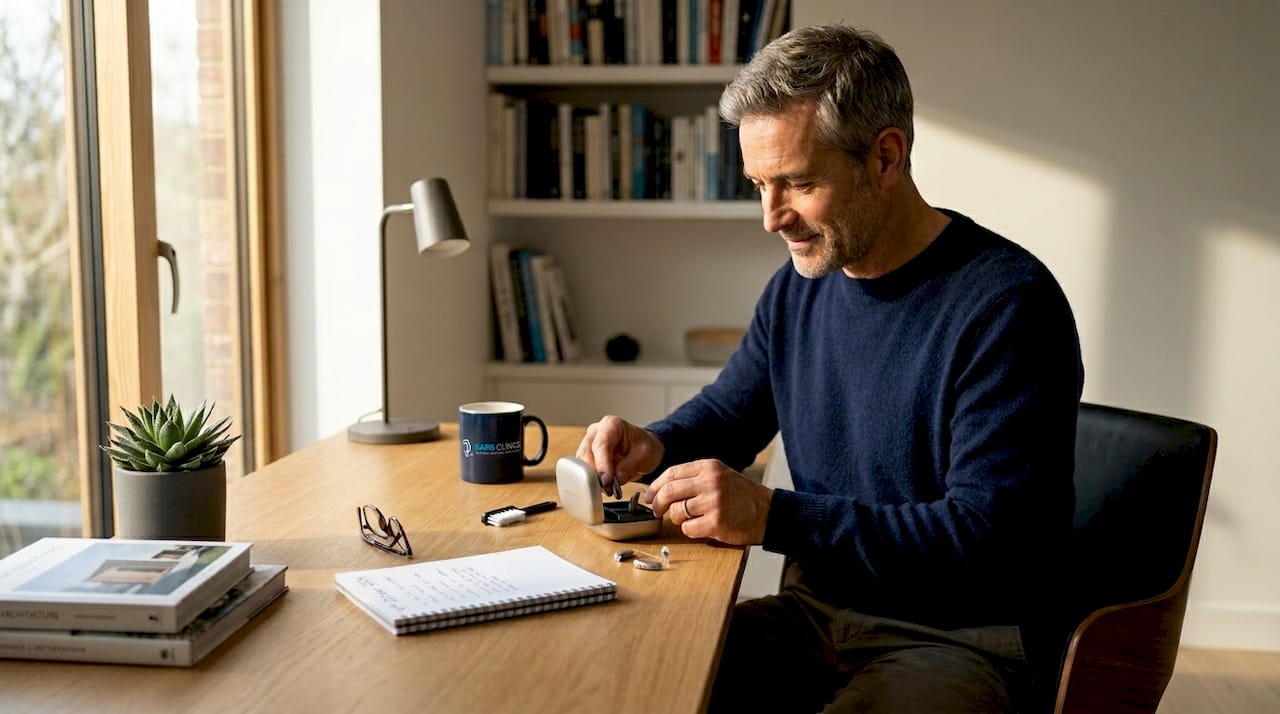
These devices have brought down costs significantly and removed barriers to access. However, they come with trade-offs. The gap between what a high-street OTC device offers and what a professionally fitted hearing aid delivers is most apparent in complex listening environments such as busy restaurants or meetings.
What to look for in a modern hearing aid
Current devices vary widely in their capabilities. The most clinically relevant features include:
Feedback cancellation to eliminate the whistling that plagues older models
Directional microphones to prioritise speech from in front of you
Noise reduction processing to reduce background sound, though selecting a target speaker in complex environments remains a challenge even with AI-enhanced systems
Connectivity to pair with smartphones and televisions via Bluetooth
Open versus closed fittings, where open fittings reduce the blocked sensation but offer less noise reduction, while closed fittings improve amplification but can create an occlusion effect (a hollow, booming quality to your own voice)
“Consumers benefit most from hearing aids with stable performance, good support, generous trial periods and clear device instructions rather than from marketing hype or flashy apps.”
Adjustment is the piece most people underestimate. Most users need 45 to 100 days to acclimatise properly. During that period, sounds that were previously inaudible become noticeable again, and the brain takes time to relearn how to process them. Patience and consistent use during this phase are what separate successful hearing aid users from those who put the device in a drawer.
Pro Tip: Wear your hearing aids for progressively longer periods each day during the first month rather than wearing them all day from day one. This gradual approach reduces fatigue and helps your brain adapt more comfortably.
3. Auditory training as an effective hearing strategy
A hearing aid amplifies sound. Auditory training teaches your brain to use that sound more effectively. These two approaches work best together, and the evidence for auditory training as a standalone intervention is stronger than many people realise.
Structured auditory training has been shown in randomised controlled trials to improve speech perception in noise by 7 to 8 dB and reduce hearing handicap after 20 sessions over four weeks. That is a clinically meaningful improvement, particularly for adults who struggle to follow conversations in background noise.
How structured auditory training works
The most effective programmes follow a consistent format:
An initial assessment to identify specific listening difficulties and set goals
Clinician-guided adaptive exercises that increase in difficulty as you improve
Regular review sessions to track progress and adjust the training content
Exercises targeting the specific environments where you struggle most, such as telephone calls or group conversations
Beyond formal training, communication strategies form an important part of an aural rehabilitation programme. These include positioning yourself to see the speaker’s face clearly, reducing background noise where possible, and letting people know the communication adjustments that help you most. These are not workarounds. They are legitimate parts of how to enhance hearing in everyday life.
Pro Tip: If structured auditory training with a clinician is not accessible to you right now, reputable app-based programmes that use adaptive difficulty and track your progress are a reasonable starting point, provided you are also working with a hearing professional.
4. Safe ear care procedures and why they matter
One of the most overlooked hearing loss solutions is also one of the simplest: keeping your ears clear of excessive wax build-up. Earwax (cerumen) is natural and protective, but when it accumulates and blocks the ear canal, it can significantly reduce hearing clarity and reduce the effectiveness of hearing aids.
The safest ear wax removal procedures are performed by trained professionals who select the most appropriate technique based on your medical history and clinical presentation. The three principal methods are:
Microsuction is the preferred method under current NICE guidelines. A clinician uses a fine, low-pressure suction device under magnification to remove wax precisely and safely, without introducing water into the ear canal.
Irrigation introduces a controlled stream of warm water to flush out wax. It remains a clinically valid and safe option when used correctly by a trained practitioner.
Manual instrumentation uses specialised tools such as a Jobson Horne probe to physically remove wax. It is appropriate in certain presentations and is performed by trained aural care specialists.
Method | Key advantage | Suitable when |
Microsuction | Precise, dry, low risk | Most presentations; preferred method |
Irrigation | Effective for soft wax | No perforation history; softened wax |
Manual instrumentation | No water or suction needed | Dry or impacted wax in certain cases |
What you should avoid entirely is attempting to remove wax at home with cotton buds, ear candles, or untested ear drops purchased without advice. These approaches risk packing wax deeper, damaging the ear canal lining, or perforating the eardrum. Professional ear care by regulated practitioners following evidence-based guidelines is always the safer route.
Pro Tip: If you wear hearing aids, having your ears checked and cleared every six to twelve months makes a measurable difference to device performance and listening comfort.
5. Regular ear checks as part of hearing health advice
Most adults do not think about their ear health until something goes wrong. Changing that habit is one of the most cost-effective hearing health advice steps you can take. Regular ear check-ups allow clinicians to identify treatable issues early, from wax build-up and mild infections to structural changes that could affect your long-term hearing.
For hearing aid users specifically, a blocked or inflamed ear canal reduces the quality of amplification and can cause feedback or discomfort. Catching and managing these issues early means your devices perform as intended. It also means your audiologist or specialist has accurate baseline information when assessing whether your hearing has changed.
Adults who have a family history of hearing loss, work in high-noise environments, or have had previous ear problems benefit most from making ear checks a routine part of their healthcare, not an emergency measure.
6. Comparing hearing improvement strategies side by side
Understanding how different approaches stack up helps you prioritise your next steps and manage expectations clearly.
Strategy | Expected benefit | Time to results | Cost consideration |
OTC hearing aids | Improved amplification for mild to moderate loss | 45 to 100 days to adapt | Lower upfront cost than prescription devices |
Professionally fitted hearing aids | Greater precision, fitting, and support | 4 to 12 weeks | Higher cost, but better long-term outcomes |
Auditory training | Improved speech perception in noise | 4 to 8 weeks of structured sessions | Variable; often available through audiology services |
Professional ear wax removal | Immediate clarity improvement | Same day | £60 for adults at EARS Clinics |
Regular ear health monitoring | Prevention of deterioration | Ongoing benefit | Minimal cost relative to impact |
A few common pitfalls are worth naming directly. Buying an OTC hearing aid without any professional assessment is risky if your hearing loss is more complex than mild. Relying on auditory training alone without addressing underlying wax or middle ear issues limits progress. And ignoring ear care entirely while pursuing device-based solutions is like trying to improve your vision through exercises without cleaning your glasses first.
The adults who achieve the most meaningful improvements tend to combine approaches, treating ear health maintenance, device use, and active listening training as complementary rather than competing priorities. Professional ear care supports everything else you do to improve your hearing.
My perspective on hearing improvement in 2025
I have worked with a great many adults who arrive frustrated because they expected their hearing aids to solve everything, and quickly. What I have seen consistently is that the technology is not the limiting factor. The adjustment period is. People give up on devices after two weeks because they find new sounds overwhelming, when in reality they are on the cusp of adapting.
The other pattern I notice is how often ear wax turns out to be the primary issue. Patients come in expecting a complex hearing loss solution and leave with dramatically improved hearing after a single wax removal appointment. It is not glamorous, but it is real and immediate.
My honest view on hearing improvement in 2025 is this: the best results come from treating it as an integrated process rather than a one-off fix. A hearing aid is a tool. Auditory training is a skill. Professional ear care is maintenance. None of them work as well in isolation as they do together. The adults who approach this with realistic expectations and a willingness to invest time, not just money, consistently get better outcomes than those chasing the fastest or cheapest option.
— EARS
Take the first step with EARS Clinics
If wax build-up is affecting your hearing or reducing the performance of your hearing aids, EARS Clinics offers safe, NHS-accredited ear care by trained Aural Care Specialists across Glasgow and Edinburgh. All procedures, including microsuction, irrigation, and manual instrumentation, are performed following NICE guidelines and under the strict regulatory oversight of Healthcare Improvement Scotland (HIS).
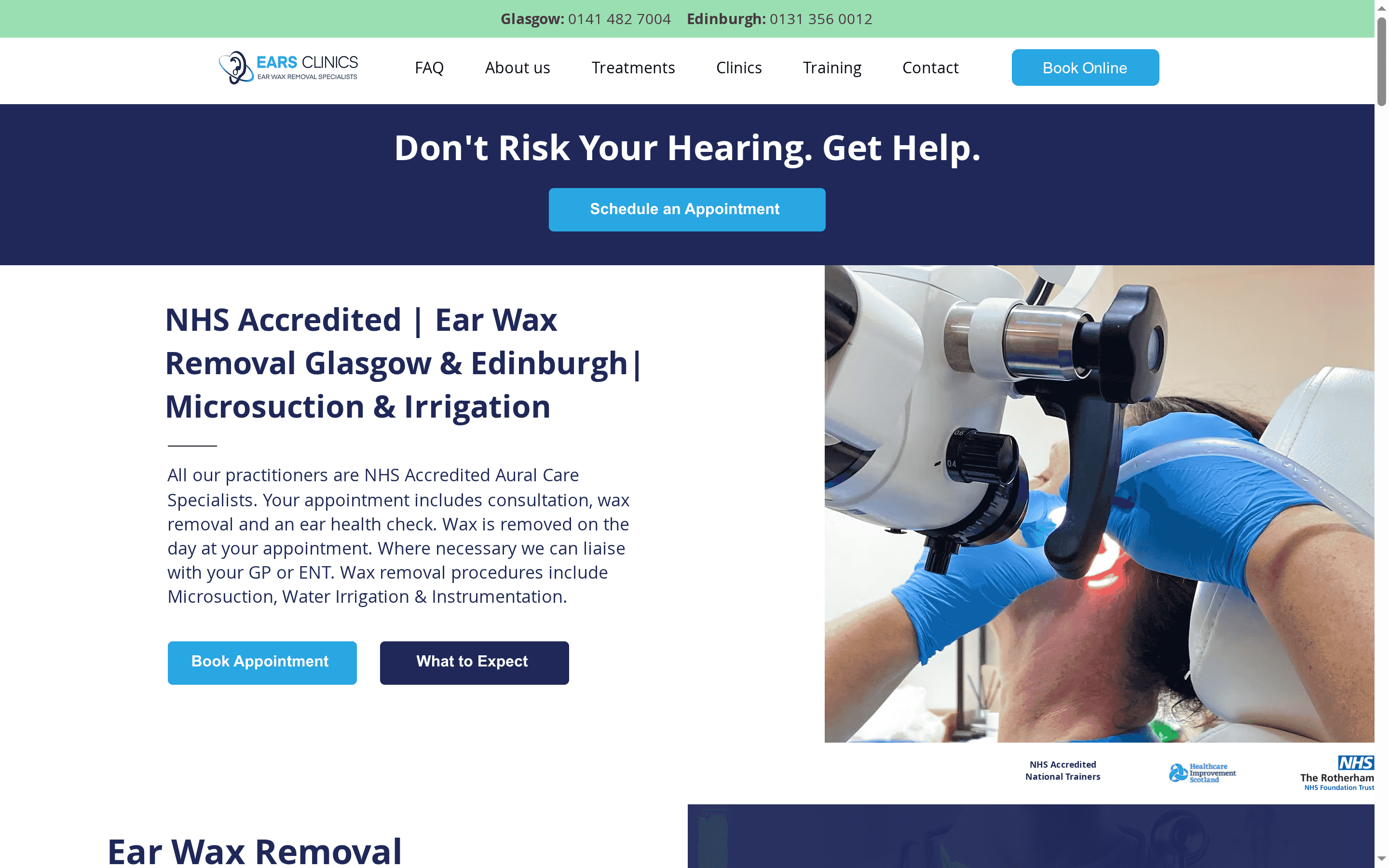
Appointments cost £60 for adults, £75 for under-18s, and £180 for a home visit. Same-day appointments are available, with no requirement to use olive oil drops before attending. You can learn more and book directly at EARS Clinics wax removal. Whether you are exploring hearing improvement for the first time or managing an existing condition, professional ear care is a practical, evidence-based place to start.
FAQ
Can ear wax removal improve my hearing straight away?
Yes, in many cases it can. Removing a significant wax blockage often produces an immediate and noticeable improvement in hearing clarity, particularly for hearing aid users whose devices are affected by the build-up.
How long does it take to adjust to a new hearing aid?
Most users require 45 to 100 days to fully adapt. Consistent daily wear during this period is the most important factor in achieving good outcomes.
What is the difference between microsuction and irrigation?
Microsuction uses gentle suction under magnification to remove wax without water, and is the method preferred under current NICE guidelines. Irrigation flushes the ear canal with warm water and remains a safe and effective alternative in appropriate cases.
Does auditory training actually work?
Yes. Structured auditory training has demonstrated measurable improvements in speech perception in noise and hearing-related quality of life in clinical trials. It works best alongside hearing aids rather than as a replacement for them.
When should I see a professional rather than using an OTC hearing aid?
If your hearing loss is more than mild, affects only one ear, or is accompanied by pain, dizziness, or sudden onset, you should consult a clinician before purchasing any device. OTC hearing aids are designed for adults with perceived mild to moderate hearing loss and are not suitable for all presentations.
Recommended