
Benefits of regulated clinics for safe ear care

TL;DR:
Regulated ear care clinics in the UK are inspected and held accountable by bodies like the CQC or HIS, ensuring higher safety standards. Unregulated providers often lack oversight, increasing the risk of harm such as perforations or infections, with limited recourse for patients. Patients should verify both clinic and clinician registration to access safe, evidence-based treatments like microsuction, irrigation, or manual instrumentation.
Not all ear care clinics are created equal, and the difference can genuinely matter to your health. Many people assume that any provider offering earwax removal has the same training, oversight, and accountability. That assumption is wrong, and in some cases, it has led to serious harm. Understanding the real benefits of regulated clinics helps you make a decision that protects your hearing and your wellbeing. This article explains what clinic regulation actually means in the UK, what risks unregulated providers carry, and how to identify a clinic you can trust.
Key takeaways
Point | Details |
Regulation protects patients | Regulated clinics are inspected and held to standards that unregulated providers are not required to meet. |
Course certificates are not enough | A training certificate does not equal full regulation. Check both clinic and clinician registration status. |
Three safe treatment options exist | Microsuction, irrigation, and manual instrumentation are all clinically valid when selected by a trained clinician. |
Red flags matter | Clinics without CQC or HIS registration and clinicians without HCPC registration should prompt caution. |
Regulated care means accountability | Complaint procedures and periodic inspections mean repeated failures are less likely in regulated settings. |
Benefits of regulated clinics in the UK
When people talk about the benefits of regulated clinics, they are really talking about a system of independent oversight that holds healthcare providers accountable, whether or not anything goes wrong. In the UK, two bodies carry most of this responsibility. The Care Quality Commission (CQC) regulates health and adult social care services in England, inspecting clinics and enforcing registration to ensure care is safe, effective, compassionate, and high quality. In Scotland, Healthcare Improvement Scotland (HIS) performs an equivalent role, licensing providers and monitoring ongoing compliance.
The distinction between clinic-level and practitioner-level regulation is one that patients often miss. A clinic can be registered with CQC or HIS and still employ practitioners who hold no professional registration. The reverse also occurs. The safest ear care settings are those where both the clinic and the individual clinicians are accountable to a recognised body, such as the Health and Care Professions Council (HCPC).
For ear care specifically, regulation enforces standards around clinical environment, equipment maintenance, infection control, record keeping, and patient safety procedures. These are not administrative formalities. They are the conditions under which safe treatment becomes consistently possible rather than occasionally likely.
Registration and inspection cycles provide an external check on clinic quality that internal policies alone cannot replicate.
Complaint investigation procedures give patients a route to formal redress if something goes wrong.
Training and competency requirements set a minimum standard for who is permitted to perform clinical procedures.
Ongoing oversight means clinics cannot simply meet standards at registration and then allow them to slip.
Pro Tip: When researching a clinic, search the CQC register or the HIS register directly rather than relying on the clinic’s own website claims. A few minutes of checking can tell you a great deal about a provider’s accountability history.
Risks of unregulated ear-care providers
The risks of seeking ear care from an unregulated provider are specific and well-documented. A BBC investigation found that unregulated earwax removal providers have caused perforated eardrums, infections, and lasting hearing damage in patients who had no reason to suspect anything was wrong. These are not theoretical risks. They are outcomes reported by real patients who trusted providers that lacked the oversight to catch or prevent poor practice.
The core problem is that earwax removal regulation in the UK remains inconsistent. Unlike prescribing or surgery, earwax removal does not currently require a registered clinician in all settings. This means someone can complete a short commercial course and begin offering the service to paying patients without being registered with CQC, HIS, or the HCPC. The course certificate may look reassuring. It is not the same thing as independent oversight.
“Patients often misunderstand ‘trained by course’ as a sufficient safety qualification, whereas formal regulation provides reliable safety assurance.” — BBC News
The risks associated with unregulated providers extend beyond the clinical procedure itself.
No formal complaint procedure means patients have limited recourse if they are harmed.
No inspection cycle means poor practice may go undetected indefinitely.
No requirement to maintain clinical records makes follow-up care and accountability difficult.
Marketing language such as “trained specialist” or “professional ear care” carries no regulatory meaning without verified registration.
Checking clinic and clinician registration status before booking is not excessive caution. Given the current gaps in earwax removal regulation, it is the minimum a patient should do. You can read more about the risks in unregulated settings and how regulation in Scotland specifically addresses them.
Treatment options in regulated ear-care clinics
One of the less-discussed advantages of certified clinics is the quality of clinical decision-making around treatment selection. In a regulated setting, a trained Aural Care Specialist will assess your medical history and clinical presentation before choosing a method. The procedure is selected to suit you. It is not simply the one the provider happens to offer.

NICE guidelines currently favour microsuction as the preferred method for earwax removal due to its precision and low risk profile. Microsuction uses a fine suction device under direct visualisation to remove cerumen (earwax) without introducing water into the ear canal. For most patients, it is the safest and most comfortable option available.
Irrigation involves gently flushing the ear canal with water to dislodge and remove wax. It is clinically appropriate for many patients and has a long history of safe use when performed correctly. Manual instrumentation uses small instruments to remove wax directly, and is particularly useful in ears where irrigation is contraindicated, such as in patients with a history of perforated eardrums or ear surgery. All three methods are safe and clinically valid. The key is that the decision is made by a trained clinician based on evidence, not by the patient choosing a service from a menu.
Regulated clinics enforce training standards for all of these techniques. This means the clinician performing your procedure has demonstrated competence to an external body, not just to their employer.
Microsuction is preferred under current NICE guidance, offering direct visualisation and precise removal.
Irrigation is appropriate for many patients and is performed using controlled water flow under clinical assessment.
Manual instrumentation is selected when other methods carry higher risk for a specific patient.
Pro Tip: If a provider only offers one method regardless of your history or symptoms, that is a signal worth noting. Regulated clinicians select based on patient safety rather than operational convenience.
How to identify a regulated ear-care clinic
Finding a regulated clinic takes a small amount of research, but the steps are straightforward. Here is what to check before booking:
Check CQC or HIS registration. In England, search the CQC register at cqc.org.uk. In Scotland, check HIS registration. The clinic’s registration status should be publicly verifiable, not just stated on its own website.
Verify clinician registration. Ask whether the practitioner holds HCPC registration or is an NHS-accredited Aural Care Specialist. Professional registration means the individual is accountable to a regulatory body, not just their employer.
Look for inspection history. Registered clinics are subject to periodic inspections and complaint investigations, which provide ongoing evidence of care quality beyond the initial licensing process.
Assess the complaint procedure. A regulated clinic will have a formal process for handling complaints. If this information is not publicly available or the clinic cannot describe it clearly, that is a red flag.
Question marketing claims carefully. Phrases like “qualified specialist” or “professional ear care” have no regulated definition. Look for specific registration numbers or affiliations with recognised bodies rather than general language.
The guidance on choosing a safe ear clinic published by Earhealthservice provides a thorough framework for applying these checks in practice. Knowing what to look for before you book can meaningfully reduce your exposure to risk.
Regulated vs. unregulated clinics: a direct comparison
The impact of clinic regulations becomes clearest when you compare what regulated and unregulated settings actually offer side by side.
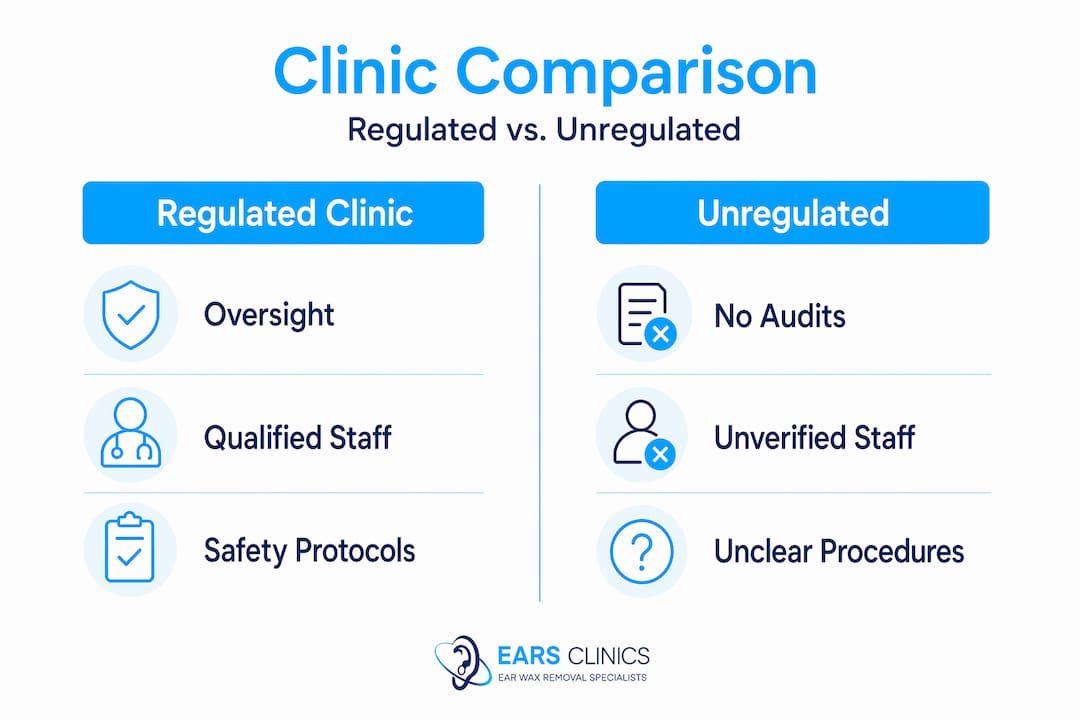
Feature | Regulated clinic | Unregulated provider |
Independent oversight | CQC or HIS registration, subject to inspection | No external oversight required |
Clinician accountability | HCPC or equivalent professional registration | No registration requirement |
Complaint procedure | Formal, documented process with external escalation | At provider’s discretion, no formal pathway |
Treatment selection | Based on clinical assessment and patient history | May be limited to one method regardless of suitability |
Ongoing quality assurance | Subject to reinspection and continuous compliance | No requirement for ongoing standards review |
Record keeping | Clinically mandated, supports follow-up care | No regulated requirement |
The quality assurance in healthcare that regulation provides is not primarily about paperwork. It is about accountability at every stage of care. Regulated clinics are required to demonstrate safety before, during, and after treatment. That systematic protection is what distinguishes a certified provider from someone who has completed a commercial training course.
For patients, this comparison translates into tangible differences: lower risk of harm, a clear route if something goes wrong, and confidence that the person treating you has been assessed by someone outside their own organisation. That is worth prioritising, even if a regulated clinic costs slightly more or requires more advance planning.
My view on patient safety and the value of regulation
I have seen the consequences of patients choosing providers based on convenience or price alone, and the outcomes are not abstract. Perforated eardrums, chronic infections, and unnecessary anxiety about lasting hearing loss are real clinical experiences that show up in regulated clinics after patients have already been treated elsewhere.
What I find consistently underappreciated is how much regulation changes the culture of a clinic, not just its paperwork. When a clinic knows it will be inspected, when its practitioners know their registration depends on safe practice, the entire approach to patient care shifts. Corners are less likely to be cut. Decisions are more likely to be documented. Patients are more likely to be assessed rather than simply treated.
The uncomfortable truth is that regulation’s most visible benefits often appear after something goes wrong. A regulated clinic has a complaint process, an investigation procedure, and a mechanism to prevent the same problem from recurring. An unregulated provider has none of that. Patients deserve to know that distinction before they make a choice.
My strong advice: choose a regulated clinic, verify registration independently, and do not let price or convenience override the question of safety. Your hearing is not something that benefits from a second opinion after the fact.
— EARS
Safe, regulated ear care with EARS Clinics
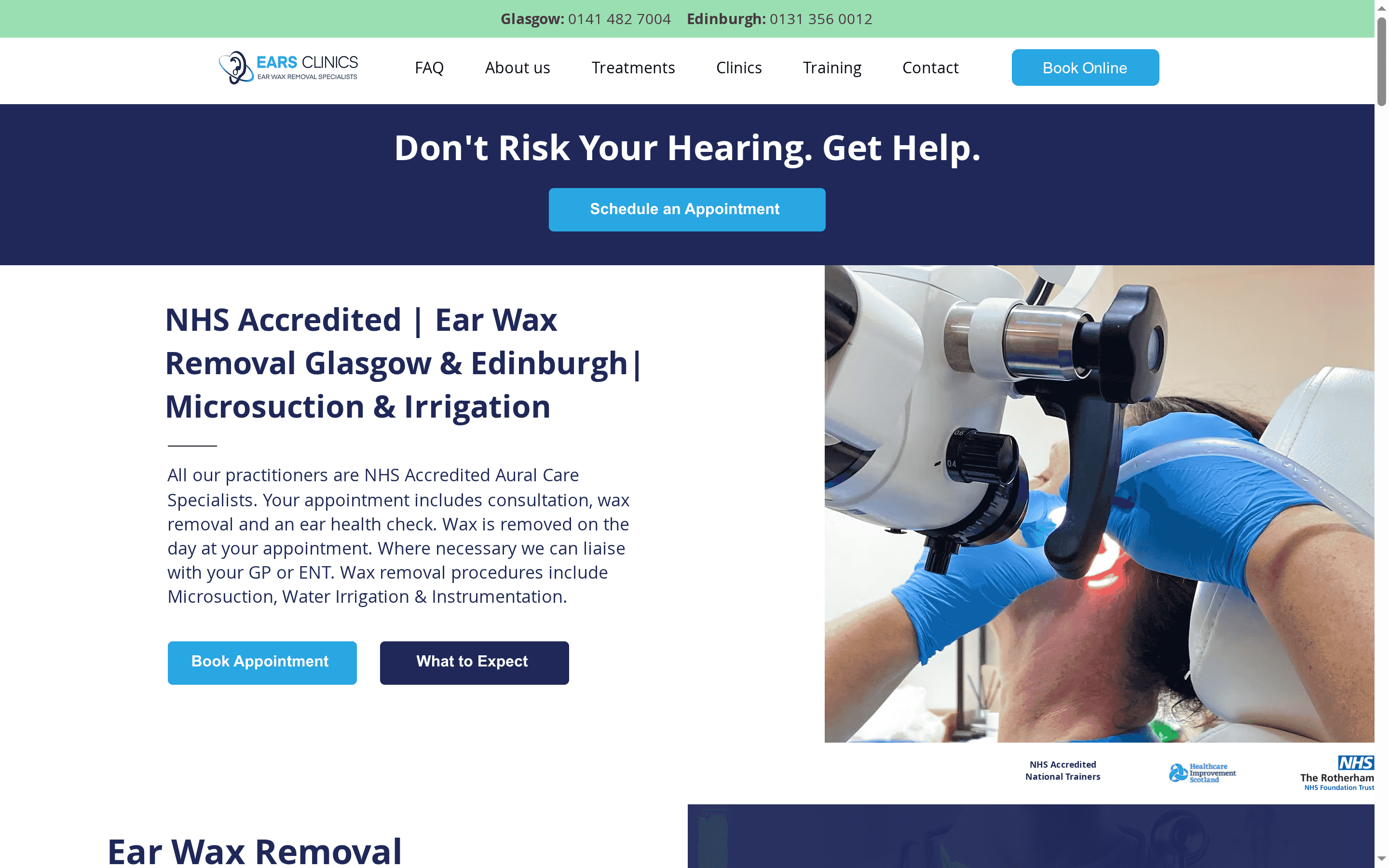
Earhealthservice operates EARS Clinics across Glasgow and Edinburgh, providing NHS-accredited earwax removal by trained Aural Care Specialists in a fully regulated environment. EARS Clinics are registered with Healthcare Improvement Scotland (HIS) and are among the few ear healthcare clinics in Scotland to hold that status. All procedures, including microsuction, irrigation, and manual instrumentation, are carried out following current NICE guidelines and selected based on each patient’s individual clinical assessment.
You can explore the full range of earwax removal procedures available at EARS Clinics, including details on how each method is selected and what to expect. Appointments are available in-clinic, with same-day options in many cases, and home visits for patients who require them.
Pricing is straightforward: £60 for patients aged 18 and over, £75 for under-18s, and £180 for home visits. To book or to find out more, visit www.earhealthservice.co.uk.
FAQ
What does a regulated ear-care clinic actually mean?
A regulated clinic is registered with an official body such as the CQC (in England) or Healthcare Improvement Scotland, and is subject to independent inspection and compliance requirements. This provides patients with external accountability that unregulated providers are not required to meet.
Why choose regulated clinics over unregulated providers?
Regulated clinics follow verified safety standards, employ clinicians with professional registration, and have formal complaint procedures, reducing the risk of harm and providing recourse if care falls short. BBC reporting has highlighted specific injuries caused by unregulated earwax removal services.
Is a course certificate enough to qualify a practitioner?
No. A course certificate demonstrates attendance at a training programme but does not equate to professional registration or independent regulatory oversight. Patients should check that clinicians hold HCPC registration or equivalent accreditation alongside any training qualifications.
What treatment options should a regulated clinic offer?
A regulated clinic should offer at least microsuction, irrigation, and manual instrumentation, with a clinician selecting the appropriate method based on your individual medical history and clinical presentation, in line with NICE guidance.
How do I verify a clinic’s regulated status in Scotland?
Check directly with Healthcare Improvement Scotland (HIS) or ask the clinic for its registration number and HIS status. EARS Clinics are HIS-registered and can provide verification. Do not rely solely on a clinic’s own marketing materials when confirming regulated status.
Recommended