
Microsuction Cuts Ear Wax Risks 50%: Essential 2026 Guide
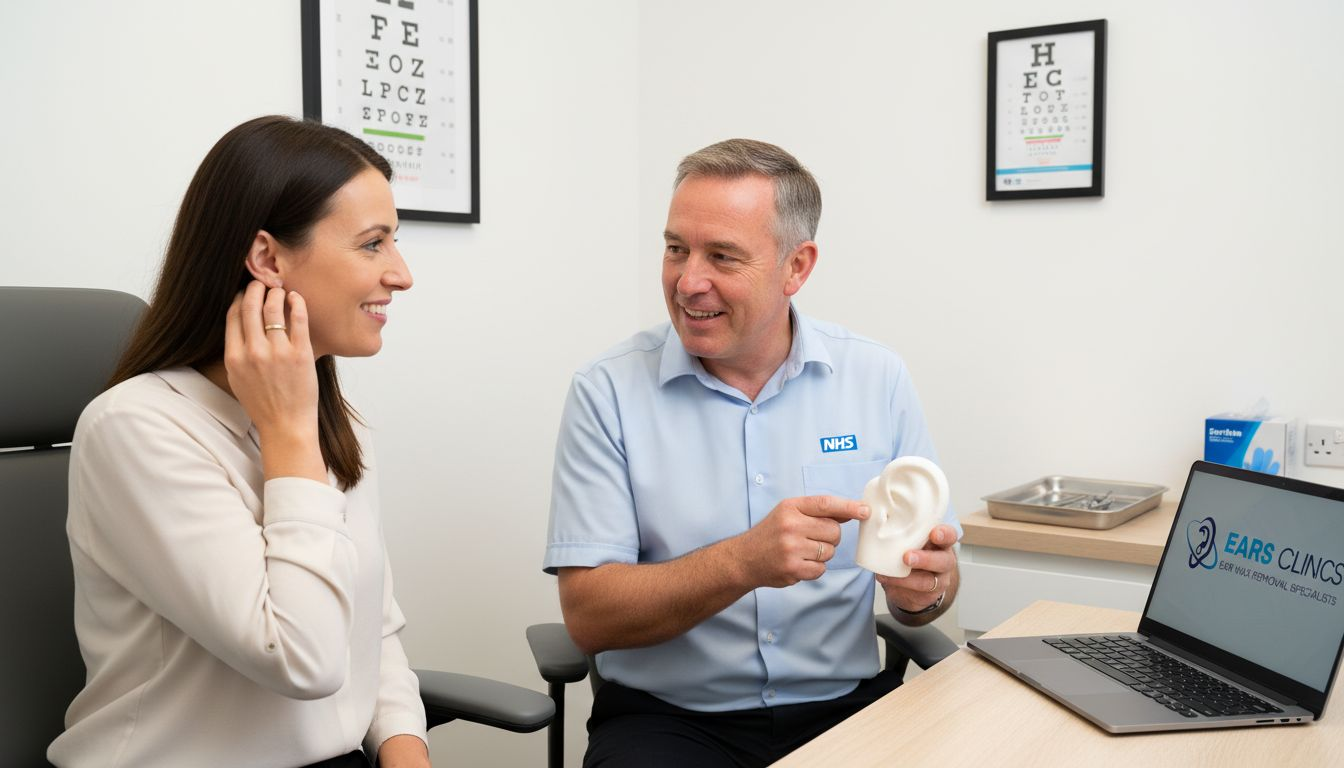
Think cotton buds are safe for cleaning your ears? Think again. Thousands of Scots injure their ear canals annually through improper home cleaning. Aural care specialists provide a safer alternative, using NHS-accredited methods like microsuction to remove ear wax without the risks. This guide reveals how regulated specialists protect your hearing, what makes their training essential, and where you can access safe, fast treatment in Scotland.
Key Takeaways
Point | Details |
Aural care specialists are NHS-trained and regulated experts | Accredited professionals undergo rigorous certification to deliver safe, effective ear wax removal. |
Microsuction is safer and reduces complications by 50% | Clinical evidence confirms microsuction minimizes canal trauma and infection risks compared to traditional methods. |
Private clinics in Scotland offer fast, same-day care | Appointments available within 24 hours, compared to weeks-long NHS waits. |
Regulation ensures high safety standards and patient protection | Healthcare Improvement Scotland registration guarantees clinics meet strict safety and hygiene protocols. |
Specialist care adapts for children and complex ear conditions | Tailored treatments accommodate patients from age 2 and those with sensitive or previously operated ears. |
Introduction to Aural Care Specialists and Their Role
Aural care specialists focus exclusively on ear health, particularly the safe removal of ear wax and treatment of ear canal conditions. Unlike general practitioners who address a broad range of health issues, these specialists complete NHS ear care accreditation programmes that equip them with advanced skills in otology and aural procedures. Their training covers ear anatomy, pathology, infection control, and patient assessment protocols.
Healthcare Improvement Scotland (HIS) registers and regulates ear health clinics, ensuring adherence to strict patient safety procedures and standards for treatment of patients from age 2 and above. This regulatory framework distinguishes accredited specialists from unqualified practitioners. Certification requires ongoing professional development and clinical audits to maintain registration.
The scope of practice for aural care specialists includes:
Diagnosing ear wax impaction and related canal conditions
Performing microsuction, irrigation, and manual instrumentation
Assessing ear health for children and adults
Managing complex cases involving perforated eardrums or hearing aids
Providing patient education on ear care and prevention
Specialist care matters because ear canals are delicate structures easily damaged by improper cleaning. Professional removal prevents complications like infection, tinnitus, or permanent hearing loss. Specialists use magnification and precision instruments to work safely within the narrow ear canal, adapting techniques to each patient’s anatomy and condition. This patient-centered approach delivers better outcomes than DIY methods or unregulated services.
Ear Wax Blockage: Causes, Symptoms, and Risks
Ear wax, or cerumen, naturally protects your ear canal by trapping dust and bacteria. However, excessive buildup leads to impaction, blocking the canal and affecting hearing. Common causes include naturally narrow ear canals, overproduction of wax, hearing aid use, and ironically, attempts to clean ears with cotton buds that push wax deeper.
Recognise blockage through these symptoms:
Muffled hearing or sudden hearing loss
Sensation of fullness or pressure in the ear
Earache or discomfort without infection
Persistent itching inside the ear canal
Tinnitus or ringing sounds
Dizziness or balance problems
Untreated ear wax blockage carries serious health risks. Prolonged impaction can cause outer ear infections, as trapped moisture creates a breeding ground for bacteria. The pressure from hardened wax may damage the eardrum or cause temporary conductive hearing loss. For individuals with existing ear conditions, blockage worsens symptoms and complicates treatment.

Timely professional intervention is crucial. Attempting safe ear wax removal steps at home without proper tools often makes the problem worse. Delaying care allows wax to harden further, making removal more difficult and uncomfortable. Specialists can assess the severity of impaction and choose the most appropriate removal method, preventing complications and restoring hearing quickly.
Safe and Advanced Ear Wax Removal Techniques
Modern aural care relies on three primary methods: microsuction, irrigation, and manual instrumentation. Each technique suits different patient needs, but clinical evidence increasingly favours microsuction for safety and effectiveness.
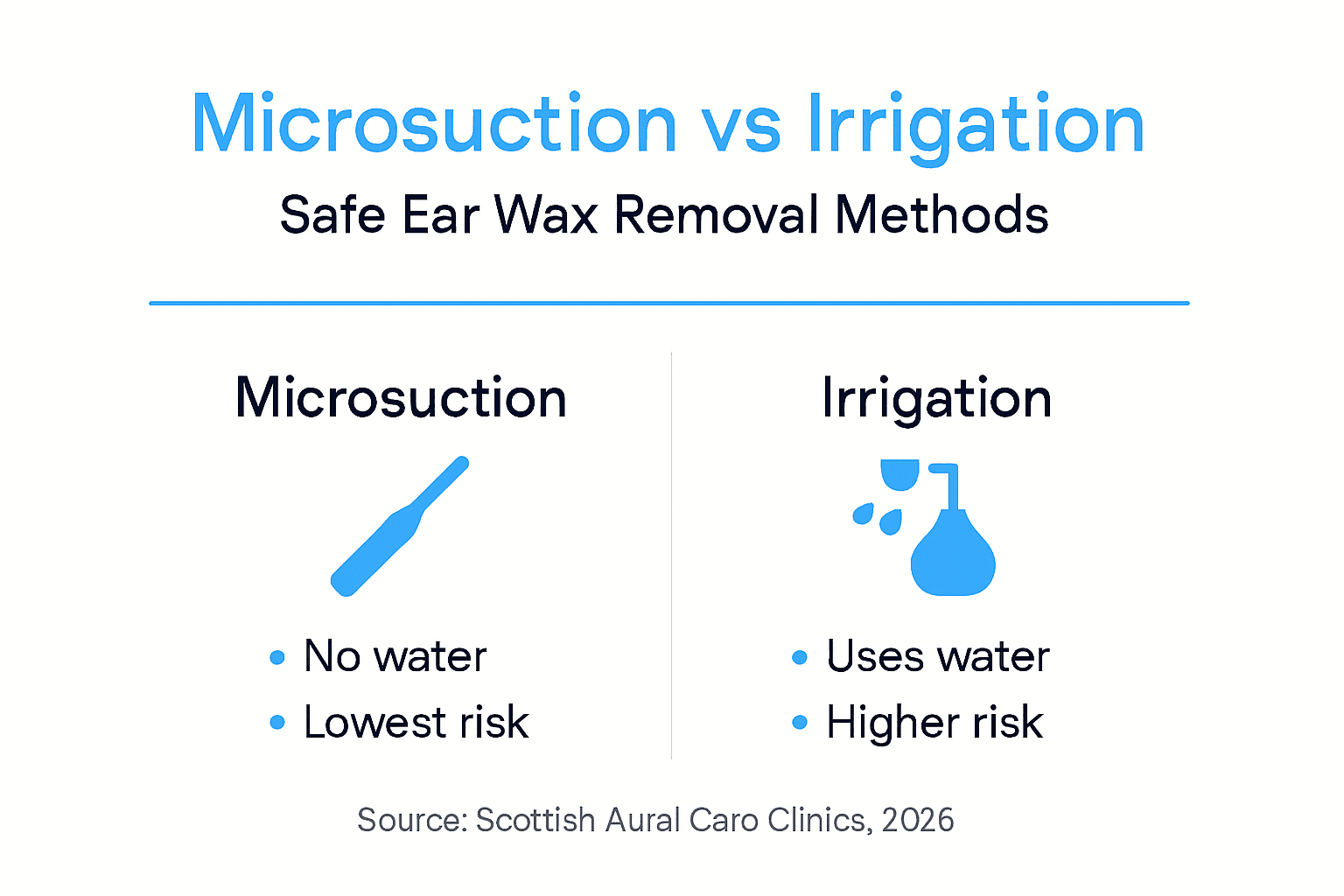
Microsuction is clinically recommended as a safer and more effective method for removing ear wax, especially for patients with complex ear conditions, due to its precision and reduced risk of canal damage. The microsuction procedure guide explains how specialists use a microscope and gentle suction to extract wax without introducing water or instruments that contact the canal walls. This dry method eliminates infection risks associated with water-based techniques.
Traditional irrigation involves flushing the ear canal with water to dislodge wax. While effective for some patients, it carries higher risks of canal trauma, perforation in vulnerable eardrums, and middle ear infections if water penetrates through undetected perforations. The advantages of microsuction become clear when comparing complication rates: microsuction reduces adverse events by up to 50% compared to irrigation.
Method | Safety | Speed | Suitability |
Microsuction | Highest, no water contact | 10-15 minutes | All ages, complex conditions |
Irrigation | Moderate, water risks | 15-20 minutes | Simple blockages, intact eardrums |
Manual Instrumentation | High with specialist training | 15-25 minutes | Hardened wax, specific cases |
For children and patients with sensitive ears, microsuction vs irrigation safety comparisons show microsuction’s gentler approach causes less discomfort. The method works under direct visualisation, allowing specialists to avoid touching sensitive areas and stop immediately if the patient experiences discomfort.
Pro Tip: Always seek trained specialists to perform microsuction for best results. The technique requires specific equipment and expertise that general practitioners typically lack.
Regulation, Accreditation, and Safety in Scotland’s Aural Care Clinics
Scotland’s ear care sector operates under strict regulatory oversight to protect patients and ensure quality. Healthcare Improvement Scotland (HIS) registers and regulates ear health clinics, ensuring adherence to strict patient safety procedures and standards for treatment of patients from age 2 and above. This registration process verifies that clinics meet comprehensive standards for infection control, equipment sterilisation, staff qualifications, and emergency protocols.
Regulated clinics must demonstrate:
Staff hold current NHS ear care accreditation and professional indemnity insurance
Clinical environments meet hospital-grade hygiene standards
Equipment undergoes regular maintenance and calibration
Patient records are securely maintained and confidentially managed
Adverse event reporting systems are in place
Regulation matters because it creates accountability. Unregulated practitioners operate without oversight, potentially using outdated methods or inadequate sterilisation procedures. The age limit of 2 years reflects the specialist training required to safely treat young children, whose ear anatomy differs significantly from adults.
For patients, choosing an HIS-registered clinic guarantees peace of mind. You can verify registration status before booking, ensuring your care meets national safety standards. The NHS vs private ear care Scotland comparison shows that regulated private clinics maintain the same safety standards as NHS services while offering better accessibility.
Accreditation impacts outcomes directly. Studies show regulated clinics have lower complication rates and higher patient satisfaction scores. The combination of specialist training, regulatory compliance, and modern equipment creates an environment where safe, effective treatment is the norm, not the exception.
Tailored Care for Children and Complex Ear Conditions
Children require modified approaches to ear wax removal. Their narrower ear canals, thinner skin, and lower pain tolerance demand gentler techniques and patient communication. Accredited specialists trained in paediatric ear care use age-appropriate language to explain procedures, reducing anxiety and ensuring cooperation.
For children aged 2 and above, specialists typically prefer microsuction over irrigation. The precision control allows them to work more carefully, and the absence of water prevents discomfort from cold or pressure sensations. Parents often accompany younger children during treatment, providing comfort and distraction.
Complex ear conditions require specialist expertise:
Perforated or surgically repaired eardrums need water-free methods
Mastoid cavity patients need careful assessment before any removal
Hearing aid users often develop harder wax requiring instrumentation
Eczema or psoriasis affecting ear canals needs gentle, non-irritating approaches
Pro Tip: Parents should choose accredited specialists for children’s ear care to ensure age-appropriate techniques and regulatory compliance.
The care for complex ear conditions approach involves pre-treatment assessment to identify risk factors. Specialists review medical history, examine the ear canal with otoscopy, and select the safest removal method. This personalised planning reduces risks and improves comfort.
Tailored treatment plans deliver better outcomes by acknowledging individual differences. What works for a healthy adult may harm a child or someone with ear surgery history. Specialists balance effectiveness with safety, adapting pressure, duration, and technique to match each patient’s needs. This flexibility is why accredited specialists achieve higher success rates and lower complication rates than generalist approaches.
Accessibility and Convenience of Private Clinics in Scotland
Accessing ear care through the NHS often involves frustrating delays. Private ear care clinics in Scotland offer same-day appointments and home visits, improving accessibility and reducing wait times significantly compared to NHS services, which can have waits of several weeks. For someone with sudden hearing loss or painful blockage, waiting weeks is unacceptable.
Private clinics address this gap by prioritising rapid access:
Same-day appointments in Scotland available for urgent cases
Evening and weekend slots accommodate work schedules
Home visits for elderly or mobility-impaired patients
No GP referral required for direct booking
Treatment completed in single visit without pre-softening requirements
Feature | NHS | Private Clinics |
Wait Time | 2-6 weeks | 24-48 hours |
Home Visits | Rarely available | Yes, for £180 |
Pre-treatment Drops | Often required | Optional |
Appointment Flexibility | Limited | Extensive |
The cost structure for private ear care is transparent and accessible. Adults pay £60 per appointment, while under-18s cost £75, reflecting the additional time and care required for younger patients. Home visits at £180 include travel and provide care for those unable to reach clinics. These prices remain stable regardless of wax severity or treatment duration.
The NHS vs private treatment benefits comparison highlights another advantage: private clinics don’t impose the pre-treatment ear drop regimens that NHS services often require. You can book and receive treatment immediately, avoiding the week-long softening period that may not even resolve your blockage.
For urgent ear wax problems affecting work, school, or quality of life, private clinics offer practical solutions. The investment in rapid, professional care prevents prolonged discomfort and potential complications from delayed treatment.
Common Misconceptions About Ear Care and Ear Wax Removal
Misinformation about ear care leads many Scots to harmful practices. Understanding the truth protects your hearing and guides you toward safe professional care when needed.
Myth 1: Cotton buds are safe and recommended for ear cleaning. Reality: Cotton buds push wax deeper, compact it against the eardrum, and can perforate the canal or drum. Medical professionals universally advise against inserting anything into your ear canal. The ear is self-cleaning; wax naturally migrates outward without intervention.
Myth 2: Ear wax should be removed regularly regardless of symptoms. Reality: Wax serves protective functions, trapping debris and moisturising the canal. Removing it unnecessarily disrupts this natural defence system and can cause dryness or irritation. Only seek removal when experiencing symptoms like hearing loss, discomfort, or fullness.
Myth 3: Surgery is always necessary for severe blockage. Reality: Even significant impaction responds to professional non-surgical methods. Microsuction, irrigation, or instrumentation resolve the vast majority of cases without invasive procedures. Surgery is reserved for rare complications or underlying structural problems.
Follow these safe ear care practices:
Never insert objects into your ear canal, including cotton buds, hairpins, or ear candles
Gently clean only the outer ear with a damp cloth
Seek specialist care if you experience blockage symptoms
Avoid ear candles, which lack evidence and pose burn risks
Choose HIS-registered clinics for professional removal
The ear wax removal myths resource debunks additional misconceptions and explains why certain popular remedies are ineffective or dangerous. By seeking accredited specialists rather than attempting DIY solutions, you protect your hearing and avoid complications that make treatment more difficult later.
Summary and Practical Guidance for Patients
Aural care specialists deliver safe, effective ear wax removal through NHS-accredited training and regulated practice. Their expertise in microsuction and other advanced techniques provides better outcomes than general practitioners or home remedies, reducing complication risks by up to 50%.
Seek professional care when you notice:
Sudden or gradual hearing loss
Persistent earache without infection
Sensation of fullness or pressure
Tinnitus or unusual ear sounds
Difficulty hearing conversations clearly
Choosing an HIS-registered clinic guarantees you receive care meeting national safety standards. Regulation ensures practitioners maintain current accreditation, use sterile equipment, and follow evidence-based protocols. This oversight protects you from the risks associated with unqualified practitioners.
Microsuction’s advantages make it the preferred method for most patients. The dry, precise technique works safely for children, adults, and those with complex ear conditions. Private clinic access eliminates lengthy NHS waits, providing relief within 24 hours when you need it most.
Avoid cotton buds, ear candles, and other home remedies that damage more than they help. Your ear canal is a delicate, self-cleaning system that functions best with minimal interference. When wax becomes problematic, trust safe ear wax removal steps performed by trained specialists rather than risking injury through DIY approaches.
Get Safe, NHS-Accredited Ear Care from Experienced Specialists Today
Experiencing ear wax blockage disrupts your daily life, affecting hearing, comfort, and concentration. Regulated private clinics across Scotland provide immediate relief through expert microsuction and advanced removal techniques.
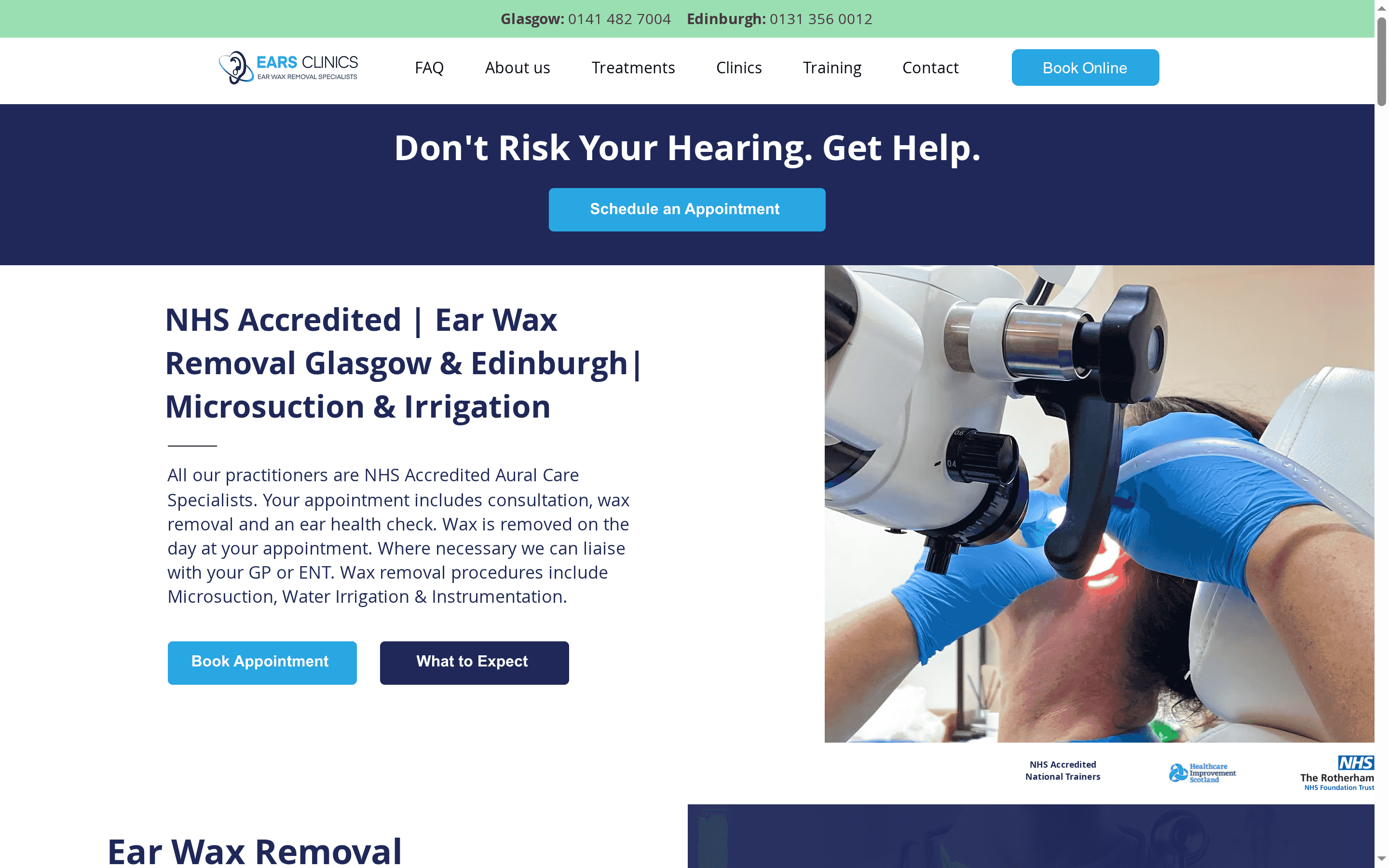
Our NHS-accredited specialists deliver safe, effective treatment with same-day appointments available in Glasgow and Edinburgh. Whether you need a quick clinic visit or prefer a home appointment, our HIS-registered service adapts to your needs. The microsuction procedure guide demonstrates our commitment to patient education and transparent care. For comprehensive information on professional removal, explore our detailed ear wax removal guide. Book your appointment today and restore your hearing with confidence in regulated, expert care.
Frequently Asked Questions
What makes aural care specialists different from general practitioners?
Aural care specialists complete focused NHS accreditation programmes specifically for ear health, while GPs receive broader medical training. Specialists use advanced equipment like microscopes and precision suction tools that most GP surgeries lack. Their concentrated expertise in ear anatomy and wax removal techniques delivers safer, more effective outcomes.
Is microsuction painful or uncomfortable?
Most patients describe microsuction as slightly noisy but painless. You hear a gentle vacuum sound during the procedure, which lasts 10-15 minutes. The specialist works under magnification without touching sensitive canal walls. Any mild discomfort is temporary and far less than the pressure from blocked wax.
Can I use private clinics if I’m also registered with the NHS?
Yes, absolutely. Private ear care operates independently of your NHS registration. You can choose private treatment for faster access while remaining registered with your NHS GP for other health needs. Many patients use private clinics specifically to avoid lengthy NHS waits for non-urgent ear problems.
How often should I have ear wax professionally removed?
Only seek removal when experiencing symptoms like hearing loss or discomfort. Most people never need professional removal because ears self-clean naturally. Those who produce excessive wax or wear hearing aids may need treatment every 6-12 months. Your specialist assesses your individual needs and recommends a schedule if regular maintenance is beneficial.
Are ear drops effective before visiting a specialist?
Ear drops can soften wax but rarely resolve blockage completely. They may help before treatment, though many private clinics don’t require pre-softening. Some drops irritate sensitive skin or worsen symptoms. The common ear wax myths guide explains why drops alone often fail and when specialist intervention becomes necessary for effective relief.
Recommended