
Common ear health risks and safe solutions in Scotland

TL;DR:
Ear health issues like wax buildup and infections are common but often overlooked.
Prompt professional treatment is safest and most effective for ear discomfort and hearing problems.
Same-day NHS-accredited ear care services are available in Scotland for immediate relief.
Ear discomfort is something many adults brush off as a minor irritation, yet hearing loss affects 1 in 3 UK adults, making ear health one of the most overlooked areas of personal wellbeing. For many people in Scotland, symptoms such as muffled hearing, a feeling of fullness, or persistent itching are early warning signs of conditions that are entirely treatable when caught promptly. This guide walks you through the most common ear health risks, explains what causes them, and outlines the safe, effective options available to you today. Whether you are dealing with wax buildup, an infection, or something less obvious, understanding the issue is the first step towards genuine relief.
Key Takeaways
Point | Details |
Ear wax risk is significant | Ear wax buildup is a leading cause of hearing loss and discomfort among Scottish adults. |
Infections are common and dangerous | Both outer and middle ear infections pose serious problems and should not be ignored. |
Specialist care offers safe solutions | Prompt, accredited treatment is the safest and most effective way to resolve ear health issues. |
Know the warning signs | Sudden pain, hearing loss, or discharge warrants immediate attention from a health professional. |
What are the most common ear health risks?
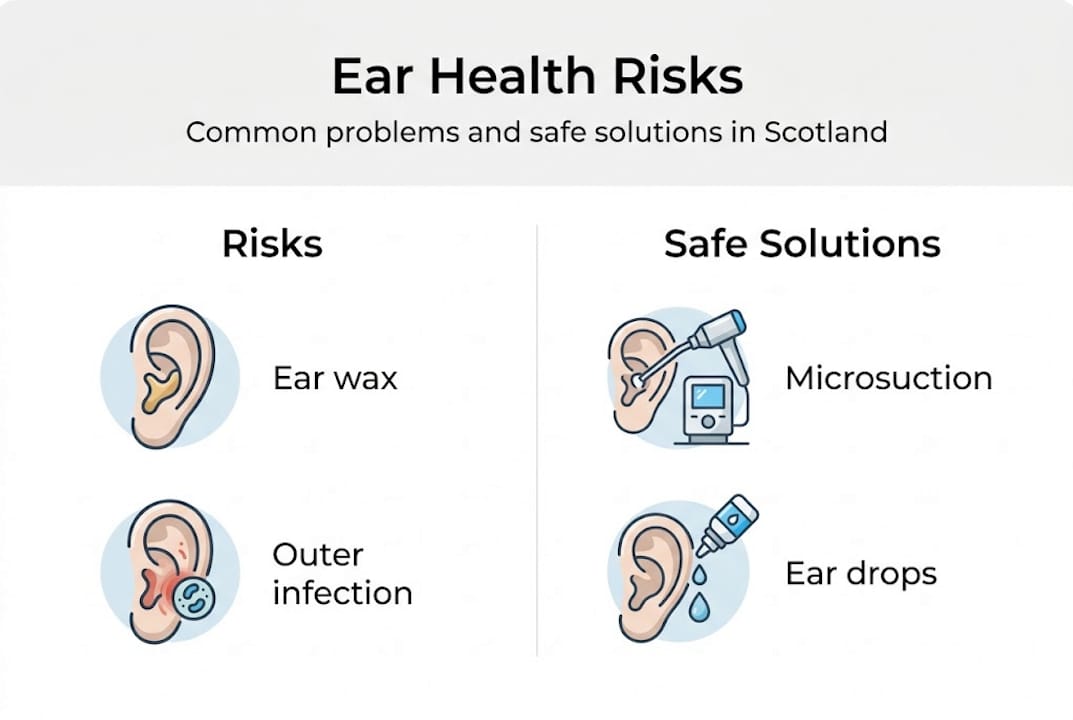
With ear health affecting so many adults, it is worth understanding the specific risks to look out for. The two most frequent problems are ear wax buildup (medically known as cerumen impaction) and ear infections, though hearing loss from other causes is also a significant concern across Scotland.
Ear wax is produced naturally by the body to protect the ear canal, but when it accumulates faster than it clears, it can block sound and cause discomfort. Ear wax and hearing are closely linked, and impaction is one of the most frequent reasons adults are referred for NHS treatment. Infections of the outer and middle ear are also common, and certain groups face a higher risk due to underlying conditions such as eczema, psoriasis, or diabetes.
Condition | Common symptoms | Who is most at risk |
Ear wax buildup | Muffled hearing, fullness, mild ache | Adults of all ages, hearing aid users |
Otitis externa | Pain, itching, discharge, hearing loss | Adults aged 45 to 75 |
Otitis media | Earache, fever, temporary hearing loss | Children and adults with colds |
Age-related hearing loss | Gradual loss of clarity | Adults over 50 |
Key risks that affect Scottish adults include:
Ear wax impaction, which leads to hearing loss and is a frequent trigger for NHS referrals
Outer ear infections (otitis externa), which are most common between 45 and 75 years of age
Middle ear infections (otitis media), which can cause temporary but significant hearing disruption
Chronic skin conditions such as eczema, which increase susceptibility to ear canal irritation and infection
It is also worth noting that hearing aid users are at elevated risk of wax buildup, as the devices can interfere with the ear’s natural self-cleaning process. Reviewing the safe care guide for adults with complex needs is a sensible starting point if you fall into this category.
Statistic: 1 in 3 UK adults experiences some degree of hearing loss, yet many wait years before seeking help.
Ear wax buildup and its impact
Now that we know ear wax buildup is a major risk, let us explore its effects and safe options for management. Cerumen (ear wax) plays an important protective role. It traps dust, repels water, and has mild antibacterial properties. The problem arises when it accumulates faster than it can migrate naturally out of the ear canal.

Ear wax is a leading cause of hearing loss and NHS referrals in the UK. Symptoms tend to develop gradually, which is why many people do not realise the extent of the problem until it is quite advanced. Knowing how to spot ear wax buildup early can make a real difference to outcomes.
Common symptoms of ear wax impaction include:
Gradual or sudden reduction in hearing clarity
A sensation of fullness or pressure in the ear
Mild earache or discomfort
Tinnitus (a ringing or buzzing sound)
Occasional dizziness or balance disturbance
Understanding why ear wax builds up in the first place helps you manage it more effectively. Factors include narrow or curved ear canals, frequent use of earphones, cotton bud use (which pushes wax deeper), and ageing, which causes wax to become drier and harder to shift naturally.
Method | Safety | Effectiveness | Recommended? |
Cotton buds | Low | Poor (pushes wax deeper) | No |
Olive oil drops | Moderate | Good for softening | Yes, short term |
Ear candling | Very low | No clinical evidence | No |
Microsuction | High | Excellent | Yes |
Irrigation | High | Excellent | Yes, with assessment |
Pro Tip: If you are using olive oil drops to soften wax at home, lie on your side for five minutes after applying them to allow the oil to reach the blockage. However, if symptoms persist beyond two weeks, seek professional assessment rather than continuing home treatment.
Research from an ear wax removal study confirms that professional removal techniques such as microsuction are significantly safer and more effective than home remedies, particularly for adults with a history of ear problems.
Outer ear infections: What adults need to know
Understanding wax is key, but infections in the outer ear can be equally disruptive and dangerous. Otitis externa is an inflammation or infection of the outer ear canal, the passage between the outer ear and the eardrum. It is painful, persistent, and often underestimated.
According to NHS Lothian guidance, otitis externa is severe and more common in adults aged 45 to 75, with water exposure, eczema, and diabetes all increasing the risk significantly. It is sometimes called “swimmer’s ear” because moisture in the canal creates an environment where bacteria and fungi thrive.
Common triggers and risk factors include:
Water exposure from swimming, showering, or humid environments
Skin conditions such as eczema or psoriasis affecting the ear canal
Diabetes, which impairs the immune response and skin healing
Hearing aid or earphone use, which traps moisture and reduces airflow
Cotton bud use, which removes protective wax and damages delicate skin
Allergic reactions to hair products, earrings, or ear drops
Symptoms to watch for include sharp or aching pain (which often worsens when you touch or move the outer ear), itching inside the canal, a feeling of blockage, discharge that may be watery or thick, and partial hearing loss.
“Otitis externa can become severe rapidly, particularly in adults with diabetes or immune system conditions. Early treatment is essential to prevent complications.”
Pro Tip: If you swim regularly, consider using custom-fitted ear plugs to keep water out of the canal. After swimming, tilt your head gently to each side to encourage drainage rather than inserting anything into the ear.
Good ear hygiene and risk awareness are the most effective preventive measures. If you suspect an outer ear infection, do not delay. NHS-accredited ear care from a trained specialist ensures the right diagnosis and treatment from the outset.
Middle ear infections and other hidden threats
While outer ear problems are common, middle ear issues and hidden risks deserve equal attention. Otitis media refers to infection or inflammation of the middle ear, the space behind the eardrum. Although it is more frequently associated with children, adults are not immune, particularly following a cold, flu, or upper respiratory infection.
Middle ear infections cause earache, fever, and temporary hearing loss, and while complications such as eardrum perforation are rare, they can occur if left untreated. The good news is that most cases resolve within three to five days without the need for antibiotics.
Symptoms of otitis media in adults include:
A dull, persistent ache deep inside the ear
Reduced hearing or a muffled quality to sounds
A feeling of pressure or fullness
Mild fever and general fatigue
Occasional fluid or discharge if the eardrum ruptures
While most middle ear infections clear on their own, there are clear warning signs that require professional attention:
Symptoms lasting more than five days without improvement
Severe or worsening pain
High fever (above 39°C)
Sudden hearing loss or significant changes in hearing
Discharge from the ear
Dizziness or balance problems
Important: Repeated middle ear infections in adults may point to an underlying issue such as a blocked Eustachian tube or immune system concern. This warrants a thorough assessment rather than repeated short-term treatment.
For adults with more complex medical histories, including those with diabetes, immune conditions, or previous ear surgery, the risks associated with middle ear infections are higher. Reviewing the ear care for complex needs resource can help you understand when specialist input is essential rather than optional.
Our perspective: What most guides miss about safe ear care
Now that we have covered the main risks, here is what experience teaches that most guides overlook. The most common mistake people make is treating ear symptoms as something to manage at home indefinitely. Cotton buds, ear candles, and prolonged use of over-the-counter drops may seem harmless, but they frequently delay proper treatment and sometimes cause additional damage.
What we see regularly at EARS Clinics is that patients arrive having tried multiple home remedies over weeks or months, when a single appointment could have resolved the issue safely and immediately. The subtle symptoms, particularly that gradual sense of muffled hearing or mild fullness, are often dismissed until they become significantly worse.
Another point most guides miss is the importance of verifying a provider’s credentials. Not all ear care clinics operate under the same standards. EARS Clinics are registered with Healthcare Improvement Scotland (HIS) and follow the strictest clinical guidelines, which matters enormously when you are dealing with something as sensitive as your hearing.
Pro Tip: Before booking any ear treatment, check that the provider is NHS-accredited and regulated. This protects you from unsafe practices and ensures your care meets recognised clinical standards.
Understanding how wax impacts hearing is one thing. Acting on it promptly with a qualified specialist is what actually makes the difference.
Same-day solutions and professional ear care in Scotland
If you are struggling with any of the ear health issues covered in this guide, you do not have to wait weeks for relief.

At EARS Clinics, we offer safe, NHS-accredited ear wax removal across Glasgow and Edinburgh, with same-day appointments available for adults who need prompt care. Our Aural Care Specialists use advanced techniques including microsuction, irrigation, and instrumentation, all tailored to your individual needs. Appointments for adults are priced at £60, with home visits available at £180 for those who cannot travel. You can explore the full range of ear wax removal procedures on our website, or go ahead and book same-day treatment online right now. Clear hearing is closer than you think.
Frequently asked questions
How do I know if ear discomfort is a health risk?
Sudden pain, hearing loss, discharge, or persistent itchiness are all signs that warrant professional assessment, particularly if symptoms of otitis externa such as pain and discharge are present. Do not wait to see if it resolves on its own if these symptoms are worsening.
Can ear wax buildup cause permanent hearing loss?
Most wax-related hearing loss is temporary and reverses with safe removal, but ear wax and infection are leading causes of NHS referrals precisely because ignoring buildup can lead to more serious complications over time.
What is the safest way to remove ear wax at home?
Avoid cotton buds entirely, as they push wax deeper into the canal. Softening drops such as olive oil may help in mild cases, but professional guidance is key for persistent or severe buildup to avoid complications.
Are middle ear infections serious for adults?
Most resolve within 3 to 5 days without treatment, but adults with diabetes, immune conditions, or recurring infections should seek professional assessment rather than waiting, as complications are more likely in these groups.
Recommended