
Safe child ear care and wax removal: A step-by-step guide
- Apr 17
- 9 min read

TL;DR:
Ear wax is natural and usually self-cleaning; removal is only needed if symptoms like blockage occur.
Use softening drops safely and avoid cotton buds; seek professional help if symptoms persist or worsen.
In Scotland, professional removal methods like microsuction are safe and effective for children when home care fails.
Watching your child tug at their ear, complain of muffled hearing, or become unsettled by unexplained discomfort is genuinely worrying. In many cases, the culprit is ear wax buildup, a common and usually harmless occurrence that nonetheless causes real distress. Ear wax is a natural protective substance; removal is not always necessary or even advisable. This guide walks you through the safest, most evidence-based steps for managing your child’s ear health, from understanding when to act to knowing when professional help is the right call.
Key Takeaways
Point | Details |
Only remove when needed | Most ear wax is harmless and protective; removal is only needed if your child is experiencing symptoms. |
Soften wax before removal | Use olive oil or sodium bicarbonate drops for up to two weeks prior to professional removal attempts. |
Professional care is safest | Microsuction is the safest and most effective method for children, especially from age two and above. |
Seek help for red flags | If your child shows signs of pain, infection, or fails to improve, consult a healthcare professional promptly. |
Understanding ear wax in children: Myths, facts and when to act
Ear wax, known medically as cerumen, is produced by glands in the outer ear canal. It traps dust, debris, and bacteria, then gradually migrates outward on its own. In children, this self-cleaning process works well most of the time. The problem arises when wax accumulates faster than it clears, or when well-meaning parents inadvertently push it deeper by using cotton buds.
One of the most persistent myths is that visible wax means dirty ears. In reality, some wax is a sign of a healthy, functioning ear. Attempting to remove it unnecessarily risks damaging the delicate skin of the ear canal or the eardrum itself. Routine removal is not recommended unless your child is showing clear symptoms.
Approximately 10% of children experience problematic wax buildup at some point. When that happens, symptoms can include:
Reduced or muffled hearing
A sensation of fullness or pressure in the ear
Earache or mild pain
Tinnitus (a ringing or buzzing sound)
Delayed speech development in younger children
Difficulty following conversations or responding to sounds
It is equally important to recognise when ear wax is not the problem. Ear infections, foreign objects lodged in the canal, and conditions such as glue ear can all produce similar symptoms. If your child has a fever, discharge from the ear, or significant pain, do not attempt any home treatment. Seek medical advice promptly.
“If symptoms such as hearing loss, pain, or fullness are present and persist, professional assessment is the appropriate next step rather than repeated home attempts.”
For a thorough overview of what is involved, the ear wax removal for children page offers detailed guidance. You can also review ear wax removal best practices to ensure you are approaching care safely from the outset.
Preparing for safe ear care: What parents need to know before starting
Before you reach for any drops or attempt any form of ear care at home, a short preparation process will protect your child and improve outcomes considerably.
Supplies you will need:
Olive oil drops or 5% sodium bicarbonate drops (available from pharmacies)
Clean tissues and a small towel
A warm room and a calm, cooperative child
Good lighting to inspect the outer ear
Contraindications: When NOT to use drops at home
Home management starts with softening drops, but they must not be used if any of the following apply:
Your child has a known or suspected ear infection (redness, discharge, pain)
Grommets (small ventilation tubes) are present in the ear
There is a known or suspected perforation (hole) in the eardrum
Your child has had recent ear surgery
There is any bleeding or unusual discharge
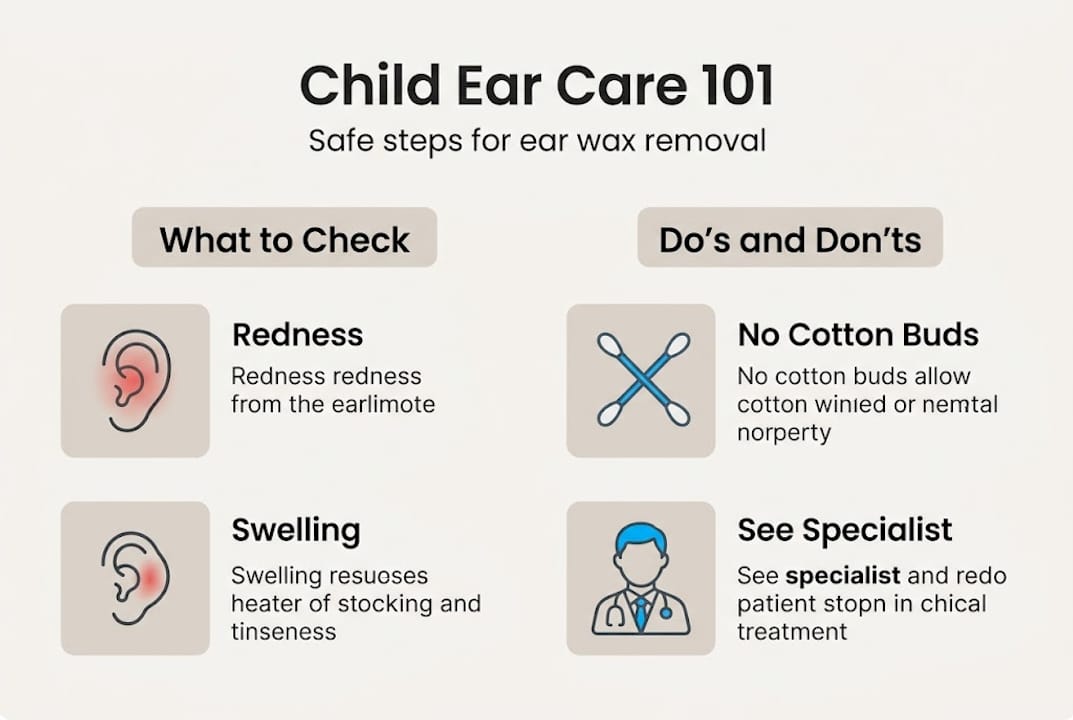
Conduct a quick visual check before starting. Look at the outer ear for redness, swelling, or any visible discharge. If everything looks clear and your child is calm, you can proceed. Talk to your child beforehand. Explain that the drops may feel slightly cool or tickly, and reassure them it will not hurt. Children who feel informed tend to cooperate far better.
Situation | Safe to use drops? | Recommended action |
Healthy ear, wax visible | Yes | Begin softening drops |
Ear infection signs | No | See GP or specialist |
Grommets in place | No | Consult specialist |
Suspected perforation | No | Seek professional care |
Recent ear surgery | No | Follow surgeon’s advice |
For broader guidance on keeping your child’s ears healthy year-round, the ear health care tips resource is well worth reviewing.
Pro Tip: Never use cotton buds, home suction devices, or ear candles on a child. Cotton buds push wax deeper and risk perforating the eardrum. Ear candles have no clinical evidence of benefit and carry a burn risk.
Step-by-step child ear wax softening process
Once you have confirmed it is safe to proceed, the softening process is straightforward. Consistency matters more than anything else here.
Warm the drops slightly. Hold the bottle in your hand for a minute or two. Cold drops can cause dizziness or discomfort when instilled into the ear.
Position your child. Have them lie on their side with the affected ear facing upward. For younger children, sitting on your lap with their head tilted works well.
Instil the drops. Place two to three drops gently into the ear canal. For very young children, one to two drops is sufficient.
Keep the position. Ask your child to stay still for three to five minutes so the drops can reach the wax. A short story or a favourite song helps pass the time.
Blot, do not wipe. After the waiting period, allow your child to sit upright. Gently blot any excess oil from the outer ear with a clean tissue. Do not insert anything into the canal.
Repeat consistently. Softening drops should be used one to two times daily for up to two weeks.
What to expect: Over the first few days, your child may notice their hearing feels temporarily worse as the wax softens and swells slightly before it begins to migrate out. This is normal. You may see small pieces of wax on the outer ear or pillow, which is a positive sign the process is working.
Signs that professional removal is needed despite home efforts:
No improvement after two full weeks of consistent drops
Worsening hearing or increasing discomfort
New symptoms appearing such as dizziness or discharge
Familiarise yourself with wax removal best practices to reinforce safe habits, and if symptoms escalate, the urgent ear wax workflow explains exactly when and how to seek faster help.
Statistic: Studies suggest that consistent use of softening drops before professional treatment improves first-attempt removal success rates significantly, reducing the need for repeat appointments.
Professional ear wax removal in Scotland: Services, methods and what to expect
When home softening has not resolved the problem, professional removal is the safe next step. In Scotland, families have two main routes: NHS services and private clinics.
The NHS typically follows a conservative approach, advising self-care first. NHS care requires self-care first, with referral usually only after two failed attempts at home management. Waiting times can be lengthy, and not all GP practices offer ear care directly. Private clinics, by contrast, can often see children from age two with same-day appointments and no pre-treatment conditions required.
Method | How it works | Suitability for children | Risk level |
Microsuction | Gentle suction removes wax under magnification | Preferred from age 2 | Very low (under 1%) |
Irrigation | Warm water flushes the canal | Suitable for older children | Low (1 in 1,000) |
Instrumentation | Fine tools remove wax manually | Used for specific cases | Low with trained specialist |
Microsuction is the safest method for children, with a complication rate of under 1%. Irrigation carries a slightly higher risk of around 1 in 1,000 cases. Both are safe when performed by a qualified Aural Care Specialist.
During a microsuction appointment, your child will sit or lie still while the specialist uses a small, low-pressure suction device and a microscope or loupe to view the ear canal clearly. It is quick, typically taking ten to fifteen minutes, and most children tolerate it well. Aftercare is minimal: avoid submerging the ears for 24 hours and monitor for any unusual symptoms.
For a detailed comparison, microsuction vs irrigation for children breaks down the differences clearly. You can also explore the benefits of private ear clinics and review typical ear wax removal costs before booking.
Pro Tip: Pre-softening with drops for five to seven days before a professional appointment makes removal easier, faster, and more comfortable for your child.
Troubleshooting and edge cases: When to stop, seek help or try something different
Even with careful preparation, things do not always go smoothly. Knowing when to stop and seek professional help is just as important as knowing how to start.
Red flags: Stop home treatment immediately and seek professional advice if you notice:
Blood or unusual discharge from the ear
Sudden or significant hearing loss
Severe or worsening ear pain
Dizziness or balance problems
Swelling around the ear or behind it
Fever alongside ear symptoms
If your child has a known ear condition such as otitis externa (an infection of the outer ear canal), a history of perforations, or grommets in place, home removal is not appropriate. Contraindications include otitis externa, perforation, grommets, and mastoid cavities. Additionally, children who cannot remain still during microsuction may require a different approach or a specialist paediatric setting.
If drops cause irritation, burning, or increased pain, stop use immediately and consult a healthcare professional. Some children have sensitivities to certain formulations, and a pharmacist or specialist can recommend an alternative.
“When in doubt, do nothing and seek advice. The ear is a delicate structure, and the cost of caution is far lower than the cost of an avoidable injury.”
For urgent situations or complex cases, the paediatric ear care help page provides clear guidance on next steps and how to access prompt specialist care in Scotland.
A realistic perspective on child ear care in Scotland: Lessons and overlooked truths
There is a tendency, entirely understandable, for parents to want the wax out as quickly as possible. Seeing your child uncomfortable is distressing, and the instinct to act is strong. But the evidence consistently points in a different direction: patience, gentle methods, and acting only when genuinely needed produce better outcomes than rushing to remove wax at the first sign of it.
Over-treatment is a real risk. Frequent or unnecessary removal disrupts the ear’s natural self-cleaning mechanism and can leave the canal more prone to future buildup. The NHS conservative approach exists for good reason, and private clinics that follow the same evidence-based guidelines are the ones worth trusting.
That said, there are moments when waiting is not the right answer. When a child’s hearing is noticeably affected, when school performance is slipping, or when softening drops have been tried diligently without result, accessing same-day private care makes complete sense. The gap between NHS waiting times and a child’s daily experience of muffled sound is real, and children’s ear cleaning by a regulated specialist is a legitimate, valuable solution. The key is choosing a clinic that is regulated, experienced with children, and transparent about its methods.
Professional child ear care: Safe, accredited help near you
If home softening has not resolved your child’s symptoms, or if you would simply prefer the reassurance of professional care from the outset, EARS Clinics is here to help.
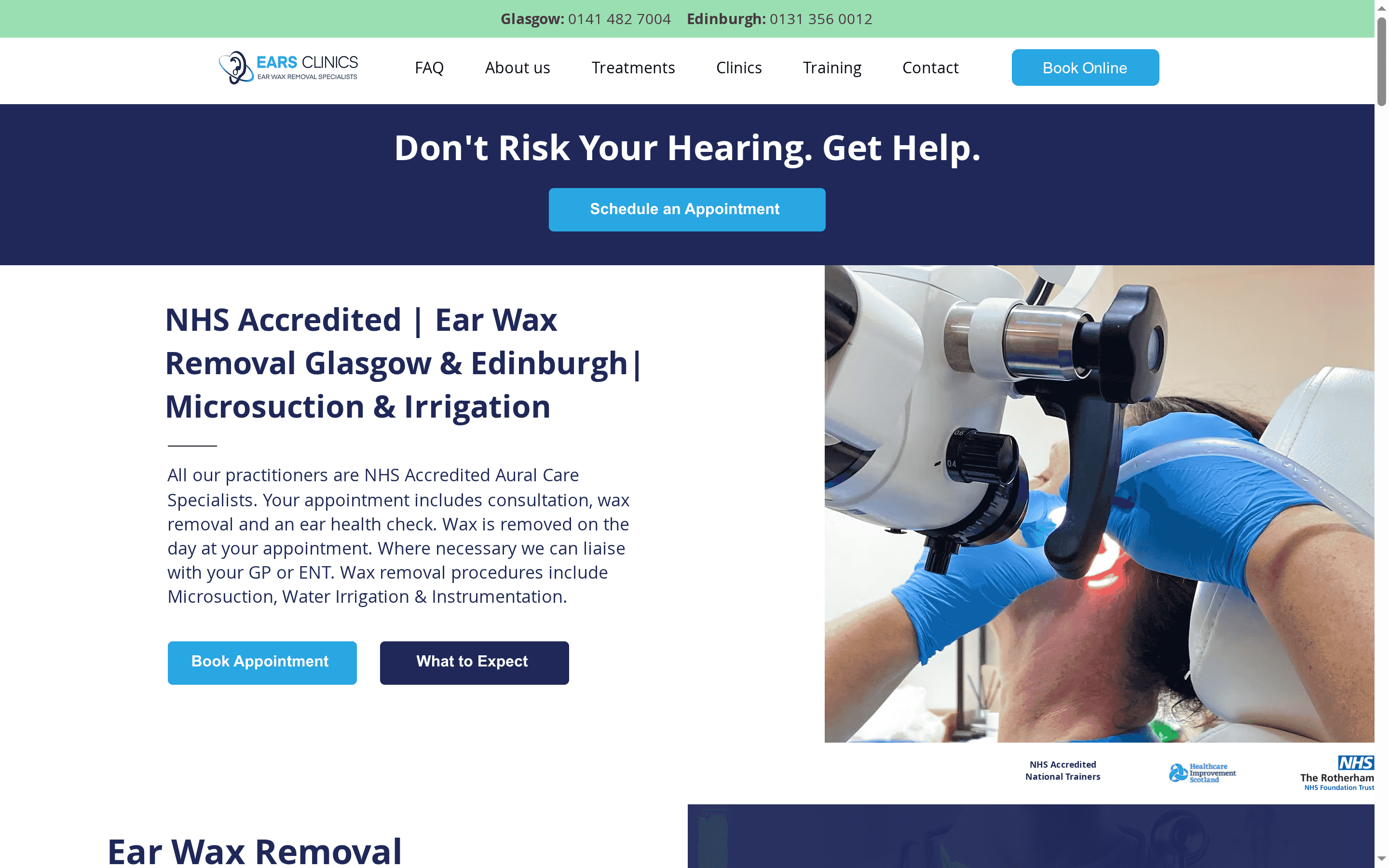
EARS Clinics is Healthcare Improvement Scotland registered and licensed to treat children from age two. Our NHS-accredited Aural Care Specialists are experienced in paediatric ear care, using the safest available techniques including types of removal procedures such as microsuction and irrigation. We offer same-day ear removal appointments across Glasgow and Edinburgh, with no pre-treatment conditions required. Appointments for under-18s are £75, and home visits are available at £180 for families who need them. Book your child’s appointment today and explore our full range of professional ear care for children.
Frequently asked questions
Is ear wax removal safe for children under age 5?
Yes, when performed by a qualified practitioner using age-appropriate techniques. Microsuction is suitable from age 2 with a very low complication rate, making it the preferred method for young children.
How do I know if my child needs professional ear wax removal?
If your child has hearing loss, pain, visible blockage, or home softening has not helped after two weeks, seek a professional evaluation. Routine removal is only advised when symptoms such as hearing loss or discomfort are clearly present.
Are home remedies like cotton buds or ear candles safe for children?
No. Cotton buds and ear candles are unsafe and can cause serious injury. Home remedies such as cotton buds should be avoided entirely; only use recommended softening drops and consult a professional for removal.
How much does professional ear wax removal for children cost in Scotland?
At EARS Clinics, private ear wax removal for children costs £75 per appointment. NHS services are free but may involve waiting periods and pre-treatment requirements.
What are signs of ear infection or complications I should watch for?
Look for increased pain, discharge, fever, hearing loss, or swelling around the ear. Otitis externa, discharge, or pain are contraindications for home removal, so consult your GP or a specialist promptly if these appear.
Recommended