
Why you keep getting earwax buildup: causes and solutions
- 11 minutes ago
- 9 min read

Most people who get excess earwax have either anatomical factors or everyday behaviours that prevent cerumen (the medical term for earwax) from migrating out of the ear canal naturally. NHS guidance identifies narrow or hairy ear canals, age-related drying of wax, skin conditions, and chronic inflammation as the most common underlying causes. For many people, the solution starts at home with softening drops such as carbamide peroxide or olive oil. When that is not enough, professional removal by microsuction is the preferred clinical method in many UK settings.
Narrow, curved, or hair-lined ear canals slow the natural outward movement of wax.
Wax becomes harder and drier with age, making self-clearance less reliable.
Hearing aids, earbuds, and earplugs block the canal and interrupt normal migration.
Repeated use of cotton buds pushes wax deeper rather than removing it.
Skin conditions such as eczema or psoriasis increase dead-cell shedding into the canal.
If you have severe pain, fever, bleeding, or discharge from the ear, do not attempt home treatment. Seek urgent medical assessment.
Key takeaways
Excess earwax buildup is almost always caused by anatomy, age, or behaviours that disrupt natural clearance, and it responds well to safe softening followed by professional removal when needed.
Point | Details |
Main causes | Narrow canals, ageing, hearing aids, skin conditions, and cotton bud use all prevent natural wax clearance. |
Safe home softening | Use carbamide peroxide drops or olive oil twice daily for a few days; never probe the canal. |
Avoid cotton buds and ear candles | Both push wax deeper or cause injury; they are a leading cause of treatment-induced impaction. |
When to seek professional care | Persistent symptoms after five days, or any red flag (severe pain, fever, discharge, sudden hearing loss), require clinical assessment. |
Regulated removal methods | Microsuction, irrigation, and manual instrumentation are all clinically valid; a trained clinician selects the safest option for your history. |
What does earwax buildup feel like?
The most recognisable symptom is a sensation of fullness or pressure in the ear, as though it is plugged. Hearing often returns to normal shortly after the wax is removed, which can feel almost immediate.
What catches many people off guard is how closely these symptoms mimic other ear conditions, including middle ear infections or Eustachian tube dysfunction. A visual inspection with an otoscope is the only reliable way to confirm that earwax, rather than something else, is the cause.
Seek urgent care if you experience: severe or worsening ear pain, high fever, discharge or bleeding from the ear, sudden significant hearing loss, or facial weakness. These symptoms require prompt clinical assessment and are not suitable for home management.
Why do some people produce or retain more earwax?
Anatomy and gland activity explain most persistent buildup. The ear canal contains ceruminous glands that produce wax continuously, and in a healthy ear, jaw movement and skin migration carry old wax outward on their own. When that process is disrupted, wax accumulates.
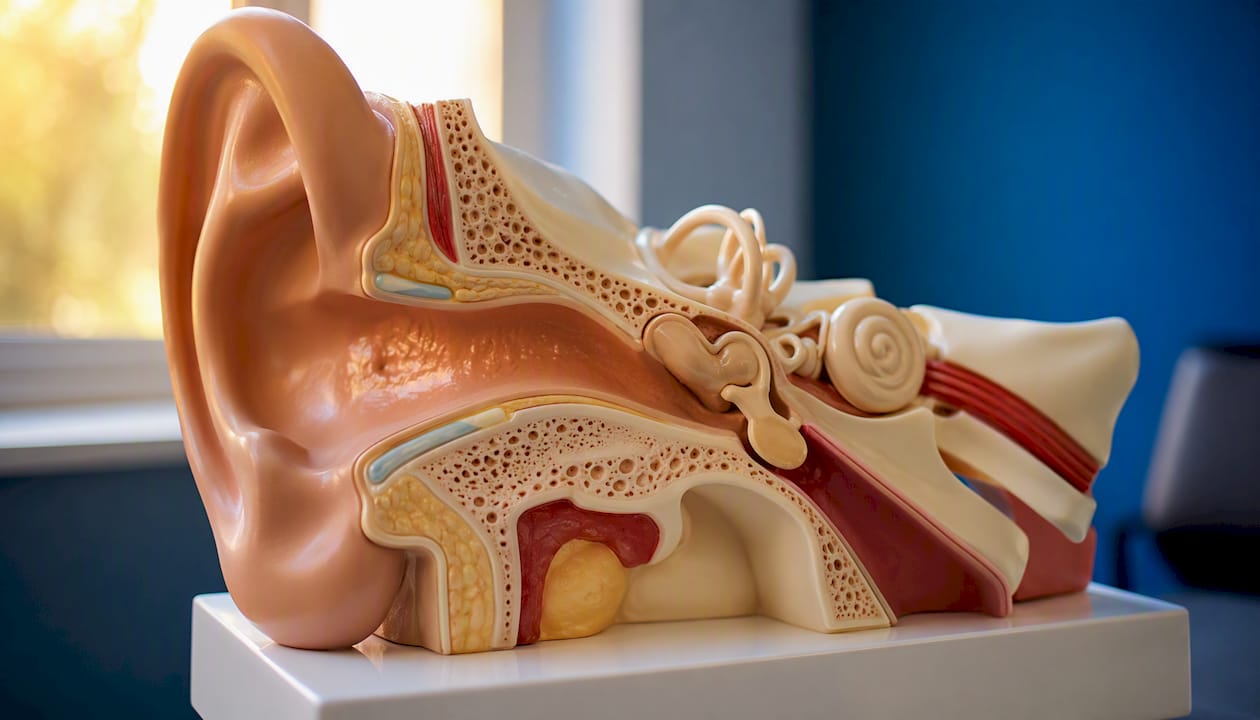
Narrow or curved ear canals create a longer, more tortuous path for wax to travel. People born with this anatomy are simply more prone to impaction, regardless of how carefully they clean their ears.
Age changes the composition of cerumen. Older adults tend to produce harder, drier wax that contains proportionally more keratin, making it less likely to move outward unaided. Impaction rates are notably higher in older adults and in hearing aid users, according to StatPearls.
Skin conditions such as eczema and psoriasis increase the rate at which dead skin cells shed into the ear canal. Those cells mix with wax secretions and create a denser, stickier mass that resists natural clearance.
Hearing aids, earbuds, and earplugs physically obstruct the canal for hours at a time. This blocks the outward migration of wax and traps it against the eardrum. The longer and more frequently devices are worn, the greater the accumulation risk.
Everyday behaviours that worsen clearance include:
Using cotton buds, which compress wax against the eardrum rather than removing it.
Wearing in-ear headphones for extended periods daily.
Swimming with tight-fitting earplugs that push wax inward.
Pro Tip: Probing the ear canal with any object, including cotton buds, can trigger a neural feedback loop that actually increases wax production. Cleveland Clinic notes that frequent insertion of objects into the canal often accelerates cerumen production and can alter its composition. The more you probe, the more wax your ear may make.
How to soften earwax safely at home
Safe self-care begins with softening, not probing. The goal is to encourage the wax to loosen and migrate outward on its own, not to extract it manually.
Choose your softening agent. Carbamide peroxide drops (available from most UK pharmacies) or plain olive oil or mineral oil are all clinically reasonable options. Cerumenolytics such as carbamide peroxide work by softening wax and encouraging spontaneous extrusion.
Warm the drops to body temperature. Hold the bottle in your hand for a minute or two. Cold drops can cause brief dizziness.
Tilt your head to one side. Pull the outer ear gently upward and backward to straighten the canal, then apply 2–3 drops.
Stay still for 5 minutes. Allow the drops to reach the wax before sitting upright.
Repeat twice daily for up to five days. If symptoms worsen or do not improve, stop and seek professional advice.
Safe home care, in brief: Soften with drops or oil. Tilt your head. Wait. Never insert objects into the canal. Ear candles are not a safe or effective treatment and carry a real risk of burns and canal blockage. Harvard Health confirms that mechanical DIY cleaning is not only ineffective but is a primary cause of treatment-induced impaction.
A pharmacist can assess uncomplicated wax buildup, recommend appropriate drops, and advise whether a GP referral is needed. If you are unsure which product to use, or if you have a history of ear surgery or a perforated eardrum, ask a pharmacist before starting any drops.
When should you see a pharmacist, GP, or specialist?
Try safe softening for up to five days unless red flags are present. If symptoms persist after that trial, or if they worsen at any point, it is time to seek professional input.
A pharmacist is the right first stop for uncomplicated cases. They can confirm whether drops are appropriate for you and advise on technique. If drops have not worked, or if the blockage is severe, a GP can refer you for professional removal. In Scotland and across the UK, regulated private clinics such as EARS Clinics offer direct access without a GP referral, often with same-day availability.
Stop home treatment and seek prompt assessment if you notice: severe or worsening pain, persistent discharge, any bleeding, sudden hearing loss, or a high fever. These are red flags that go beyond a simple wax blockage.
When you contact a clinic or GP, mention how long the symptoms have been present, whether you have had ear surgery in the past, and whether you take anticoagulant medication. This information directly influences which removal method is safest for you. Hearing changes in older adults can sometimes be mistaken for wax buildup, so a clinical assessment is particularly worthwhile for anyone over 60 noticing a gradual decline in hearing.
What professional earwax removal involves in the UK
Microsuction is the preferred technique in many UK clinical settings, including under current NICE guidance, though clinicians use microsuction, irrigation, and manual instrumentation for safe removal, with selection based on the patient’s history and clinical presentation. No single method suits every patient.
Microsuction uses a fine suction probe under direct microscopic or loupe vision. Because no water enters the canal, it is suitable for patients with a perforated eardrum, a history of ear surgery, or active discharge. Most patients find it comfortable and the procedure is typically completed in one appointment. A detailed microsuction procedure guide explains what to expect at each stage.
Irrigation (sometimes called ear syringing) uses a controlled flow of warm water to flush wax from the canal. It is effective for soft, well-softened wax but is contraindicated in patients with a perforated eardrum, recent ear surgery, active infection, or immunosuppression. Practitioners also exercise caution with patients on anticoagulants.

Manual instrumentation involves using a fine probe or curette to remove wax under direct vision. It is particularly useful when wax is positioned close to the eardrum or when other methods are not appropriate.
Practitioners select the safest and most suitable method based on each patient’s medical history and the clinical picture they see on examination. This is not a one-size-fits-all decision.
Clinics regulated by Healthcare Improvement Scotland (HIS) or the Care Quality Commission (CQC) are required to meet defined standards for clinician competence, equipment, and patient safety.
EARS Clinics in Glasgow and Edinburgh are HIS-registered and treat patients from two years of age.
Appointments cost £60 for adults (over 18), £75 for under-18s, and £180 for a home visit.
What to expect at a regulated clinic visit:
A clinical history review, including prior ear surgery, perforations, and medication.
Visual examination with an otoscope or operating microscope.
Selection of the most appropriate removal method.
The procedure itself, typically taking 15–30 minutes.
Before-and-after imaging in many cases.
Advice on prevention and a follow-up plan if recurrence is likely.
How to reduce the chance of future buildup
Avoiding objects in the ear canal is the single most effective preventive step. Beyond that, a few consistent habits make a meaningful difference for people prone to frequent impaction.
Use olive or mineral oil periodically. Periodically using a few drops can keep wax soft enough to migrate outward without professional intervention. This is particularly useful for older adults whose wax tends to be drier.
Maintain hearing aids carefully. Remove them for several hours each day to allow natural ventilation of the canal and reduce the accumulation of trapped wax.
Limit prolonged earbud use. Extended daily use of in-ear devices is one of the most modifiable risk factors for recurrent buildup.
Manage skin conditions. Treating eczema or psoriasis affecting the scalp and outer ear reduces the volume of dead skin cells entering the canal.
Book regular clinic checks if you are prone to impaction. A practical prevention guide outlines how to build this into your routine.
Pro Tip: A simple weekly routine: on Sunday evenings, apply 2–3 drops of warm olive oil to each ear, tilt your head for five minutes, then let it drain. This takes under ten minutes and, for many people prone to buildup, reduces the frequency of clinical appointments considerably.
How clinicians diagnose impaction and how long treatment takes
Diagnosis requires visual inspection. No clinician can confirm cerumen impaction from symptoms alone, because those symptoms overlap with several other ear conditions.
Clinical history. The clinician asks about symptom duration, prior ear surgery, perforations, current medications (especially anticoagulants), and any history of ear infections or immunosuppression.
Visual examination. An otoscope or operating microscope is used to view the canal and eardrum directly. This confirms whether wax is present, how much, and where it sits.
Contraindication check. Before irrigation is considered, the clinician rules out perforation, active discharge, and other contraindications. Microsuction or manual instrumentation may be selected instead.
Method selection. The safest and most appropriate technique is chosen based on steps 1–3.
On timelines: Softening drops typically begin to loosen wax within 24–48 hours, though a full five-day course is often needed before wax migrates out or becomes easy to remove professionally. After professional removal by microsuction or irrigation, most patients notice symptom relief within minutes. For those with recurrent impaction, a follow-up check every few months is a reasonable interval, though the exact schedule depends on individual history and how quickly wax accumulates.
A note from EARS Clinics on earwax and patient reassurance
Earwax is not dirt. It is a protective substance that traps debris, repels water, and has mild antimicrobial properties. The goal of ear care is never to achieve a wax-free canal; it is to maintain a balance where wax does its job without accumulating to the point of causing symptoms. Mayo Clinic confirms that earwax is a normal, healthy secretion, and that problems arise from impaction rather than from wax itself.
The patients who worry us most are not those with a lot of wax. They are those who have been cleaning their ears aggressively for years, convinced they are helping, when in fact they have been driving the problem. Cotton buds, ear candles, and improvised probing tools do not remove wax safely. They compress it, damage the delicate canal skin, and in some cases perforate the eardrum. The risks of DIY ear cleaning are well documented, and no home remedy replaces a trained clinician with the right equipment.
At EARS Clinics, every procedure is performed by NHS-accredited Aural Care Specialists working within HIS-regulated standards. Patients can book a same-day appointment in Glasgow or Edinburgh, or arrange a home visit if attending a clinic is not practical. If you are unsure whether your symptoms are caused by wax, book an assessment rather than guessing. A five-minute examination answers the question that no amount of internet research can.
Book your appointment with EARS Clinics

If softening drops have not resolved your symptoms, or if you simply want the reassurance of a professional assessment, EARS Clinics offers microsuction and ear wax removal in Glasgow and Edinburgh, with same-day appointments and home visits available. Appointments are £60 for adults, £75 for under-18s, and £180 for a home visit. Book at Earhealthservice.
Sources
This article is general information, not a substitute for advice from a qualified doctor. Consult a qualified healthcare professional about your own circumstances before acting on anything here.
Recommended