
What to use to remove ear wax safely: your guide

TL;DR:
Most adults do not need to intervene in ear wax removal because the ear is largely self-cleaning and naturally protects against debris. Cerumenolytic drops are the safest home remedies to soften wax, while professional procedures like microsuction are recommended when symptoms persist or wax is impacted. Avoid cotton buds, ear candles, and DIY tools, as they pose risks of injury and worsen impaction.
Ear wax, known clinically as cerumen, is a natural substance produced by the ear canal to protect against dust, bacteria, and debris. Most adults do not need to intervene at all, because the ear is largely self-cleaning. When wax does build up and causes symptoms such as muffled hearing, a blocked sensation, or mild discomfort, knowing what to use to remove ear wax safely makes a significant difference to both comfort and ear health. The safest options include cerumenolytic drops and, where needed, professional procedures such as microsuction or irrigation performed by trained clinicians following current NICE guidelines.
What are the safest home remedies to remove ear wax?

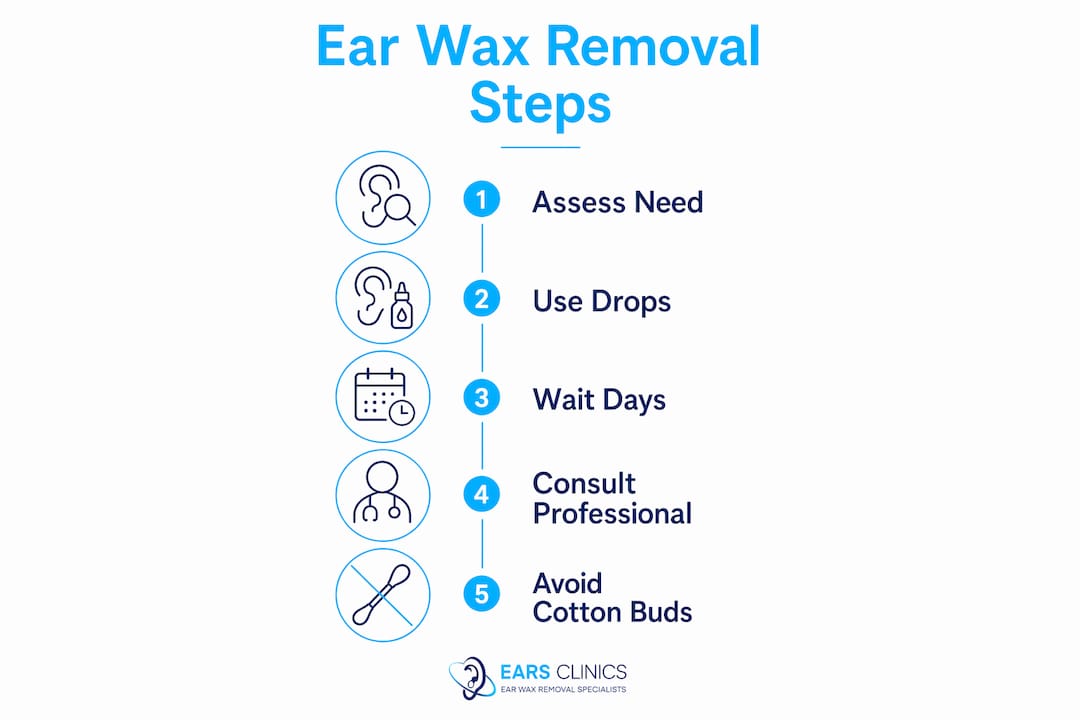
Cerumenolytic agents are the first-line home treatment for ear wax buildup. These are drops that soften or dissolve wax, making it easier for the ear to expel naturally. Clinically approved options include olive oil, almond oil, sodium bicarbonate 5% solution, and carbamide peroxide. Each works by breaking down the wax structure, reducing its adhesion to the canal wall.
The recommended approach is to apply drops for 3–5 days before attempting any further intervention. This duration gives the wax time to soften fully, which reduces the force needed to clear it and lowers the risk of irritation. Tilt your head to one side, place two to three drops into the ear canal, and remain still for a few minutes to allow the oil to reach the wax.
After softening, some patients use a rubber bulb syringe filled with body-temperature water to gently flush the canal. This technique, sometimes called gentle ear irrigation, works best when the wax has already been softened by drops. For a detailed walkthrough of combining drops with home irrigation, the step-by-step home guide from Earhealthservice covers the process clearly.
Pro Tip: Always warm your irrigation water to approximately 37°C before use. Water that is too cold or too hot triggers the caloric reflex, which can cause sudden vertigo or nausea within seconds of entering the ear canal.
Three home methods to avoid entirely:
Cotton buds push wax deeper into the canal rather than removing it, worsening impaction over time.
Ear candles have no clinical evidence of efficacy and carry a documented risk of burns to the face and ear canal.
DIY ear picks or hairpins risk perforating the eardrum and causing canal abrasions.
When should ear wax removal be done by a professional?
Professional removal is the right choice when home remedies fail, when symptoms persist beyond two weeks, or when you experience significant hearing loss, pain, tinnitus, or dizziness. These signs suggest the wax may be impacted, meaning it has hardened and packed against the eardrum in a way that drops alone cannot resolve.
Clinicians trained in aural care use three main procedures:
Microsuction: A fine suction probe removes wax under direct visualisation using a microscope or loupe. Current NICE guidelines identify microsuction as the preferred method. It is dry, precise, and suitable for most patients, including those with a history of ear surgery or a perforated eardrum.
Electronic irrigation: A controlled flow of warm water flushes the canal. This method is effective for soft or semi-soft wax but is contraindicated in patients with active ear infections, a known perforation, or a history of ear surgery.
Manual instrumentation: A trained clinician uses fine instruments to remove wax under direct vision. This approach suits patients who cannot tolerate suction or irrigation.
Practitioners select the most appropriate method based on each patient’s medical history and clinical presentation. This is not a one-size-fits-all decision. Clinics regulated by Healthcare Improvement Scotland (HIS) or the Care Quality Commission (CQC) follow strict protocols to ensure patient safety at every stage.
Attempting professional-grade procedures at home carries real risk. Clinicians use specialised equipment that prevents trauma and ensures complete wax removal, something no consumer device can replicate reliably. For patients with complex ear histories, the microsuction procedure overview from Earhealthservice explains exactly what to expect during a clinical appointment.
Pro Tip: Before any home treatment, ask a clinician to confirm your eardrum is intact. Home irrigation is contraindicated if you have a perforation, and proceeding without this check can cause a serious middle ear infection.
What methods and tools should be strictly avoided?
Certain ear wax removal tools are widely sold but carry a genuine risk of harm. Understanding why they are dangerous helps you make a safer choice.
Ear candles: Scientific reviews confirm a complete lack of efficacy and document cases of burns to the face, hair, and ear canal. The suction theory behind ear candling has been disproved in controlled studies.
Cotton swabs: The wax visible on a swab after use is often debris that has been pushed inward and then dragged back out. Cotton swabs cause micro-abrasions and pack wax deeper, which can convert mild buildup into a full impaction.
Camera-enabled ear cleaning devices: These consumer gadgets appear precise but carry a risk of eardrum puncture because the hand-eye coordination required to operate them safely inside a narrow canal is beyond most people. Injuries from slipping have required surgical repair.
Hairpins, ear picks, and similar objects: Any rigid object inserted into the ear canal risks lacerating the skin or puncturing the eardrum, particularly if the patient moves unexpectedly.
Ear candling is not a traditional remedy that modern medicine has simply failed to validate. Controlled studies have shown it creates no negative pressure in the ear canal at all. The debris found in a used candle is residue from the candle itself, not extracted wax. Using one does not clean your ears. It simply adds risk.
Pro Tip: If you feel the urge to clean your ears after a shower, wipe only the outer bowl of the ear with a soft cloth. Nothing smaller than your elbow belongs inside the ear canal.
How does the ear naturally clean itself, and when should you intervene?
The ear canal has a built-in migration mechanism. Skin cells grow outward from the eardrum towards the canal opening, carrying wax with them. Wax migrates slowly toward the outer ear and often falls out on its own, particularly during jaw movements such as chewing or talking. Most adults do not need to remove wax at all.
Several factors increase wax production or slow migration. Genetics play a role, with some people producing harder, drier wax that migrates less efficiently. Skin conditions such as eczema or psoriasis affecting the canal can disrupt the normal shedding process. Hearing aid or earplug use physically blocks the outward migration path, making buildup more likely in regular wearers.
The table below outlines when intervention is and is not appropriate.
Situation | Recommended action |
No symptoms, wax visible at canal opening | No action needed; wipe outer ear only |
Mild fullness or muffled hearing | Try cerumenolytic drops for 3–5 days |
Persistent blockage after drops | Book a professional assessment |
Pain, discharge, or sudden hearing loss | Seek clinical review promptly |
Known perforation or ear surgery history | Professional removal only; no home irrigation |
A baseline clinical examination before any self-treatment is the safest starting point. This rules out abnormalities such as a perforation or active infection that make home cleaning dangerous. Earhealthservice offers guidance on safe home ear care for patients who want to manage mild buildup between clinical visits. For patients who prefer a clinician-led assessment before deciding on any approach, consulting an audiologist or ENT specialist is always a sound first step, as outlined in guidance from ENT and audiology specialists.
Key takeaways
The safest approach to ear wax removal combines clinically approved cerumenolytic drops for mild buildup with professional microsuction or irrigation when symptoms persist or worsen.
Point | Details |
Use cerumenolytic drops first | Apply olive oil, sodium bicarbonate, or carbamide peroxide for 3–5 days to soften wax before any further step. |
Warm water prevents vertigo | Irrigation water must be at body temperature (~37°C) to avoid triggering the caloric reflex. |
Avoid cotton buds and ear candles | Both worsen impaction or cause injury; neither removes wax effectively or safely. |
Professional removal is sometimes necessary | Microsuction, irrigation, and instrumentation must be performed by HIS- or CQC-regulated clinicians. |
Know when to seek help | Persistent symptoms, pain, or hearing loss after home treatment require a clinical assessment, not more self-treatment. |
What we see every week at EARS Clinics
Patients arrive at Earhealthservice having already tried cotton buds, ear candles, or camera-tipped devices. In many cases, the original wax buildup was minor. What made it worse was the attempt to remove it at home without the right tools or knowledge.
The most common misconception I encounter is that visible wax means dirty ears. Wax is not a sign of poor hygiene. It is a sign that the ear is doing its job. Patients who clean their ears aggressively and frequently often end up with more impaction, not less, because they disrupt the natural migration process and push debris inward.
The second misconception is that professional removal is only for severe cases. A clinical assessment is worthwhile even for mild symptoms, because it tells you whether home treatment is appropriate at all. A patient with an undetected perforation who irrigates at home risks a middle ear infection that could affect their hearing for weeks.
Microsuction, when performed by a trained clinician, takes minutes and causes no discomfort for the vast majority of patients. The difference between a professional procedure and a home attempt is not just technique. It is the ability to see exactly what is happening inside the canal at every moment. That visibility is what prevents injury.
Trust the process. Soften first, seek help when needed, and leave the canal alone the rest of the time.
— EARS
Professional ear wax removal with Earhealthservice
Earhealthservice offers NHS-accredited ear wax removal at clinics in Glasgow and Edinburgh, with same-day appointments and home visits available for patients who cannot travel.

All procedures, including microsuction and irrigation, are performed by NHS-accredited Aural Care Specialists registered with Healthcare Improvement Scotland. Clinicians select the safest method based on your individual history and clinical presentation, following current NICE guidelines. Appointments cost £60 for adults, £75 for under-18s, and £180 for home visits. Earhealthservice is one of the few regulated ear healthcare clinics in Scotland and is licensed to treat patients from two years of age. Book directly at earhealthservice.co.uk for a prompt, professional assessment.
FAQ
What is the safest thing to use to remove ear wax at home?
Cerumenolytic drops such as olive oil, sodium bicarbonate 5%, or carbamide peroxide are the safest home options. Apply them for 3–5 days to soften wax before attempting gentle irrigation with body-temperature water.
Can I use a cotton bud to clean my ears?
Cotton buds push wax deeper into the canal and cause micro-abrasions to the skin. Clinicians advise against inserting anything into the ear canal, including cotton buds.
How do I know if I need professional ear wax removal?
Persistent muffled hearing, a blocked sensation, tinnitus, or pain after using drops for 3–5 days are all signs that professional removal is needed. A clinician can assess whether microsuction or irrigation is appropriate for your situation.
Is ear candling an effective way to remove wax?
Ear candling has no clinical evidence of efficacy. Controlled studies show it creates no suction in the ear canal, and it carries a documented risk of burns. It is not a safe or effective ear wax removal method.
What is microsuction and why is it preferred?
Microsuction is a dry procedure in which a trained clinician uses a fine suction probe under direct visualisation to remove wax. Current NICE guidelines identify it as the preferred professional method because it is safe for most patients, including those with a perforated eardrum or a history of ear surgery.
Recommended