
What is the best way to get rid of earwax?

TL;DR:
Professional earwax removal using microsuction, irrigation, or manual methods is the safest and most effective option in 2026. Earwax usually cleans itself naturally, and symptoms such as hearing loss or earache call for professional assessment and tailored treatment. Home remedies only work safely after confirming that the eardrum is intact and should not replace professional care when symptoms persist.
Professional earwax removal, performed by a trained clinician using microsuction, irrigation, or manual instrumentation, is the safest and most effective method available in 2026. Earwax, known clinically as cerumen, is a natural substance that protects the ear canal by trapping dust, bacteria, and debris. Health guidelines advise seeing a healthcare professional for controlled removal to avoid injury and infection. Most ears are self-cleaning and require no intervention at all. When symptoms do appear, the method chosen should always match your individual ear anatomy and medical history.
What are the symptoms of earwax blockage?
Earwax becomes a problem only when it accumulates to the point of causing symptoms. Earwax traps dirt and bacteria, moisturises the ear canal, and usually migrates outward naturally, requiring removal only when symptomatic. Understanding which symptoms signal a genuine blockage helps you decide when to act.
The most common earwax blockage symptoms include:
Muffled or reduced hearing in one or both ears, often described as a feeling of cotton wool in the ear
Earache or a sensation of fullness, which can range from mild pressure to noticeable discomfort
Tinnitus, a ringing, buzzing, or hissing sound with no external source
Dizziness or a sense of imbalance, particularly when wax presses against the eardrum
An itching sensation inside the ear canal, sometimes accompanied by a mild odour
Not every case of reduced hearing is caused by wax. Symptoms that persist after professional removal, or that include discharge, severe pain, or sudden hearing loss, warrant further clinical investigation. Earwax alone rarely causes permanent damage, but ignoring a significant blockage can lead to discomfort that worsens over time.
Why professional earwax removal is best practice in 2026
Professional removal is the gold standard because it is tailored to you. Regulated clinicians select between microsuction, irrigation, and manual instrumentation based on your medical history, ear anatomy, and the nature of the blockage. That individual assessment is something no home remedy can replicate.

The three main clinical methods
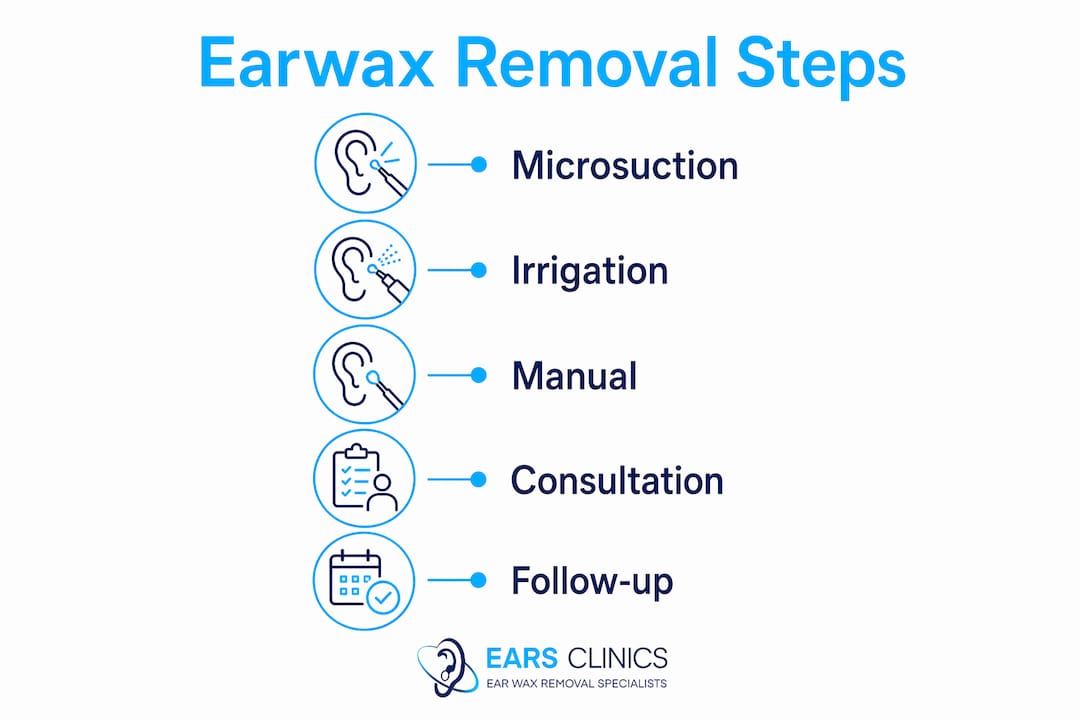
Microsuction is regarded as the gold standard method because it uses a fine suction device under direct visual magnification. The clinician sees exactly what they are doing at all times, which minimises the risk of trauma to the ear canal or eardrum. No water enters the ear, making it suitable for patients with a history of ear surgery or a perforated eardrum.
Irrigation uses a controlled flow of warm water to flush softened wax from the canal. It is clinically valid and comfortable for most patients, provided there is no history of eardrum perforation or prior ear surgery. Cold water must never be used, as it can trigger dizziness by stimulating the balance organs.
Manual instrumentation, sometimes called curettage, involves a trained clinician using specialised instruments and adequate lighting to remove wax directly. It is particularly useful for hard or dry wax that does not respond well to water or suction alone.
Method | How it works | Best suited for |
Microsuction | Gentle suction under direct vision | Most patients, including those with prior ear surgery |
Irrigation | Warm water flush | Patients with soft wax and no eardrum history |
Manual instrumentation | Instrument removal under magnification | Hard or dry wax, complex anatomy |
Clinics regulated by Healthcare Improvement Scotland (HIS) or the Care Quality Commission (CQC) follow strict protocols that govern which method is used and how. Earhealthservice is HIS registered and treats patients from 2 years of age, making it one of the few fully regulated ear healthcare providers in Scotland.
Pro Tip: Always tell your clinician about any history of ear surgery, a perforated eardrum, or previous ear infections before your appointment. This information directly determines which removal method is safest for you.
Safe at-home care options and their limitations
Some patients can manage mild wax build-up at home, but only after a professional has confirmed the ear canal and eardrum are intact. Attempting home care without that baseline assessment carries real risk.
The two most widely used home options are:
Ear drops containing carbamide peroxide or mineral oil. These soften wax over several days, making it easier for the ear to expel naturally. Follow the product instructions carefully and lie with the treated ear facing upward for a few minutes after application.
Warm water irrigation with a bulb syringe. Once a clinician has confirmed your eardrum is healthy, gentle flushing with body-temperature water can help dislodge softened wax. Never use cold water, and never apply forceful pressure.
Home care has clear contraindications. DIY irrigation carries risks including pushing wax deeper or perforating the eardrum, particularly in patients with undetected prior ear damage. Patients with a perforated eardrum, grommets, or a history of ear surgery should avoid all forms of home irrigation. For those with complex ear anatomy, hearing protection and professional guidance are especially relevant to long-term ear health.
Pro Tip: Ear drops alone do not guarantee wax removal. If your symptoms do not improve within five days of using drops, book a professional appointment rather than increasing the frequency of home treatment.
Home remedies work best as a temporary measure for mild cases. They do not replace professional intervention when symptoms persist, worsen, or return repeatedly.
Why common DIY methods are unsafe or ineffective
Several popular earwax removal methods are not only ineffective but actively dangerous. Understanding why helps you avoid harm.
Cotton swabs are the single most common cause of earwax impaction. Habitual cotton swab use packs wax further into the canal rather than removing it, and can abrade the delicate skin lining the ear canal or puncture the eardrum.
Ear candling produces no measurable wax removal. No clinical evidence supports ear candling as a treatment, and the debris visible after the procedure is residue from the candle itself, not earwax. Burns to the face, ear canal, and eardrum are documented injuries associated with this practice.
Consumer ear vacuum devices and illuminated scoops are sold widely but carry a real risk of eardrum perforation. Without clinical training and proper magnification, it is impossible to judge safe depth or pressure inside the ear canal.
Essential oils and unproven herbal remedies lack clinical evidence and can cause allergic reactions or chemical irritation to the sensitive skin of the ear canal.
The pattern across all these methods is the same. They are used without visual guidance, without knowledge of the patient’s ear anatomy, and without the training to respond if something goes wrong. For a fuller explanation of the risks, the dangers of ear candling are covered in detail by Earhealthservice. Hearing deterioration after self-removal attempts usually signals damage during the process and warrants immediate professional assessment.
When should you see a professional for earwax removal?
Some symptoms require prompt professional attention rather than a wait-and-see approach. Book an appointment if you experience:
Sudden or significant hearing loss in one or both ears, even if it feels temporary
Ear pain that does not resolve within 24–48 hours, or pain accompanied by discharge
Persistent tinnitus that has appeared or worsened recently
Dizziness or balance problems that you cannot attribute to another cause
Symptoms that return within weeks of a previous episode of wax build-up
During a clinical appointment, your Aural Care Specialist will examine both ears using an otoscope before selecting a removal method. The procedure itself is typically completed within 30 minutes. For patients with narrow or curved ear canals, anatomical variations can impede natural self-cleaning, and scheduled professional maintenance approximately once or twice per year is the most effective long-term strategy. After removal, your clinician will advise on whether preventative drops or any follow-up care are appropriate for your ear type.
Key takeaways
Professional earwax removal using microsuction, irrigation, or manual instrumentation is the safest and most effective approach, selected by a trained clinician based on your individual medical history and ear anatomy.
Point | Details |
Professional removal is safest | Microsuction, irrigation, and manual instrumentation are clinically validated and tailored to each patient. |
Earwax is usually self-cleaning | Removal is only needed when symptoms such as hearing loss, earache, or tinnitus are present. |
Home care has strict limits | Ear drops and warm water irrigation are only safe after a clinician confirms the eardrum is intact. |
DIY methods cause harm | Cotton swabs, ear candling, and consumer devices risk impaction, burns, and eardrum perforation. |
Recurrent build-up needs maintenance | Patients with narrow or curved ear canals benefit from professional care once or twice per year. |
What we have learned from treating patients every day
The question we hear most often is: “Can I just sort this out at home?” The honest answer is that it depends, but the starting point should always be a professional assessment, not a trip to the pharmacy.
What surprises many patients is how often their blockage was caused not by excessive wax production but by years of cotton swab use. The swab does not clean the ear. It compresses wax against the eardrum and creates the very problem it was meant to prevent. We see this pattern repeatedly, and it is entirely avoidable.
The other misconception worth addressing directly is that microsuction is uncomfortable or frightening. In practice, most patients describe it as a mild sensation of pressure, and the relief they feel immediately afterwards is significant. The procedure takes minutes when performed by a trained clinician with the right equipment.
For patients who experience recurrent build-up, the most effective thing you can do is stop self-treating between appointments and let your clinician set a maintenance schedule suited to your ear anatomy. Trying to manage it yourself in the interim almost always makes the next appointment more difficult.
Ear health is not complicated, but it does require respect for the anatomy involved. The ear canal is narrow, the eardrum is fragile, and the consequences of getting it wrong are not trivial. Trust the process, see a professional, and your ears will thank you.
— EARS
Professional earwax removal at Earhealthservice
If you are experiencing muffled hearing, earache, or a persistent feeling of fullness, professional assessment is the right next step.
Earhealthservice offers NHS-accredited earwax removal across Glasgow and Edinburgh, delivered by trained Aural Care Specialists using microsuction, irrigation, and manual instrumentation. Appointments are available in clinic, with same-day options for urgent cases and home visits for patients who cannot travel. Earhealthservice is Healthcare Improvement Scotland (HIS) registered, treats patients from 2 years of age, and charges £60 for adults, £75 for under-18s, and £180 for home visits. No GP referral is needed and there are no pre-treatment preconditions. Book directly at earhealthservice.co.uk.
FAQ
What is the safest way to remove earwax at home?
The safest home option is carbamide peroxide or mineral oil drops to soften wax, but only after a clinician has confirmed your eardrum is intact. Home irrigation carries risks including pushing wax deeper or perforating the eardrum.
Is microsuction better than ear syringing?
Microsuction is regarded as the gold standard because it uses direct visual magnification, involves no water, and is suitable for patients with a history of ear surgery or a perforated eardrum. Irrigation remains clinically valid for patients without those contraindications.
Should I see a doctor for earwax removal?
You should seek professional care if you experience sudden hearing loss, persistent earache, tinnitus, or dizziness, or if symptoms return within weeks of a previous episode. A trained Aural Care Specialist can assess your ears and select the safest removal method.
Do earwax removal kits actually work?
Over-the-counter drops can soften wax and support natural expulsion in mild cases, but they do not guarantee removal and can worsen impaction if used incorrectly. They are not a substitute for professional treatment when symptoms persist.
How often should I have my ears professionally cleaned?
Most people never need routine professional cleaning because the ear is self-cleaning. Patients with narrow or curved ear canals, or those prone to recurrent build-up, benefit from professional maintenance approximately once or twice per year.
Recommended