
Best way to clean out ear wax: your 2026 guide

TL;DR:
The safest way to remove ear wax is through professional procedures like microsuction, irrigation, or manual instrumentation.
Home remedies are limited to gentle cleaning or softening drops, while avoiding cotton swabs and unregulated irrigation kits.
The best way to clean out ear wax is through clinically recommended procedures such as microsuction, irrigation, and manual instrumentation, performed by trained professionals. Earwax, known medically as cerumen, protects the ear canal by moisturising skin, trapping dust, and preventing infection. Earwax impaction affects around 5% of adults, making professional removal the safest and most effective solution for persistent buildup. Understanding what is the best way to clean out ear wax starts with respecting the ear’s own biology and knowing when home care ends and clinical help begins.
Why does earwax exist and how does the ear clean itself?
Earwax is not a sign of poor hygiene. Earwax serves protective functions including moisturising the canal skin, trapping dust and debris, and providing antimicrobial defence against bacteria and fungi. Without it, the ear canal would be dry, itchy, and far more vulnerable to infection.
The ear is effectively self-cleaning. Wax moves outward naturally through a combination of jaw motion and the gradual migration of skin cells from the eardrum toward the ear opening. This process works continuously and silently, requiring no intervention from you in most cases.
Problems arise when this natural mechanism is disrupted. Inserting objects into the ear canal, over-cleaning, or using cotton swabs can push wax inward rather than allowing it to exit naturally. Earwax consistency varies from liquid to rock-hard, and harder wax is far more likely to become impacted when disturbed.
Pro Tip: Wipe only the outer ear with a damp cloth after bathing. The canal itself does not need cleaning unless a clinician advises otherwise.
The signs of ear wax buildup worth watching for include a feeling of fullness in the ear, muffled hearing, mild earache, or a low ringing sound. These symptoms indicate that wax has accumulated beyond what the ear can clear on its own.
What are safe home remedies for ear wax?
Mild earwax buildup can often be managed at home with gentle, low-risk methods. These approaches work best when wax has not yet become impacted and when there is no history of ear surgery, perforation, or active infection.
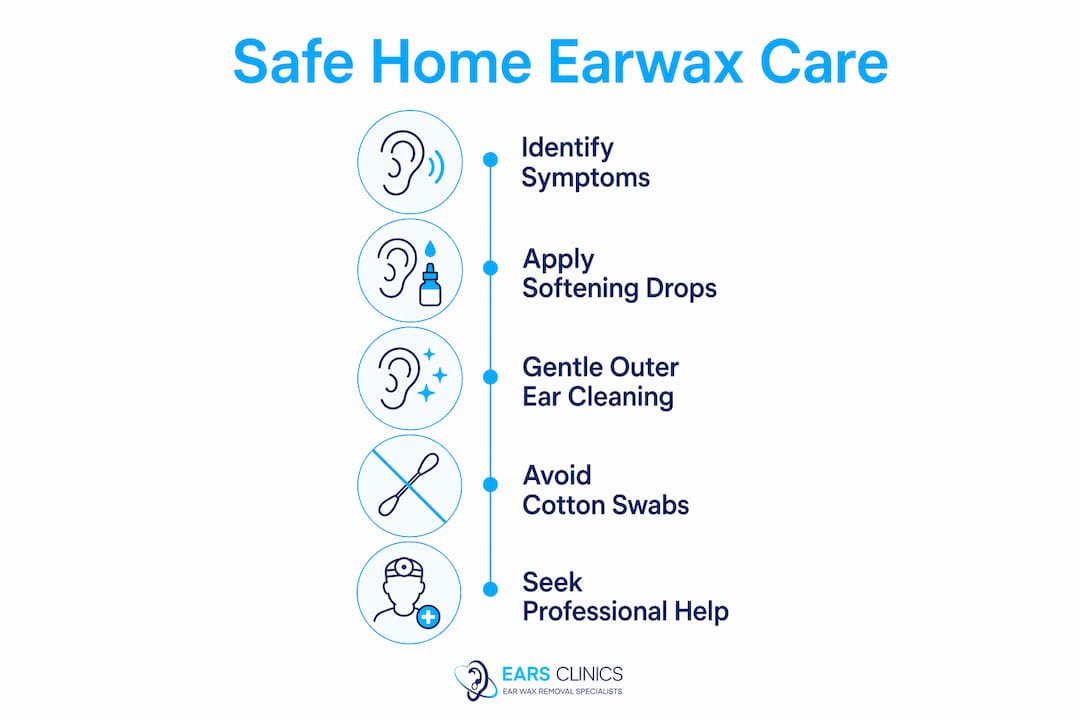
Wipe the outer ear only. Use a soft, damp cloth to clean the visible part of the ear. Never insert the cloth or any object into the canal.
Use mineral oil drops. A few drops of mineral oil, warmed to room temperature, can soften wax and encourage it to migrate outward. Apply two to three drops, tilt your head, and allow it to settle for a few minutes before draining.
Try medicated softening drops. Pharmacy-available drops containing sodium bicarbonate or urea hydrogen peroxide are formulated to loosen wax gently. Follow the product instructions carefully.
Use hydrogen peroxide cautiously. Hydrogen peroxide gently bubbles, loosening wax from the canal walls. Use a diluted solution and avoid it entirely if you suspect a perforated eardrum or active ear infection.
Allow time for drainage. After applying any drops, lie on your side for five to ten minutes, then allow the ear to drain naturally onto a tissue.
These safe ear care steps are appropriate for occasional use, not daily routine. Frequent application of any drops can irritate the canal lining and cause more harm than good.
Pro Tip: Never use cold water to flush your ears at home. Cold water triggers the vestibular system, causing sudden dizziness and disorientation. Always use water at body temperature if rinsing is ever advised by a clinician.
Which ear cleaning methods should you avoid?
Several widely used home methods carry real clinical risks. Knowing what to avoid is as important as knowing what works.
Cotton swabs. The most common mistake patients make is using cotton swabs, which push wax deeper into the canal rather than removing it. This increases impaction risk and can cause eardrum perforation.
Ear candling. Ear candling has no proven clinical benefit. The practice carries risks of burns to the face and ear canal, wax deposits from the candle itself, and eardrum damage. No reputable clinical body endorses it.
Unregulated irrigation kits. Irrigation devices sold without clinical guidance can deliver water at the wrong temperature or pressure, causing dizziness, infection, or eardrum damage.
Hair pins, keys, or any rigid object. Inserting anything rigid into the ear canal risks lacerating the skin or perforating the eardrum, even when done carefully.
People with a perforated eardrum, recent ear surgery, or an active ear infection must not attempt any home irrigation or flushing. The risk of introducing water or pressure into a compromised ear is significant and can lead to serious, lasting damage.
What are the professional ear wax removal methods?
Professional removal is the safest and most reliable approach for significant earwax buildup. Clinicians select the most appropriate method based on each patient’s medical history and the nature of the wax itself.
Microsuction
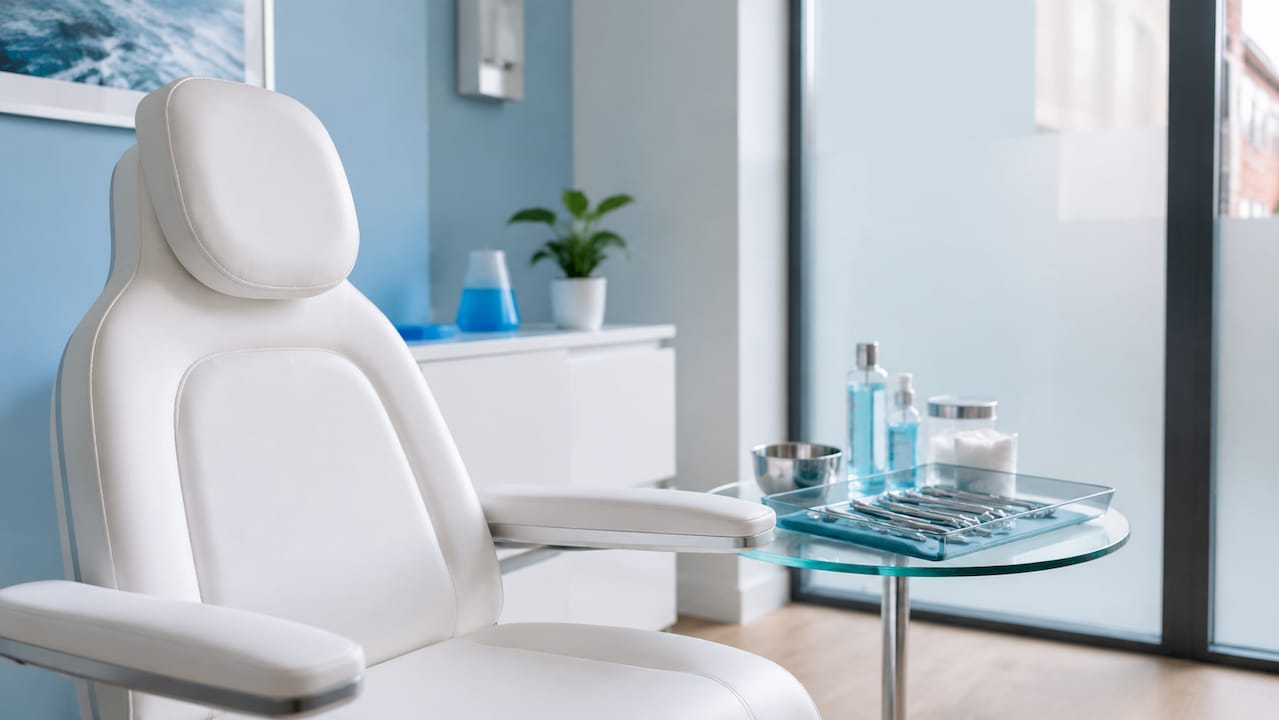
Microsuction is the preferred method recommended by current NICE guidelines. A trained clinician uses a fine suction device under microscopic or loupe magnification to remove wax with direct visualisation of the ear canal and eardrum. Microsuction requires specialised suction and microscopy to safely remove wax without contact with the eardrum. This makes it the most controlled and precise method available, suitable for most patients including those with a history of ear surgery.
Irrigation
Irrigation uses a controlled flow of warm water, at body temperature, to flush wax from the canal. The water temperature is critical. Cold water causes vestibular disturbance and dizziness, so trained clinicians always use water matched to body temperature. Contraindications for irrigation include diabetes, immunocompromise, ear anomalies, head or neck radiation history, and anticoagulation medications. A clinician will screen for these before proceeding.
Manual instrumentation
Manual instrumentation uses delicate loops and curettes, handled by trained clinicians under appropriate lighting, to dislodge and remove wax mechanically. This method is particularly useful when wax is too dry or compacted for irrigation and when microsuction alone is insufficient. Professional removal methods allow clinicians to visually confirm eardrum integrity before and after treatment, a safeguard that no home method can replicate.
Method | How it works | Best suited for |
Microsuction | Fine suction under magnification | Most patients; preferred by NICE guidelines |
Irrigation | Warm water flush at body temperature | Soft to moderate wax; no contraindications |
Manual instrumentation | Loops and curettes by trained clinician | Hard or compacted wax; complex cases |
Pro Tip: Always confirm that your ear care provider is regulated by Healthcare Improvement Scotland (HIS) or the Care Quality Commission (CQC). Regulation means the clinician follows verified safety standards and is accountable for the care they deliver.
When should you seek professional ear care?
Some symptoms require clinical assessment rather than home management. Attempting to self-treat when these signs are present can delay proper care and worsen the underlying condition.
Muffled hearing that does not resolve within a few days
A persistent feeling of fullness or pressure in the ear
Tinnitus (ringing or buzzing sounds) that appears suddenly
Earache or discomfort without an obvious cause
Dizziness or balance disturbance linked to ear symptoms
Symptoms like fullness, tinnitus, or muffled hearing caused by earwax buildup can mimic ear infections. Self-diagnosis is unreliable in these cases, and mismanagement risks making the condition worse.
Patients with a history of ear surgery, a perforated eardrum, or a current ear infection must seek professional assessment before any wax removal is attempted. The same applies to those who are immunocompromised or taking anticoagulant medication. For these patients, home ear wax blockage solutions carry genuine clinical risk.
Earhealthservice offers NHS-accredited ear wax removal in Glasgow and Edinburgh, carried out by trained Aural Care Specialists. Appointments are available in clinic, as same-day bookings, or as home visits for patients who cannot travel. You can learn more about the range of removal procedures available and book directly through the Earhealthservice website.
Key takeaways
The safest and most effective way to remove ear wax is through professional clinical methods, microsuction, irrigation, or manual instrumentation, performed by a regulated, trained clinician.
Point | Details |
Earwax has a protective role | It moisturises the canal, traps debris, and fights infection; avoid removing it unnecessarily. |
Home care has clear limits | Mineral oil and softening drops are safe for mild buildup; avoid cotton swabs and ear candling entirely. |
Microsuction is the gold standard | NICE guidelines recommend microsuction as the preferred professional removal method. |
Contraindications matter | Patients with perforated eardrums, ear infections, or recent surgery must seek clinical assessment first. |
Regulation protects patients | Choose a clinician registered with HIS or CQC to guarantee safe, accountable care. |
Our view on earwax care at EARS Clinics
At EARS Clinics, we see the consequences of well-intentioned but harmful home cleaning every week. Patients arrive with wax packed so deeply that it has taken on the consistency of concrete, often because cotton swabs were used repeatedly over months or years. The ear canal is narrow and delicate. Anything inserted into it carries risk, regardless of how carefully it is done.
What surprises many patients is how little the ear actually needs from them. The self-cleaning mechanism is genuinely effective in most people. The cases we treat most often are not caused by neglect but by over-intervention. Frequent use of cotton swabs, ear drops applied daily, or attempts to flush the ear at home can all disrupt the canal’s natural balance and create the very problem the patient was trying to prevent.
Our clinical view is straightforward. If your ears feel clear and your hearing is normal, leave them alone. If you notice signs of wax buildup that do not resolve within a week or two of gentle softening drops, book a professional assessment. Persistent symptoms always warrant a clinical look, because what feels like wax is sometimes something else entirely.
The technology available to us now, particularly microsuction under magnification, means we can remove even the most stubborn wax safely, with full visibility of the eardrum throughout. Patients who have been struggling with muffled hearing for months often leave the clinic hearing clearly within minutes. That outcome is only possible when the right method is matched to the right patient by a trained clinician.
— EARS
Professional ear wax removal at Earhealthservice
Earhealthservice provides clinically regulated ear wax removal at EARS Clinics in Glasgow and Edinburgh, with services available to patients from two years of age.

All procedures, including microsuction, irrigation, and manual instrumentation, are carried out by NHS-accredited Aural Care Specialists. EARS Clinics are registered with Healthcare Improvement Scotland (HIS), placing them among the few fully regulated ear healthcare providers in Scotland. Appointments cost £60 for adults, £75 for under-18s, and £180 for home visits. Same-day appointments are available, with no requirement for pre-treatment softening drops before attending. To find out which procedure suits your needs, visit the ear wax removal procedures page and book directly online.
FAQ
What is the safest way to remove ear wax at home?
The safest home approach is to apply a few drops of mineral oil or a pharmacy-approved softening solution to loosen mild wax buildup. Never insert cotton swabs or any object into the ear canal.
How do I know if I have ear wax blockage?
Signs of ear wax buildup include muffled hearing, a feeling of fullness in the ear, mild earache, and tinnitus. These symptoms can also indicate an ear infection, so persistent cases require clinical assessment.
Is microsuction better than irrigation for ear wax removal?
Microsuction is the preferred method under current NICE guidelines because it allows direct visualisation of the ear canal and eardrum throughout the procedure. Irrigation is also safe and effective when contraindications are absent and is selected by the clinician based on each patient’s clinical presentation.
Can I use cotton swabs to clean my ears?
Cotton swabs should not be used inside the ear canal. They push wax deeper, increasing the risk of impaction and eardrum perforation. Wipe only the outer ear with a soft, damp cloth.
Who should not attempt home ear wax removal?
Patients with a perforated eardrum, a history of ear surgery, an active ear infection, diabetes, immunocompromise, or those taking anticoagulant medication should not attempt home removal. These patients require professional clinical assessment before any treatment is carried out.
Recommended