
Wax in ear causing pain: what it means and how to fix it

Yes, earwax can cause ear pain. When wax hardens and packs against the ear canal or presses on the eardrum, it produces genuine, sometimes sharp, discomfort, not just a vague blocked feeling. If the pain is mild, stop touching your ear and try a short course of softening drops unless you have a known perforation or infection. If it’s severe, or you notice bleeding, discharge or sudden hearing loss, get it checked rather than waiting it out.
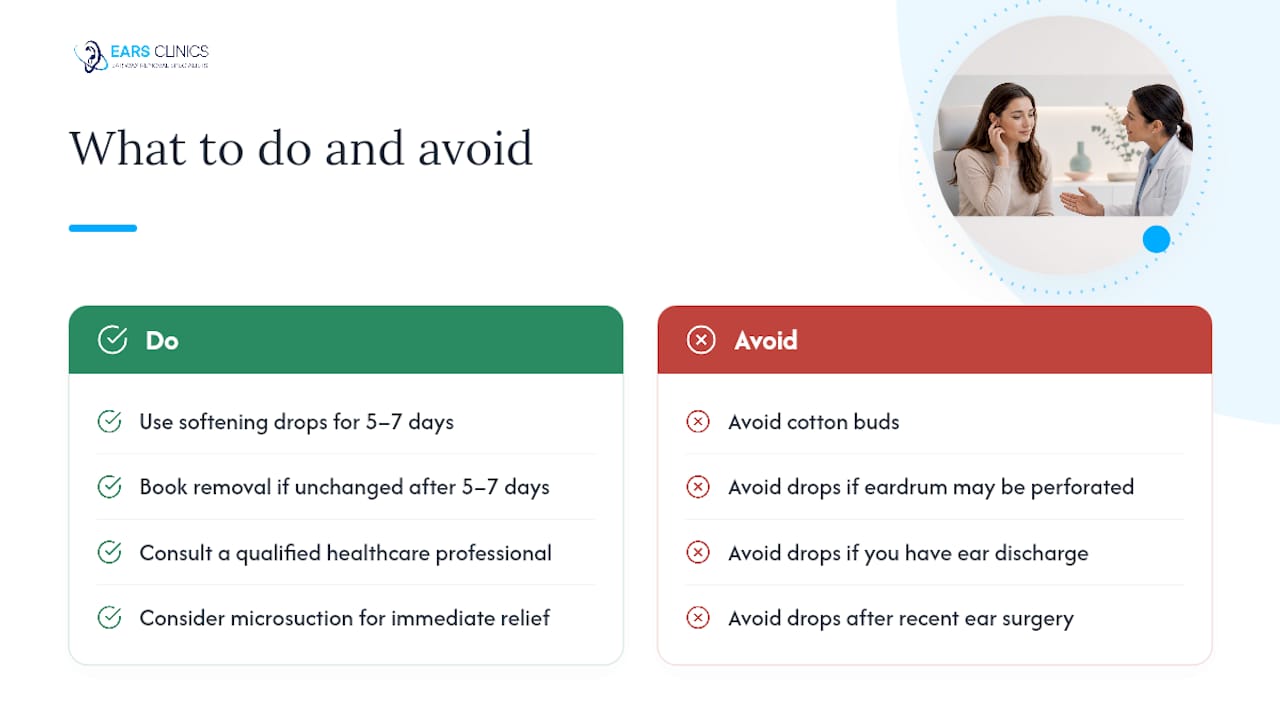
Do: use olive oil or a pharmacy softening drop for a few days.
Don’t: insert cotton buds, matchsticks or anything else into the canal.
Don’t: try ear candling. It doesn’t work and can burn the skin.
Pro Tip: Warm the oil bottle between your palms for a minute before use. Cold drops in the ear canal are startlingly uncomfortable and put people off finishing the course.
Key Takeaways
Impacted earwax causes pain by pressing on the sensitive canal skin or eardrum, and regulated microsuction, irrigation, or manual instrumentation from a trained clinician resolves it faster and more safely than repeated home attempts.
Point | Details |
Wax can genuinely cause pain | Pressure against the canal wall or eardrum, not the wax itself, is what hurts. |
Try softening drops first | Olive or mineral oil for a few days, unless perforation or infection is suspected. |
Know your red flags | Bleeding, discharge, fever or sudden hearing loss mean stop home care and get checked. |
Microsuction is often preferred | NICE-favoured method for its precision and dry, direct-vision technique. |
Book regulated care when needed | Earhealthservice provides HIS-registered microsuction, irrigation and instrumentation with same-day slots. |
Symptoms that suggest wax is behind your ear pain
Earwax pain rarely turns up alone. Cerumen impaction typically causes a cluster of symptoms: earache, a plugged or full sensation, muffled hearing, tinnitus, itchiness and sometimes dizziness. That combination is the giveaway. A simple infection tends to arrive with fewer of these at once, while impacted wax tends to bring several together, gradually worsening over days rather than appearing overnight.
Quick checklist, if you’re ticking off more than two or three of these, wax is a likely culprit:
Dull ache or pressure in one or both ears
Hearing that sounds muffled, as though underwater
Ringing or buzzing (tinnitus)
Itchiness deep in the canal
Mild dizziness or unsteadiness
Occasional odour or discharge, which can point to a secondary infection rather than wax alone
If odour or discharge appears, treat that as a signal to get the ear examined rather than continue home treatment.
Why earwax builds up and who gets it worse
Cerumen is a normal, protective substance. Glands in the canal produce it constantly, and it’s meant to migrate outward on its own, carrying dead skin and debris with it. Impaction happens when that natural conveyor belt gets interrupted or overwhelmed. Pushing a cotton bud into the ear canal is one of the most common causes: it feels like cleaning, but it usually packs wax deeper instead of removing it.
Some people are simply more prone to build-up:
Narrow or unusually hairy ear canals that trap wax rather than let it migrate
Regular hearing aid or earbud use, which blocks the canal’s natural clearing motion
Naturally high wax production, which varies a great deal between individuals
Skin conditions affecting the canal, such as eczema
A history of using cotton buds or other objects to “clean” the ear
How to soften earwax safely at home
Start with a short course of softening drops or oil unless you suspect a perforated eardrum, active infection, or you’ve had recent ear surgery. In any of those cases, skip home treatment and speak to a pharmacist or GP first.
Lie on your side with the affected ear facing up.
Apply the recommended number of drops (check the product label, or use two to three drops of olive or mineral oil) into the canal, not deep inside it.
Stay in that position for five to ten minutes so the oil can work down into the wax.
Repeat once or twice daily for several days.
Check progress. Some wax may soften and fall out naturally; if it doesn’t shift, further home treatment usually isn’t worth continuing.
Mineral oil and olive oil are both reasonable softening agents, and pharmacy drops work on a similar principle. A few precautions matter:
Never insert cotton buds, ear picks or anything solid into the canal.
Avoid drops entirely if you suspect a perforated eardrum, discharge, or infection.
If you use hydrogen peroxide, dry the canal properly afterwards. Trapped moisture can encourage bacterial growth.
Stop immediately and seek advice if pain increases rather than eases.
Pro Tip: If nothing has shifted after a week of consistent softening, that’s your cue to book removal rather than extend the trial. Prolonged softening without progress just prolongs the discomfort.
When to see a pharmacist, GP or ear specialist
A pharmacist is a sensible first stop for mild symptoms or advice on which drops to try (Online Treatment for UTI, Strep, Rash, Flu & More Conditions | Chameleon). Book a GP or specialist clinic appointment if any of these apply:
Pain is severe, worsening, or not responding to softening drops
You notice bleeding or discharge from the ear
You have a fever alongside ear pain
Hearing loss is sudden or significant
Symptoms persist after a full course of home treatment
You have a known history of a perforated eardrum or previous ear surgery
Certain groups should get professional review earlier rather than trying home treatment first:
Children, particularly younger ones who can’t reliably describe symptoms
People with diabetes or a weakened immune system, where minor ear problems can escalate faster
Anyone with cochlear implants, grommets, or other indwelling ear devices
Professional removal: microsuction, irrigation and manual instrumentation
Clinicians choose from three established methods, and the right one depends on your ear anatomy, medical history and how the wax presents on examination. Current NICE guidance favours microsuction as the preferred first-line option in most cases, though irrigation and manual instrumentation both remain safe, clinically valid choices when appropriate.

Microsuction uses a fine suction device under direct microscope or magnified vision, letting the practitioner see exactly what they’re removing. It’s dry, generally quick, and well suited to complicated cases, including patients with a history of perforation, since no water is introduced into the canal.
Irrigation uses gentle, controlled water flow to dislodge softened wax. It works well for straightforward cases but is not appropriate after ear surgery, with a known perforated eardrum, or during an active infection, since forcing water into a compromised ear risks complications.
Manual instrumentation involves a curette or small probe used to lift wax out directly. It suits visible wax near the entrance of the canal but has less reach for deeper impactions.
A thorough otoscopic examination and medical history always come before treatment. Practitioners rule out perforation, infection or recent surgery, then select the safest method for that individual ear rather than applying one technique to everyone.
Method | Best suited for | Avoid when |
Microsuction | Complex cases, dry procedure, direct visual control | Rarely contraindicated, but excessive canal narrowing can limit access |
Irrigation | Softened wax, straightforward cases | Perforated eardrum, recent ear surgery, active infection |
Manual instrumentation | Visible wax near canal entrance | Deep or hardened impaction, limited visibility |
What actually happens during a clinic appointment
Expect a fairly quick, structured visit rather than anything daunting.
The clinician takes a short history, asking about pain, hearing changes, past ear surgery or perforations.
An otoscopic exam confirms impaction and rules out infection or other causes.
They explain the chosen method and get your consent before starting.
The procedure itself typically takes a matter of minutes per ear.
During microsuction, you’ll hear a steady buzzing sound rather than feel pain. Irrigation feels like a gentle warm trickle. Most people notice pressure lifting and hearing sharpening almost immediately afterwards.
Aftercare is simple:
Keep the ear dry for a day or two if advised
Watch for unusual pain, discharge or dizziness after treatment
Book a follow-up if wax tends to recur regularly
Stopping the problem coming back
Prevention is mostly about leaving your ears alone. Clean only the outer ear with a flannel, never the canal itself, and skip cotton buds entirely, since pushing wax deeper is exactly how many impactions start. If you wear hearing aids or use earbuds constantly, periodic softening drops every few weeks can help prevent build-up before it becomes painful.
Skip cotton buds, hairpins and ear candles altogether
Use softening drops occasionally if you’re prone to build-up
Book a professional check every 6 to 12 months if impactions recur
Pro Tip: Hearing aid users should clean the device itself daily. A wax-clogged aid pushes more debris back into the canal, creating a repeating cycle of blockage.
Signs that need urgent medical attention
A small number of symptoms shouldn’t wait for a routine appointment. Get urgent care, A&E or an emergency GP slot, if you experience:
Sudden, severe hearing loss
Intense pain that isn’t easing
Heavy bleeding from the ear
High fever alongside ear symptoms
Confusion or collapse
These point to something beyond simple wax impaction and need same-day medical assessment.
Why regulated clinical care is usually the safer, faster fix
Home treatment resolves plenty of mild cases, but regulated clinics reduce the risk of injury and typically clear symptoms faster than repeated attempts at home. When choosing where to go, a few markers separate a properly regulated service from an informal one.
Registration with Healthcare Improvement Scotland (HIS) or the Care Quality Commission (CQC)
Practitioners trained specifically in microsuction, irrigation and manual instrumentation
Clear documented safety protocols and contraindication checks before treatment
NHS-accredited clinical staff
Regulation and training aren’t paperwork exercises. They directly determine whether a practitioner recognises a perforation risk before it becomes a real complication.
Earhealthservice operates as EARS Clinics, registered with Healthcare Improvement Scotland, with same-day appointments available and treatment for patients from age 2 upwards. For anyone weighing up which doctor can safely clean your ear wax, a regulated specialist clinic is a legitimate and often quicker route than waiting for a routine GP slot.
A clinician’s short note on treating painful wax
Safety comes before speed, always. In practice, microsuction is usually our first choice because it gives direct visual control and avoids introducing water into a compromised ear. Most patients notice relief the moment wax clears; pressure lifts and hearing sharpens almost instantly. That immediacy is what makes proper assessment worth doing before reaching for a syringe or a probe.
Fast, professional relief when home care isn’t enough
If softening drops haven’t shifted the wax after a week, or the pain has become more than a nuisance, Earhealthservice offers same-day microsuction, irrigation and manual instrumentation appointments in-clinic or at home, so you’re not stuck waiting weeks for an NHS slot with no guarantee it’ll happen at all.

Every treatment starts with a proper otoscopic assessment, and your clinician picks the safest method for your ear rather than defaulting to one approach. Appointments cost £60 for adults, £75 for under-18s, or £180 for a home visit, with no referral or pre-treatment softening required beforehand. If your ears are prone to repeat blockages, the microsuction procedure guide explains exactly what to expect before you arrive. Book your microsuction appointment directly through Earhealthservice and get seen by an NHS-accredited specialist without the wait.
Where to check the guidance yourself
For further reading beyond this article:
NHS guidance on earwax build-up covers symptoms, treatment routes and when to seek help.
Mayo Clinic’s earwax blockage overview details symptoms and causes in depth.
Harvard Health’s guide to earwax blockage explains the mechanics of impaction.
Cleveland Clinic’s earwax resource outlines professional removal options.
Frequently asked questions
Can earwax buildup really cause sharp ear pain, not just discomfort? Yes. When hardened wax presses against the eardrum or canal wall, the pain can be sharp rather than a dull ache, particularly if the impaction is severe or sudden.
How long should I try home treatment before seeing someone? Give softening drops around five to seven days. If nothing has changed by then, further home treatment rarely helps and it’s time to book removal.
Is it ever unsafe to use olive oil or ear drops? Yes, avoid them if you suspect a perforated eardrum, have discharge, or have recently had ear surgery. Speak to a pharmacist or GP first in those cases.
Why does my ear pain get worse after I use a cotton bud? Cotton buds usually push wax deeper into the canal instead of removing it, increasing pressure against the eardrum and worsening pain.
Is microsuction painful? Most patients feel pressure changes and hear a buzzing sound, but the procedure itself isn’t painful. Many notice relief immediately afterwards.
Can earwax pain be confused with a TMJ problem or ear infection? Yes. Jaw joint issues and infections can produce similar earache and fullness. A proper examination distinguishes between them, which is why self-diagnosis has limits.
This article is general information, not a substitute for advice from a qualified doctor. Consult a qualified healthcare professional about your own circumstances before acting on anything here.
Sources
Recommended