
What is NHS-accredited care? A patient's guide

TL;DR:
NHS-accredited care involves services assessed against recognized, ongoing safety and quality standards set or endorsed by NHS regulators. Accreditation, supported by national audits and standards, improves patient safety, clinical consistency, staff satisfaction, and continuous quality improvement. Patients should verify specific schemes and regulatory recognition to ensure they access genuine NHS standards and regulated healthcare providers.
NHS-accredited care is defined as healthcare services and providers that have met rigorous quality and safety standards set or formally recognised by the NHS and its regulatory partners, including NHS England, the Care Quality Commission (CQC), and the Health Quality Improvement Partnership (HQIP). Accreditation is not a single certificate. It is a structured, ongoing process of assessment against nationally agreed criteria, designed to protect patients, reduce variation in clinical practice, and drive continuous improvement across healthcare settings. Understanding what NHS-accredited care means in practice helps you make more informed decisions about the services you choose and the questions you ask your clinician.
What is NHS-accredited care and how does it work?
NHS-accredited care refers to services that have been assessed against defined quality and safety standards by a recognised accreditation body, with that assessment then incorporated into NHS regulatory frameworks. The CQC, which regulates health and social care in England, plays a central role in this process. It does not run accreditation schemes itself. Instead, it recognises specific schemes and uses their findings to inform and sometimes reduce its own inspection activity.
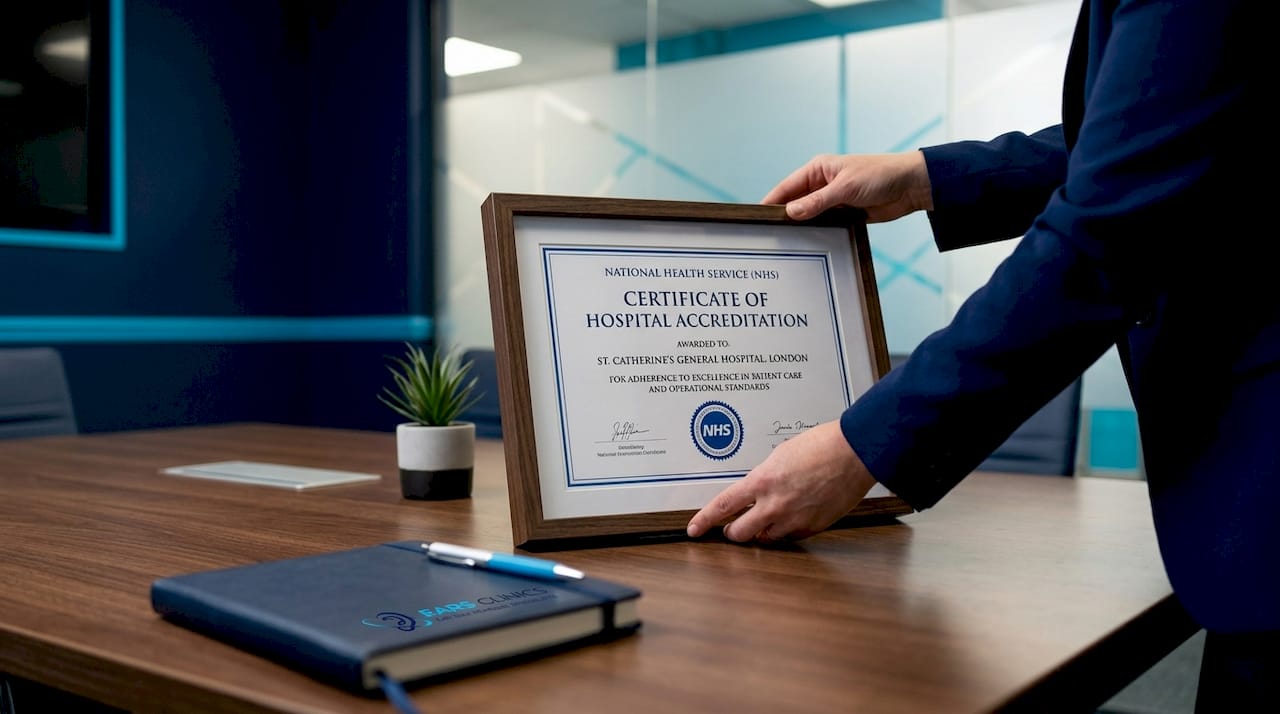
Schemes currently recognised within this framework include JAG (the Joint Advisory Group on GI Endoscopy), ISAS (the Imaging Services Accreditation Scheme), and AIMS (the Accreditation for Inpatient Mental Health Services). Each scheme maps to CQC’s assessment framework, covering its key questions around whether services are safe, effective, caring, responsive, and well led. For a scheme to be incorporated into CQC regulation, it must meet strict quality and rigour standards and demonstrate adequate uptake and benchmarking among NHS trusts.
The practical implication is significant. When an NHS trust participates in a recognised accreditation scheme, CQC treats this as evidence of quality improvement under its “well-led” and “effective” key questions. Achieving accreditation can directly influence inspection outcomes at both provider and core service levels.
Pro Tip: Not every use of the word “accredited” carries the same weight. Always ask which specific scheme a provider is accredited under and whether that scheme is formally recognised by CQC or Healthcare Improvement Scotland (HIS).
For NHS advanced practitioners, accreditation also involves multi-level governance and formal assessment. NHS Employers confirms that successful accreditation depends on governance structures, training pathways, and assessment gateways rather than informal declarations of competence. This applies across specialisms, from nursing and midwifery to specialist ear care.
What are the benefits of NHS-accredited care for patients and staff?
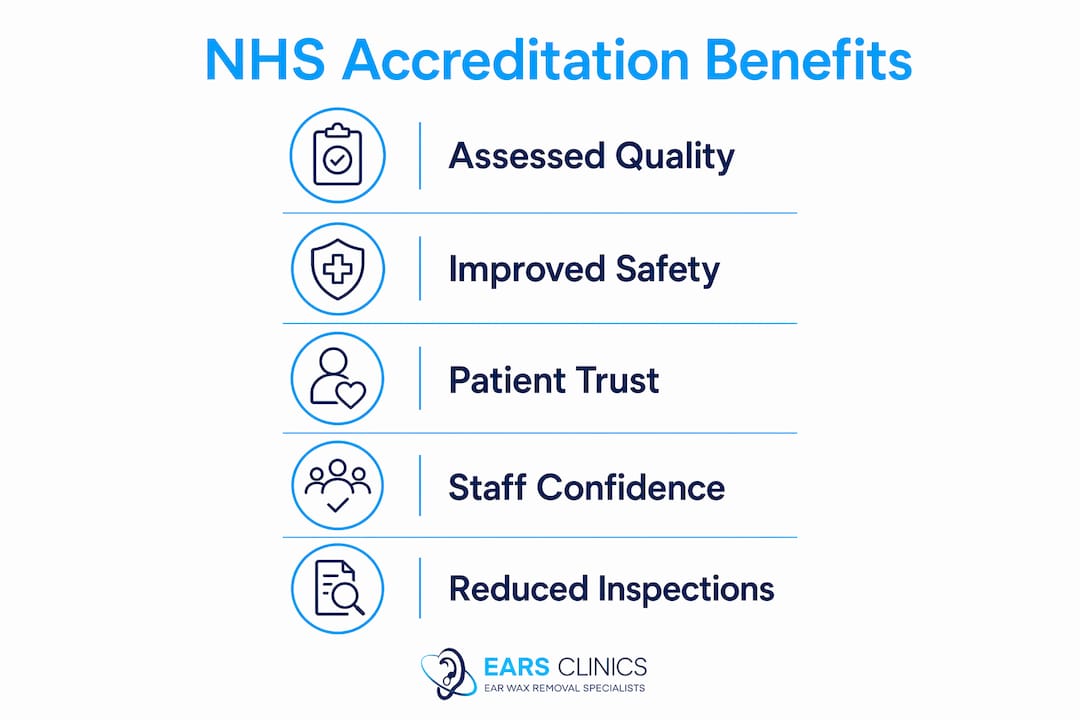
NHS-accredited care delivers measurable improvements across two interconnected areas: patient outcomes and workforce quality. NHS England’s local accreditation programmes produce reduced unwarranted variation in clinical practice, meaning patients receive more consistent care regardless of which clinician or site they attend. This consistency is one of the most underappreciated benefits of accreditation.
For patients, the benefits are direct and tangible:
Consistent, evidence-based care delivered according to nationally agreed standards rather than individual clinical preference.
Greater transparency, as accredited providers are assessed against published criteria that patients can review.
Improved safety, because accreditation schemes require documented processes, training records, and clinical governance structures.
Confidence in practitioner competence, particularly in specialist services such as ear care, where the difference between a trained and untrained clinician can cause lasting harm.
For healthcare staff, the impact is equally significant. NHS England’s evidence shows that accreditation supports a culture of pride, accomplishment, and patient-centred quality care, with positive effects on staff retention and recruitment. Clinicians working in accredited settings report higher job satisfaction, partly because clear standards reduce ambiguity about what good practice looks like.
“Accreditation in NHS care is more than a certificate. It is a continuous culture of quality improvement embedded at clinical and organisational levels.” — NHS England, Local Accreditation Resources
This cultural dimension matters. Services that pursue accreditation are not simply ticking a box. They are committing to regular self-assessment, external review, and ongoing improvement. That commitment shapes the day-to-day experience of both patients and staff in ways that a single inspection cannot replicate.
How do national standards and clinical audits support accredited care?
Accreditation schemes do not operate in isolation. They are underpinned by a broader architecture of national standards, clinical audits, and information frameworks that together define what high-quality NHS care looks like.
HQIP, the Health Quality Improvement Partnership, manages national clinical audit programmes that provide publicly available benchmarked data covering a wide range of conditions and care settings. These programmes allow providers to compare their performance against national averages, identify gaps, and implement evidence-based improvements. Crucially, HQIP’s national benchmarking tools support ongoing quality assurance in a way that contrasts with one-off accreditation assessments. Continuous audit data keeps quality improvement active between formal accreditation cycles.
The NHS Standards Directory adds another layer of structure. The All Age Continuing Care (AACC) Data Set, published under section 250 of the Health and Social Care Act 2012, sets patient-level rules covering eligibility, activity, and care packages for NHS Continuing Healthcare. This standardises processes across providers, reducing the risk of inconsistent decisions about patient entitlements.
Standard or programme | Purpose | Patient benefit |
HQIP national clinical audits | Benchmarked performance data across conditions | Identifies and closes gaps in care quality |
AACC Data Set (NHS Standards Directory) | Standardises NHS Continuing Healthcare processes | Consistent eligibility and care package decisions |
Core Information Standard | Defines shared care record content | Joined-up care during transitions between services |
CQC accreditation recognition | Maps schemes to regulatory framework | Inspection outcomes reflect real quality evidence |
The Core Information Standard, designated by NHS England as a key enabler of integrated care, defines the information that must be shared across care settings to support accessible, joined-up patient records. When a patient moves between a GP, a hospital, and a specialist clinic, this standard helps to make sure their clinical history travels with them. For patients with complex or long-term conditions, this is not a technical detail. It is the difference between safe, coordinated care and fragmented, potentially dangerous care.
Pro Tip: When choosing a specialist clinic, ask whether they follow NHS information standards for record sharing. A clinician who cannot access or share your relevant medical history is working with incomplete information.
How can patients recognise and access NHS-accredited services?
Identifying genuinely NHS-accredited care requires more than reading a provider’s marketing materials. The term “accredited” can vary considerably in meaning depending on which scheme is referenced, whether that scheme is CQC-recognised, and the scale of adoption across NHS trusts. Patients who understand this distinction are better placed to advocate for their own safety.
Follow these steps to evaluate any accreditation claim:
Ask which specific scheme the provider is accredited under. Named schemes such as JAG, ISAS, or AIMS carry defined standards. Vague references to “NHS standards” without a named scheme are less meaningful.
Check whether the scheme is recognised by CQC or HIS. CQC publishes guidance on which schemes it incorporates into its regulatory framework. HIS performs a similar function in Scotland.
Look for evidence of ongoing audit participation. Providers engaged with HQIP programmes or equivalent national audits demonstrate a commitment to continuous improvement, not just a one-time assessment.
Ask about information sharing practices. Accredited providers should be able to share relevant clinical records with your GP or other treating clinicians, in line with the Core Information Standard.
Verify practitioner credentials. In specialist services such as ear care, ask whether clinicians hold formal training qualifications and whether the clinic is regulated by HIS or CQC. Regulation and accreditation together provide the strongest assurance of safety.
For ear care specifically, the distinction between regulated and unregulated providers is particularly important. Procedures such as microsuction, irrigation, and manual instrumentation carry clinical risks when performed by untrained practitioners. Choosing a regulated ear clinic that follows NHS care standards provides a meaningful safeguard that a general “accredited” label alone does not guarantee.
Key takeaways
NHS-accredited care is defined by formal assessment against CQC-recognised or HIS-recognised standards, supported by national clinical audits and information frameworks that drive continuous quality improvement.
Point | Details |
Accreditation has a specific meaning | CQC only incorporates schemes that meet strict quality and rigour criteria into its regulatory framework. |
Benefits extend beyond patients | Accreditation improves staff retention, job satisfaction, and clinical consistency across services. |
National audits underpin accreditation | HQIP benchmarking and NHS information standards provide continuous quality assurance between formal assessments. |
Not all “accredited” claims are equal | Always ask which named scheme applies and whether it is formally recognised by CQC or HIS. |
Regulation matters in specialist care | For ear care, HIS or CQC regulation combined with formal training provides the strongest patient safety assurance. |
Why accreditation is about culture, not just compliance
Working within NHS accreditation frameworks over many years, one thing becomes clear quickly: the providers who benefit most from accreditation are those who treat it as a starting point rather than a finish line. The certificate matters. The inspection outcome matters. But what actually protects patients day to day is whether the culture of quality improvement is embedded in how a team thinks and works.
We see this at EARS Clinics. Being registered with Healthcare Improvement Scotland is not simply a regulatory requirement we fulfil. It shapes how we train our Aural Care Specialists, how we select procedures for individual patients, and how we document and review our clinical outcomes. Microsuction is our preferred method in line with current NICE guidelines, but our practitioners choose the safest and most appropriate technique based on each patient’s history and clinical presentation. That clinical judgement, exercised within a regulated framework, is what accreditation is supposed to produce.
The most common misunderstanding we encounter is that accreditation is a guarantee of perfection. It is not. It is a guarantee of process. Accredited providers have agreed to be assessed, to meet defined standards, and to improve when gaps are found. That commitment to accountability is what separates them from providers who operate outside any recognised framework. Patients who understand this distinction are far better equipped to choose services that will genuinely serve their health.
The NHS accreditation landscape is also evolving. CQC’s integration of scheme data into its inspection methodology, combined with HQIP’s expanding audit programmes, means that the evidence base for quality judgements is becoming richer and more continuous. That is good news for patients, provided they know how to read it.
— EARS
Ear care you can trust: NHS-accredited services at EARS Clinics
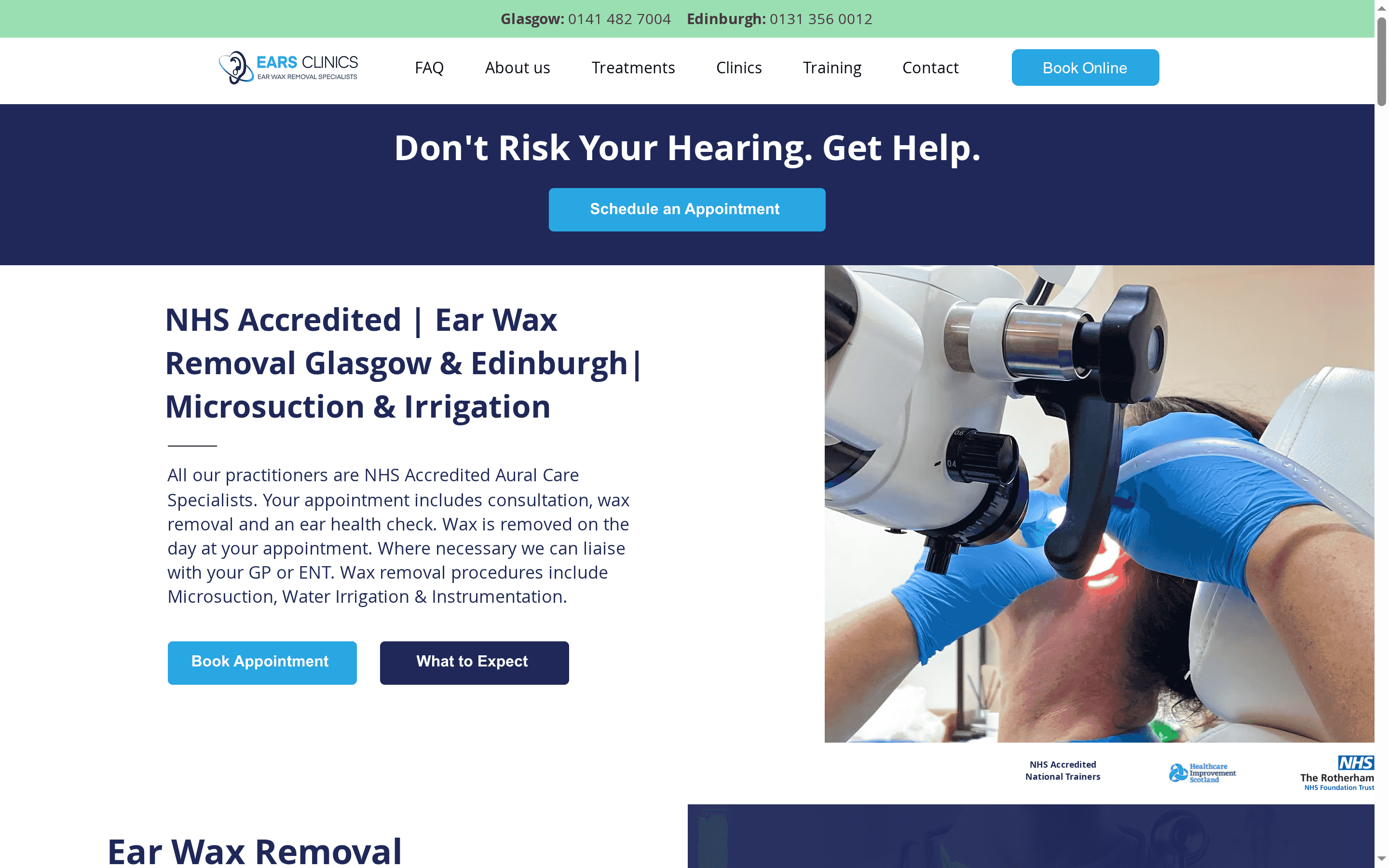
EARS Clinics is one of Scotland’s few regulated ear healthcare providers, registered with Healthcare Improvement Scotland and licensed to treat patients from two years of age. Our Aural Care Specialists are trained to NHS-accredited standards and perform microsuction, irrigation, and manual instrumentation, selecting the safest method for each patient based on their clinical history. Appointments are available in clinic in Glasgow and Edinburgh, with same-day options and home visits for those who need them. Costs start at £60 for adults and £75 for under-18s, with home visits at £180. To explore your ear wax removal options or book an appointment, visit earhealthservice.co.uk.
FAQ
What does NHS-accredited care actually mean?
NHS-accredited care means a service or provider has been assessed against quality and safety standards recognised by the NHS and its regulators, including the CQC in England and HIS in Scotland. Accreditation is an ongoing process of review and improvement, not a one-time award.
Which bodies oversee NHS accreditation schemes?
The CQC oversees accreditation scheme recognition in England, incorporating schemes such as JAG, ISAS, and AIMS into its regulatory framework. Healthcare Improvement Scotland performs an equivalent function in Scotland, and NHS England supports local accreditation programmes across nursing and midwifery.
Does accreditation replace CQC inspection?
Accreditation does not replace CQC inspection, but it can reduce inspection activity when a scheme has adequate uptake and rigour. CQC uses accreditation evidence to inform its assessments under the “well-led” and “effective” key questions.
How do I know if a private clinic meets NHS care standards?
Ask which named accreditation scheme the clinic operates under and whether it is regulated by CQC or HIS. For ear care in Scotland, look for HIS registration, which confirms the clinic meets defined clinical governance and safety standards.
Why does NHS accreditation matter for ear care?
Ear care procedures such as microsuction and irrigation carry clinical risks when performed by untrained practitioners. NHS-accredited or HIS-regulated clinics follow defined training, governance, and safety standards that protect patients from harm and provide consistent, evidence-based care.
Recommended