
What causes hearing loss in children: a parent's guide
TL;DR:
Hearing loss in children can be conductive or sensorineural, requiring accurate diagnosis for effective management. Conductive issues like glue ear and earwax blockage are often temporary and treatable, while sensorineural loss is usually permanent and linked to genetic, prenatal, or acquired factors. Early detection and intervention, including audiology assessments and protective measures against noise, are crucial for optimal hearing health.
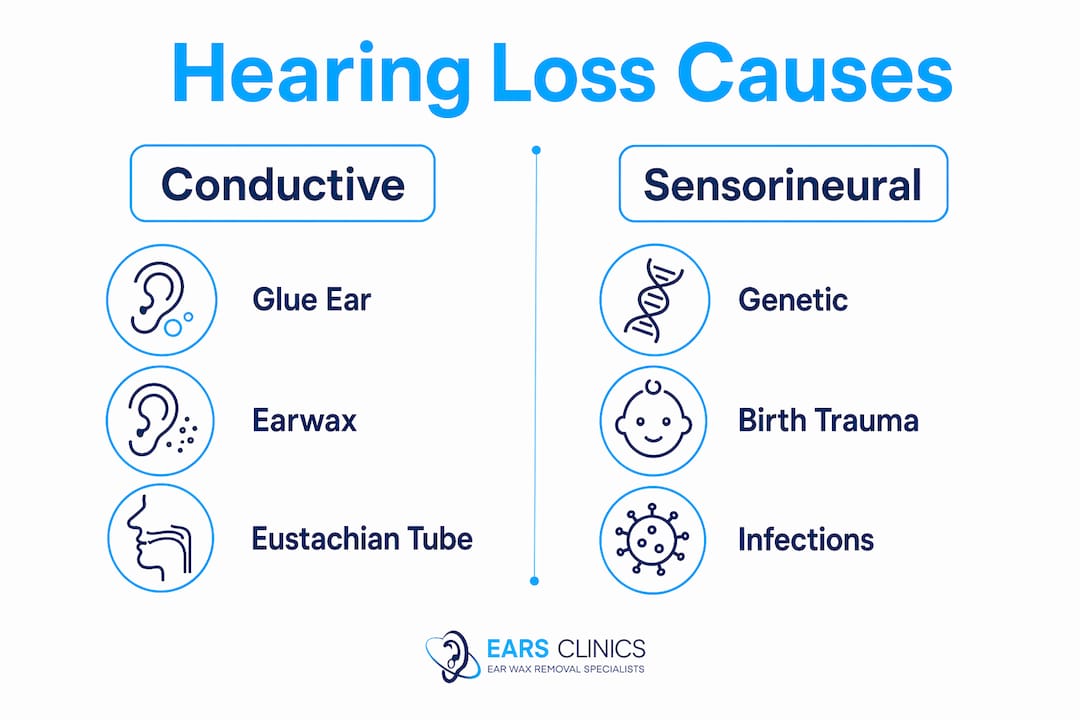
Hearing loss in children is defined as a reduced ability to detect sound, classified into two main types: conductive loss, which involves problems in the outer or middle ear, and sensorineural loss (SNHL), which involves damage to the inner ear or auditory nerve. Understanding what causes hearing loss in children matters because the cause determines whether the impairment is temporary or permanent, and whether early intervention can restore or protect hearing. The World Health Organization and HealthyChildren.org both confirm that causes vary significantly depending on a child’s age and the mechanism of hearing involved.
What causes hearing loss in children: conductive problems explained
Conductive hearing loss occurs when sound cannot travel efficiently through the outer or middle ear to reach the inner ear. The most common cause in children is glue ear, the informal term for otitis media with effusion, where fluid accumulates in the middle ear cavity. Middle ear fluid from congestion or infection is the leading cause of temporary hearing loss in children, and hearing typically returns once the fluid drains. This makes glue ear one of the most frequently encountered and most treatable forms of childhood hearing impairment.
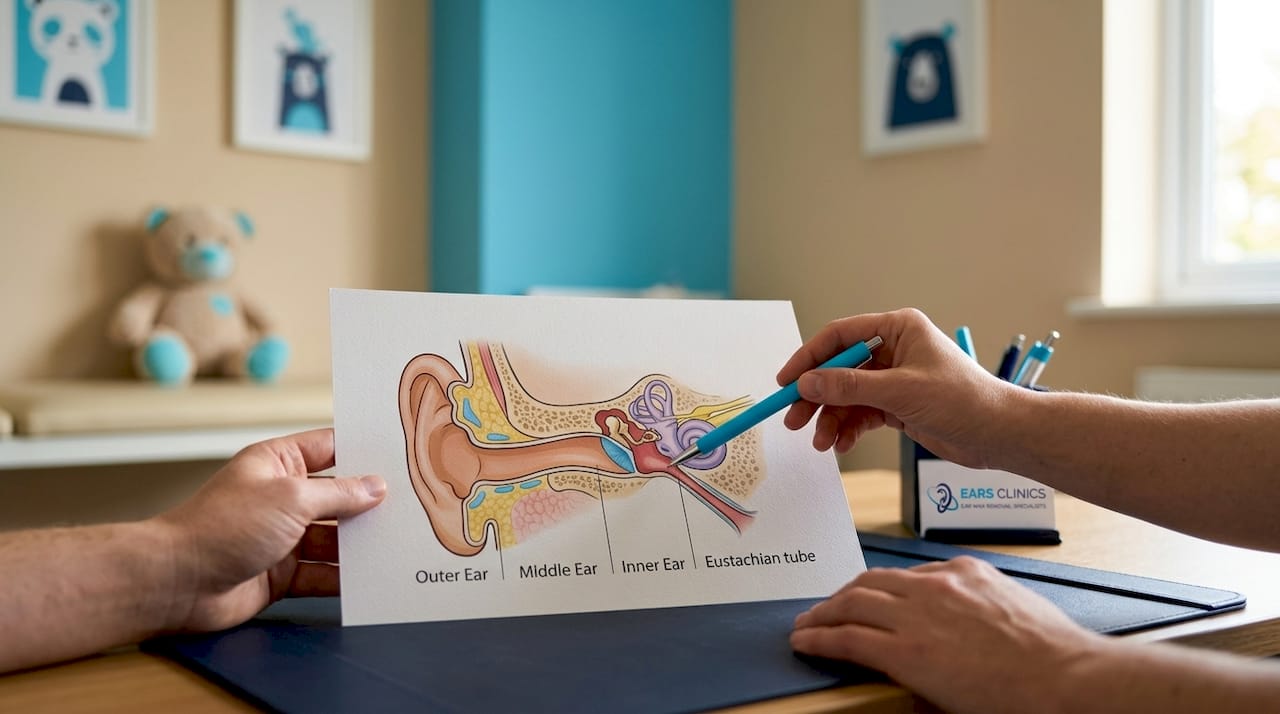
Eustachian tube dysfunction is the underlying mechanism in many of these cases. The Eustachian tube connects the middle ear to the back of the throat and regulates pressure. In young children, this tube is shorter and more horizontal than in adults, making it less effective at draining fluid. About 1 in 10 children develop persistent middle ear fluid after an ear infection, leading to continued hearing difficulties and sometimes speech delays. That figure underscores why a single ear infection should not be dismissed without follow-up.
Earwax impaction, known clinically as cerumen impaction, is another reversible conductive cause. Wax is a natural and protective substance, but when it accumulates and blocks the ear canal, it reduces sound transmission. You can read more about earwax buildup in children and how to manage it safely. Professional removal using microsuction, the method recommended by current NICE guidelines, is the safest approach for children. Irrigation and manual instrumentation are also clinically valid options when selected by a trained clinician based on the child’s history and presentation.
The table below summarises the key differences between common conductive causes:
Cause | Mechanism | Typical outcome |
Glue ear (otitis media with effusion) | Fluid in middle ear reduces sound conduction | Often resolves; may need grommets if persistent |
Eustachian tube dysfunction | Poor drainage leads to fluid retention | Hearing returns once drainage improves |
Cerumen impaction | Wax blocks ear canal | Fully reversible with professional removal |
Structural abnormalities | Malformed ear canal or ossicles | May require surgical assessment |
Pro Tip: If your child’s teacher reports inattentiveness or your child frequently asks you to repeat yourself, do not assume it is a behavioural issue. Persistent conductive hearing loss from glue ear is often mistaken for attention problems, and a simple hearing test can clarify the picture.
What sensorineural factors cause hearing loss in children?
Sensorineural hearing loss differs fundamentally from conductive loss because it involves damage to the hair cells of the cochlea or the auditory nerve itself. Sensorineural loss is often permanent, caused by inner ear or nerve damage, and can be present from birth or develop afterwards. This permanence is what makes early identification so critical.
Genetic factors are the most common congenital cause of sensorineural hearing impairment in children. Genetic factors and intrauterine infections such as rubella and cytomegalovirus (CMV) are major prenatal causes of hearing loss, according to the WHO. CMV in particular is the leading non-genetic cause of congenital hearing loss in the UK, yet it remains underdiagnosed because many mothers experience no symptoms during pregnancy. Rubella, largely controlled through the MMR vaccine, remains a risk in unvaccinated populations.
Perinatal risk factors, those occurring around the time of birth, also contribute significantly. Birth asphyxia, severe neonatal jaundice, and low birth weight all increase the risk of hearing impairment in newborns. A 2026 meta-analysis published in Frontiers in Pediatrics found that very low birth weight and ototoxic drugs in neonatal intensive care unit (NICU) infants significantly raise the risk of hearing loss. This means that any child with a NICU history warrants enhanced audiology surveillance, not just a standard newborn screen.
Inner ear malformations, such as an enlarged vestibular aqueduct or Mondini dysplasia, are structural causes of SNHL that may be present from birth or worsen progressively. These are typically identified through MRI or CT imaging following an audiological assessment.
Cause category | Examples | Hearing loss type |
Genetic | Connexin 26 mutations, syndromic conditions | Sensorineural, often bilateral |
Prenatal infection | Cytomegalovirus, rubella, toxoplasmosis | Sensorineural, variable severity |
Perinatal factors | Birth asphyxia, jaundice, low birth weight | Sensorineural, risk increases with severity |
Inner ear malformations | Enlarged vestibular aqueduct, Mondini dysplasia | Sensorineural, may be progressive |
How do infections and trauma contribute to childhood hearing loss?
Acquired hearing loss, meaning loss that develops after birth rather than being present from the outset, has several well-documented causes in early childhood. Meningitis and chronic ear infections are established causes of hearing loss during early childhood, with meningitis being one of the most serious. Bacterial meningitis can cause rapid and severe sensorineural hearing loss by damaging the cochlea through inflammation and toxin release. Children who survive bacterial meningitis should receive urgent audiological assessment, as early cochlear implant candidacy assessment may be time-sensitive due to cochlear ossification.
Chronic otitis media, which is recurrent or persistent middle ear infection, can cause both conductive and sensorineural damage over time. Repeated infections may lead to perforation of the eardrum, erosion of the ossicles (the tiny bones of the middle ear), or cholesteatoma, an abnormal skin growth that destroys surrounding tissue. Each of these complications can produce lasting hearing impairment if left untreated.
Head trauma and ear trauma are less common but clinically significant causes. A direct blow to the ear, a skull fracture, or a sudden pressure change, such as from an explosion or a slap to the ear, can rupture the eardrum or damage the cochlea. These injuries require prompt medical assessment.
Ototoxic medications are another acquired risk. Earwax build-up and ototoxic drugs are recognised contributing factors across the lifespan. Aminoglycoside antibiotics such as gentamicin, certain chemotherapy agents including cisplatin, and high-dose loop diuretics all carry cochlear toxicity risk. Clinicians prescribing these medications to children should monitor hearing closely, particularly in NICU settings.
Pro Tip: If your child has recently recovered from bacterial meningitis, request an audiology referral within two to four weeks of discharge. Delays in assessment can narrow the window for certain interventions, including cochlear implantation.
What role does noise exposure play in hearing loss in children?
Noise-induced hearing loss (NIHL) is entirely preventable, yet it is increasingly common in children and adolescents. Noise exposure causes hearing loss in a dose-dependent manner, meaning the louder the sound and the longer the exposure, the greater the damage to the hair cells of the cochlea. Unlike most other causes of hearing impairment, NIHL is cumulative and irreversible once it occurs.
Children today face noise exposure from multiple sources: personal audio devices such as smartphones and tablets, live music events, sports stadiums, and even some classrooms. The CDC recommends a clear set of protective steps for parents and carers:
Turn down the volume on personal devices to no more than 60% of maximum, and limit listening sessions to under 60 minutes at a time.
Move away from loud sound sources at concerts, fireworks displays, or sporting events where possible.
Use hearing protection earmuffs or earplugs designed for children in high-noise environments. Resources such as BANZ® Carewear’s guide explain how earmuffs reduce sound and what to look for when choosing protection for children.
Take regular breaks from noise exposure to allow the auditory system to recover.
Teach children from an early age to recognise when sound is uncomfortably loud and to act on that signal.
Good ear hygiene practices also reduce the risk of cerumen impaction, which can compound hearing difficulties in children already exposed to noise. Parents should avoid inserting cotton buds or any object into a child’s ear canal, as this pushes wax deeper and risks injury. If wax build-up is suspected, professional assessment is the appropriate step.
Key takeaways
Hearing loss in children results from either conductive problems in the outer or middle ear, or sensorineural damage to the inner ear or auditory nerve, and identifying the correct type is the foundation of appropriate care.
Point | Details |
Conductive loss is often reversible | Glue ear, earwax impaction, and Eustachian tube dysfunction typically resolve with treatment. |
Genetic and prenatal causes dominate SNHL | Cytomegalovirus, rubella, and genetic mutations are the leading causes of permanent hearing loss from birth. |
NICU history requires follow-up | Low birth weight and ototoxic medication exposure in NICU infants significantly raise hearing loss risk. |
Meningitis demands urgent audiology review | Bacterial meningitis can cause rapid cochlear damage; early assessment is time-sensitive. |
Noise-induced hearing loss is preventable | Volume limits, hearing protection, and noise breaks protect children’s hearing from cumulative damage. |
Our perspective on recognising causes and seeking care
At EARS Clinics, we see a consistent pattern in the families who come to us: parents who noticed something was wrong months before anyone took it seriously. A child who stops responding to their name, who turns the television up, who seems distracted in class. These are not small things. They are early signs of hearing loss that deserve prompt attention.
One of the most common misconceptions we encounter is the assumption that ear infections always cause permanent damage, or conversely, that they never do. The reality is more nuanced. A single episode of glue ear in an otherwise healthy child will usually resolve without lasting consequence. But recurrent infections, persistent fluid, or an untreated cerumen impaction in a child already navigating speech development can have a measurable impact on language acquisition and educational progress.
We also see families who have been told to wait and see after a NICU stay, without being given clear guidance on audiology follow-up. The 2026 Frontiers in Pediatrics research is unambiguous: NICU infants with combined risk factors need structured hearing surveillance, not a single newborn screen and a discharge letter.
Our advice is straightforward. If you are concerned about your child’s hearing, do not wait for the concern to resolve itself. Seek a professional assessment. For issues related to earwax, which is a common and entirely treatable cause of conductive hearing loss, ensure that removal is carried out by a trained clinician using safe, evidence-based methods. Procedures like microsuction, irrigation, and manual instrumentation should only be performed by regulated practitioners. Self-treatment with cotton buds or ear candles carries real risk and no clinical benefit.
— EARS
How EARS Clinics can help with your child’s ear health
EARS Clinics provides safe, NHS-accredited ear wax removal for children from the age of two, with services available in Glasgow, Edinburgh, and through home visits across Scotland. Our Aural Care Specialists are trained in microsuction, irrigation, and manual instrumentation, selecting the most appropriate method based on each child’s clinical presentation and medical history. All clinics are registered with Healthcare Improvement Scotland (HIS), making us one of the few fully regulated ear health providers in Scotland.
Appointments for under-18s are priced at £75, with home visits available at £180 for families who prefer care in a familiar environment. If your child is showing signs of hearing difficulty and you suspect earwax may be a contributing factor, you can explore our ear wax removal procedures or book directly at earhealthservice.co.uk.
FAQ
What is the most common cause of hearing loss in children?
Glue ear, or otitis media with effusion, is the most common cause of temporary hearing impairment in children, resulting from fluid accumulation in the middle ear. It typically resolves once the fluid drains, though persistent cases may require medical intervention.
Can earwax cause hearing loss in a child?
Yes. Cerumen impaction blocks the ear canal and reduces sound transmission, causing conductive hearing loss. Professional removal by a trained clinician using microsuction or another appropriate method restores hearing safely and effectively.
Is childhood hearing loss always permanent?
No. Conductive hearing loss from glue ear, earwax, or ear infections is often temporary and treatable. Sensorineural hearing loss, caused by inner ear or nerve damage, is more likely to be permanent and requires specialist audiological management.
Which children are at highest risk of hearing loss from birth?
Children born with very low birth weight, those admitted to a NICU, and those exposed to ototoxic medications in early life carry a significantly higher risk of sensorineural hearing loss. Babies born to mothers who had cytomegalovirus or rubella during pregnancy are also at elevated risk.
How can parents protect their child’s hearing from noise damage?
The CDC recommends limiting personal device volume to 60% of maximum, using child-appropriate hearing protection earmuffs in loud environments, and taking regular breaks from noise exposure. These steps reduce the cumulative cochlear damage that leads to noise-induced hearing loss.
Recommended