
The role of clinic safety protocols in 2026
TL;DR:
Effective clinic safety protocols integrate infection prevention, risk assessments, and procedure standardization to ensure safe healthcare delivery.
Leading organizations like CDC, WHO, JCI, and CMS shape these standards through guidance on risk management and infection control.
Clinic safety protocols are comprehensive systems of policies, procedures, and practices designed to prevent harm and ensure safe healthcare delivery for both patients and staff. In regulated medical settings, the role of clinic safety protocols extends far beyond simple checklists. These systems integrate infection prevention, risk management, procedure standardisation, and regulatory compliance into a single operational framework. Foundational guidance from organisations including the CDC, WHO, and Joint Commission International (JCI) shapes how clinics build and maintain these frameworks. For clinic managers and healthcare professionals, understanding this architecture is the starting point for delivering consistently safe, high-quality care.
What are the key components of effective clinic safety protocols?
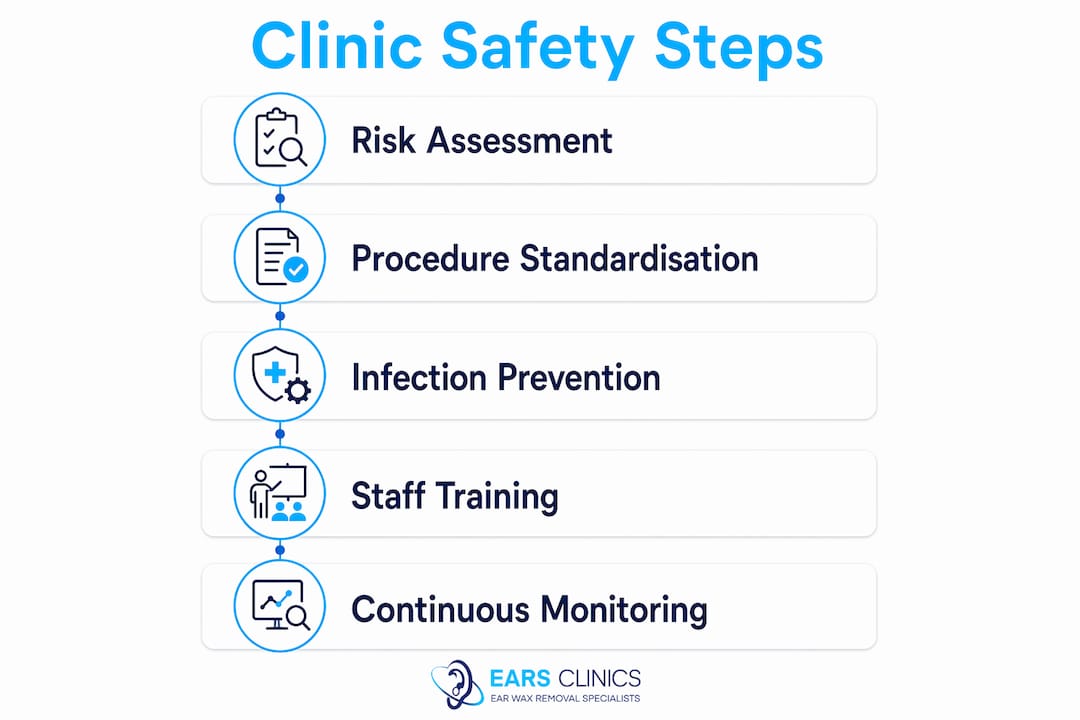
Effective medical facility safety protocols are built on several interlocking components, each addressing a distinct category of clinical risk. No single measure is sufficient on its own. The strength of a protocol system lies in how well these components work together.
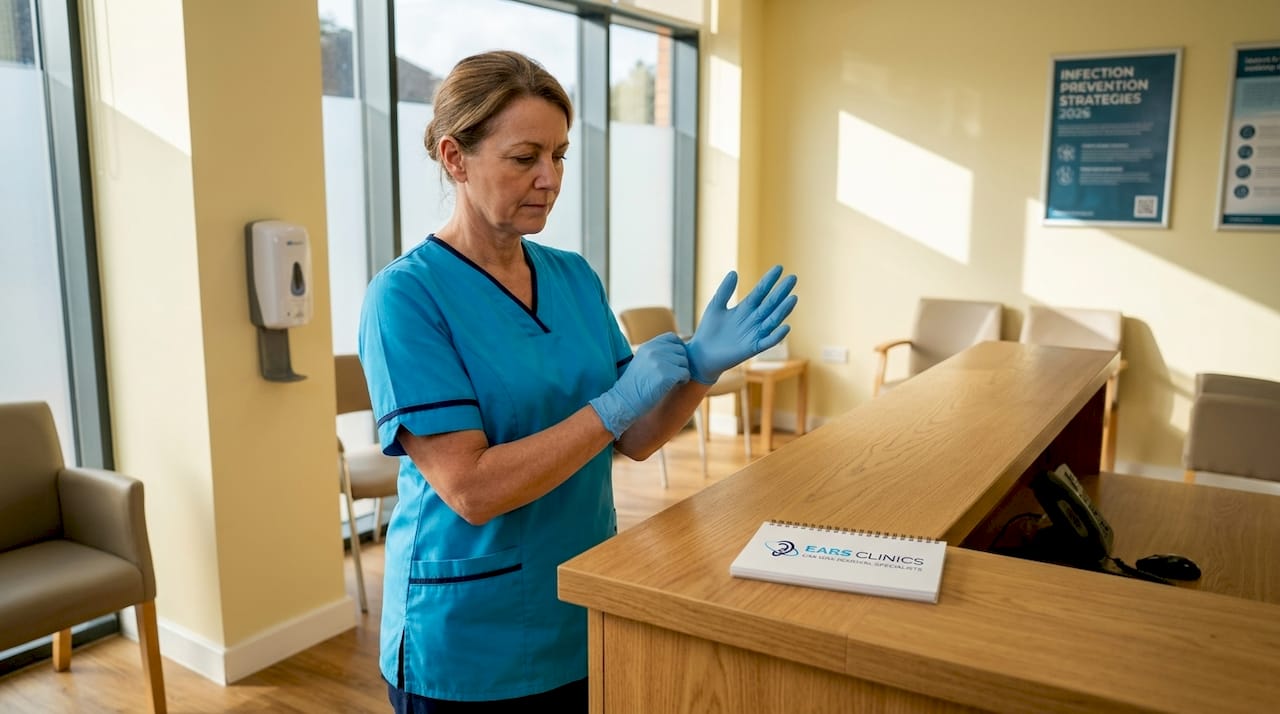
Infection prevention and control forms the backbone of any clinic safety framework. This includes hand hygiene programmes, appropriate use of personal protective equipment (PPE), staff immunisation, and environmental decontamination. CDC guidance identifies controlling pathogen transmission through work restrictions and post-exposure prophylaxis as core elements of occupational infection prevention. This means clinics must address both the physical environment and staff behaviour simultaneously, not one at a time.
Hand hygiene: Protocols must specify the exact moments when hand hygiene is required, such as before patient contact, after handling clinical waste, and following removal of PPE.
PPE standards: Written procedures should define which PPE is required for each clinical task, how it is donned and doffed, and how compliance is monitored.
Staff immunisation: Vaccination requirements for clinical staff reduce the risk of transmitting preventable infections to vulnerable patients.
Environmental controls: Decontamination schedules, surface disinfection standards, and waste management procedures all form part of the infection control layer.
Risk assessment is the second critical component. JCI standards specify that risk assessments should not follow a fixed frequency alone. Instead, reassessment must be triggered by significant changes to the environment or clinical processes, with documented follow-up actions assigned to responsible teams. A risk register that identifies hazards but fails to record closure actions is a common documentation weakness identified during external reviews.
Procedure standardisation addresses the consistency of clinical tasks. Care bundles, which group several evidence-based practices into a single protocol for high-risk procedures, are a well-established method for reducing variability and error. Staff education and ongoing monitoring of protocol adherence complete the picture, ensuring that written standards translate into consistent clinical behaviour.

Pro Tip: When reviewing your clinic’s infection prevention framework, map each protocol element to a specific workflow moment rather than a general task category. Protocols tied to defined moments are measurably easier to audit and improve.
How do authoritative organisations shape clinic safety best practices?
Four organisations produce the most widely adopted frameworks for clinic safety standards in 2026: the CDC, WHO, JCI, and the Centers for Medicare and Medicaid Services (CMS). Each approaches patient safety guidelines from a distinct angle, and together they form the evidence base that most regulated clinics draw upon.
Organisation | Primary focus | Key contribution to clinic safety |
CDC | Occupational infection prevention | Work restrictions, post-exposure prophylaxis, pathogen transmission control |
WHO | Global infection prevention and hand hygiene | Lifecycle guidelines for high-risk procedures, multimodal improvement strategies |
JCI | Risk assessment and environment of care | Risk assessment triggers, documentation standards, environment of care evaluations |
CMS | Regulatory compliance and patient safety programmes | Evidence-based safety initiative participation requirements for hospitals |
The CDC’s occupational infection prevention programme addresses both patient-facing and staff-facing risks, recognising that healthcare workers are simultaneously potential vectors and potential victims of clinical infection. WHO’s 2026 World Hand Hygiene Day campaign reinforces that hand hygiene inclusion in infection prevention and control (IPC) action plans, supported by monitoring and feedback, is a non-negotiable standard. This matters because guidance that lacks a monitoring mechanism rarely produces sustained behaviour change.
JCI’s approach to risk assessment is particularly instructive for clinic managers. Rather than prescribing annual reviews as sufficient, JCI recommends reassessment whenever significant environmental or process changes occur, with each identified risk linked to a responsible team and a defined reassessment schedule. CMS patient safety standards require that hospitals participate in evidence-based safety initiatives to reduce preventable harm, a requirement that flows down to clinic-level operations through Qualified Health Plan compliance verification.
What practical steps should clinics follow to implement safety protocols?
Translating written protocols into consistent clinical practice requires a structured implementation approach. The following steps reflect current best practice for clinic managers establishing or strengthening their safety systems.
Conduct a baseline audit. Before introducing new protocols, assess current compliance levels across infection prevention, risk management, and procedure documentation. Identify gaps between written policy and observed practice.
Establish monitoring and feedback loops. Hand hygiene audits that target each specific workflow moment, combined with rapid feedback to clinical teams, produce measurable results. Studies show hand hygiene compliance rising from approximately 63% to 82% within weeks of multimodal intervention including monitoring and feedback. That nearly 19 percentage point improvement demonstrates that feedback is not optional; it is the mechanism through which protocols become habits.
Implement care bundles for high-risk procedures. WHO recommends combining aseptic technique, staff education, care bundles, and surveillance for procedures such as central venous catheter (CVC) insertion and maintenance. Treating these procedures as a lifecycle rather than a single event is the key distinction between adequate and excellent infection prevention.
Schedule and document risk assessments. Link each identified hazard to a named responsible team member and define both the initial action and the reassessment trigger. External reviews frequently identify absent reassessment triggers and missing closure records as the primary documentation failures in risk registers.
Embed safety culture through staff engagement. Protocols that staff understand and believe in are followed more consistently than those imposed without explanation. Regular briefings, case reviews, and visible leadership commitment all contribute to a safety culture that sustains compliance between formal audits.
Review and update protocols in response to new guidance. WHO, CDC, and JCI all update their frameworks periodically. Assign a named individual within your clinic to monitor guidance updates and initiate protocol revisions when required.
Pro Tip: Assign each protocol element an owner, not just a department. When a named individual is accountable for a specific protocol component, reassessment and closure documentation rates improve significantly compared to team-level ownership.
For clinics managing ear care procedures specifically, patient safety protocols for ear wax removal provide a useful model for how procedure-specific safety frameworks are structured from pre-treatment assessment through to post-procedure review.
How do safety protocols impact patient outcomes and staff well-being?
The measurable benefits of well-implemented clinic safety measures extend across patient outcomes, staff welfare, and organisational reputation. The evidence base is clear and consistent.
Infection prevention protocols directly reduce healthcare-associated infections (HAIs), which remain one of the most significant sources of preventable harm in clinical settings. WHO’s lifecycle approach to catheter-related bloodstream infections demonstrates that standardising multiple risk factors across the entire procedure, from insertion through maintenance to removal, produces greater reductions in infection rates than addressing any single stage in isolation. This finding has broad implications for any clinic managing invasive procedures.
“Timing of infection prevention actions is critical; protocols specifying workflow moments and supported by monitoring and feedback deliver better compliance and outcomes.” — WHO, 2026 World Hand Hygiene Day
Staff well-being benefits are equally significant. Occupational infection prevention programmes that include work restrictions, post-exposure prophylaxis, and clear reporting pathways reduce the risk of healthcare workers acquiring infections in the course of their duties. A clinic that protects its staff demonstrates the same standard of care it applies to patients, and this consistency strengthens the overall safety culture.
Regulatory compliance and organisational reputation are the third dimension of benefit. Clinics registered with bodies such as Healthcare Improvement Scotland (HIS) or the Care Quality Commission (CQC) are subject to inspection against defined safety standards. Clinics with documented, actively monitored protocols are better positioned during inspections and less likely to face enforcement action. For private clinics in particular, regulatory standing is a direct signal of trustworthiness to prospective patients. Reviewing regulated ear care standards in Scotland illustrates how national and international safety frameworks translate into clinic-level practice requirements.
Key takeaways
Effective clinic safety protocols require active monitoring, documented risk management, and lifecycle-based procedure standardisation to produce measurable improvements in patient and staff outcomes.
Point | Details |
Infection prevention is foundational | Hand hygiene, PPE, immunisation, and environmental controls must work together, not in isolation. |
Risk assessments need triggers and closure records | JCI standards require reassessment on process changes, with each risk linked to a named responsible team. |
Feedback loops drive compliance | Multimodal hand hygiene interventions raised compliance from 63% to 82% within weeks in published studies. |
Lifecycle management reduces HAIs | WHO recommends treating high-risk procedures as a full lifecycle, combining bundles, education, and surveillance. |
Regulatory standing reflects protocol quality | HIS and CQC registration signals to patients and inspectors that safety standards are actively maintained. |
Our view on clinic safety protocols in practice
Safety protocols are only as strong as the culture that surrounds them. At EARS Clinics, we have observed that the most common implementation failure is not a lack of written policy. It is the absence of a feedback mechanism that connects observed practice back to the written standard. Clinics invest considerable effort in drafting protocols and then assume that distribution is sufficient. It rarely is.
The organisations that sustain genuine safety improvements share one characteristic: leadership that treats protocol adherence as a clinical priority rather than an administrative obligation. When senior clinicians model correct hand hygiene technique, conduct visible audits, and act on the results, compliance rates follow. When protocols are delegated entirely to administrative staff without clinical leadership involvement, they tend to drift.
We also believe that the integration of updated guidance is underestimated as a continuous task. WHO’s 2026 catheter-related infection prevention guidelines and the updated hand hygiene campaign materials represent meaningful advances on previous frameworks. Clinics that treat their protocols as fixed documents rather than living systems will find themselves operating on outdated evidence within two to three years. Assigning a named clinician to monitor guidance updates is not bureaucratic overhead. It is a patient safety measure.
The future of clinic safety lies in tighter integration between protocol documentation, real-time monitoring, and staff feedback. Technology will play a growing role, but the human elements of leadership, accountability, and professional culture remain the determining factors in whether protocols produce the outcomes they promise.
— EARS
Safe ear care that meets the highest clinical standards
At Earhealthservice, every ear wax removal procedure is delivered within a framework of rigorous clinical safety measures, following the standards set by Healthcare Improvement Scotland (HIS). EARS Clinics are one of the few regulated ear healthcare providers in Scotland, licensed to treat patients from two years of age. Whether you are a healthcare professional exploring NHS-accredited microsuction training or a clinic manager seeking a trusted referral pathway for patients, EARS Clinics offers a model of regulated, evidence-based ear care. Appointments are available in clinic, on the same day, or as home visits across Glasgow and Edinburgh. Explore the full range of ear wax removal procedures or book directly at earhealthservice.co.uk.
FAQ
What is the role of clinic safety protocols?
Clinic safety protocols are structured systems of policies and practices that prevent harm to patients and staff by standardising infection prevention, risk management, and clinical procedures. They form the operational foundation of safe healthcare delivery in any regulated medical setting.
How often should clinics conduct risk assessments?
JCI standards do not prescribe a fixed frequency for risk assessments. Instead, reassessment must be triggered by significant changes to the clinical environment or processes, with documented follow-up actions assigned to named responsible individuals.
Which organisations set the standards for clinic safety?
The CDC, WHO, JCI, and CMS each produce widely adopted frameworks for medical facility safety protocols. Most regulated clinics in the UK also follow guidance from Healthcare Improvement Scotland (HIS) or the Care Quality Commission (CQC).
How does hand hygiene compliance improve with protocols?
Multimodal hand hygiene interventions that include auditing, monitoring, and rapid feedback have been shown to raise compliance from approximately 63% to 82% within weeks. Protocols that specify exact workflow moments produce consistently better results than general guidance.
Why are care bundles used in infection prevention?
Care bundles group several evidence-based practices into a single protocol for high-risk procedures, such as central venous catheter insertion. WHO recommends this lifecycle approach because standardising multiple risk factors simultaneously produces greater reductions in infection rates than addressing individual steps in isolation.
Recommended