
Common ear health myths: facts you need to know

TL;DR:
Many ear health myths, like using cotton swabs or ear candling, are scientifically disproven but still widely believed and harmful. Ear canals are self-cleaning, and only the outer ear should be cleaned with a soft cloth, as inserting objects can cause damage or infections. Hearing loss affects all ages, mainly from noise exposure, and early use of hearing aids can preserve long-term hearing health.
Common ear health myths are widespread beliefs about ear care that clinical evidence consistently disproves, yet millions of people act on them daily. From using cotton swabs (Q-tips) to clean the ear canal, to believing that hearing aids accelerate hearing loss, these misconceptions cause real harm. A 2026 study found that 61.6% of young adults believe cotton swabs benefit ear hygiene, despite universal medical consensus against their use. Understanding the truth behind ear health is not merely academic. It determines whether you protect your hearing or quietly damage it over time.
1. Cotton swabs clean your ears safely

The ear canal is a self-cleaning system, and inserting cotton swabs disrupts that process rather than supporting it. The jaw’s natural movement during chewing and talking gradually migrates old wax and debris from the canal to the outer ear, where it dries and falls away. Cotton swabs push wax deeper toward the eardrum, causing impaction, micro abrasions, and in some cases a perforated eardrum.
The same 2026 study found that 23.4% of students admit to inserting sharp objects into their ears. This figure confirms that ear hygiene myths translate directly into dangerous behaviour. Clinicians including Dr Angela Peng at Henry Ford Health have noted that the ear canal’s skin is delicate, and even a cotton swab used gently can create small wounds that invite bacterial infection.
The risks associated with cotton swab use include:
Wax impaction caused by compressing cerumen against the eardrum
Micro abrasions that increase infection risk
Eardrum perforation in cases of sudden movement or deep insertion
Stimulation of excess wax production as the ear compensates for dryness
Pro Tip: The only part of the ear you should clean at home is the outer ear (the pinna). Use a soft, damp cloth to wipe away any visible wax. Never insert anything into the ear canal, including cotton swabs, hairpins, or ear candles.
For guidance on safe ear cleaning for children, the same principle applies: the canal should be left alone unless a trained clinician advises otherwise.
2. Ear candling removes earwax effectively
Ear candling is defined as the practice of inserting a hollow, cone-shaped candle into the ear canal and lighting the far end, with the claimed aim of drawing out wax through suction. Clinical evidence disproves this entirely. No measurable suction effect occurs during the procedure, and the dark, waxy residue found inside the candle after burning is candle residue, not earwax.
The hazards of ear candling are well documented and include:
Burns to the face, ear canal, and eardrum from dripping wax
Canal obstruction caused by candle wax entering the ear
Fire risk from the open flame near hair and bedding
Eardrum perforation in rare but recorded cases
No professional medical body endorses ear candling as a treatment for wax build-up or any other ear condition. The method persists largely through word of mouth and wellness marketing rather than clinical evidence.
Pro Tip: If you have seen ear candling promoted as a natural remedy, treat it with the same scepticism you would apply to any unregulated health claim. Safe, clinically validated alternatives such as microsuction and irrigation are available from trained professionals and carry none of these risks.
3. Hearing loss only affects older people
Hearing loss is not primarily an age-related condition. Research shows that 65% of individuals with hearing loss are under the age of 64, which means the majority of those affected are of working age or younger. This figure challenges one of the most persistent ear health misconceptions in public awareness.
Noise exposure is the leading preventable cause of hearing loss in younger adults. A 2026 study found that 86.4% of students report listening to music at maximum volume, a behaviour that causes cumulative, irreversible damage to the hair cells of the cochlea. Genetics, certain medications (ototoxic drugs), and conditions such as Ménière’s disease also contribute across all age groups.
The table below shows the primary causes of hearing loss and the demographics most commonly affected:
Cause | Most affected group |
Noise-induced (earbuds, concerts) | Under 35s |
Age-related degeneration (presbycusis) | Over 65s |
Ototoxic medications | All ages |
Genetic conditions | Children and young adults |
Chronic ear infections | Children |
Audiologists recommend a baseline hearing test in your 30s or 40s, even if you have no symptoms. Early detection allows for intervention before significant decline occurs, and for newborns, diagnosis by three months and intervention by six months substantially reduces the risk of developmental and cognitive impact.
4. Hearing aids make your hearing worse over time
The belief that hearing aids cause the ear to become “lazy” and accelerate decline is one of the most damaging ear health misconceptions in circulation. It leads people to delay treatment for years, during which the auditory cortex receives insufficient stimulation and begins to atrophy. Untreated hearing loss leads to brain auditory cortex atrophy, not hearing aid use.
The auditory cortex operates on a “use it or lose it” principle. When sound signals are consistently weak or absent, the brain reallocates that neural territory to other functions. Hearing aids counteract this by delivering appropriately amplified, processed sound to the auditory system, keeping those brain regions active and preserving clarity of perception.
The benefits of hearing aid use extend well beyond volume:
Improved speech clarity in noisy environments
Reduced listening fatigue during conversation
Lower risk of cognitive decline associated with untreated hearing loss
Better balance and spatial awareness in some patients
Reduced social withdrawal and associated mental health impact
Modern hearing aids from manufacturers such as Phonak, Oticon, and Widex are highly customisable, with digital processing that adapts to different sound environments. The stigma historically attached to wearing hearing aids has also diminished considerably, particularly as devices have become smaller and more discreet. Audiologists consistently report that patients who adopt hearing aids early preserve significantly more functional hearing over the long term.
5. Hearing loss means sounds become quieter
High-frequency hearing loss, the most common form, does not primarily reduce volume. It reduces consonant clarity. Words sound muffled or indistinct because consonants such as “s,” “f,” “th,” and “sh” occupy the high-frequency range that is typically lost first. This is why people with undiagnosed hearing loss often say others are mumbling rather than quiet.
This misconception delays diagnosis because people assume hearing loss would be obvious. They can still hear speech at normal volumes but struggle to distinguish words in background noise or follow fast conversation. Recognising that clarity loss, not volume loss, is the primary symptom encourages earlier testing and intervention.
6. Earwax is dirty and should always be removed
Earwax, known clinically as cerumen, is a beneficial substance produced by glands in the outer ear canal. It protects the ear canal skin, traps dust and small insects, and has natural antibacterial properties. Removing it unnecessarily disrupts the ear’s own defence system.
Overcleaning the ear canal causes dryness, itching, and paradoxically stimulates excess wax production as the body attempts to restore its natural barrier. Most people never need to actively remove earwax. The canal manages itself. Professional removal is appropriate only when wax becomes impacted and causes symptoms such as:
Reduced hearing or a sensation of fullness in the ear
Tinnitus (ringing or buzzing) that was not previously present
Earache or discomfort without an obvious cause
Recurrent ear infections linked to wax build-up
When removal is clinically indicated, the method chosen depends on the patient’s medical history and the nature of the blockage. The table below compares the three clinically validated approaches:
Method | How it works | Best suited for |
Microsuction | Gentle suction removes wax under direct vision | Most patients; preferred by NICE guidelines |
Irrigation | Warm water flushes the canal | Soft wax; not suitable if eardrum is perforated |
Manual instrumentation | Wax removed with fine instruments | Complex cases; used alongside microsuction |
All three methods are clinically valid options when performed by trained, regulated clinicians. The practitioner selects the safest approach based on individual assessment, not patient preference alone.
Pro Tip: If you are using olive oil or mineral oil drops to soften wax at home, this is a safe and evidence-supported approach. Use two to three drops in the affected ear once or twice daily for five to seven days. Do not use drops if you have a perforated eardrum or a history of ear surgery without first consulting a clinician.
7. Earbuds are no more harmful than over-ear headphones
Earbuds are riskier than over-ear headphones because they sit directly in the ear canal, delivering sound at a much closer proximity to the eardrum. Earbuds expose the ear canal to higher sound intensity than over-ear models at equivalent volume settings. The difference in distance between the driver and the eardrum is small in absolute terms but significant in terms of decibel exposure.
The World Health Organisation estimates that over one billion young people are at risk of noise-induced hearing loss due to unsafe listening habits. Choosing over-ear headphones, keeping volume below 60% of maximum, and following the 60/60 rule (no more than 60 minutes of listening at a time) are the most practical steps to reduce this risk.
Key takeaways
Debunking ear health myths requires replacing habitual behaviours with evidence-based practices, and the most important step is recognising that the ear canal is a self-regulating system that rarely needs intervention.
Point | Details |
Cotton swabs cause harm | They push wax deeper and cause micro abrasions; avoid inserting anything into the ear canal. |
Ear candling is ineffective | No suction occurs; residue is candle wax, not cerumen; the method carries serious burn risks. |
Hearing loss affects all ages | 65% of those with hearing loss are under 64; noise exposure is the leading preventable cause. |
Hearing aids preserve hearing | They stimulate the auditory cortex and prevent atrophy; early adoption produces better outcomes. |
Earwax is protective | Removal is only necessary when wax is impacted and causing symptoms; overcleaning causes harm. |
What we have learned from years of seeing these myths in practice
Every week at EARS Clinics, we see patients who have spent months using cotton swabs, trying ear candles, or avoiding hearing aids because of advice they received from well-meaning friends or online sources. The myths covered in this article are not fringe beliefs. They are mainstream. That is what makes them genuinely dangerous.
What strikes me most is how often the delay in seeking professional care is rooted in a belief that the ear needs active management at home. The ear does not. It is one of the body’s most capable self-regulating systems, and the majority of problems we treat are caused or worsened by interference rather than neglect. The patients who fare best are those who leave the canal alone, seek a professional assessment when symptoms appear, and act on what a trained clinician recommends rather than what a wellness blog suggests.
There is no universal approach to ear care. A 70-year-old with a history of ear surgery requires a completely different assessment to a 25-year-old with noise-induced wax build-up. That is precisely why individual clinical assessment matters. Regulated clinicians, whether registered with Healthcare Improvement Scotland (HIS) or the Care Quality Commission (CQC), are trained to make those distinctions safely. Self-treatment based on myths cannot.
If there is one thing I would ask you to take from this article, it is this: trust the evidence, not the anecdote. Your hearing is worth protecting.
— EARS
Professional ear wax removal at EARS Clinics
If you are experiencing reduced hearing, a sensation of fullness, or discomfort that may indicate wax build-up, professional assessment is the right next step.
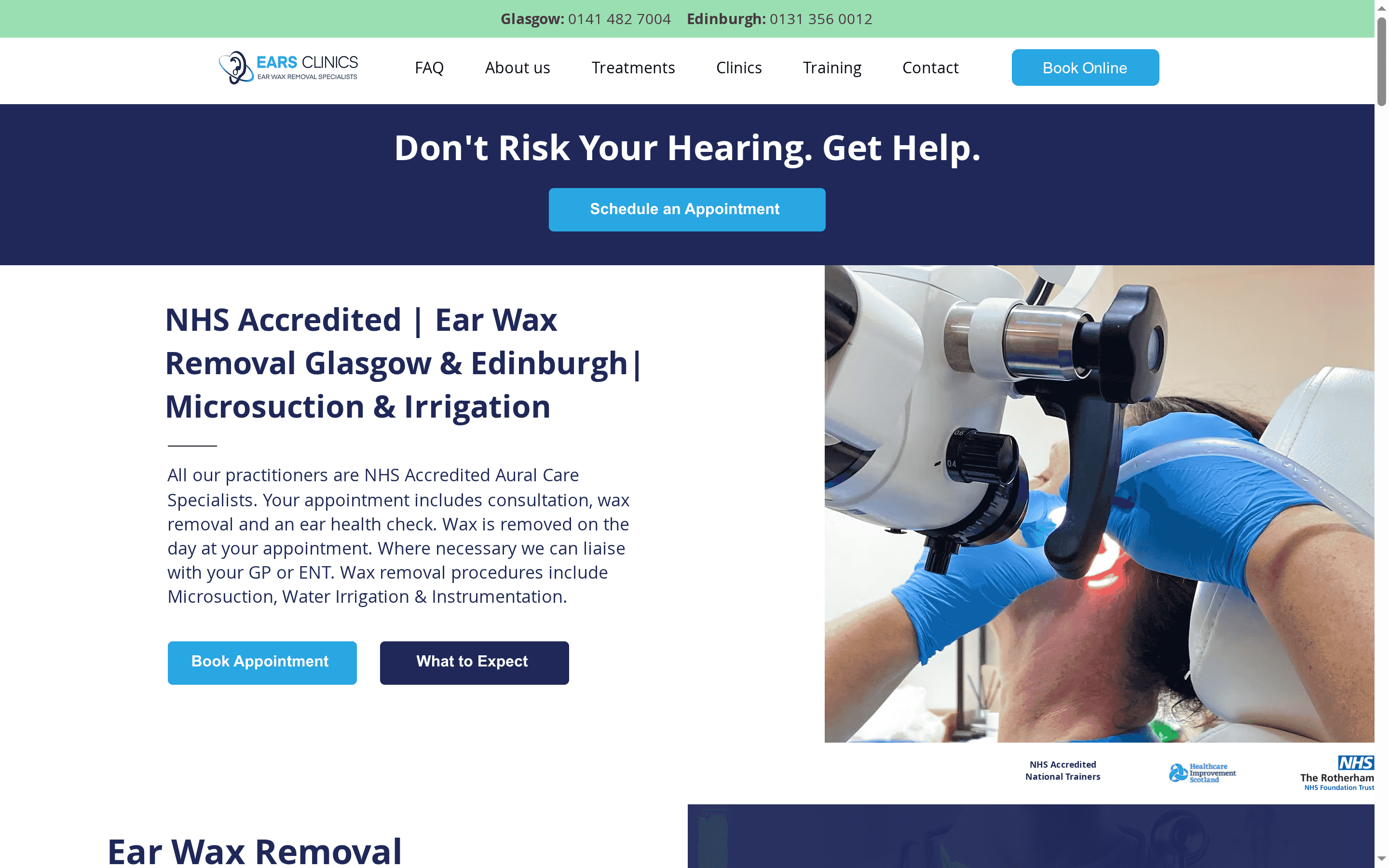
EARS Clinics provides NHS-accredited ear wax removal in Glasgow and Edinburgh, carried out by trained Aural Care Specialists registered with Healthcare Improvement Scotland. Appointments are available in clinic, with same-day options and home visits for those who need them. Microsuction is the preferred method following NICE guidelines, with irrigation and manual instrumentation available where clinically appropriate. The practitioner selects the safest procedure based on your individual history and presentation. Costs start from £60 for adults and £75 for under-18s. To find out which wax removal procedure is right for you, book directly through Earhealthservice.
FAQ
Are cotton swabs safe for cleaning ears?
Cotton swabs are not safe for cleaning the ear canal. They push wax deeper, cause micro abrasions, and can perforate the eardrum. The outer ear is the only area that should be wiped with a soft cloth.
Does earwax always need to be removed?
Earwax does not always need removal. The ear canal is self-cleaning, and professional removal is only appropriate when wax is impacted and causing symptoms such as hearing loss, tinnitus, or discomfort.
Can hearing aids make hearing worse?
Hearing aids do not worsen hearing. Untreated hearing loss causes auditory cortex atrophy through lack of stimulation, while hearing aids keep those brain regions active and preserve clarity over time.
Is hearing loss only a problem for older adults?
Hearing loss affects all age groups. Research shows that 65% of people with hearing loss are under 64, with noise exposure from earbuds and concerts being the leading preventable cause in younger adults.
What is the safest method for earwax removal?
Microsuction is the method preferred by current NICE guidelines and is considered the safest option for most patients. Irrigation and manual instrumentation are also clinically valid when selected by a trained clinician based on individual assessment.
Recommended