
What is manual instrumentation for ear wax removal?
TL;DR:
Manual instrumentation is a controlled ear wax removal method using specialized hand tools guided under magnification. It is especially effective for hard, impacted wax and should only be performed by trained clinicians due to safety risks. Patients should prepare with cerumenolytic drops and attend regulated clinics to ensure safe and effective treatment.
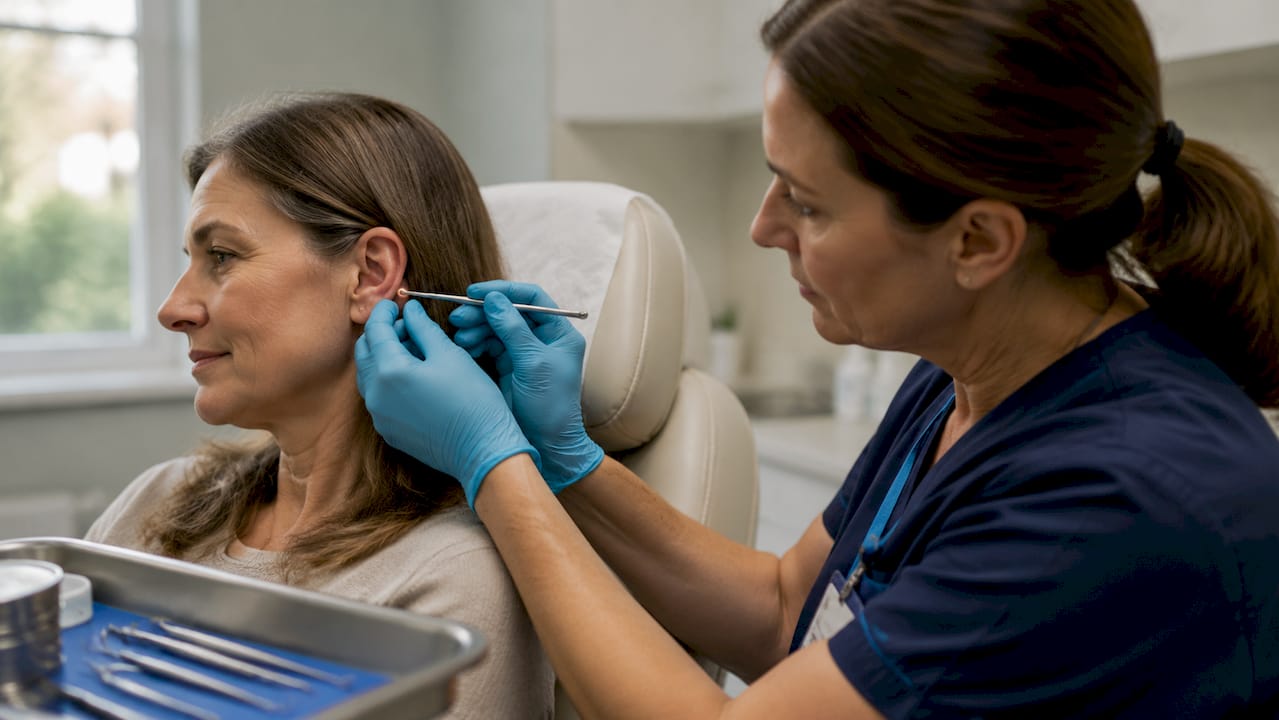
Manual instrumentation is the use of specialised hand tools to physically extract impacted ear wax, known clinically as cerumen, from the ear canal under direct visualisation. Unlike microsuction or irrigation, this technique relies on mechanical control rather than suction or water pressure. Instruments such as curettes, hooks, and micro-forceps are guided carefully along the canal wall to separate and remove wax deposits. Performed by trained Aural Care Specialists, manual instrumentation remains a clinically valid and important method in professional ear care, particularly when other techniques are unsuitable. Understanding what it involves helps patients make informed decisions about their ear health.
What is manual instrumentation and which tools are used?
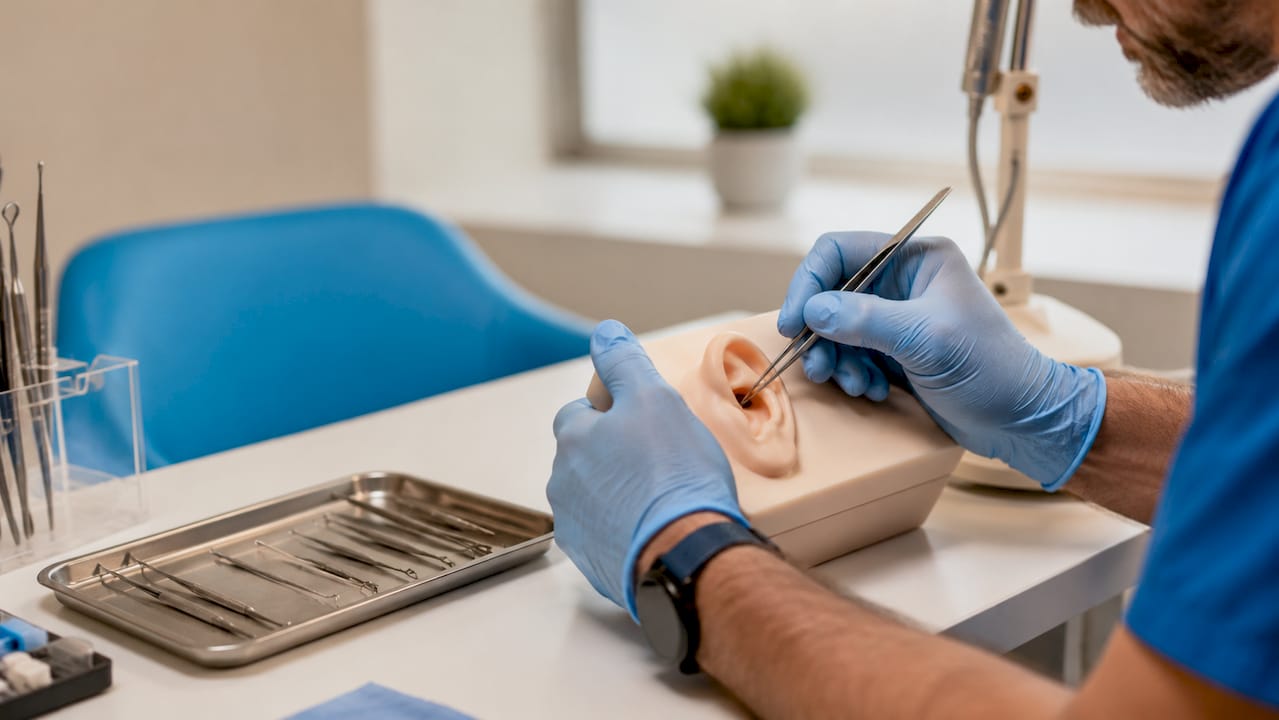
Manual instrumentation is a controlled clinical procedure performed under magnification, not a simple act of ear picking. The clinician uses a range of specialised instruments, each designed for a specific task within the ear canal. The choice of tool depends on the wax type, its position, and how firmly it adheres to the canal wall.
The most commonly used instruments include:
Jobson Horne probe: A slender metal instrument with a ring-shaped end used for scraping wax away from the canal wall. The ring design limits the depth of penetration, reducing the risk of trauma.
Curettes: Spoon-shaped or loop-shaped tools that scoop wax deposits out of the canal. They come in various sizes to suit different canal widths.
Micro-forceps: Fine-tipped grasping instruments used to grip and remove larger or more solid wax fragments.
Hooks: Angled instruments used to manoeuvre wax around bends in the canal or to dislodge firmly adhered deposits.
Each instrument mechanically separates wax that is physically adhered to the canal wall, which is something suction and water cannot always achieve. The procedure takes place under a microscope or loupe magnification, giving the clinician a clear, magnified view throughout. The patient is typically positioned in a semi-reclined or seated posture to allow steady access to the ear canal.
Pro Tip: Steady hands and continuous direct visualisation are non-negotiable during manual instrumentation. Even minor uncontrolled movement can cause canal wall abrasion, which is why this procedure must only be performed by trained clinicians.
How does manual instrumentation compare with microsuction and irrigation?
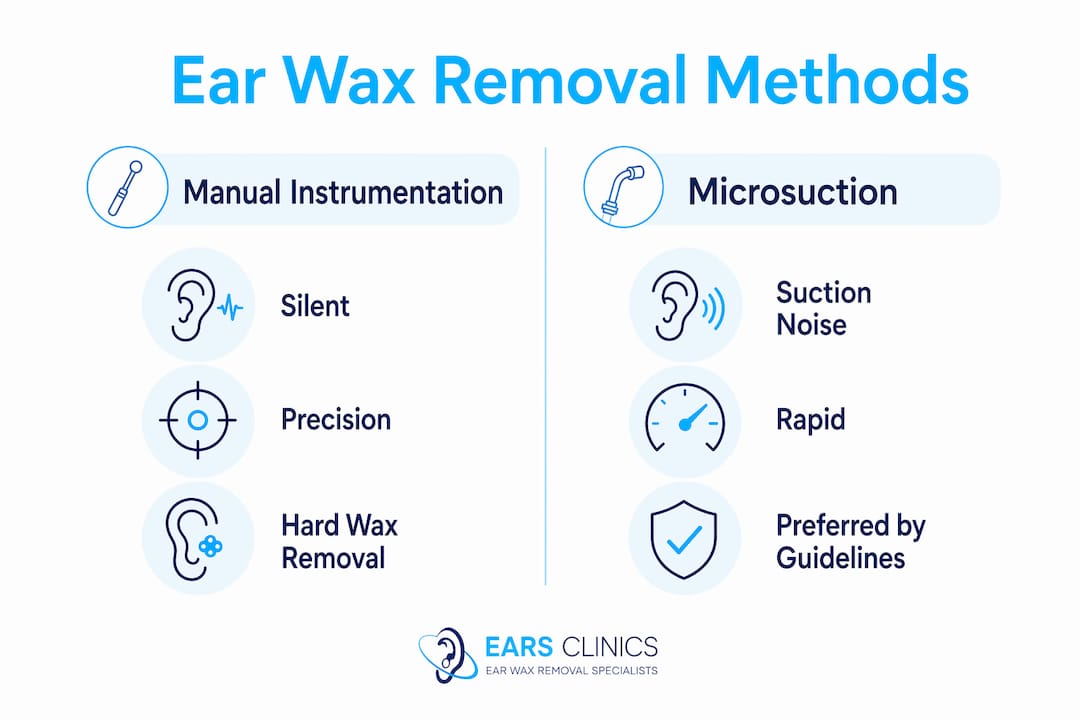
Each ear wax removal method has distinct strengths, and the best method depends on wax type and patient needs. Manual instrumentation is the gold standard for very hard, impacted wax. Microsuction uses a fine suction probe to draw wax out and is the method currently preferred by NICE guidelines. Irrigation uses a controlled flow of water to flush wax from the canal.
Feature | Manual instrumentation | Microsuction | Irrigation |
Noise level | Silent | Moderate suction noise | Low water flow noise |
Wax type suitability | Hard, impacted wax | Soft to moderately hard wax | Soft wax only |
Visualisation required | Yes, continuous | Yes, continuous | Limited |
Risk of canal trauma | Moderate if skill is low | Low | Low to moderate |
Suitable for perforated eardrum | No | Yes | No |
Patient comfort | Variable | Generally well tolerated | Generally well tolerated |
Skill level required | High | High | Moderate |
Manual instrumentation is silent compared to suction devices, making it particularly suitable for patients with noise sensitivity or tinnitus. This is a meaningful clinical advantage that is often overlooked. Microsuction, while highly effective and widely recommended, produces a noticeable suction sound that some patients find distressing. Irrigation, by contrast, is unsuitable for patients with a perforated eardrum or a history of ear surgery.
The right choice is never one-size-fits-all. Practitioners at Earhealthservice assess each patient’s medical history and wax presentation before selecting a method. You can read more about how methods compare in the advantages of microsuction guide.
What are the key safety considerations and risks?
Manual instrumentation carries a moderate risk of canal wall scratching and minor bleeding if performed without adequate skill or visualisation. These risks are manageable but real, which is why the procedure is reserved for trained specialists rather than general practitioners or home use.
The main safety considerations include:
Canal wall abrasion: The most common risk, caused by instrument contact with the delicate skin lining the ear canal.
Bleeding: Minor bleeding can occur if the canal wall is scratched, particularly in patients with thin or sensitive skin.
Incomplete removal: Without adequate magnification, fragments of wax can be pushed deeper rather than extracted.
Infection risk: Any breach of the canal skin creates a potential entry point for bacteria, making sterile technique important.
Tympanic membrane perforation: Extremely rare when performed correctly, but possible if instruments are advanced too deeply without visualisation.
Softening hardened wax with cerumenolytic agents for 15–30 minutes before the procedure reduces the risk of canal trauma and makes removal easier. Cerumenolytics are drops that soften wax, and using them before your appointment is a simple step that significantly improves outcomes. Earhealthservice follows patient safety protocols aligned with Healthcare Improvement Scotland (HIS) standards to ensure every procedure is performed safely.
Pro Tip: Never attempt manual instrumentation at home using cotton buds, hair pins, or any improvised tool. These objects compact wax further and risk perforating the eardrum. Only a trained clinician using proper instruments under direct visualisation can perform this procedure safely.
When is manual instrumentation selected in clinical practice?
Clinical decision-making around ear wax removal is guided by the patient’s wax type, medical history, and the clinician’s assessment. Manual instrumentation is selected in specific circumstances where other methods are less effective or contraindicated.
Very hard or impacted wax: When wax is too firm for suction or water to dislodge, instruments physically separate it from the canal wall. Manual removal is effective for this type of impaction but demands high skill and steady visualisation.
Foreign body removal: Manual instrumentation enables removal of foreign bodies and large, hard wax deposits where suction or irrigation may struggle to gain purchase.
Noise-sensitive patients: Patients with severe tinnitus or hyperacusis may not tolerate the sound of microsuction. Manual instrumentation is silent and therefore the preferred choice in these cases.
Combined approach with microsuction: Manual instrumentation is often used alongside microsuction, with instruments loosening the wax first and suction clearing the remaining debris. This combined approach maximises effectiveness with hard wax.
Surgical and ENT settings: In hospital ear, nose, and throat departments, manual instrumentation under an operating microscope is standard practice for complex or surgical cases.
Contraindications to irrigation: Patients with a perforated eardrum, a history of ear surgery, or a mastoid cavity cannot safely receive irrigation. Manual instrumentation or microsuction are the appropriate alternatives.
Practitioners always consider the full clinical picture. A patient with very hard wax, a history of ear surgery, and noise sensitivity would be a strong candidate for manual instrumentation specifically. The microsuction procedure workflow guide explains how these methods integrate in practice.
What should patients expect during a manual instrumentation procedure?
Knowing what to expect reduces anxiety and helps patients prepare effectively. The procedure is straightforward when performed by a trained clinician, and most patients find it tolerable with minimal discomfort.
Before the appointment:
Use cerumenolytic drops (olive oil or a proprietary softening solution) for several days before your visit. Softened wax is significantly easier and safer to remove.
Avoid inserting cotton buds or any objects into the ear canal before your appointment.
Inform your clinician of any history of ear surgery, perforated eardrum, or ear infections.
During the procedure:
You will be seated or semi-reclined, with your head tilted to give the clinician clear access.
The clinician will examine your ear with an otoscope before selecting the appropriate instrument.
Direct otoscopic visualisation is maintained throughout the entire extraction process, ensuring control and minimising trauma.
The procedure is silent. You may feel mild pressure or a tickling sensation, but sharp pain is not expected.
Most appointments take between 15 and 30 minutes depending on wax volume and complexity.
After the procedure:
Hearing typically improves immediately after wax removal.
Mild sensitivity in the canal is normal for a day or two.
Avoid getting water in the ear for 24 hours post-procedure.
Attend a clinic regulated by HIS or the Care Quality Commission (CQC) to ensure your care meets national safety standards.
Earhealthservice offers appointments at clinics in Glasgow and Edinburgh, as well as home visits for patients who cannot travel. Booking information is available at earhealthservice.co.uk.
Key takeaways
Manual instrumentation is the gold standard for removing very hard, impacted ear wax and must always be performed by a trained clinician under direct visualisation.
Point | Details |
Definition and tools | Manual instrumentation uses curettes, hooks, micro-forceps, and Jobson Horne probes to physically extract wax. |
Best clinical use | It is the preferred method for very hard, impacted wax and for noise-sensitive patients. |
Safety requirements | Direct visualisation and cerumenolytic pre-treatment reduce the risk of canal trauma and bleeding. |
Comparison with other methods | It is silent and effective on hard wax, but requires higher skill than microsuction or irrigation. |
Regulation matters | Only attend clinics regulated by HIS or CQC to ensure safe, competent care. |
Our view on manual instrumentation in modern ear care
Manual instrumentation is one of those procedures that is easy to underestimate until you see it done well. At EARS Clinics, we use it regularly, and what strikes us most is how much clinical judgement it demands compared to other methods. Microsuction is our most commonly performed procedure, and rightly so given NICE guidance. But there are patients who walk in with wax so hard and so firmly adhered to the canal wall that no amount of suction will shift it without instruments first.
What we have found over years of clinical practice is that the combined approach, using instruments to loosen and then suction to clear, consistently produces the best outcomes for complex cases. Patients often arrive having tried olive oil drops for weeks with no improvement. The wax has simply hardened beyond what drops alone can address. In those cases, manual instrumentation is not a fallback. It is the right first choice.
We also want to be honest about the skill requirement. This is not a procedure that should be attempted by anyone without proper training and ongoing clinical practice. The ear canal is narrow, the tympanic membrane is close, and the margin for error is small. Regulation by Healthcare Improvement Scotland gives patients a meaningful assurance that their clinician has met a defined competency standard. We would encourage every patient to check that their provider is properly regulated before booking any ear wax removal procedure.
— EARS
Professional ear wax removal at EARS Clinics
Earhealthservice offers manual instrumentation, microsuction, and irrigation performed by NHS-accredited Aural Care Specialists at clinics in Glasgow and Edinburgh. Every procedure is carried out under direct visualisation following Healthcare Improvement Scotland (HIS) standards.

Appointments are available in clinic, on the same day, or as home visits for patients who cannot travel. Costs are £60 for patients over 18, £75 for under-18s, and £180 for home visits. To understand which procedure is right for you, visit the ear wax removal procedures page for a full overview of all methods available. Book directly at earhealthservice.co.uk or call the clinic to speak with a specialist.
FAQ
What is manual instrumentation in ear care?
Manual instrumentation is a clinical procedure that uses specialised tools such as curettes, hooks, and micro-forceps to physically remove impacted ear wax from the canal under direct visualisation. It is performed by trained Aural Care Specialists and is particularly effective for hard, impacted wax.
Is manual instrumentation safe?
Manual instrumentation is safe when performed by a trained clinician under direct magnified visualisation. Risks such as canal wall scratching are minimised by pre-softening wax with cerumenolytic drops and attending a clinic regulated by HIS or CQC.
How does manual instrumentation differ from microsuction?
Microsuction uses a fine suction probe to draw wax out and is the method preferred by current NICE guidelines. Manual instrumentation physically separates wax from the canal wall using instruments and is silent, making it preferable for patients with noise sensitivity or very hard wax.
Do I need to prepare before a manual instrumentation appointment?
Using cerumenolytic drops, such as olive oil, for several days before your appointment softens the wax and reduces the risk of canal trauma during removal. Avoid inserting cotton buds or other objects into the ear before attending.
Can manual instrumentation be combined with other removal methods?
Manual instrumentation is often used alongside microsuction, with instruments loosening hard wax first and suction clearing the remaining debris. This combined approach is particularly effective for stubborn or heavily impacted wax deposits.
Recommended