
Wax in ears causes: what to do and when to see a clinic
Earwax, known clinically as cerumen, is a natural and protective substance. It traps dust, repels moisture, and usually migrates out of the ear canal on its own. Buildup occurs when that natural clearance is disrupted, whether by anatomy, age, ear devices, or the single most common culprit: inserting objects into the canal. If you are experiencing muffled hearing or a blocked sensation, the NHS recommends trying softening drops (olive oil or mineral oil) once or twice over 48 hours as a first step. If symptoms persist, professional removal is the appropriate next move.
Never insert cotton buds, bobby pins, or any object into the ear canal. They push wax deeper and can cause impaction.
Softening drops (olive oil, almond oil, or pharmacy eardrops) are the only safe home measure.
Seek professional care if symptoms worsen, persist beyond a few days of home treatment, or are accompanied by pain, discharge, or sudden hearing loss.
EARS Clinics offers NHS-accredited removal in Glasgow and Edinburgh, with same-day appointments and home visits available.
What actually causes wax to build up in the ear canal?
Earwax accumulates when the ear’s natural outward migration mechanism is disrupted or overwhelmed. Harvard Health notes that most blockages result from improper cleaning rather than the ear simply producing too much wax. The canal relies on gradual outward movement; anything that interferes with that process causes retention and, eventually, impaction.
The main earwax buildup reasons fall into two broad categories: anatomical and behavioural.
Anatomical and physiological causes:
Naturally narrow or hairy ear canals, which slow or prevent outward wax migration
Older age, which tends to produce harder, drier cerumen that moves less freely; NHS Inform identifies age as a primary contributing factor
Bony growths (exostoses) in the canal, which physically obstruct migration
Skin conditions such as eczema or psoriasis, which alter the canal’s skin-shedding pattern
Previous ear surgery that changes canal anatomy
Individual variation in cerumen consistency: some people simply produce harder or more copious wax by nature
Behavioural and device-related causes:
Cotton buds and similar objects are the most common self-inflicted cause. Rather than removing wax, they compact it against the eardrum. Cleveland Clinic research shows that stimulating the canal hairs with cotton buds can also trigger a feedback loop, causing the ceruminous glands to produce more wax, not less.
Hearing aids and earplugs repeatedly displace wax inward and block the natural outward pathway. Hearing-aid users are among the groups most likely to experience recurrent impaction.
In-ear earphones (earbuds) worn for extended periods have a similar compacting effect.
Understanding these causes of earwax matters because it changes what you do about it. The instinct to clean the ear more thoroughly is usually what makes the problem worse.
Safe self-care you can try at home (UK guidance)
At home, only gentle softening and external cleaning are recommended. Probing inside the canal, using ear candles, or attempting to irrigate without clinical guidance are not safe options. The goal of home care is to soften the wax so that it can migrate outward naturally or be more easily removed by a clinician.
Apply softening drops. Use olive oil, almond oil, or a pharmacy-bought eardrop preparation. Tilt your head to one side, apply two or three drops into the affected ear, and remain in that position for a few minutes. Repeat once or twice daily for up to five days, as per NHS guidance.
Allow natural drainage. After applying drops, gently wipe the outer ear with a soft cloth. Do not insert anything into the canal to “help” the wax out.
Assess after 48–72 hours. If symptoms are improving, continue the drops for the recommended period. If they are not improving or are worsening, move to professional care rather than persisting with home treatment.
Do not attempt home irrigation. Ear syringing or irrigation at home carries real risks, including canal injury and eardrum perforation, and should only be performed by a trained clinician.
For guidance on which eardrops are suitable for your situation, a pharmacist is a practical first port of call. They can advise on over-the-counter preparations and confirm whether a GP referral is appropriate, often saving an unnecessary appointment. For a detailed guide on safe removal products, the Earhealthservice website covers UK-available options and contraindications.
Contraindications to home treatment — seek professional care instead if you have:
A history of perforated eardrum
Previous ear surgery or ear tubes (grommets)
Active ear infection or undiagnosed discharge
Ear pain that is more than very mild
Pro Tip: Warm the oil drops to body temperature before applying by holding the bottle in your hand for a minute or two. Cold drops can cause temporary dizziness.
When should you see a pharmacist, GP or ear specialist?
See a pharmacist first for initial advice on softening drops and to confirm whether home treatment is appropriate for your situation. Move to a GP or ear specialist if symptoms persist after a full course of drops, worsen at any point, or are accompanied by any of the red-flag signs described earlier.
Triage guide:
Pharmacist: First contact for OTC eardrop advice, confirmation of suitability, and guidance on whether to self-manage or escalate. A brief pharmacy consultation can prevent unnecessary GP appointments.
GP: Persistent symptoms after home treatment, suspected ear infection, significant pain, or where a comorbidity (such as diabetes or a compromised immune system) makes self-care inadvisable.
Ear specialist or aural care clinic: Failed home care, history of ear surgery or perforated eardrum, recurrent impaction, hearing-aid users with frequent blockages, or anyone who needs microsuction rather than irrigation.
Contraindications to home irrigation specifically:
Past eardrum perforation or repair
Ear tubes (grommets) in situ
Active discharge or suspected infection
Undiagnosed ear pain
When booking a clinical appointment, it helps to tell the clinician: how long symptoms have been present, whether you have used drops already, any history of ear surgery or perforated eardrum, and whether you wear a hearing aid. This allows the clinician to select the most appropriate removal method from the outset. You can also read about NHS policy changes that explain why many patients now access removal through private regulated clinics rather than their GP.
What are the clinical removal options: microsuction, irrigation and instrumentation?
Microsuction is the clinically preferred method per current NICE guidance and is increasingly favoured by UK ear clinics, though irrigation and manual instrumentation remain safe and effective in appropriate cases. The right choice depends on the patient’s medical history, canal anatomy, eardrum integrity, and clinical presentation. A trained clinician will always assess these factors before proceeding.
Method | How it works | Well suited for | Main contraindications | Typical recovery |
Microsuction | A fine suction probe removes wax under direct microscopic or loupe vision, without water | Fragile canals, perforated eardrums, previous surgery, hearing-aid users | Active ear infection with discharge | Immediate; no drying time needed |
Irrigation | Warm water is gently flushed into the canal to dislodge softened wax | Soft, well-softened wax; intact eardrum confirmed | Perforated eardrum, ear tubes, previous ear surgery, active infection | Immediate; canal may feel slightly damp briefly |
Manual instrumentation | A trained clinician uses a curette or forceps to remove wax under direct vision | Hard or impacted wax not suitable for irrigation; narrow canals | Requires clinician skill; not appropriate for uncooperative patients | Immediate |
Mayo Clinic guidance confirms that clinicians use otoscopy alongside these techniques and that over-the-counter irrigation kits and alternative methods carry risks if misused. Practitioner selection of technique depends on eardrum integrity, canal shape, patient mobility, and the presence of infection or active discharge.
Ear candling is not a recognised clinical procedure. It has no reliable evidence of effectiveness and carries documented risks including burns, ear canal obstruction from candle wax, and eardrum perforation. The NHS advises against it, and no regulated UK clinic should offer it.
Pro Tip: If you are unsure which method is right for you, a pre-appointment consultation with a clinician will clarify this. You do not need to request a specific technique; the clinician will recommend the safest option based on your history.
For a detailed walk-through of each procedure, the Earhealthservice guide on ear wax removal techniques covers what to expect before, during, and after each method.
How can you reduce the risk of repeat wax build-up?
The single most effective step is straightforward: stop inserting objects into the ear canal. Beyond that, prevention is largely about managing the factors that disrupt natural wax migration.
Avoid cotton buds, ear candles, and any object inserted into the canal. Clean only the outer ear with a soft cloth.
Hearing-aid users should clean their devices daily, as wax accumulates on moulds and receivers and is pushed back into the canal with each insertion. Regular clinic checks, typically every six to twelve months, are advisable for those with recurrent blockages.
Frequent earplug wearers (musicians, swimmers, industrial workers) face similar displacement risks and benefit from periodic professional assessment.
Softening drops used occasionally on clinical advice can help those prone to hard wax, but routine prophylactic use without guidance is not recommended.
Scheduled clinic cleaning is appropriate for older adults with consistently hard or dry wax, hearing-aid users, and anyone with a history of recurrent impaction. ENTnet guidance notes there is no universal prevention schedule; the right interval is determined with a clinician based on individual history.
For hearing-aid users in particular, device hygiene and regular professional ear checks together form the most reliable prevention strategy. The Earhealthservice guide on preventing earwax buildup covers hearing-aid hygiene and clinic scheduling in more detail.
What should you expect when you book professional earwax removal in the UK?
A regulated clinic visit follows a clear, reassuring pathway. The appointment begins with a pre-assessment: the clinician asks about your symptoms, medical history, any previous ear surgery, hearing-aid use, and whether you have already used softening drops. This information directly informs which removal method is safest for you.
The clinician then performs an otoscopic examination, inspecting the ear canal and eardrum with a small illuminated instrument. This confirms the presence and extent of wax, checks eardrum integrity, and rules out infection or other conditions that would change the treatment plan. Only after this assessment does the procedure begin.
What a typical appointment includes:
Pre-assessment questions (symptoms, history, contraindications)
Otoscopic examination of both ears
Clinician-selected removal procedure (microsuction, irrigation, or manual instrumentation)
Post-procedure otoscopic check to confirm clearance
Aftercare advice and guidance on prevention and follow-up
Regulation and accreditation matter. In Scotland, clinics should be registered with Healthcare Improvement Scotland (HIS), which sets standards for practitioner competence and clinical governance. In England and Wales, the equivalent regulator is the Care Quality Commission (CQC). EARS Clinics is HIS-registered, one of the few regulated ear healthcare clinics in Scotland, and its practitioners hold NHS accreditation. The clinic is licensed to treat patients from two years of age.
Pro Tip: If you cannot travel to a clinic, EARS Clinics offers home visits for patients who find it difficult to attend in person, including those with mobility issues or complex care needs.
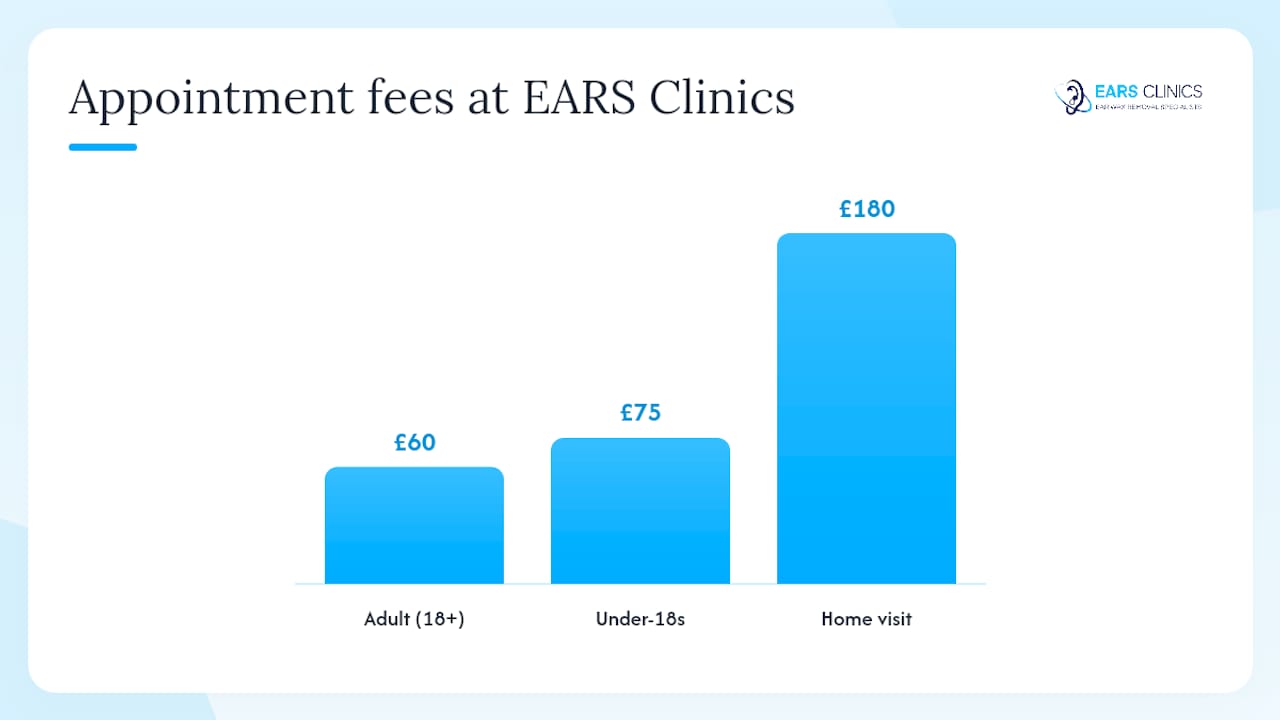
Pricing at EARS Clinics is £60 for patients aged 18 and over, £75 for under-18s, and £180 for a home visit. Same-day appointments are available at both the Glasgow and Edinburgh clinics.
Key takeaways
Earwax buildup is almost always preventable, and when it does occur, safe and effective clinical removal is straightforward at a regulated UK clinic.
Point | Details |
Earwax is protective | Cerumen is normal and healthy; most people should leave their ear canals alone. |
Avoid inserting objects | Cotton buds compact wax and stimulate more production, making blockages worse. |
Try softening drops first | Apply olive or mineral oil drops once or twice daily for up to five days before seeking professional care. |
Microsuction is clinically preferred | NICE guidance favours microsuction, though irrigation and instrumentation are valid when clinically appropriate. |
EARS Clinics offers regulated removal | NHS-accredited, HIS-registered removal in Glasgow and Edinburgh, with same-day and home-visit options from £60. |
The part most patients get wrong
The most common misunderstanding we encounter is the belief that earwax is a sign of poor hygiene. It is not. Cerumen is produced deliberately by the body to protect the canal, and the ear is designed to clean itself. The patients who arrive with the most severe impaction are almost always those who have been cleaning their ears most diligently, usually with cotton buds, for years.
There is a real behavioural loop at work here. Cotton buds provide immediate tactile satisfaction, which reinforces the habit, even as they are compressing wax deeper and stimulating the glands to produce more. Clinicians working in ear health spend as much time on behaviour change as on the procedure itself, because removing the wax without addressing the habit means the patient returns within months.
The other question we hear often is whether removal will hurt. For the vast majority of patients, microsuction is quick and comfortable. Irrigation is similarly well tolerated when the wax has been softened beforehand. The rare cases of discomfort usually involve very hard, impacted wax or a particularly sensitive canal, and a good clinician will adjust their technique accordingly. Choosing a regulated clinic with trained, accredited practitioners is the most reliable way to ensure the procedure is both safe and as comfortable as possible.
Professional earwax removal in Glasgow and Edinburgh
Persistent earwax symptoms deserve proper clinical attention, not repeated home attempts. EARS Clinics provides NHS-accredited, HIS-regulated earwax removal in Glasgow and Edinburgh, performed by trained Aural Care Specialists using microsuction, irrigation, and manual instrumentation. There are no pre-treatment preconditions, no long waiting lists, and no referral needed.
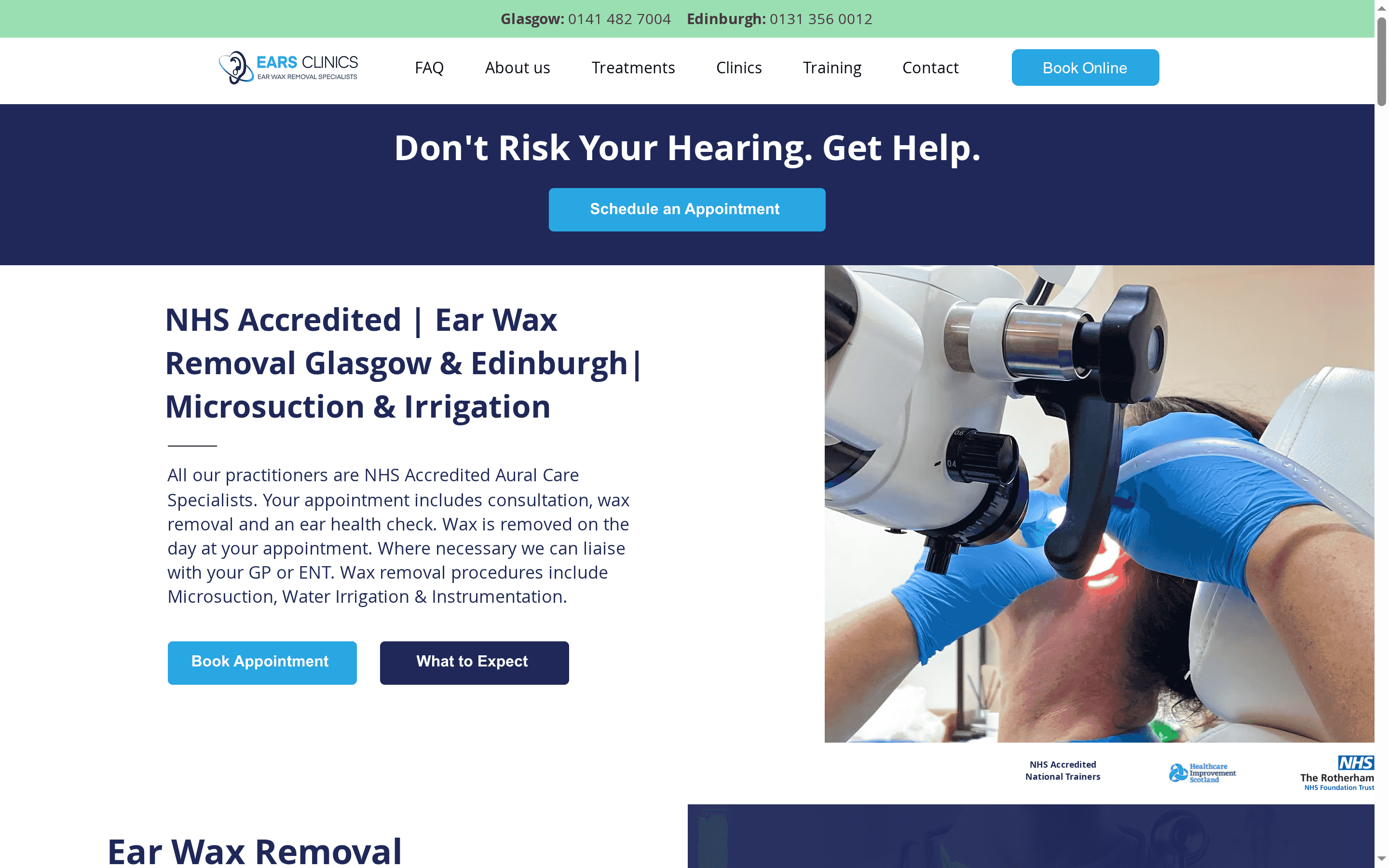
Appointments are available in clinic, with same-day slots and home visits for patients who cannot travel. Prices start at typical fees for adults, lower rates for minors, and higher fees for home visits. Every appointment includes a full otoscopic assessment, clinician-selected removal, and aftercare guidance.
To book or find out more about the range of removal procedures available, visit earhealthservice.co.uk.
Further reading and authoritative sources
The sources below are the most reliable starting points for further information on earwax, safe removal, and UK clinic standards.
Patients in Scotland and the rest of the UK should always choose a clinic regulated by HIS or CQC. Regulation means the clinic meets defined standards for practitioner training, clinical governance, and patient safety, not simply that it offers the service. Unregulated providers carry real clinical risk, particularly for patients with a history of ear surgery, perforated eardrums, or complex ear conditions.
Recommended