
Ear wax removal pain level: what it feels like and why

For most people, ear wax removal is not painful. NHS inform describes irrigation and microsuction as quick and painless, and what you notice is usually pressure, noise or a cool sensation rather than pain. Discomfort is more likely when the wax is hard, compacted or pressing on the eardrum. The method matters too, and so does who does it. At EARS Clinics, our NHS-accredited Aural Care Specialists choose the safest method for your ears, and an appointment costs £60 for adults.
TL;DR
Most people feel pressure, a rushing-air sound or a cool sensation, not pain.
Hard, impacted wax, sensitivity to noise and some medical conditions make discomfort more likely.
Brief soreness, itching or a short spell of dizziness or tinnitus can follow, and usually settles.
Severe pain, bleeding, discharge, or dizziness that persists needs prompt clinical review.
Ear care should only be done by trained, regulated clinicians. EARS Clinics is registered with Healthcare Improvement Scotland (HIS).
How painful is ear wax removal, really?
Think of it as a scale that runs from “barely noticeable” to “a little uncomfortable”. Very few people reach “painful”.
Three things set where you land:
The wax. UCLH says discomfort is more likely when wax is hard, compacted or pressing on the eardrum. Wax sitting deep in the canal is harder to reach, and ENT UK notes microsuction can be uncomfortable when wax or a foreign object is deep.
Your sensitivity. The British Society of Audiology (BSA) says pain sensitivity varies from person to person. It adds that anticoagulants can increase bruising, bleeding and pain sensitivity, while diabetes can sometimes go with a higher pain threshold.
The method. Each one feels different, as below.
What each method feels like
Method | What you may feel | Good to know |
Microsuction | A rushing-air sound, a cool sensation, a gentle tickle | The sound can be unsettling for sound-sensitive people |
Irrigation | Water pressure, warmth or a splashing sensation | Not suitable for every ear |
Manual instrumentation | A light touch or scrape in the outer canal | Used when it is the most suitable option |
Microsuction
A fine suction tube removes the wax while the clinician looks into the ear under magnification. York Hospitals NHS Foundation Trust says most people tolerate it well, though the rushing-air sound and cool sensation may feel odd, and some people are more sensitive to the noise. If noise worries you, our page on microsuction noise and sensitive ears explains what to expect. For the full procedure, see our microsuction procedure guide.
Irrigation
Irrigation uses a controlled flow of water to flush wax out. NHS Lothian says irrigation carries a small risk of otitis externa (infection of the outer ear canal) and a very rare risk of eardrum perforation, at 1 in 1,000 or less. That is why the clinician first checks your history and your ear. Our guide to ear irrigation risks covers this in more detail.
Manual instrumentation
Small, specialist instruments lift wax that sits in the outer canal. It suits some ears better than suction or water. Microsuction is the method preferred by current NICE guidance, but irrigation and manual instrumentation remain safe and clinically valid when appropriate. Our specialists select the safest and most suitable procedure based on your medical history and what they see in your ear.
What if it hurts during the appointment?
Tell the clinician straight away. You are in control of the pace.
ENT UK advises that if microsuction is too painful, removal may be stopped. Wax softeners can then be used before another appointment, and short-term paracetamol may be used if pain occurred during the procedure. For irrigation, the Scottish Right Decisions guideline says pain or vertigo means stopping immediately and examining the ear.
If your wax is very hard, softening it with drops for a few days before the appointment can make removal more comfortable. Ask us when you book what suits your ears.
Pain after microsuction: what is normal
Most people walk out feeling clearer and lighter. Some notice short-lived effects.
Brief soreness or a little bleeding. ENT UK reports ear-canal skin trauma in about 1 in 20 microsuction procedures. Associated pain or bleeding usually settles within seconds or minutes after suction stops.
Tinnitus. NHS Tayside says tinnitus may worsen for a day or two after ear-care treatment, and a small amount of bleeding is occasional. See our guide to tinnitus and ear wax removal.
Feeling unsteady. The BSA says you may feel unsteady straight after treatment, so sit up and stand slowly. Our article on dizziness after ear wax removal explains the difference between a brief spin and a warning sign.
Why are my ears itchy after microsuction?
Itching is a recognised sensation. Royal Devon University Healthcare NHS Foundation Trust lists itching and dizziness among possible strange sensations after microsuction. Wax also protects the skin of the canal, so removing it can leave the skin feeling dry.
What helps:
Do not scratch or put cotton buds, fingers or anything else into the ear. UCLH says normal activities can resume, but nothing should be pushed into the canal.
Guy’s and St Thomas’ advises keeping water, soap and shampoo out of the canal. Paraffin-coated cotton wool can sit at the entrance, never pushed inside.
For persistent dry or itchy skin, ask a pharmacist or healthcare professional.
When pain is a warning sign
Mild, short-lived effects are common. These are not:
Increasing pain, swelling, discharge or an odour from the ear
Bleeding that continues
Dizziness or balance problems that do not settle
New or worsening tinnitus, or hearing that does not return
The BSA says to report these promptly to your GP and practitioner. NHS Tayside advises prompt GP review if pain, dizziness, reduced hearing or discharge develops, and further assessment may be needed if hearing does not return.
Serious problems are uncommon. ENT UK puts eardrum trauma at less than 1 in 10,000, ear-canal infection after traumatic microsuction at about 1 in 500 and severe vertigo at about 1 in 200. Severe vertigo is particularly relevant to people with a canal-wall-down mastoid cavity. If you have severe pain, heavy bleeding or severe vertigo, contact the clinic that treated you, your GP or NHS 24 on 111 without delay.

Sensitive ears and complex conditions
If you have had ear surgery, a perforated eardrum, grommets, a mastoid cavity, recent ear infection or discharge, say so when you book. The BSA excludes perforated and post-surgery ears from routine cases and says other methods may be considered when irrigation is not suitable. A 2024 NHS commissioning policy lists current perforation, grommets, recent middle-ear infection, previous ear surgery and prior irrigation complications as reasons to avoid irrigation or refer to ENT.
This is why a proper history and an assessment of your ear come before any treatment. Ear care should only be done by trained, competent clinicians following best practice and regulated by Healthcare Improvement Scotland (HIS) or the Care Quality Commission (CQC). Our clinics are HIS registered, and we can send clinical correspondence to your GP or ENT when needed.
Children
Parents often worry most about this. We are licensed and regulated to treat patients from 2 years of age, at £75 for under-18s. Our children’s ear wax removal page explains how we approach it.
Does the NHS offer ear wax removal?

Sometimes. NHS inform says you can try pharmacy eardrops, speak to your GP practice if they have not helped after a week, and you may be referred to ENT. One 2024 NHS commissioning policy says community irrigation or microsuction may be available after self-care fails, when wax causes hearing loss or pain. Access depends on where you live and local criteria.
Wax left in place is not painless either. NHS inform says earwax can itself cause earache, hearing loss, tinnitus, itchiness and infection, and these usually improve once excess wax is removed.
Pain during ear wax removal is largely a question of assessment and technique. We look into the ear first, ask about your history, and choose between microsuction, irrigation and manual instrumentation for you, not the other way round. Microsuction is the method preferred by current NICE guidance, and it lets the clinician see the wax throughout. We would rather you tell us the moment something is uncomfortable. Pausing, adjusting or changing approach is part of good care. Our specialists are NHS-accredited, our clinics are HIS registered, and we are one of the few regulated ear healthcare clinics in Scotland. EARS
Our view
Book an appointment
If blocked, painful or full-feeling ears are bothering you, you can book ear wax removal with EARS Clinics in Glasgow or Edinburgh. There are no pre-treatment requirements, and same-day appointments are available. Adults pay £60 and under-18s £75. A home visit within 20 miles of Glasgow is £180. See what to expect at an appointment, or book online.
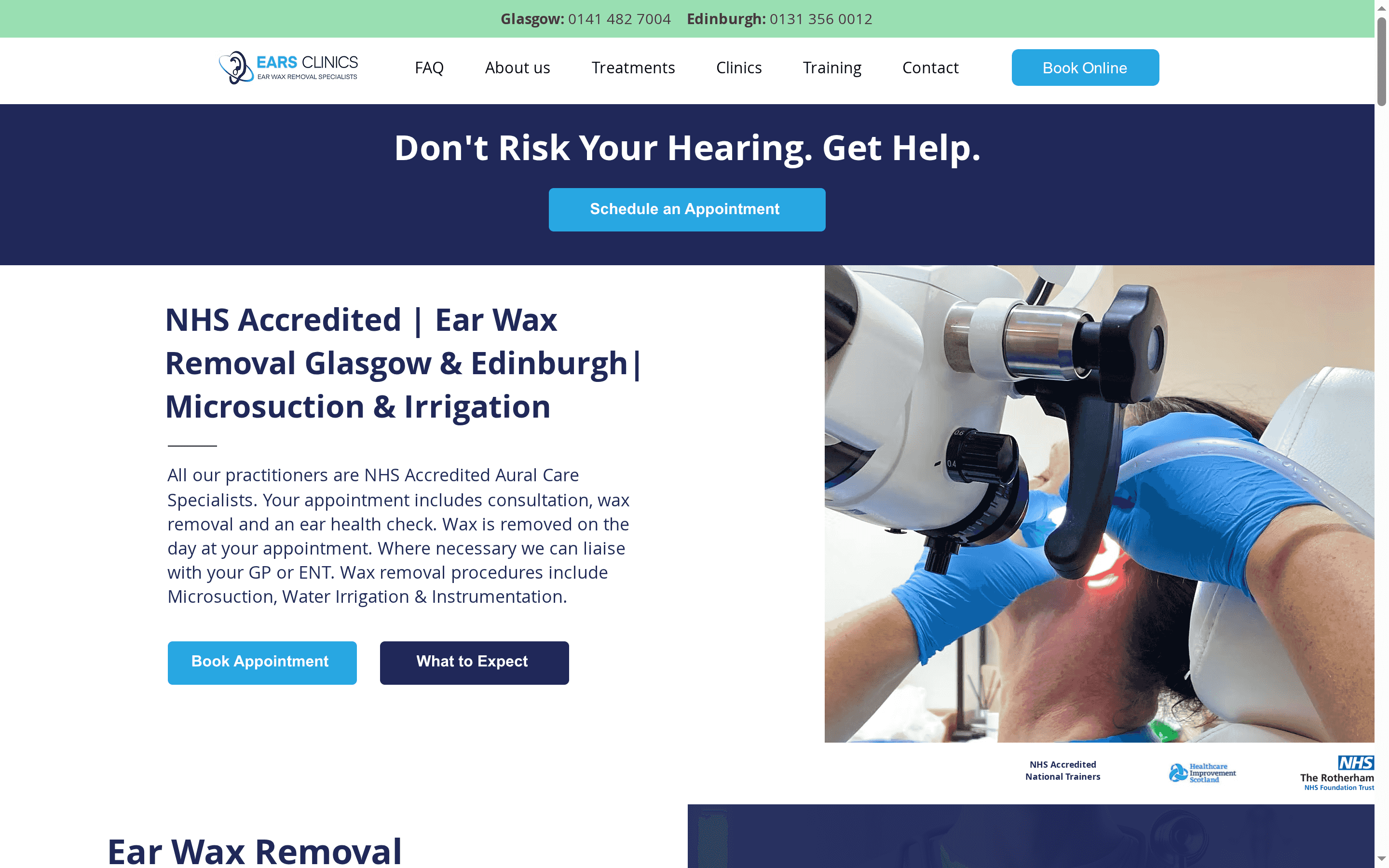
If you need to be seen quickly, our same-day appointments are there for that.
FAQ
Does microsuction hurt?
For most people it does not. You will hear a rushing-air sound and may feel coolness or a light tickle. Discomfort is more likely with hard or deep wax, and the clinician can pause at any point.
How long does pain after microsuction last?
Pain or bleeding from minor canal skin trauma usually settles within seconds or minutes after suction stops. Mild tinnitus can last a day or two. If pain increases, or you notice discharge, dizziness or reduced hearing, contact the clinic and your GP promptly.
Is irrigation more painful than microsuction?
Neither is usually painful. Irrigation can feel like water pressure or warmth, and it is not suitable for every ear. Your clinician will recommend the safest method for your medical history and ear.
Can children have ear wax removed painlessly?
Most children tolerate it, though noise or unfamiliarity can unsettle them. We treat children from the age of 2. Tell us beforehand about any worries so we can plan the appointment around your child.
Sources
Recommended