
Ear wax removal and hearing improvement: does it work?

TL;DR:
Removing impacted earwax often results in immediate hearing improvement by relieving mechanical blockage.
Most cases can be managed with safe home softening agents or, if needed, professional removal methods like microsuction, irrigation, or manual instruments.
For most people, yes. Removing a build-up of earwax (cerumen) often produces an immediate and noticeable improvement in hearing. The improvement is real because impacted wax causes conductive hearing loss, a mechanical blockage that reduces sound transmission, and clearing it removes that barrier. Here is what to do next:
Try safe home softening first. Use olive oil, mineral oil, or a pharmacist-recommended drop two to three times daily for up to five days. NHS guidance advises this as the first step for most adults.
See a pharmacist or GP if softening drops have not helped after two weeks, or if symptoms are worsening.
Seek urgent care if you have severe ear pain, discharge, sudden profound hearing loss, or a history of a perforated eardrum or grommets. These are red flags that need prompt clinical review, not home treatment.
How can you tell if earwax is causing your hearing problem?
Earwax impaction produces a recognisable cluster of symptoms. If you are experiencing several of these together, wax is a plausible cause worth investigating:
Muffled or reduced hearing, often described as “cotton wool in the ear”
A feeling of fullness or pressure in the ear canal
Tinnitus (ringing, buzzing, or humming sounds)
Mild earache or a sensation of itching deep in the canal
Brief episodes of dizziness
According to a primary care review published in the British Journal of General Practice, hearing difficulty was the presenting complaint in 86.5% of patients attending for wax removal, making it by far the most common reason people seek treatment.
Red flags that need prompt clinical review, not home drops:
Severe or worsening ear pain
Discharge or bleeding from the ear
Sudden, profound hearing loss in one or both ears
A history of ear surgery, grommets, or a perforated eardrum
Symptoms following a head injury
Earwax is also more likely to accumulate if you regularly use in-ear headphones or hearing aids, or if you are older. That said, not every case of muffled hearing is wax. Sudden sensorineural hearing loss, middle ear infection, and Eustachian tube dysfunction can all produce similar symptoms, so if your hearing does not improve after wax clearance, further assessment is warranted.
Ear wax removal and hearing improvement: which method is right for you?
Clinicians use three main techniques to remove impacted cerumen. The safest and most suitable method for each patient is chosen based on their medical history, the nature of the wax, and a clinical examination of the ear canal and eardrum (otoscopy) before any treatment begins.
Method | How it works | Best suited to | Key contraindications |
Microsuction | A fine suction probe removes wax under direct visualisation using a microscope or loupe | Most patients; preferred by NICE guidance where appropriate | Active ear infection (relative caution) |
Irrigation | Warmed, low-pressure water flushes the canal; fluid directed along the canal wall | Soft or moderate wax; patients without contraindications | Perforated eardrum, grommets, recent ear surgery, only-hearing ear |
Manual instrumentation | A curette, probe, or forceps removes wax under direct visualisation | Hard or dry wax; patients where irrigation is contraindicated | Requires skilled practitioner; not suitable for uncooperative patients |
Microsuction is generally preferred because it allows continuous direct visualisation throughout the procedure, making it the safest option for most presentations. Irrigation can be highly effective for softer wax but requires tympanic membrane assessment beforehand and must use fluid warmed to body temperature to avoid caloric-induced vertigo. Manual instrumentation is particularly useful for hard, dry cerumen in older adults where irrigation is unlikely to be effective.
A note on clinician selection: no single method is universally superior. A trained, regulated clinician will assess your ear before treatment and select the approach that minimises risk for your specific situation.
Will your hearing actually improve after wax removal?
For most patients whose hearing loss is caused primarily by wax, the answer is yes, and the improvement can be substantial. The BJGP primary care review found that more than 83% of patients reported hearing somewhat or much better after removal.
Quantitative data from an irrigation study published in American Family Physician found that hearing thresholds improved by 10 dB or more in 41% of patients presenting with hearing problems, with some patients gaining 15–36 dB. Those are clinically meaningful gains.
Outcome measure | Finding |
Patients reporting improved hearing | Over 83% of patients reported improved hearing after removal (BJGP clinic survey) |
Patients with ≥10 dB threshold improvement | 41% of those presenting with hearing problems |
Typical threshold gain range | 15–36 dB in patients with measurable improvement |
The key distinction is between conductive and sensorineural hearing loss. Wax causes conductive loss, a physical obstruction of sound transmission. Remove the obstruction and hearing typically recovers. Sensorineural loss, caused by damage to the cochlea or auditory nerve, is not affected by wax removal.
Older adults and people with pre-existing hearing conditions may find that some hearing reduction persists even after the wax is fully cleared. This is because wax may have been masking an underlying sensorineural loss. If your hearing remains reduced after clearance, audiometry should be arranged to check for other causes.
Where should you go in the UK for wax removal?
The UK pathway runs roughly as follows, with each step offering different levels of access and clinical capability:
Pharmacist: Can advise on softening drops and confirm whether symptoms suggest wax. Cannot perform removal but is a useful first port of call.
GP: Can examine the ear and refer for irrigation or microsuction. NHS waiting times for ear care have lengthened considerably in many areas, and some GP practices no longer offer irrigation directly.
ENT specialist: Appropriate for complex cases, suspected perforation, persistent hearing loss after clearance, or recurrent impaction. Referral typically adds weeks to the pathway.
Regulated private clinic: Offers same-day or next-day appointments without the pre-treatment softening requirements that some NHS services impose. Clinics regulated by Healthcare Improvement Scotland (HIS) or the Care Quality Commission (CQC) follow the same clinical standards as NHS services.
Contraindications: when not to attempt irrigation or home drops
Perforated eardrum (current or previous)
Grommets (tympanostomy tubes) in place
Recent ear surgery
Active ear infection or discharge
Only-hearing ear (extra caution required)
Children under two years (specialist assessment needed)
When choosing a private provider, check that the clinic is regulated by HIS or CQC and that practitioners hold recognised aural care accreditation. EARS Clinics, operating as Earhealthservice, are registered with Healthcare Improvement Scotland and employ NHS-accredited Aural Care Specialists. They offer in-clinic appointments in Glasgow and Edinburgh, same-day availability, and home visits for patients who cannot travel.
Safe at-home softening: what works and what to avoid
Home softening can work well for mild to moderate wax build-up. It will not remove a hard impaction on its own, but it can make professional removal easier and faster.
Choose a softening agent: olive oil, mineral oil, or a pharmacist-recommended commercial drop (such as sodium bicarbonate or docusate drops). NICE and systematic reviews do not strongly favour one agent over another, so any of these is a reasonable starting point.
Warm the drops slightly by holding the bottle in your hand for a minute or two. Cold drops can cause brief dizziness.
Lie on your side with the affected ear facing upward. Apply two to three drops into the canal.
Stay in that position for five to ten minutes to allow the drops to penetrate.
Repeat two to three times daily for up to five days for softening, or up to two weeks if you are waiting for a lump to loosen and fall out naturally, as NHS guidance advises.
If symptoms have not improved after two weeks, book a professional appointment rather than continuing indefinitely.
What to avoid:
Cotton buds inserted into the ear canal: they push wax deeper and risk perforating the eardrum.
Ear candles: no clinical evidence supports their use, and they carry a real risk of burns and canal blockage from candle debris. Cleveland Clinic guidance advises against them explicitly.
DIY irrigation kits and vacuum devices: these are not well studied and can cause injury if used incorrectly.
Drops if you have a known or suspected perforated eardrum.
Pro Tip: If your hearing feels noticeably worse after starting drops, stop immediately. Liquid can cause wax to swell, temporarily worsening the blockage. This is a signal to seek professional removal rather than persisting at home, as clinical guidance notes.
What to expect at a professional ear wax removal appointment
Most appointments are brief, typically 20–30 minutes, and many patients notice an immediate improvement in hearing clarity as soon as the wax is removed.
A typical appointment follows this sequence:
Clinical history: The practitioner asks about your symptoms, any previous ear problems, surgery, or contraindications.
Otoscopy: The ear canal and eardrum are examined with an otoscope before any treatment begins. This step is non-negotiable: it confirms the diagnosis and determines which method is safe for you.
Chosen procedure: Microsuction, irrigation, or manual instrumentation is performed based on the findings.
Post-procedure check: The ear is re-examined to confirm clearance, and findings are documented. Some clinics provide before-and-after imaging.
Common short-term effects to be aware of:
Temporary change in tinnitus (it may briefly worsen before settling)
Mild transient dizziness, particularly after irrigation
Slight discomfort or sensitivity in the canal for a day or two
Contact your clinician if pain, discharge, or significant hearing reduction develops after the appointment.
Aftercare:
Keep the ear dry for 24–48 hours after irrigation; a cotton wool ball lightly coated in petroleum jelly at the canal entrance can help when showering.
If you wear hearing aids, have them checked after removal as the fit and volume settings may need adjusting.
Older adults and hearing-aid users often benefit from routine maintenance every 3–6 months to prevent re-impaction.
Key takeaways
Ear wax removal reliably improves hearing when impacted cerumen is the primary cause, with over 83% of patients reporting better hearing after clearance.
Point | Details |
Hearing improvement is likely | Over 83% of patients report improved hearing after wax removal when wax was the cause. |
Home softening is the first step | Use olive oil or pharmacist drops two to three times daily for up to two weeks before seeking professional help. |
Microsuction is the preferred method | NICE guidance favours microsuction where appropriate; irrigation and manual instrumentation remain clinically valid alternatives. |
Red flags need urgent review | Severe pain, discharge, sudden profound loss, or a history of perforated eardrum or grommets require clinical assessment, not home treatment. |
Persistent loss needs audiometry | If hearing remains reduced after clearance, arrange audiometry to check for underlying sensorineural loss. |
Regulated care in Scotland | EARS Clinics (Earhealthservice) offer same-day and home-visit appointments with NHS-accredited specialists in Glasgow and Edinburgh. |
A clinical note on safety, access, and realistic outcomes
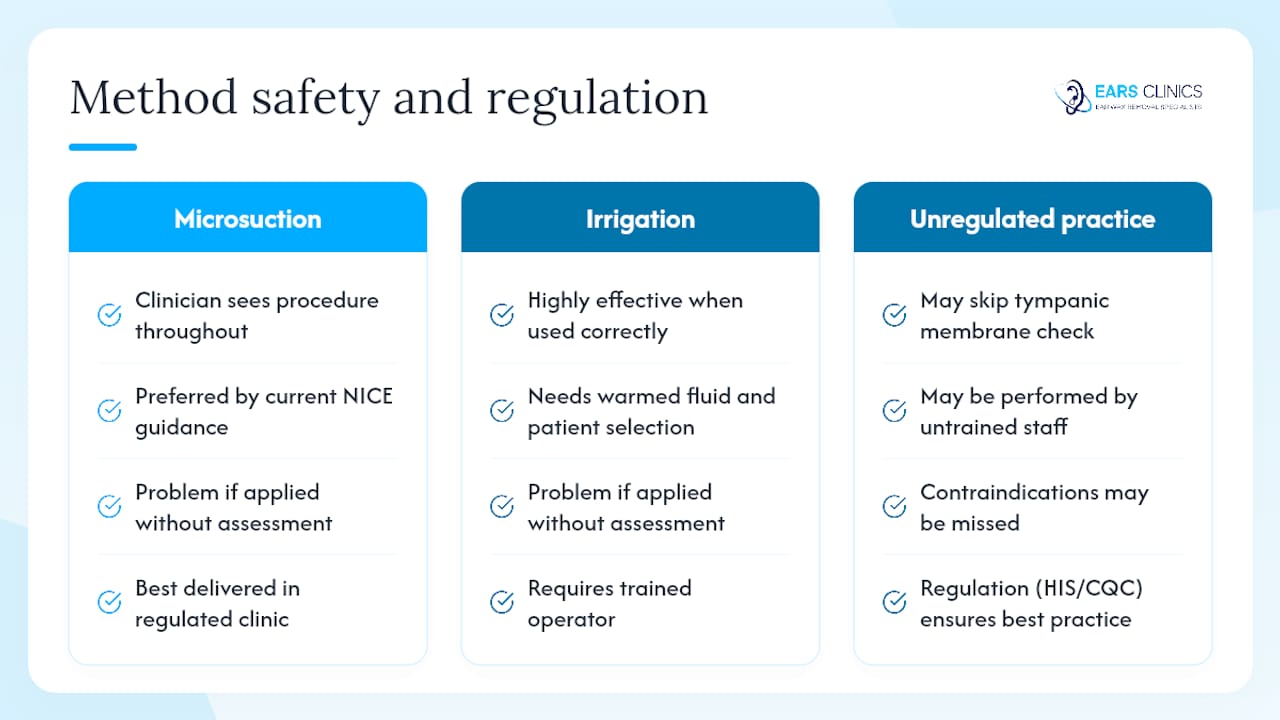
The evidence on hearing improvement after wax removal is genuinely encouraging, but the part that tends to get lost in patient-facing content is this: the method matters as much as the outcome. Microsuction is preferred by current NICE guidance precisely because it allows the clinician to see exactly what they are doing throughout the procedure. Irrigation, when used correctly with warmed fluid and proper patient selection, is also highly effective. The problem arises when either technique is applied without proper assessment, without checking the tympanic membrane, or by someone without the training to recognise contraindications.
Regulation by Healthcare Improvement Scotland or the Care Quality Commission is not a bureaucratic formality. It is the mechanism that ensures a clinic follows best practice, maintains clinical records, and employs practitioners with verified competence. Patients deserve to know that the person treating their ear has been trained to the same standard as an NHS aural care specialist, regardless of whether they are seen privately or on the NHS. At EARS Clinics, that standard is built into every appointment.
Book regulated ear wax removal with EARS Clinics
Waiting weeks for an NHS referral when your hearing is muffled is genuinely frustrating, and it is not always necessary. EARS Clinics (Earhealthservice) offer professional ear wax removal procedures using microsuction, irrigation, and manual instrumentation, performed by NHS-accredited Aural Care Specialists at clinics in Glasgow and Edinburgh. Appointments are available the same day, with no requirement to pre-soften before attending. Home visits are also available at £180 for patients who cannot travel to a clinic.
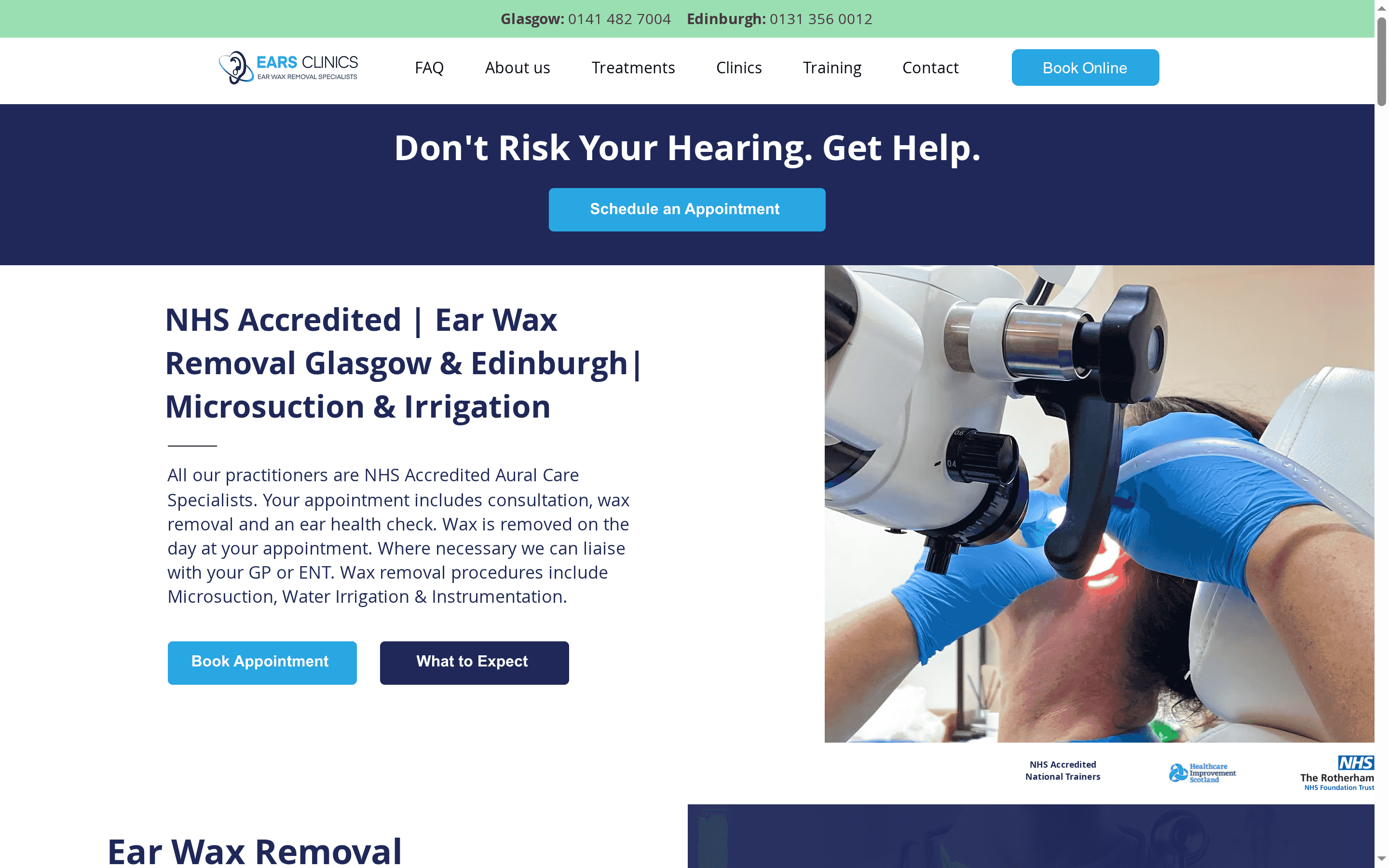
Clinics are registered with Healthcare Improvement Scotland, making Earhealthservice one of the few fully regulated ear health providers in Scotland. In-clinic appointments are priced at £60 for adults and £75 for under-18s. To book, visit earhealthservice.co.uk or contact the team directly for same-day availability.
This article provides general health information and is not a substitute for professional medical advice. Always consult a qualified clinician or check current NHS guidance for advice specific to your situation.
Useful sources
Recommended