
Top reasons for blocked ears and how to get relief

TL;DR:
Blocked ears can result from earwax buildup, infections, water trapping, or Eustachian tube dysfunction. Seeking professional assessment and treatment is essential for safe relief, especially if symptoms persist or worsen. Avoid using cotton buds and address underlying causes to prevent further ear problems.
A blocked ear can turn an ordinary day into a frustrating ordeal. Whether it’s the muffled sound of a colleague speaking across a meeting table, your child tugging at their ear in discomfort, or that persistent feeling of pressure that simply won’t shift, ear blockages affect people of all ages and can interfere with work, concentration, and daily wellbeing. The reassuring news is that most causes of blocked ears are entirely treatable once you understand what’s behind them. This article walks you through the leading causes, helps you identify your symptoms, and points you towards the right path for fast, safe relief.
Key Takeaways
Point | Details |
Wax build-up leads most cases | Earwax trapping or hardening is the most common and treatable cause of blocked ears. |
Infections can mimic blockage | Ear infections cause swelling and muffled hearing but require medical attention rather than home remedies. |
Water and objects affect children | Kids experience sudden blockages from water, toys, or debris and need careful, specialist assessment. |
Sinus issues matter | Allergies or sinus congestion can block ears by disrupting normal tube function, even with no wax present. |
Professional care prevents complications | Timely specialist help is the safest route if you’re unsure about the cause or can’t clear the blockage yourself. |
1. Excessive or impacted earwax
Now that we understand the urgency, let’s uncover the most common cause first. Earwax, known medically as cerumen, is produced naturally by glands in the outer ear canal. It exists for a very good reason: it traps dust and bacteria, lubricates the ear canal, and gradually migrates outward to keep the canal clean. In most people, this process works seamlessly. However, in a significant number of adults and children, the wax builds up faster than it can naturally clear, forming a blockage.
Earwax build-up is a major cause of ear blockage, creating symptoms such as fullness, dulled hearing, and discomfort in both adults and children. Understanding the symptoms of earwax build-up early makes a real difference in how quickly you can seek appropriate care.
Why does earwax become a problem? Several factors accelerate its build-up:
Cotton buds: Pushing a cotton bud into the ear canal compacts wax against the eardrum rather than removing it, making blockages significantly worse.
In-ear headphones and earbuds: Regular use physically blocks the natural outward migration of wax, trapping it deeper in the canal.
Hearing aids: These sit in the ear canal for long periods and can similarly disrupt wax movement.
Narrow or curved ear canals: Some people are simply born with a canal shape that makes natural clearance more difficult.
Older age: As we age, earwax tends to become drier and harder, making it more likely to accumulate.
Children are particularly vulnerable because their ear canals are narrower and shorter than adults’. Even a modest amount of wax can cause a meaningful blockage in a young child. If your child seems inattentive, is turning up the television, or is pulling at their ear, these may all be children’s ear blockage symptoms worth taking seriously.
Understanding why ear wax builds up in the first place can help you avoid the habits that worsen it over time.
Pro Tip: Never attempt to remove earwax with a cotton bud, ear candle, or any pointed object. These methods risk pushing wax deeper, damaging the delicate ear canal lining, or even perforating the eardrum. If softening drops haven’t helped within a few days, seek professional assessment.
2. Ear infections and inflammation
While earwax is the most familiar culprit, underlying medical conditions may also be to blame. Ear infections are another highly common cause of blocked or muffled hearing, and they can affect both adults and children, though children are particularly susceptible.
There are two main types of ear infection to be aware of:
Otitis media (middle ear infection): This occurs in the space behind the eardrum. It often follows a cold or upper respiratory infection, when bacteria or viruses travel through the Eustachian tube (the narrow channel connecting the back of the nose to the middle ear). Fluid accumulates in the middle ear, causing pressure, muffled hearing, and often significant pain.
Otitis externa (outer ear infection, sometimes called “swimmer’s ear”): This affects the outer ear canal itself, usually due to moisture, skin irritation, or bacterial overgrowth. The canal becomes swollen and inflamed, which can physically narrow or block it.
Ear infections can cause swelling and fluid between the eardrum and inner ear, leading to blocked or muffled hearing that can closely mimic earwax symptoms. This is precisely why professional assessment is so important: what feels like a wax blockage may actually require medical treatment with antibiotics or antifungal drops.
Important: If your blocked ear is accompanied by sharp pain, a fever above 38°C, discharge from the ear canal, or dizziness, you should seek medical attention promptly rather than attempting any home treatment. These signs suggest an active infection that needs proper clinical care.
Common symptoms of ear infection related blockage from ear infections include:
A persistent sensation of pressure or fullness in the ear
Reduced or muffled hearing on the affected side
Pain ranging from mild aching to sharp, intense discomfort
Occasional discharge (which may appear yellowish or watery)
Fever and general malaise, particularly in children
Children are at higher risk because their Eustachian tubes are shorter, more horizontal, and more easily affected by upper respiratory illnesses. After a cold or bout of tonsillitis, a child’s ears are particularly vulnerable to developing a secondary infection.
3. Water, foreign bodies and trapped debris
In addition to body-produced blockages, acute blockages can happen from everyday activities. Water trapped in the ear is one of the most instantly recognisable sensations. After swimming, showering, or even just washing your hair, water can become lodged in the ear canal, producing a distinctive muffled, echoing quality to sound. In most cases this resolves on its own within a short time, but if water remains for longer periods it can disrupt the skin lining of the canal, increasing the risk of infection.
Water, small objects, and debris often become stuck in the ear canal, especially in children, causing sudden blockage that can be both distressing and potentially dangerous.
Recommended steps for managing water in the ear:
Tilt your head to the affected side and gently tug the earlobe to encourage the water to drain naturally.
Try creating a gentle vacuum by cupping your palm over the ear and pressing in and out.
Use a clean, dry towel to pat the outer ear and encourage drainage.
If symptoms persist beyond 24 to 48 hours or pain develops, seek professional advice.
Avoid using cotton buds to dry the ear canal, as this can introduce bacteria or push debris inward.
The issue of foreign objects in children’s ears is a more serious concern. Young children are naturally curious and may insert small beads, seeds, fragments of toys, or even insects into their ears. Symptoms may include sudden unexplained pain, reduced hearing on one side, or an unusual smell. Unlike adults, children may not always be able to communicate what has happened, so unexplained ear symptoms in a child always warrant professional examination.
Pro Tip: If you suspect a foreign object in a child’s ear, do not attempt to remove it at home with tweezers or any other implement. This can push the object further in or cause injury. Seek specialist help promptly.
4. Eustachian tube dysfunction and sinus issues
Apart from visible blockages, internal issues can make ears feel blocked with no obvious cause. Eustachian tube dysfunction is a frequently overlooked reason why ears feel congested, pressured, or “full” in the absence of earwax or infection.

The Eustachian tube runs from the middle ear to the back of the throat. Its primary job is to equalise air pressure on both sides of the eardrum and drain any fluid that accumulates in the middle ear. When this tube becomes swollen, inflamed, or congested due to allergies, a cold, sinusitis, or even changes in air pressure (for example, during aeroplane travel or mountain driving), it can no longer perform these functions effectively.
Changes in air pressure and blocked Eustachian tubes can leave the ear feeling blocked despite there being no earwax problem at all. This is a very important distinction. Many people assume that a blocked ear automatically means wax, but if symptoms follow a cold, an allergic reaction, or a flight, the Eustachian tube is often the real culprit.
Typical symptoms of Eustachian tube dysfunction include:
A sensation of fullness or pressure deep within the ear
Popping, clicking, or crackling sounds when swallowing or yawning
Muffled hearing, often affecting both ears simultaneously
Mild dizziness or a feeling of imbalance
Symptoms that fluctuate throughout the day
Helpful to know: Yawning, swallowing, or chewing gum can sometimes temporarily equalise pressure and offer brief relief from Eustachian tube dysfunction. The Valsalva manoeuvre (gently blowing out while pinching the nose and keeping the mouth closed) can also help in mild cases. However, avoid this if you have an active ear infection.
Understanding whether your blocked ears after illness stem from a Eustachian issue, residual infection, or genuine wax build-up is key to choosing the right treatment. Antihistamines, decongestants, and nasal steroid sprays can all provide relief when allergies or sinus congestion are the primary driver.
Summary comparison: Causes, symptoms, and actions
With so many causes, a quick comparison helps clarify which scenario fits your symptoms.
Cause | Typical symptoms | Recommended first action |
Earwax build-up | Fullness, dulled hearing, itching, no pain | Softening drops; book professional removal if no improvement in 3 to 5 days |
Ear infection | Pain, fever, discharge, muffled hearing | See a GP or specialist promptly; avoid home removal |
Water or foreign body | Sudden blockage, possible pain, echoing sound | Gentle drainage for water; seek urgent specialist help for foreign objects |
Eustachian tube dysfunction | Pressure, popping, muffled hearing after a cold or flight | Decongestants, antihistamines; consult a professional if symptoms persist |
If you are unsure which category your symptoms fall into, the safest course is always professional assessment. For earwax specifically, following safe ear wax removal steps ensures you avoid the common mistakes that turn a minor inconvenience into a more serious problem.
A clinician’s take: Why ignoring blocked ears rarely helps
There is a pattern we see time and again in clinical practice. A patient arrives having tolerated a blocked ear for several weeks, having tried cotton buds, ear candles, and various drops, none of which worked and some of which made things considerably worse. By the time they seek professional help, what might have been a straightforward ten-minute procedure has become a more involved assessment.
The uncomfortable truth is that many people significantly underestimate the potential consequences of leaving a blocked ear untreated. Impacted wax left for extended periods can press against the eardrum, contributing to tinnitus (a persistent ringing or buzzing sound), dizziness, and in rare cases, more lasting hearing deterioration. An infection that is mistaken for simple wax and left untreated can spread or become chronic.
The other habit worth challenging is the widespread belief that cotton buds clean ears. They do not. Every ear care professional will tell you the same thing: a cotton bud inserted into the ear canal compacts wax, irritates the skin, and introduces bacteria. It is one of the most reliably counterproductive things a person can do for their ear health.
What we consistently recommend is this: understand what type of blockage you are likely dealing with, avoid interventions that could worsen the situation, and seek professional advice sooner rather than later. When it comes to preventing wax build-up in the future, small changes to daily habits, such as avoiding in-ear headphones for extended periods and never inserting anything into the ear canal, make a measurable difference over time.
The ears are remarkably self-sufficient organs. They generally need very little intervention. But when something goes wrong, prompt and appropriate care is far better than prolonged self-treatment that delays the relief you deserve.
Specialist ear care for fast relief in Glasgow and Edinburgh
If self-care hasn’t worked or you’re dealing with persistent symptoms, expert help is available right here in Glasgow and Edinburgh.
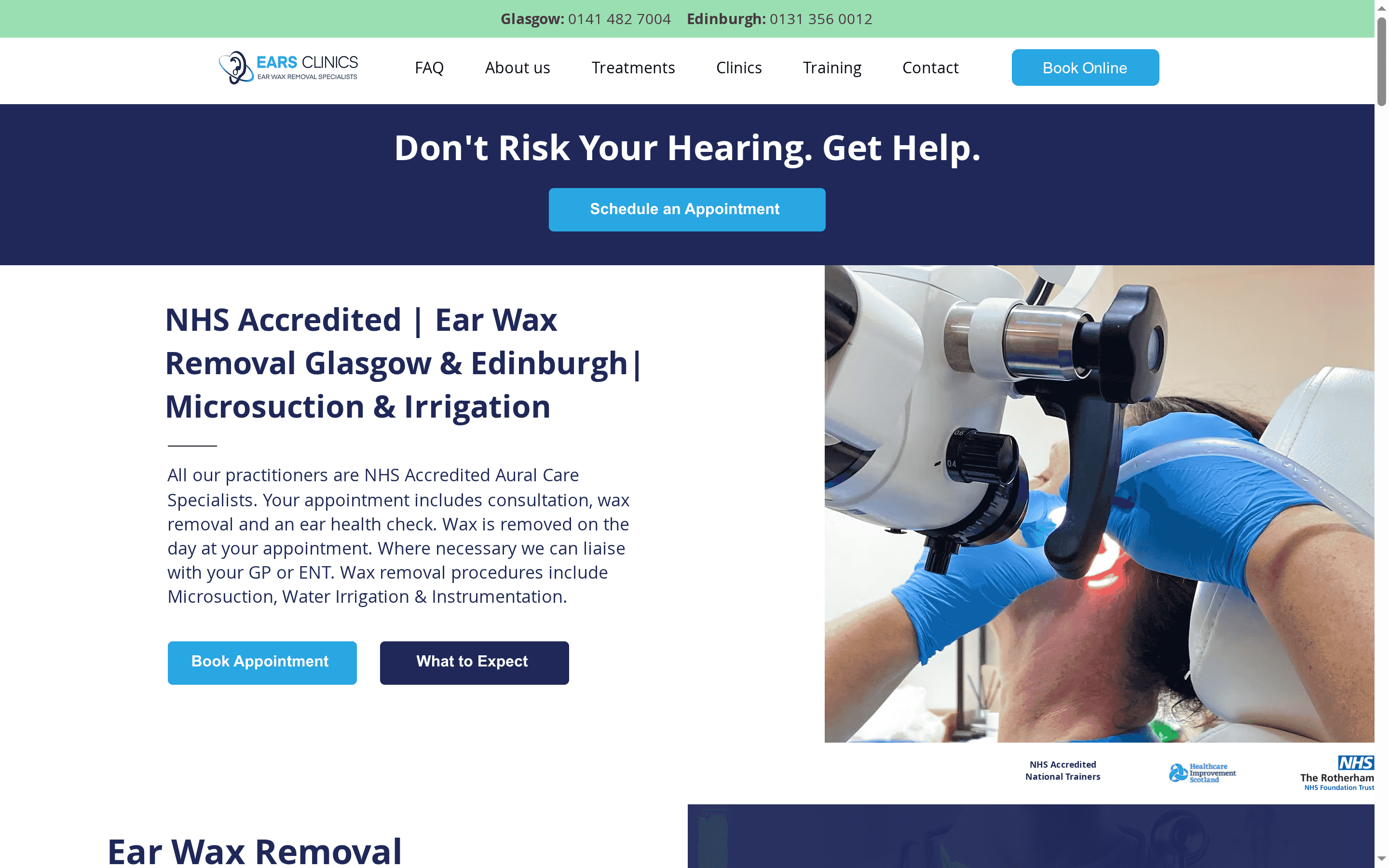
At EARS Clinics, our NHS-accredited Aural Care Specialists offer a full range of NHS-accredited wax removal options, including microsuction, irrigation, and instrumentation, for patients from two years of age upwards. We are Healthcare Improvement Scotland (HIS) registered, making us one of the few fully regulated ear healthcare clinics in Scotland. Appointments start from £60 for adults and £75 for under-18s, with home visits also available at £180 for those who need them. If you’d like to know what to expect at a clinic before you book, our patient guides walk you through the entire process. For parents concerned about a child’s hearing or comfort, our specialist children’s ear wax removal service provides safe, gentle care in a reassuring environment. Same-day appointments are often available, so relief is closer than you think.
Frequently asked questions
How do I know if my blocked ear is caused by wax or something else?
If your ear feels full and hearing is dulled without any pain or fever, excess earwax is the most likely cause. However, symptoms of earwax blockage are usually painless, whereas pain, discharge, or recent illness may indicate infection or another underlying cause requiring medical attention.
Are blocked ears in children treated differently?
Yes, children require a more cautious approach because their ear canals are narrower and their risk of infection is higher. Special care is needed for children’s blocked ears, and home removal attempts should be avoided entirely if symptoms persist or worsen.
When should I see a specialist for a blocked ear?
Prolonged or painful blockage needs expert assessment, particularly if symptoms last more than a few days, affect both ears, or are accompanied by pain, discharge, or dizziness. At-home methods should not be relied upon indefinitely.
Is it safe to use cotton buds to clear blocked ears?
No. Using cotton buds can worsen earwax blockage and significantly increase the risk of injury, canal irritation, and infection. Professional removal is always the safer and more effective choice.
Can allergies or sinus problems really block my ears?
Yes, absolutely. Allergies and sinus issues cause Eustachian tube problems that create a blocked sensation in the ear even when there is no earwax involved, and treating the underlying congestion is usually the most effective route to relief.
Recommended