
How to prepare your child for an ear appointment smoothly

TL;DR:
Preparing a child’s ear appointment involves understanding their fears and using clear, honest communication.
Parents should arrive early, stay calm, and support their child with familiar items to create a reassuring environment.
Taking a young child to a medical appointment can feel daunting, especially when it involves something as sensitive as their ears and hearing. Many parents worry that their child will become distressed, uncooperative, or frightened by the unfamiliar equipment and clinical setting. The good news is that with a little thoughtful preparation, an ear health appointment can be a calm, even positive experience. This guide walks you through every step, from understanding your child’s concerns to what happens after the visit, so you can feel confident and prepared.
Key Takeaways
Point | Details |
Prepare shortly before | Tell young children about the appointment only the day before or morning of to lessen anxiety. |
Age-appropriate explanations | Simple, honest language reassures and prepares your child for what to expect during the visit. |
Bring comfort items | Favourite toys or snacks can soothe nerves and help your child feel secure at the clinic. |
Model calmness | Children look to parents for cues, so stay calm and confident to support them effectively. |
Follow up positively | Praise your child after the appointment to reinforce a good experience and build confidence for the future. |
Understanding your child’s needs and concerns
With the stage set for why preparation matters, the next step is to understand your child’s unique fears and needs. Children are perceptive, and even a routine ear check can feel overwhelming when they do not know what to expect. Recognising the source of your child’s anxiety is the first and most important step towards addressing it effectively.
Common fears children have around ear appointments tend to fall into a few categories:
Unfamiliar environments: Waiting rooms, examination chairs, and clinical lighting can all feel strange and unsettling for young children.
Unusual sounds: Equipment like microsuction devices or otoscopes (the small torch-like tool used to look inside the ear) can make sounds that seem alarming if a child is unprepared.
Feelings of discomfort: Even gentle ear examinations can cause a child to worry about pain, especially if they have experienced earache before.
Loss of control: Being asked to stay still while someone examines them can make children feel powerless, which often increases distress.
Behavioural cues that your child may be anxious include clinginess in the days before an appointment, asking repetitive questions, becoming tearful or irritable, or refusing to engage in conversation about the visit. These are all normal responses and should be met with calm reassurance rather than dismissal.
One of the most important things to remember is that timing matters greatly. Research confirms that telling children too early about a medical appointment can prolong anxiety rather than reduce it. For most young children, informing them the day before or the morning of the appointment is the most effective approach. Giving a toddler a week’s notice rarely results in calm acceptance; it more often produces a week of worry and sleepless nights.
Understanding what to expect at an ear check yourself will also help you speak confidently to your child, which in turn signals safety and stability.
“Children take their emotional cues from the adults around them. When parents feel informed and calm, children are far more likely to feel the same way.”
Talking to your child: Timing and approach
Once you have identified what your child might be worrying about, you will need to communicate effectively and gently about the appointment. The language you use, and the moment you choose to use it, makes a significant difference to how your child receives the information.
Here is a practical step-by-step approach to having the conversation:
Choose the right moment. Tell your child the day before or morning of the appointment. Avoid mentioning it at bedtime or during a stressful part of the day.
Use simple, honest language. Say something like, “Tomorrow we’re going to visit a kind person who will look inside your ears to make sure they’re healthy.” Keep it brief and factual.
Reassure them of your presence. Let your child know clearly that you will be with them throughout the entire appointment. Children cope significantly better when they know they will not face the experience alone.
Invite questions but stay brief. If your child asks questions, answer them honestly and simply. Avoid over-explaining, as adding too many details can introduce new things to worry about.
Normalise the experience. Mention that lots of children have their ears checked, and that it helps them hear better and feel comfortable.
Avoid empty promises. Do not say “It won’t hurt at all” if you are not certain, as this can damage trust. Instead, say, “The specialist is very careful and gentle, and if anything feels uncomfortable, you can tell me straight away.”
You might also find it helpful to review a ear health checklist for kids in advance so you know which symptoms or concerns to mention to the clinician.
Pro Tip: For children aged three to seven, using a toy or doll to demonstrate the appointment can be very effective. Pretend to “examine” the toy’s ears using a torch or your finger, and let your child do the same. This kind of play-based preparation demystifies the process and can transform the experience from something scary into something familiar. You can also read picture books about visiting the doctor to reinforce the message gently.
Understanding the importance of regular ear checkups will also help you speak confidently to your child about why the visit matters, and that in turn helps them trust that the appointment is a normal and worthwhile part of looking after themselves. A well-informed parent is always better placed to offer reassurance, and children respond well to that confidence. For broader guidance, our children’s ear care guide covers all the key areas parents should be aware of.
Preparing for the appointment: Tools, comfort, and what to bring
After discussing the appointment, it is time to gather what you will need and set up your child for a comfortable visit. Practical preparation is just as important as emotional preparation, and having the right items with you on the day can make a real difference.
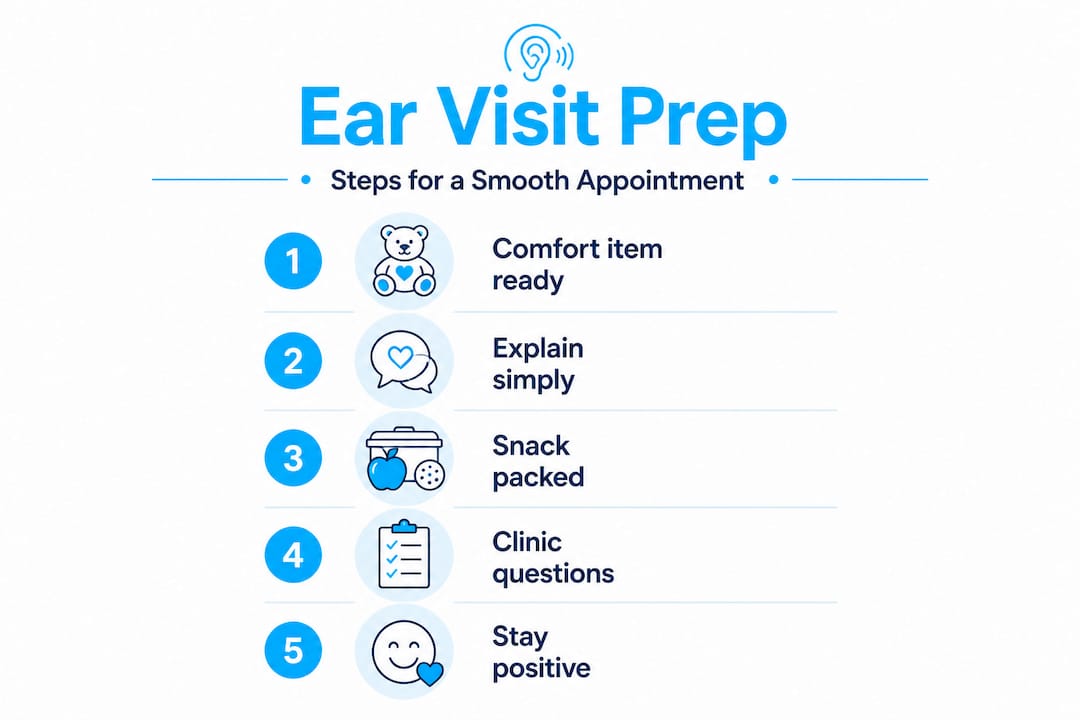
Here is a checklist of what to bring:
Appointment letter or booking confirmation (digital or printed)
Your child’s favourite comfort item such as a small toy, stuffed animal, or blanket
A healthy snack for after the appointment as a small, natural reward
A list of symptoms and questions you would like to discuss with the clinician, including how long your child has had symptoms and any history of ear infections
Any previously prescribed ear drops or relevant medical documents
Headphones or a familiar audiobook for waiting times, to provide a calm distraction
The following table summarises practical preparation items and their purpose:
Preparation item | Purpose |
Appointment letter | Confirms booking details and provides important clinic information |
Comfort toy or blanket | Provides emotional security during unfamiliar situations |
Healthy snack | Manages hunger and serves as a gentle post-appointment reward |
List of symptoms and questions | Ensures the clinician has full context and nothing is forgotten |
Familiar music or audiobook | Reduces anxiety in the waiting room through distraction |
Comfortable, loose clothing | Allows easy access to the ear area without added stress |
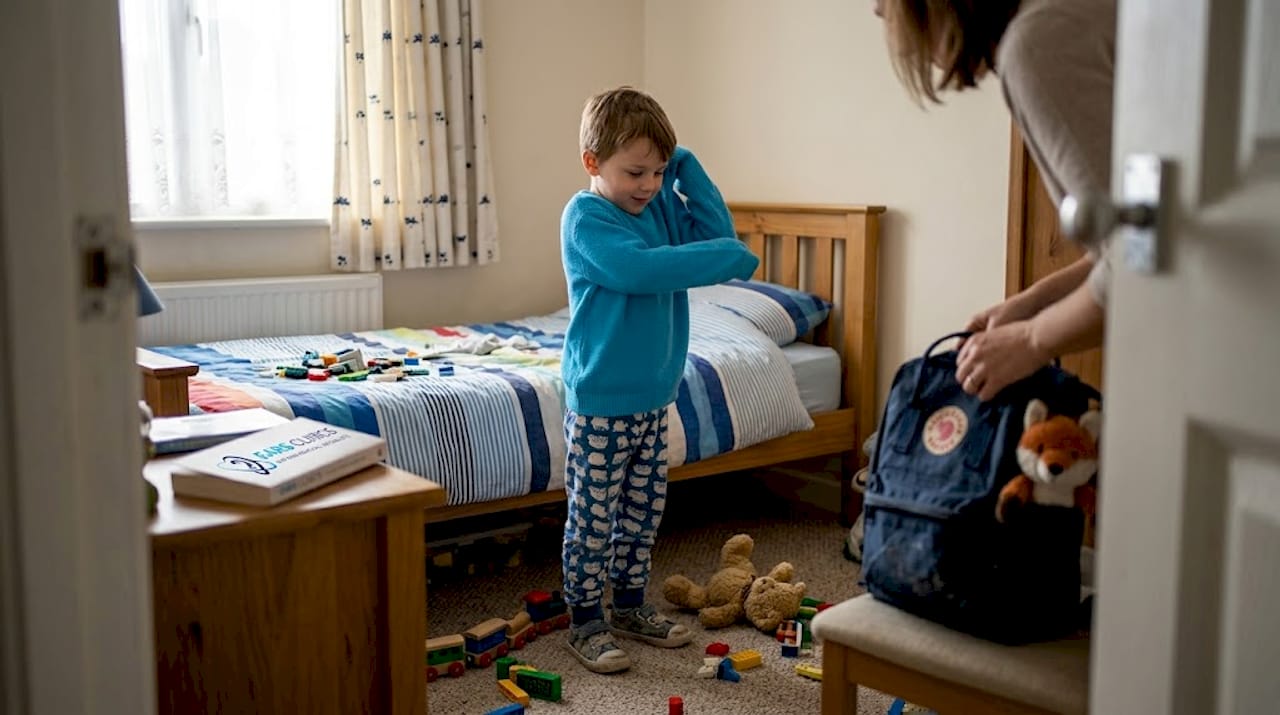
Dress your child in familiar, comfortable clothing on the day. Avoid anything fiddly or uncomfortable, as physical discomfort adds to emotional tension. Soft layers that can be removed easily are ideal. Choose shoes your child can manage independently where possible, as this supports their sense of control.
Following tips for preventing wax buildup in the weeks before an appointment can also make the examination more straightforward, and tips for better hearing in children offers further guidance on ongoing ear health between visits.
Pro Tip: If your child has older siblings, involve them positively. A sibling saying “I’ve had my ears checked before, it’s fine” is often more persuasive than anything a parent can say. Older children can reinforce calm expectations, and even accompany you to the waiting room for added emotional support.
At the clinic: Easing anxiety and advocating for your child
Preparation at home leads directly into how you and your child handle the clinic environment during the appointment. The way you behave in the clinic will shape your child’s entire experience, so it is worth thinking this through in advance.
Arrive early. Give your child ten to fifteen minutes to acclimatise to the waiting area before the appointment begins. Rushing in at the last moment heightens anxiety in children and adults alike.
Stay visibly calm. Children are extraordinarily sensitive to parental stress. If you appear anxious or hurried, your child will mirror that emotion. Breathe steadily, smile, and maintain a relaxed posture.
Use quiet distraction. Bring a small book or quiet activity for the waiting room. Avoid screens that require sound, as these can overstimulate before the appointment.
Practise simple breathing together. A slow breath in through the nose and out through the mouth is something even a three-year-old can do, and it activates the body’s calming response.
Communicate with the clinician. Before the examination begins, share any concerns about your child’s anxiety with the specialist. A good clinician will adjust their pace and communication accordingly.
The table below illustrates how different parental approaches can affect outcomes at a child’s ear appointment:
Parental approach | Child’s likely response | Outcome |
Calm and supportive | Relaxed, cooperative | Smooth examination, positive experience |
Visibly anxious or worried | Mirrored anxiety, tearful | Difficult examination, negative associations |
Rushed or impatient | Overwhelmed, resistant | Incomplete examination, increased fear for future visits |
Familiarising yourself with ear safety protocols in advance will reassure you that your child is in safe, expert hands. EARS Clinics is one of the few regulated ear healthcare providers in Scotland and is registered with Healthcare Improvement Scotland.
“At EARS Clinics, our NHS-accredited Aural Care Specialists are trained to work with children from the age of two. Our approach is gentle, thorough, and entirely child-focused.”
Finding a child-friendly ear care clinic near you in Glasgow or Edinburgh means your child will be seen by practitioners who understand the unique needs of younger patients.
After the appointment: Positive reinforcement and ear care tips
Once your child’s appointment concludes, there are important steps to help them feel positive about the experience and maintain good ear health in the long term. How you respond immediately after the visit sets the tone for how your child will feel about future appointments.
Praise your child specifically and warmly. Say something like, “I’m so proud of how still you sat” or “You were so brave asking that question.” Specific praise is far more meaningful than a general “well done.”
Have a brief, positive conversation about what happened. Ask what they noticed or liked, and gently correct any lingering worries. “The machine made a funny sound, didn’t it? But it was just cleaning your ear gently.”
Avoid over-dramatising the experience. Do not say “That was so scary, but you survived!” as this reinforces the idea that the appointment was indeed frightening.
Schedule follow-up appointments promptly if the clinician has recommended a return visit, and mark the date calmly in front of your child to normalise the process.
Continue good ear hygiene at home. Follow the clinician’s advice regarding ear cleaning, and avoid inserting cotton buds or other objects into the ear canal, as this can push wax further in and cause discomfort.
Our ear health steps for children provides a clear and practical guide for parents to follow between appointments.
Pro Tip: Use reward systems sparingly. A small sticker or choosing a favourite activity afterwards is perfectly fine, but try to make praise and encouragement the primary form of recognition. Children who associate bravery with intrinsic pride rather than material rewards tend to carry that resilience forward more effectively into future appointments and other challenges.
A parent’s perspective: What really works when preparing children
Looking back across all of these steps, it becomes clear that the most effective approaches are often the simplest ones. Many parents, understandably, want to do everything possible to protect their child from anxiety. This can lead to over-explaining, rehearsing the appointment repeatedly, or researching equipment online until worry sets in. Ironically, this level of preparation can transfer anxiety rather than reduce it.
The parents who report the smoothest experiences tend to have one thing in common: they stay present rather than future-focused. They do not project worry onto their child. They use straightforward, honest language without elaborate storytelling, and they trust their child to manage the moment with support.
Comfort routines matter far more than most parents expect. A well-loved toy, a familiar song hummed in the waiting room, or the warmth of a parent’s hand makes more difference than an hour of preparation the night before. Children do not need full information; they need emotional safety.
It is also worth being honest with yourself if you have your own anxiety about medical settings. Children are remarkably good at picking up on unspoken tension, and addressing your own feelings before the appointment, even briefly, is one of the most useful things you can do. Our children’s ear care guide offers reassurance for parents as well as practical advice for keeping ear health on the agenda throughout childhood.
The simplest truth is this: your calm is your child’s calm.
Support for your child’s ear health journey
Preparing your child for an ear appointment is so much easier when you know that the clinic itself is ready to meet them with patience, expertise, and a genuinely child-friendly approach.

At EARS Clinics, we specialise in children’s ear wax removal and ear health care for children from the age of two. Our NHS-accredited Aural Care Specialists are experienced in working with young patients, and our clinics in Glasgow and Edinburgh are registered with Healthcare Improvement Scotland. Appointments for under-18s are priced at £75, and home visits are available at £180 for families who prefer a familiar setting. Explore what to expect at EARS Clinics and book a convenient appointment today. Shorter waiting times, no pre-treatment conditions, and specialist care from arrival mean you and your child are always in good hands.
Frequently asked questions
When should I tell my child about the ear appointment?
It is best to tell them the day before or morning of the appointment, as informing them too early can lead to prolonged and unnecessary worry.
What can I do if my child is afraid of doctors?
Use calm, steady reassurance and bring familiar items such as a favourite toy or comfort blanket to provide security during the visit.
What should I bring to my child’s ear appointment?
Bring the appointment letter, your child’s favourite comfort item, a snack, and a written list of any symptoms or questions you would like to raise with the clinician.
How can I help my child stay calm during the examination?
Stay positive and composed yourself, practise slow breathing together, and let the clinician know if your child feels upset so they can adjust their approach.
Is it normal for my child to be anxious about ear checks?
Yes, many children feel nervous about any medical appointment, but clear and timely preparation combined with warm reassurance helps to minimise anxiety considerably.
Recommended