
How to choose the right ear care specialist safely

TL;DR:
Blocked ears require prompt professional evaluation when experiencing sudden hearing loss, pain, dizziness, or discharge, as DIY methods can worsen the condition. Verifying that an ear care provider is regulated by Healthcare Improvement Scotland ensures safe, standardized treatment; unregistered clinics pose higher risks. Choosing a qualified, registered specialist and following safe self-care practices before appointments protect your hearing and ensure effective, safe ear care.
Blocked ears are one of those problems that creep up without warning. One morning you wake up with muffled hearing, a sense of fullness, or an irritating itch deep inside the ear canal, and you are left wondering what to do next. For many people in Glasgow and Edinburgh, the temptation is to reach for a cotton bud, order an ear candle kit online, or simply wait and hope it clears. But making the wrong choice at this stage can turn a manageable inconvenience into a more serious complication. Choosing the right specialist from the outset protects your hearing, saves you time, and gives you genuine peace of mind.
Key Takeaways
Point | Details |
Urgent symptoms need specialist | If you have severe hearing loss or pain, seek professional ear care immediately—do not delay. |
Regulation ensures safety | Always verify Healthcare Improvement Scotland registration to ensure your chosen clinic meets strict standards. |
Check credentials and reviews | Ask about staff qualifications and read feedback before booking any procedure. |
Avoid risky self-care | Never use cotton buds for ear wax—stick to drops and escalate to a specialist if symptoms persist. |
Rule out complex causes | For buzzing or tinnitus, consult a specialist to exclude underlying conditions rather than guessing it’s wax. |
Key signs you need professional ear care
Having introduced the importance of careful selection, let’s first clarify when professional care is actually required and when more modest self-care might be sufficient.
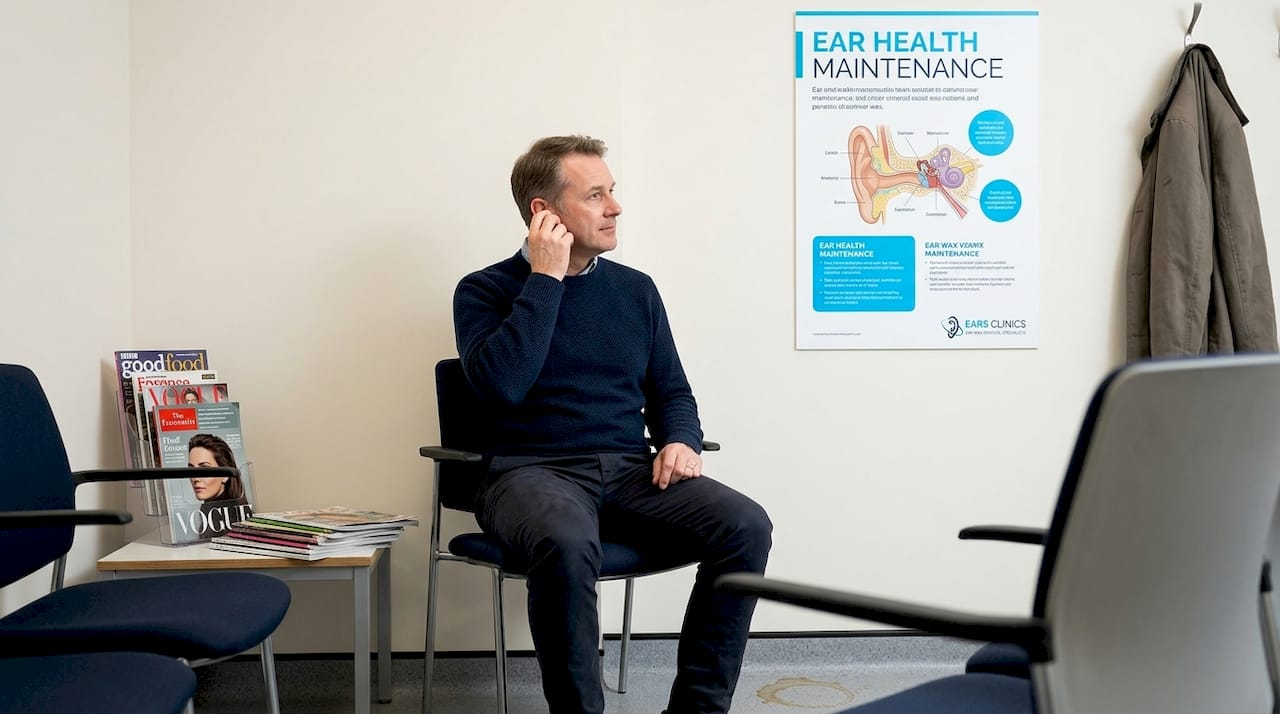
Not every sensation of ear fullness signals a crisis. However, certain symptoms should prompt you to seek professional evaluation without delay. Knowing the difference between an urgent situation and one that can wait a short while is genuinely important for your safety and comfort.
Symptoms that require immediate professional attention:
Sudden or significant hearing loss in one or both ears
Ear pain that is persistent, severe, or worsening
Dizziness, balance problems, or a spinning sensation (vertigo)
Discharge or bleeding from the ear canal
Tinnitus (ringing, buzzing, or humming) that starts suddenly
A sensation of fullness accompanied by fever
Symptoms that may allow a short wait:
Mild itching inside the ear with no pain
A subtle sense of blockage with only minor hearing changes
Very light, infrequent crackling or popping sounds
If symptoms require urgent professional evaluation, particularly significant hearing loss, balance problems, or pain, do not attempt DIY removal. These signs indicate that wax build-up may not be the sole cause, and probing the ear yourself risks pushing wax further in or damaging the delicate ear canal.
“Earwax build-up can affect anyone, but self-treatment carries real risks. Symptoms like hearing loss and balance disruption deserve expert assessment, not a home remedy.”
Pro Tip: If you are unsure whether your symptoms are serious enough for an appointment, err on the side of caution and book a consultation. A brief assessment by a qualified Aural Care Specialist is always preferable to accidentally worsening the problem. Reviewing safe ear healthcare tips beforehand can also help you understand what to expect.
How to verify regulation and specialist credentials
Once you recognise the need for professional care, the next step is ensuring your provider is regulated and genuinely credible. This matters more than many people realise.
Scotland has its own regulatory framework for independent healthcare services, and Healthcare Improvement Scotland registration is the key benchmark to look for when choosing an ear care specialist or clinic. Providers must meet criteria covering staff qualifications, treatment protocols, patient safety procedures, and premises standards, with ongoing inspections to maintain compliance. Without this registration, a clinic is operating outside the formal oversight structure, which increases risk to patients.
Many clinics offering ear wax removal in Scotland are not registered with Healthcare Improvement Scotland. This is a critical distinction that online comparisons and simple Google searches rarely surface. Knowing how to verify credentials yourself puts you in control.
How to verify a clinic’s credentials: a step-by-step guide
Visit the Healthcare Improvement Scotland website and use the register of independent healthcare providers to search for the clinic by name or location.
Ask the clinic directly whether they hold current HIS registration and request their registration number.
Confirm that the practitioner treating you is NHS-accredited and holds a recognised qualification in aural care.
Ask what clinical protocols are followed for each procedure (microsuction, irrigation, or instrumentation).
Enquire about how the clinic manages complications or referrals if a problem arises during or after treatment.
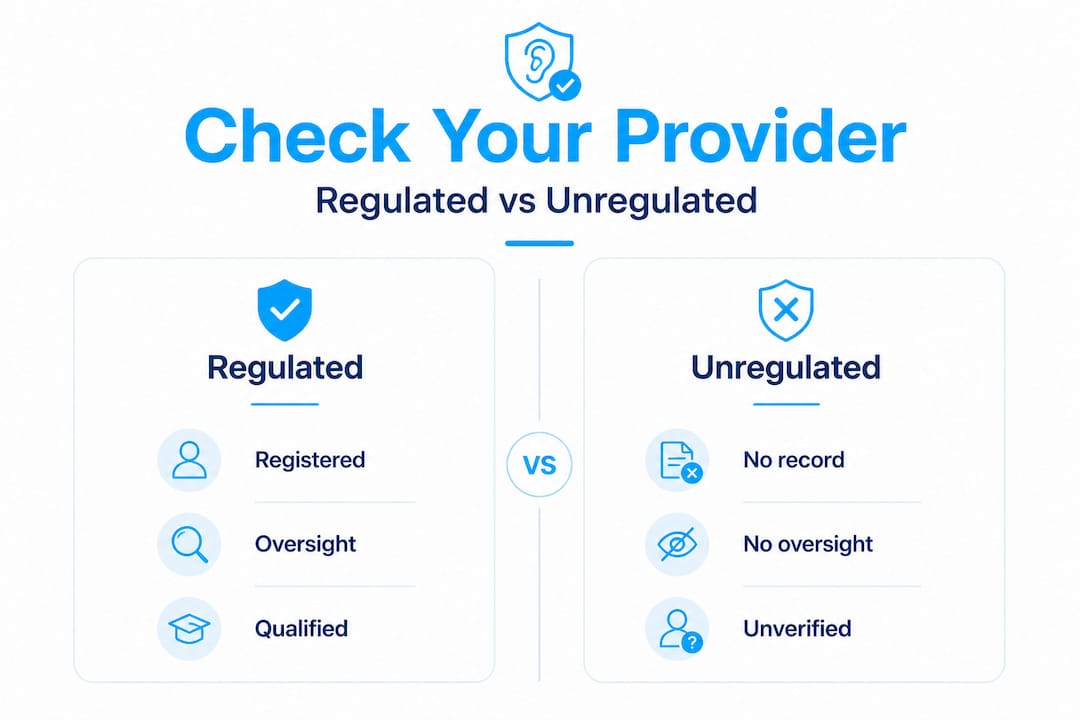
The table below illustrates the key differences between regulated and unregulated providers:
Feature | Regulated provider (HIS registered) | Unregulated provider |
Formal oversight | Yes, ongoing inspections | No |
Qualified Aural Care Specialists | Required | Not guaranteed |
Clinical protocols | Standardised and audited | Variable or absent |
Safe treatment range | Children from age 2 upward | Often adults only, unspecified |
Patient safety procedures | Formally documented | May be informal or absent |
Accountability | Clear regulatory pathway | Limited |
Pro Tip: Never hesitate to ask a provider for written proof of their HIS registration before booking. A credible, regulated clinic will provide this without hesitation. You can also explore regulated ear care guidance to understand what standards you should expect, and review the regulated clinic benefits to see why registration genuinely matters for your care.
If you want to understand how ear care regulations apply specifically in Scotland, familiarising yourself with these standards will help you ask better questions and make a more confident choice.
Practical steps to choosing the right specialist
Understanding regulation is essential. Now let’s walk through how to actually find and choose the right specialist for your situation.
The process works best when you follow a logical order: first shortlist clinics based on location and availability, then vet their credentials thoroughly, and finally confirm that the clinic’s services match your specific needs.
Step-by-step selection process:
Search for regulated, HIS-registered clinics in Glasgow or Edinburgh. Checking top Glasgow ear clinics can help you identify quality providers in the area.
Confirm that the clinic offers the procedure suited to your situation (microsuction, irrigation, or instrumentation).
Verify HIS registration as described in the previous section.
Read patient reviews on independent platforms such as Google or Trustpilot, looking specifically for comments about practitioner manner, safety, and outcomes.
Contact the clinic to ask about waiting times, whether same-day appointments are available, and whether home visits are offered if mobility is a concern.
Questions to ask before booking:
Are your practitioners NHS-accredited Aural Care Specialists?
Which ear wax removal methods do you offer?
Do you treat children, and from what age?
What happens if a complication arises during treatment?
Are there any preconditions before my appointment (such as pre-treatment softening drops)?
The HIS assessment process evaluates clinics against criteria including staff qualifications, treatment protocols, patient safety procedures, and premises standards, with ongoing inspections to ensure compliance. Choosing a clinic that has passed this process gives you a meaningful level of assurance.
The table below gives a broad overview of service types and typical price ranges for private ear care in Scotland:
Service type | Typical setting | Approximate cost | Notes |
Ear wax removal (adult) | Clinic | £60 | Both ears included |
Ear wax removal (under 18) | Clinic | £75 | Regulated providers only |
Home visit | Patient’s home | £180 | For those with mobility needs |
NHS ear wax removal | GP or community centre | Free | Waiting times vary |
Private treatment removes the uncertainty of NHS waiting lists. With EARS Clinics, same-day appointments are available for those who need urgent care, and there is no requirement to use pre-treatment drops before booking.
Self-care tips and common mistakes before your appointment
Even when you have chosen a clinic, self-care matters in the period before your appointment. Managed well, it keeps you comfortable and may make the removal procedure easier. Managed poorly, it can make things significantly worse.
The most important rule is straightforward: if your symptoms are mild and you are waiting for a routine appointment, the only safe self-care option is using wax-softening drops and avoiding any probing of the ear canal. If symptoms persist or worsen, escalate to professional assessment rather than continuing to self-treat.
Safe self-care steps while waiting for your appointment:
Use olive oil or approved wax-softening drops (available from pharmacies) twice daily for up to five days before your appointment
Keep the affected ear dry, particularly during showering or swimming
Avoid earphones or in-ear devices that may compact wax further
Sleep with the affected ear facing upward to allow softened wax to move naturally
Mistakes to avoid at all costs:
Inserting cotton buds into the ear canal. This is one of the most common causes of wax compaction and ear canal damage seen by ear care specialists.
Using ear candles. There is no clinical evidence that ear candles are effective, and they carry a genuine risk of burns and wax deposits from the candle itself entering the canal.
Attempting to irrigate your own ears without proper equipment or training
Ignoring worsening symptoms in the belief that the problem will resolve on its own
Tinnitus, the perception of ringing, buzzing, or humming in the ears, is sometimes attributed to wax build-up. While this can occasionally be the case, it is important not to assume wax is the cause without proper assessment. Persistent tinnitus may have other underlying causes that require specific investigation.
Pro Tip: If you have used softening drops for five days and your symptoms have not improved, or if at any point your discomfort worsens, contact an Aural Care Specialist promptly rather than continuing with self-care. Earlier intervention almost always leads to better outcomes.
What most guides miss about ear care selection
After covering practical and regulatory steps, it is worth addressing some deeper realities of ear care decision-making that typical articles tend to pass over entirely.
Most online guides offer a simple formula: search locally, check reviews, book an appointment. That advice is not wrong, but it leaves out the parts that genuinely trip people up. The first reality is that symptoms do not always fit neatly into categories. Someone experiencing muffled hearing and a low-level buzz in their ear might assume it is straightforward wax build-up, when in fact the same symptoms can indicate a perforated eardrum, a middle ear infection, or even something requiring specialist ENT (ear, nose, and throat) referral.
For non-emergency symptoms like tinnitus, experienced primary-care practitioners emphasise rule-out thinking rather than assuming the problem is wax alone. This means considering other possible causes systematically before settling on a diagnosis. A regulated clinic, by definition, operates within clinical protocols that include this kind of careful assessment. An unregulated provider may not.
The second reality is that price and convenience, while understandably important, are frequently the wrong starting point for choosing an ear care provider. A cheaper appointment at an unregistered clinic might resolve a simple blockage without incident. But if something unexpected arises during treatment, such as a reaction, an anatomical variation, or an underlying condition that complicates the procedure, you want to be in the hands of someone operating within a formal clinical framework, not someone working from a spare room with a YouTube qualification.
We see this pattern regularly. Patients arrive at EARS Clinics having previously visited unregistered providers, sometimes with wax pushed further in, sometimes with irritation caused by inappropriate technique. The lesson is consistent: the benefits of a regulated clinic are not abstract. They are felt in the quality of assessment, the safety of the procedure, and the confidence that comes from knowing your practitioner is accountable to an independent regulatory body.
The third reality is that many people delay seeking care because they are embarrassed or unsure whether their symptoms are “bad enough.” The answer is simple: if something has changed in your hearing, your comfort, or your sense of balance, it is worth a professional conversation. Early assessment is almost always better than a prolonged wait.
Find your trusted specialist today
If you have been experiencing blocked ears, reduced hearing, or discomfort and you are ready to take the next step, EARS Clinics offer regulated, NHS-accredited care for patients across Glasgow and Edinburgh. Our practitioners are qualified Aural Care Specialists, and every clinic is Healthcare Improvement Scotland registered, giving you the assurance of formal oversight from your very first appointment.
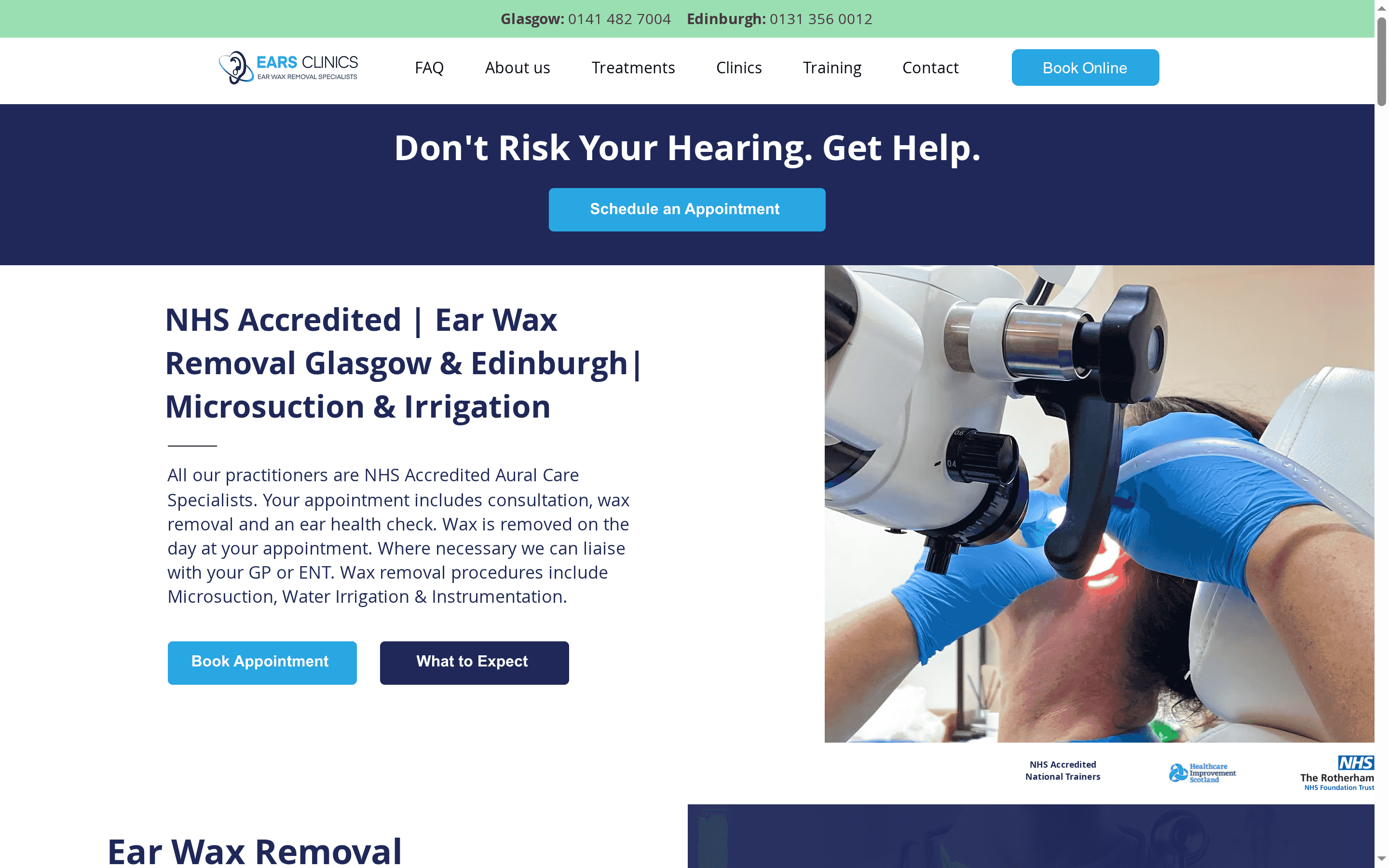
You can learn more about our ear wax removal procedures, which include microsuction, irrigation, and instrumentation, to understand which approach may be most appropriate for your situation. If you are based near Edinburgh, our South Queensferry clinic provides convenient access to regulated care. You are also welcome to meet our specialists before booking, so you know exactly who will be caring for your ears. Same-day appointments are available, and home visits can be arranged for those who need them. Appointments start from £60 for adults. Your hearing is worth protecting with the right team behind it.
Frequently asked questions
How do I know if an ear care clinic is properly regulated?
Look for Healthcare Improvement Scotland registration, which confirms the clinic meets regulated standards for independent healthcare providers in Scotland. You can verify this directly on the HIS website or by asking the clinic for their registration details.
Can I get NHS-funded ear wax removal in Glasgow and Edinburgh?
NHS wax removal may be available when wax is causing hearing loss or other significant symptoms, often through community treatment centres, though waiting times can vary considerably. Private regulated clinics like EARS Clinics offer a faster alternative with no pre-treatment preconditions.
Is it safe to remove ear wax at home?
Using wax-softening drops is considered safe for most adults, but inserting cotton buds or any other object into the ear canal is not. See a specialist promptly if your symptoms persist beyond five days of self-treatment or if they worsen at any point.
What if I experience buzzing or tinnitus?
If tinnitus is persistent, do not assume it is caused by wax alone. As primary-care guidance highlights, a careful rule-out assessment is essential to exclude more serious underlying causes before treatment is considered.
Recommended