
Top children's ear care services: safe, parent-friendly guide
- 4 days ago
- 12 min read

TL;DR:
Microsuction performed by NHS-accredited clinicians is the safest and most effective method for children’s ear wax removal under current guidance.
Parents should verify clinic regulation, clinical expertise, and the availability of microscope-guided microsuction before booking.
For most children aged 2 and above, microsuction performed by a regulated, NHS-accredited clinician is the safest and most effective route to ear wax removal. It is the method preferred under current NICE guidance, avoids water pressure on sensitive eardrums, and typically takes only a few minutes. If your child is showing symptoms of wax build-up, you do not need a GP referral to act.
Here is what to look for and what to do next:
Book with a HIS or CQC-registered clinic. In Scotland, Healthcare Improvement Scotland (HIS) registration is the key regulatory marker. In England and Wales, look for Care Quality Commission (CQC) registration.
Confirm the clinician is NHS-accredited. Aural Care Specialists with NHS-accredited training follow the same clinical standards as hospital practitioners.
Ask about microscope-guided microsuction. This allows the clinician to see the ear canal in real time, which is the single most important safety factor for children.
Same-day appointments are available. If your child is in discomfort, you do not have to wait weeks. EARS Clinics offers same-day and home-visit options for children from age 2.
To book a paediatric ear-care appointment, visit EARS Clinics.
Why is microsuction usually the best method for children?
Microsuction uses a fine, low-pressure suction probe guided by a clinical microscope to remove wax gently from the ear canal. No water enters the ear at any point, which matters greatly for children whose eardrums may be thinner, more sensitive, or where a perforation or grommets are present. The clinician can see exactly what they are doing throughout the procedure, reducing the risk of accidental contact with the canal wall or eardrum.

Professional removal typically takes only a few minutes once the clinician has assessed the ear. For a child, that brevity is a real clinical advantage: less time in the chair means less opportunity for distress or movement.
What parents should know about the experience:
The suction probe produces a low hissing sound, which can startle younger children. Telling them in advance that it sounds “like a tiny vacuum cleaner” tends to reduce anxiety.
There is no water, no flushing sensation, and no mess. Most children describe it as mildly ticklish rather than painful.
The appointment, including assessment, usually lasts around half an hour.
No special aftercare is required in most cases; the clinician will advise if softening drops are needed beforehand.
Pro Tip: Bring a comfort item from home, a favourite small toy or a pair of headphones playing familiar music, and ask the clinic whether a parent can sit beside the child throughout. Most regulated clinics actively encourage this, and a calm, familiar presence makes a significant difference to cooperation.
Clinicians do not apply microsuction in every case. They assess each child’s history and clinical presentation first, and may choose irrigation or manual instrumentation when the clinical picture makes that the safer or more appropriate option.

How do microsuction, irrigation and manual instrumentation compare?
Microsuction is usually the preferred starting point for children, but irrigation and manual instrumentation remain clinically valid and are used when the situation calls for them. Understanding the differences helps parents ask the right questions when booking.
Method | How it works | Best suited for | Key contraindications |
Microsuction | Gentle suction via fine probe under microscope | Most children; sensitive ears; grommets present | Requires some cooperation; not suitable if child cannot remain still |
Irrigation | Warm water flushed gently into canal | Soft, mobile wax; no perforation history | Perforated eardrum; grommets; recent ear surgery; active infection |
Manual instrumentation | Wax removed using a curette or probe | Visible, firm plugs accessible without suction | Requires steady cooperation; not suitable for very young children without specialist training |
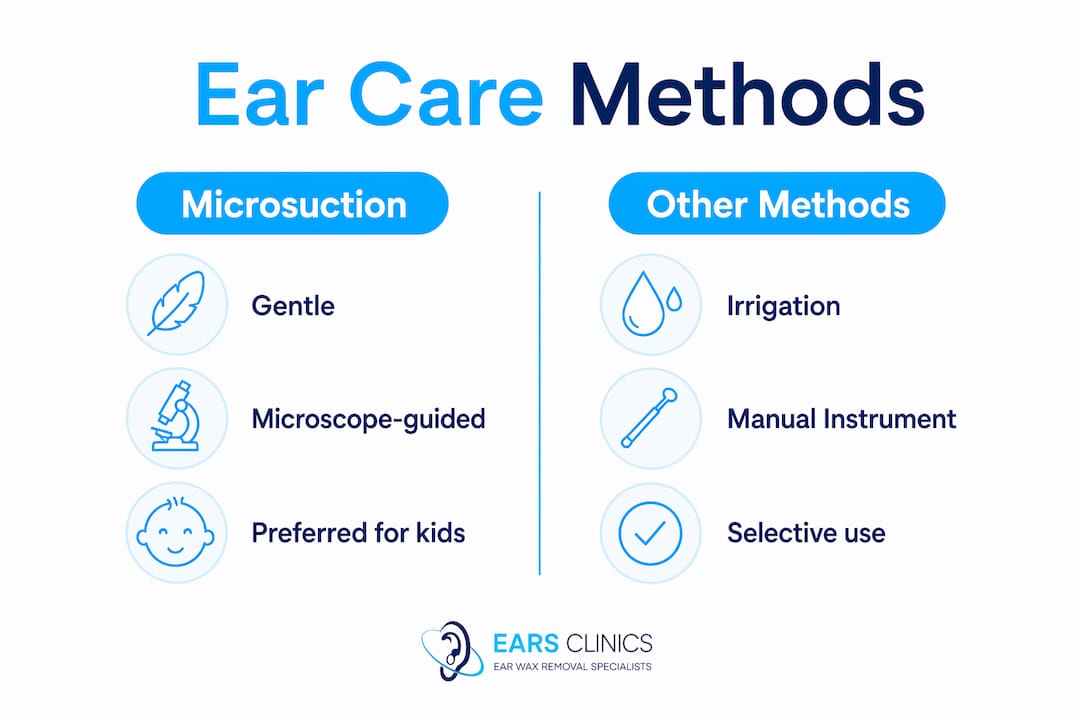
For a detailed clinical comparison, see microsuction vs irrigation for children.
When each method is and is not appropriate:
Irrigation can be used safely when wax is soft and mobile, there is no history of perforation, and the child has no grommets. It should be avoided when any of those conditions are present, or when there is active discharge.
Manual instrumentation is appropriate for firm, visible plugs that a trained clinician can access directly. It requires a cooperative patient and a clinician with specific aural-care training.
Microsuction is generally preferred because it offers direct visualisation throughout, avoids water pressure, and is safe even when a perforation is suspected. Microscope-guided microsuction is widely regarded by paediatric ENT specialists as the single most important safety factor in children.
Clinical note: If there is any sign of infection, bloody or purulent discharge, or a suspected perforation, a clinician should assess the ear before any removal is attempted. In those cases, antibiotic drops or ENT referral may be the appropriate first step rather than wax removal.
What happens at a paediatric ear-care appointment?
A typical appointment follows a clear, predictable sequence. Knowing what to expect helps parents prepare their child and reduces anxiety on the day.
Arrival and check-in (5 minutes). You will complete a brief consent form on behalf of your child. Bring any relevant medical history, including past ear infections, grommets, or known perforations.
Clinical history (5 minutes). The clinician asks about symptoms, duration, any previous ear surgery, and whether softening drops have been used. This shapes the choice of method.
Otoscopic assessment (3–5 minutes). The clinician examines both ears using an otoscope or clinical microscope. This is the stage where a suspected infection or perforation would be identified. Before/after imaging may be taken at this point.
Procedure (5–10 minutes). Microsuction, irrigation, or manual instrumentation is carried out based on the assessment. The child sits or reclines in a clinical chair, often with a parent alongside.
Post-procedure check and advice (5 minutes). The clinician confirms the canal is clear, reviews the after-imaging if taken, and advises on any follow-up care or GP correspondence needed.
Total appointment time: approximately 20–30 minutes. Complex cases or bilateral wax in a very young child may take a little longer.
Practical notes for parents:
Arrive a few minutes early so the child has time to settle before entering the clinical room.
Consent for children must be given by a parent or legal guardian; bring identification if the clinic requests it.
Before/after otoscopic photographs are a useful quality marker. Ask whether the clinic provides them as standard.
The microsuction procedure workflow at EARS Clinics follows this structure, with the clinician selecting the safest method after the initial assessment.
When should you seek professional ear care rather than waiting?
Ears are largely self-cleaning. Wax moves outward naturally, and routine deep cleaning at home is rarely necessary or advisable. The question for most parents is not whether to clean, but when symptoms justify professional assessment.
Book a same-day or urgent appointment if your child has:
Ear pain or a sensation of pressure that does not resolve within 24 hours
Fever alongside ear symptoms
Bloody or purulent (pus-like) discharge from the ear canal
Sudden or noticeable change in hearing
Any injury to the ear or head
Severe distress in a young child who cannot explain their symptoms
Watchful waiting is reasonable when:
There are no pain or infection symptoms and the child is hearing normally
Mild muffled hearing has appeared recently without other symptoms
A clinician has previously confirmed wax build-up and advised monitoring
Safe home care in the meantime:
Clean only the outer ear with a soft, damp washcloth. Inserting objects into the ear canal is unsafe and can worsen impaction.
Never use cotton buds, hair pins, or fingers inside the canal; these are the leading cause of wax impaction and canal injury in children.
Softening drops may help soften wax before an appointment, but use them cautiously in children under 3 or where there is any history of perforation or grommets. Always have a clinician assess the ear first.
When to go straight to your GP or ENT: Recurrent ear infections, known or suspected grommets, a history of ear surgery, or any discharge that persists beyond 24 hours all warrant a GP or ENT review before wax removal is attempted. The clinician needs to know this history to choose the right approach safely.
How do you choose a safe, child-friendly ear clinic in the UK?
The single most important criterion is regulation. A clinic that is HIS-registered (Scotland) or CQC-registered (England and Wales) and employs NHS-accredited clinicians is operating within a framework of enforceable clinical standards. Everything else, from child-friendly décor to flexible booking, matters less than that foundation.
Checklist for parents:
Clinic is registered with HIS or CQC (ask for the registration number and verify it)
Clinicians hold aural-care or ENT-related qualifications and can evidence microsuction training
Microscope-guided microsuction is available (not just handheld otoscope)
Before/after otoscopic imaging is offered as standard
Paediatric consent and safeguarding policies are in place
The clinic treats children from a stated minimum age (EARS Clinics treats from age 2)
Clinical correspondence with GPs or ENT is available if needed
Questions to ask when booking:
What is your minimum age for treatment?
Are your clinicians NHS-accredited or hold recognised aural-care qualifications?
Do you use a clinical microscope for microsuction?
Is before/after imaging included in the appointment?
Do you offer home visits for children who cannot attend a clinic?
What is your pricing structure, and are there additional fees for same-day appointments?
Will you write to our GP or ENT if you identify anything of concern?
Patient reviews that mention a child’s comfort, the clinician’s calm manner, and clear post-appointment communication are more informative than generic five-star ratings. Look for specifics. Use the ear health checklist for kids as a reference when evaluating clinics.
Care for toddlers, babies and sensory-sensitive children
Young children and those with sensory sensitivities need a different approach, not a different standard of care. The clinical goal remains the same: safe, effective wax removal with minimal distress.
For toddlers and young children (ages 2–5):
Prepare the child in advance with simple, honest language. “The doctor will look in your ear with a special light, and then use a tiny machine to clean it” is more reassuring than vague reassurance.
Bring a comfort item and ask whether a parent can be present throughout the procedure.
Request the shortest available appointment slot; young children’s cooperation tends to diminish after 15–20 minutes.
If the child cannot remain still enough for safe treatment, the clinician may defer the procedure. Removal under general anaesthetic in hospital is a safe and appropriate option when clinic cooperation is not possible, and a good clinician will say so rather than attempt an unsafe procedure.
For autistic or sensory-sensitive children:
Contact the clinic before booking to discuss environmental adaptations: reduced lighting, a quieter room, and a longer appointment slot.
Ask whether a pre-visit familiarisation appointment is available so the child can meet the clinician and see the equipment before the procedure day.
Sensory breaks during the appointment can help. A clinician experienced with sensory-sensitive patients will build these in naturally.
Home visits are available from EARS Clinics and can be particularly valuable for children who find clinical environments distressing. The same regulated standards apply; the clinician brings the equipment to you.
Pro Tip: When booking, supply a brief written summary of your child’s ear history: past infections, any grommets fitted or removed, known perforations, and previous reactions to clinical environments. This allows the clinician to prepare the right equipment and approach before the appointment begins, saving time and reducing stress on the day.
What do children’s ear-care appointments typically cost in the UK?
Private paediatric ear-care appointments in the UK are priced per session, with home visits carrying a higher fee to reflect travel and extended clinician time.
Appointment type | Typical price | Approximate duration |
Under-18 clinic appointment | £75 | 20–30 minutes |
Adult (18+) clinic appointment | — | 20–30 minutes |
Home visit (any age) | £180 | 20–30 minutes |
These are the published prices at EARS Clinics. Prices at other private providers vary; always confirm what is included before booking.
What affects the total cost:
Same-day appointments may carry a premium at some clinics; confirm this when booking.
Home visits include travel to your address and are priced accordingly.
Before/after otoscopic imaging and a post-procedure advice note should be included as standard; ask if they are not mentioned.
Clinical correspondence with a GP or ENT, if required, may be charged separately at some providers.
Some private health insurance policies reimburse ear wax removal; check your policy before the appointment.
Cancellation policies vary between clinics. Ask about the notice period required to avoid a cancellation fee, particularly for home visits where clinician travel time is involved.
What do CQC and HIS registration actually mean for your child?
Registration with the Care Quality Commission (CQC) in England and Wales, or Healthcare Improvement Scotland (HIS) in Scotland, is not a badge. It is a legal requirement for clinics providing regulated health activities, and it carries enforceable obligations.
What these registrations require in practice:
Documented infection-control protocols and equipment sterilisation standards
Safeguarding policies for children and vulnerable patients
Clinician competency checks and ongoing training requirements
A formal complaints procedure with an independent escalation route
Regular inspection against published clinical standards
Clinician qualifications that matter:
NHS-accredited aural-care training, which covers microsuction, irrigation, and instrumentation to the same standard as NHS ear clinics
Documented microsuction training with a recognised provider (some clinics publish their training credentials; ask if not visible)
NMC registration where the clinician is a registered nurse
Experience with paediatric patients specifically, not just adult ear care
Microscope-guided microsuction requires trained operators and appropriate equipment. Clinics that describe their training and equipment transparently, and offer before/after imaging as evidence of the procedure’s outcome, are demonstrating the standard of accountability you should expect.
What to look for on a clinic’s website: HIS or CQC registration number, named clinician qualifications, a stated minimum age for paediatric treatment, and a clear description of the equipment used. If these are absent, ask directly before booking.
EARS Clinics is HIS-registered and employs NHS-accredited Aural Care Specialists. It is one of the few regulated ear healthcare clinics in Scotland and treats children from age 2.
Key takeaways
Microsuction by an HIS or CQC-registered, NHS-accredited clinician is the safest and most effective approach to children’s ear wax removal in the UK, and EARS Clinics offers this service from age 2 in Glasgow and Edinburgh.
Point | Details |
Microsuction is the preferred method | It avoids water pressure, uses microscope guidance, and is safe even where eardrum issues are possible. |
Avoid cotton buds and home probing | Inserting objects into the ear canal is the leading cause of wax impaction and canal injury in children. |
Know the red flags | Ear pain, fever, discharge, or sudden hearing change require same-day professional assessment, not watchful waiting. |
Verify HIS or CQC registration | Only book with a clinic that is regulated and employs NHS-accredited clinicians with documented paediatric experience. |
EARS Clinics treats children from age 2 | Clinic appointments cost £75 for under-18s; home visits are £180. Same-day appointments are available. |
A clinician’s perspective on paediatric ear care
Every paediatric ear appointment begins with the same priority: safety first, speed second. Children’s ear canals are narrower, their eardrums more delicate, and their tolerance for unfamiliar clinical environments genuinely variable. A clinician who rushes past the assessment stage to get to the procedure is not serving the child well.
What reassures us most about microsuction is not just the technique itself, but what the microscope makes possible. Seeing the canal clearly before, during, and after the procedure means we can stop the moment something unexpected appears, whether that is a perforation, a grommet, or a sign of infection that changes the clinical picture entirely. That real-time visibility is what separates a safe procedure from a guessed one.
Parents sometimes worry that their child will not cooperate well enough for treatment. That concern is valid, and the honest answer is that some children cannot be treated safely in a clinic setting on a given day. We would rather defer a procedure and refer appropriately than push through when the conditions are not right. For children who find clinical environments difficult, home visits and longer, adapted appointments are available. The goal is always a calm, safe experience, not a completed procedure at any cost.
Book a paediatric ear-care appointment with EARS Clinics
EARS Clinics provides specialist ear wax removal for children from age 2, with appointments available in Glasgow and Edinburgh. Every paediatric appointment is carried out by an NHS-accredited Aural Care Specialist using microscope-guided microsuction, with irrigation and manual instrumentation available where clinically appropriate. Before/after otoscopic imaging is included, and the clinician will write to your GP or ENT if anything of clinical concern is identified.
Clinic appointments for under-18s are priced at £75. Home visits, which bring the same regulated standard of care to your home, are £180. Same-day appointments are available for children in acute discomfort. EARS Clinics is HIS-registered and is one of the few fully regulated ear healthcare clinics in Scotland.
To book a clinic or home-visit appointment, or to check same-day availability, visit the children’s ear wax removal page or browse the full range of ear wax removal procedures available at EARS Clinics.
This article provides general health information and is not a substitute for professional medical advice. Always consult a qualified clinician or your GP for guidance specific to your child’s situation.
Useful sources for parents
The following sources were used in preparing this article and are worth bookmarking for further reading.
Dealing With Earwax (Cerumen) | Nemours KidsHealth — Clear parent-facing guidance on when wax becomes a problem, safe removal methods, and when to see a clinician.
Ear cleaning in kids | Children’s Healthcare of Atlanta — Practical advice on what not to put in a child’s ear and why cotton buds cause more harm than good.
How do I safely clean my child’s ears? | Connecticut Children’s — Guidance on softening drops, age restrictions, and when to seek professional assessment.
Ear cleaning: How to clean your child’s ears | AboutKidsHealth — Step-by-step outer-ear cleaning advice and a clear explanation of what is safe at home.
Taking care of your ears (for kids) | Nemours KidsHealth — Child-friendly explanation of ear health that parents can read alongside their child.
Protect Your Child’s Hearing | NIDCD — US National Institute on Deafness guidance on hearing protection for children, including noise exposure and hearing protector selection.
EARS Clinics | Children’s ear wax removal — EARS Clinics’ paediatric service page for booking, pricing, and appointment information in Glasgow and Edinburgh.
Recommended