
What loosens ear wax: safe home methods for adults

Olive oil, mineral oil, saline, and licensed ear drops containing carbamide peroxide are the substances that loosen ear wax most reliably and safely at home. Softening typically takes several days and up to around two weeks before wax becomes easy to remove or falls out naturally. When home softening is not enough, microsuction is regarded as the gold standard in clinical practice, with irrigation and manual instrumentation also used where clinically appropriate. Regulated clinics registered with Healthcare Improvement Scotland (HIS) or the Care Quality Commission (CQC) offer all three methods, performed by trained specialists following NHS-aligned protocols.
The main safe home softeners at a glance:
Mineral oil or olive oil: warm to body temperature, apply a few drops, and allow to sit for several minutes
Saline solution: gentle mechanical softening; plain warm water also works
Licensed OTC ear drops (carbamide peroxide): cerumenolytic action breaks wax down more actively than oils alone
Diluted hydrogen peroxide: available in some licensed preparations; effective but requires care (see below)
Pro Tip: Warm the oil or drops to body temperature by holding the bottle in your hand for a minute or two before applying. Cold drops can cause brief dizziness.
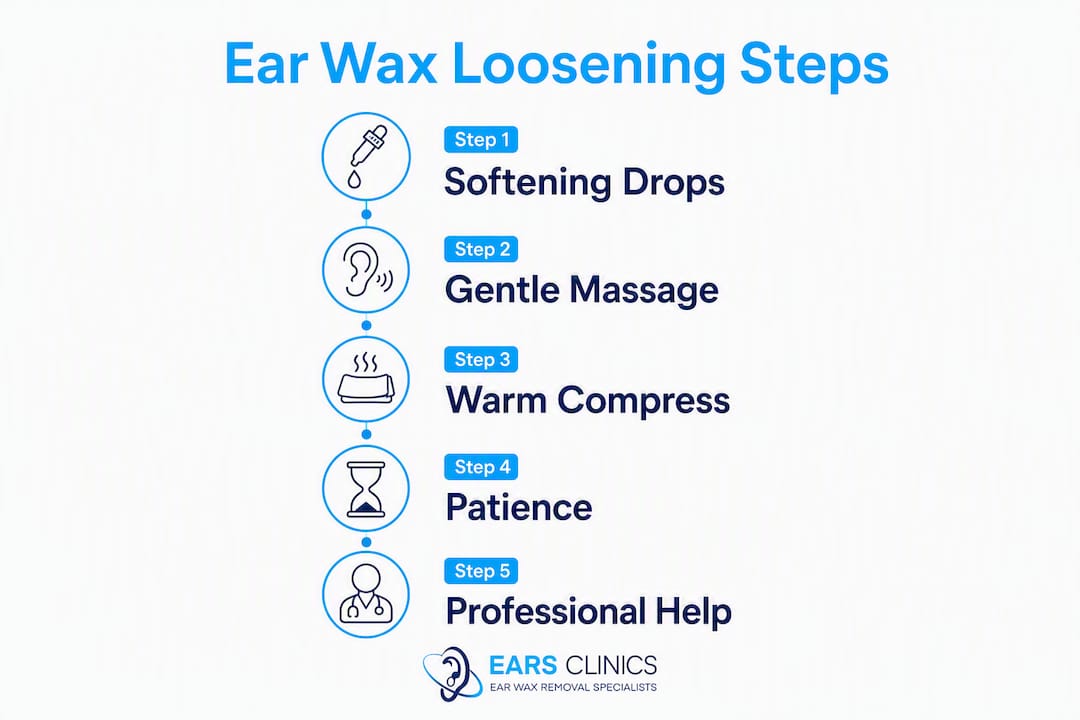
How to loosen ear wax at home: a safe step-by-step routine
Home softening works best when you follow a consistent routine. The steps below are aligned with NHS guidance on earwax build-up and are suitable for adults without a known perforation, active infection, or recent ear surgery.
Tilt your head so the affected ear faces upward.
Apply the drops or oil as directed on the packaging, usually 2–3 drops for licensed preparations or a few drops of oil.
Stay in position for 5–10 minutes to allow the softener to reach the wax.
Tilt your head the other way and let any excess drain onto a tissue.
Repeat once or twice daily for up to two weeks, or until symptoms resolve.
Clean only the outer ear with a damp cloth after each session; never insert anything into the canal.
After a few days, softened wax often migrates outward on its own. If symptoms persist beyond two weeks, or if softening drops do not resolve the blockage, professional removal is the appropriate next step.
Stop home treatment immediately if you experience:
Pain or discomfort during or after applying drops
Any discharge from the ear
Sudden or worsening hearing loss
Dizziness or a feeling of pressure that does not settle
Pro Tip: Clinicians often ask patients to soften wax with drops for a few days before a scheduled removal appointment. This makes microsuction or irrigation quicker and more comfortable.

Which substances loosen ear wax: what works and why
Softening agents work through two main mechanisms: lubrication and cerumenolytic action. Oils coat and soften wax so it becomes pliable; water-based and peroxide-based preparations actively break down the wax structure, a process described in the research literature as cerumenolytic activity.
Understanding the difference helps you choose the right option from a pharmacy shelf.
Olive oil: widely available, gentle, and well tolerated. Softens by lubrication rather than chemical breakdown. A reasonable first choice for mild build-up, though mineral oil is often preferred clinically because it is less likely to cause sensitivity reactions.
Mineral oil / baby oil: similar lubricating mechanism to olive oil, with a lower risk of irritation. Suitable for regular use.
Saline solution: warm salt water softens wax through gentle hydration and is safe for most people. Plain warm water has a comparable effect.
Carbamide peroxide ear drops (licensed OTC preparations): the most active home option. Carbamide peroxide releases hydrogen peroxide on contact with moisture, producing a bubbling action that breaks wax apart. Products such as Otex are widely available in UK pharmacies.
Hydrogen peroxide (diluted, in licensed preparations): effective cerumenolytic action, but leaves the ear canal moist after the oxygen dissipates, which can encourage bacterial growth. Use only as directed and allow the ear to dry afterwards.
One important caveat: softening agents do not usually dissolve a large, firm plug outright. They make wax pliable so that microsuction, irrigation, or instrumentation can then remove it more effectively and safely.
Avoid preparations marketed online as natural remedies, including tea tree oil and garlic oil. These are not clinically supported and carry a real risk of contact dermatitis; they are not used in regulated clinical practice.
Unsafe methods you should never use on your ears
Some of the most widely used DIY approaches are also the most damaging. The NHS is clear that cotton buds and ear candles have no evidence of benefit and can cause direct harm.
Cotton buds: push wax deeper into the canal rather than removing it, and can abrade the delicate skin lining, causing inflammation or infection.
Ear candles: no clinical evidence supports their use. The heat poses a genuine burn risk to the canal and eardrum, and residue can worsen blockage.
Hairpins, pen lids, or any pointed object: risk of canal laceration and eardrum perforation.
Ear vacuum kits (home suction devices): not clinically validated; suction levels are uncontrolled and can damage the tympanic membrane.
The single safest rule for home ear care: clean only the outer ear with a damp cloth. Leave the canal alone unless you are applying approved softening drops. Anything inserted beyond the outer bowl of the ear risks harm, regardless of how carefully it is done.
When home softening is not safe: red flags and contraindications
Certain situations make home softening inappropriate. Applying liquid to an ear with an undiagnosed perforation can drive contaminants into the middle ear and cause severe infection. If any of the following apply, seek professional assessment before using any drops.
Red flags that require clinical attention first:
Severe or sharp ear pain
Bleeding or coloured discharge from the ear
Sudden or significant hearing loss
Vertigo or balance disturbance
Fever alongside ear symptoms
History of a perforated eardrum or grommets (ventilation tubes)
Recent ear surgery or major head injury
Active ear infection
If you are unsure whether any of these apply to you, a pharmacist can triage your symptoms and advise whether drops are safe to use or whether you need a GP or specialist appointment.

When to see a pharmacist, GP, or ear specialist
Most earwax problems can be managed through a simple care pathway. Knowing which step to take first saves time and avoids unnecessary delays.
Pharmacist: the first port of call for uncomplicated wax build-up. A pharmacist can assess your symptoms, recommend a licensed softening preparation, and advise on how long to try it. Many pharmacies now offer a formal ear health triage service.
GP: appropriate if red flags are present, if a pharmacist triage suggests an underlying condition, or if symptoms persist after a full course of softening drops. Your GP can refer you for professional removal or investigate other causes of hearing loss.
Ear specialist / aural care clinic: the right choice for persistent or impacted wax, complex ear anatomy, previous surgery, or when you want same-day resolution without a waiting list.
When to escalate without delay:
Symptoms persist after two weeks of consistent home softening
Pain, discharge, or dizziness develops at any point
You have a known perforation, grommets, or a history of ear surgery
Hearing loss is sudden rather than gradual
Professional ear wax removal: microsuction, irrigation, and manual instrumentation
When home softening is not enough, three clinical methods are available. Clinicians select the most appropriate technique after an otoscopic assessment of the canal and eardrum, taking into account the patient’s medical history and anatomy.
Microsuction: a fine, low-pressure suction probe removes wax under direct visualisation using a microscope or loupes. No water is used, making it suitable for patients with perforations, grommets, or a history of ear surgery. Microsuction is the preferred method recommended in current clinical practice and often provides same-day relief in a single appointment. A detailed explanation of the procedure is available in this microsuction procedure guide.
Irrigation: warm water is gently introduced into the canal to flush wax out. Clinically valid and effective for most straightforward cases, though it requires caution: excessive pressure risks tympanic membrane injury and it is not appropriate where a perforation is suspected.
Manual instrumentation: a clinician uses fine instruments, such as a Jobson Horne probe or wax hook, to remove wax under direct vision. Particularly useful for large, firm plugs that are not amenable to suction or irrigation alone.
Narrow canals, previous surgery, or a suspected perforation often shift the clinical decision away from irrigation towards microsuction or instrumentation. This is why a trained clinician’s assessment matters; the same wax presentation can warrant different approaches in different patients.
Pro Tip: If you are booked for professional removal, using softening drops for two to three days beforehand makes the procedure faster and more comfortable, regardless of which method your clinician uses.
Why regulated clinical care is safer than DIY
Regulated ear care clinics operate under frameworks that protect patients in ways that home treatment cannot replicate. In Scotland, clinics registered with Healthcare Improvement Scotland (HIS) are subject to inspection and must meet defined standards of clinical governance. In England and Wales, the equivalent body is the Care Quality Commission (CQC).
Clinicians working in regulated settings:
Follow NICE and NHS guidance, including the recommendation that microsuction is the preferred method where clinically appropriate
Conduct an otoscopic assessment before any procedure to rule out contraindications
Hold recognised aural care qualifications and maintain ongoing clinical training
Document patient history and adapt the procedure to individual anatomy and medical background
When choosing a clinic, look for:
Visible HIS or CQC registration
NHS-accredited practitioners with named qualifications
A clear pre-treatment assessment process
Transparent pricing and no requirement to pre-soften before booking
Pro Tip: Ask the clinic directly whether their practitioners hold NHS-accredited aural care qualifications. A reputable clinic will answer this without hesitation.
Key takeaways
Olive oil, mineral oil, saline, and licensed carbamide peroxide drops are the safest home options for loosening ear wax; if symptoms persist beyond two weeks or red flags appear, microsuction by a regulated specialist is the recommended next step.
Point | Details |
Best home softeners | Olive oil, mineral oil, saline, and licensed carbamide peroxide drops are all safe and effective. |
Realistic timeline | Home softening takes several days up to around two weeks before wax clears or becomes removable. |
Red flags to stop | Pain, discharge, or sudden hearing loss mean stop drops immediately and seek clinical assessment. |
Microsuction is preferred | Current clinical practice recommends microsuction as the gold-standard removal method where appropriate. |
Earhealthservice | EARS Clinics offer microsuction, irrigation, and instrumentation by NHS-accredited specialists in Glasgow and Edinburgh. |
The case for getting it right the first time
The most common mistake we see is patients who have spent weeks trying increasingly aggressive home methods before seeking help. Cotton buds, ear candles, and improvised instruments rarely solve the problem and frequently make it worse, sometimes turning a straightforward wax build-up into a canal abrasion or a pushed-in plug that takes longer to remove professionally.
What often surprises patients is how quickly a regulated clinical appointment resolves something they have been struggling with for weeks. Microsuction, in particular, tends to be over in minutes when the wax has been softened beforehand. The combination of a few days of licensed drops at home followed by a single clinical appointment is, in most cases, the fastest and safest route to clear hearing.
The other thing worth saying plainly: earwax is normal. It is protective, antimicrobial, and the ear is largely self-cleaning by design. Most people do not need routine ear cleaning at all. When wax does cause symptoms, the response should be measured and evidence-based, not a reach for the nearest cotton bud.
Professional ear wax removal at EARS Clinics
If home softening has not cleared your symptoms, or if you would rather have a specialist assess your ears from the outset, EARS Clinics offers a straightforward, same-day solution. Our NHS-accredited Aural Care Specialists perform microsuction, irrigation, and manual instrumentation at clinics in Glasgow and Edinburgh, with home visits available across the area for patients who cannot travel.
EARS Clinics is registered with Healthcare Improvement Scotland (HIS), one of the few regulated ear healthcare clinics in Scotland. Every appointment begins with an otoscopic assessment so the clinician can select the safest and most appropriate procedure for your ears specifically. Pricing is transparent: £60 for adults, £75 for under-18s, and £180 for a home visit. No GP referral is needed, and same-day appointments are available. To book, visit earhealthservice.co.uk or view the full range of removal procedures and services available at the clinic.
Sources and further reading
Earwax build-up, NHS
Earwax blockage: diagnosis and treatment, Mayo Clinic
Earwax removal: safe methods at home, Cleveland Clinic
How to remove cerumen manually and with irrigation, Merck Manual
Ear drops for the removal of ear wax, PMC / Cochrane
The effectiveness of topical preparations for earwax: a systematic review, PMC
EARS Clinics: ear wax removal procedures
This article provides general information only and is not a substitute for professional medical advice. If you are unsure whether home treatment is appropriate for your situation, consult a pharmacist, GP, or qualified ear care specialist.
Recommended