
Regulated ear care in Scotland: Safety, methods & advice

Many people assume that any ear clinic offering wax removal in Scotland is operating to the same professional standard. That assumption can be costly. The reality is that not all ear clinics are held to the same safety requirements, and choosing an unregulated provider puts you and your family at genuine risk. This article explains what regulated ear care actually means in Scotland, which methods are approved and why, who can access these services, and how to protect yourself from providers who fall short of the national standard.
Key Takeaways
Point | Details |
Regulated clinics ensure safety | Only HIS-registered clinics meet Scotland’s standards for quality, hygiene, and patient protection. |
Microsuction is the safest method | Microsuction offers high success and minimal complications, making it best for children and adults alike. |
Ask about HIS registration | Always verify a provider’s HIS registration before agreeing to treatment, especially for family or urgent care. |
Regulated care means quicker access | Private regulated clinics offer fast appointments for urgent needs, unlike typical NHS waits. |
Know when to see a GP | Seek NHS help immediately for severe pain, infection, or other emergency symptoms. |
What does regulated ear care mean?
Regulated ear care in Scotland refers to services that operate under formal oversight from a recognised national body. That body is Healthcare Improvement Scotland, commonly known as HIS. Any independent clinic offering ear wax removal or related procedures must be registered with HIS, meeting strict safety and professional standards before treating a single patient.
Registration is not a formality. It means the clinic has been assessed against defined criteria covering staff qualifications, treatment protocols, patient safety procedures, and premises standards. Clinics are also subject to ongoing HIS inspections to ensure continued compliance.
Here is a summary of what regulated ear care requires:
Requirement | What it means in practice |
HIS registration | Clinic is formally listed and inspected |
Qualified practitioners | Staff hold recognised aural care credentials |
Age eligibility | Regulated clinics may treat patients from age 2 |
Non-surgical only | No sedation; procedures are non-invasive |
Individualised care | Treatment plans tailored to each patient |
Key features of a regulated ear care service include:
Practitioners trained to NHS-equivalent standards
Clear protocols for contraindications (situations where treatment should not proceed)
Documented patient assessments before any procedure
Transparent pricing and informed consent processes
Premises that meet clinical hygiene and safety requirements
Pro Tip: Before booking any ear wax removal appointment in Scotland, search the Healthcare Improvement Scotland register online. If the clinic does not appear, walk away.
Methods used in regulated ear clinics
With a clear understanding of what constitutes a regulated service, it is vital to know which wax removal methods are authorised and proven most effective within these clinics. There are three main techniques: microsuction, irrigation, and manual removal (also called instrumentation).
Microsuction uses a fine, low-pressure suction device to draw wax out of the ear canal under direct visualisation. It is widely regarded as the gold standard, with over 90% success and a complication rate of less than 1%. It does not require pre-treatment with ear drops, making it ideal for urgent appointments and for children who may find prolonged preparation distressing.
Irrigation involves a controlled flow of warm water to flush wax from the ear canal. It is effective for softer wax and is generally well tolerated. However, it is not suitable for patients with a perforated eardrum, a history of ear surgery, or active infection.
Manual removal (instrumentation) uses small, specialised tools to carefully extract wax under direct vision. This method is particularly useful when wax is positioned in a way that makes suction or irrigation less practical.
Here is a quick comparison to help you understand when each method is typically used:
Method | Best suited for | Not suitable for |
Microsuction | All ages, urgent cases, complex ears | Extremely narrow canals (rare) |
Irrigation | Soft wax, straightforward cases | Perforated eardrum, recent surgery |
Manual removal | Targeted extraction, awkward wax position | Highly sensitive ear canals |
What you can expect during a typical regulated appointment:
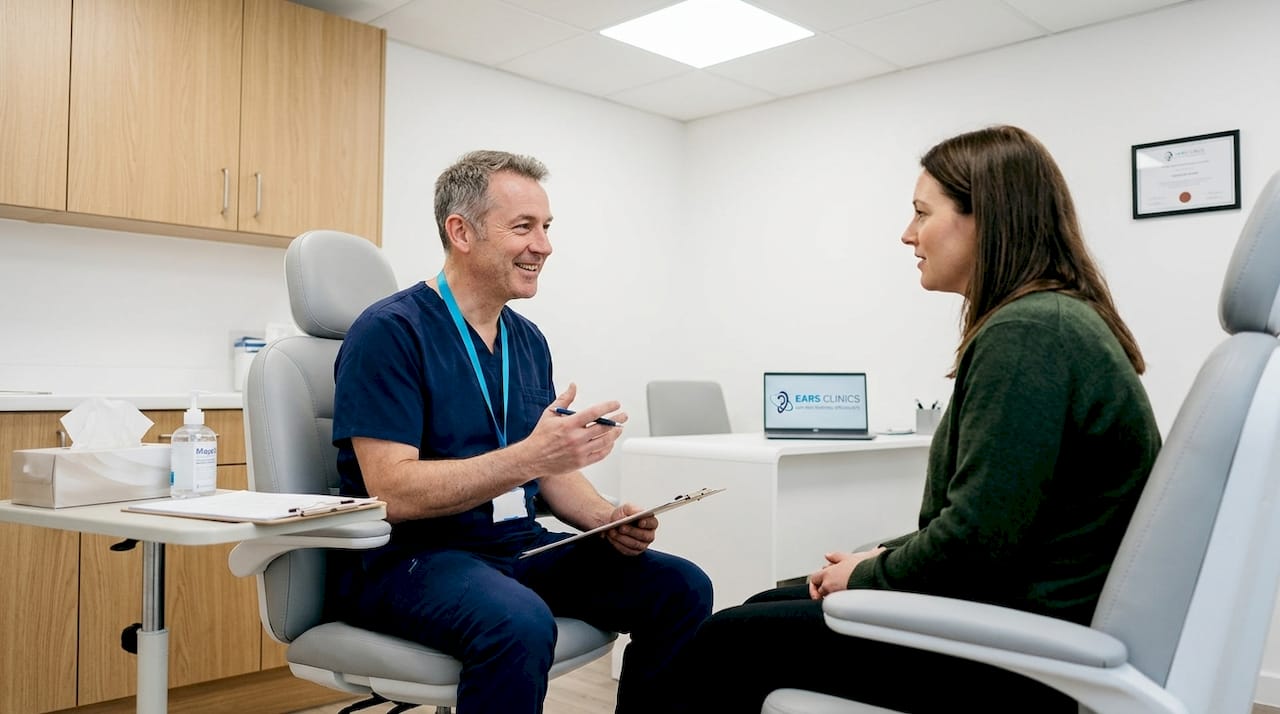
A brief consultation and medical history review
Visual examination of the ear canal using an otoscope
Selection of the most appropriate removal method
The procedure itself, which usually takes 15 to 30 minutes
A post-treatment check to confirm the canal is clear
Aftercare advice and guidance on preventing future build-up
The NHS typically recommends ear drops and self-management as a first-line approach, which means many patients wait weeks before accessing hands-on treatment. Regulated private clinics offer direct access to these proven techniques without that delay.
“Microsuction is the safest and most effective method for ear wax removal, particularly for patients with complex ear histories or young children who need a quick, comfortable procedure.”
Pro Tip: If you are booking for a child or someone with a history of ear problems, always ask the clinic specifically whether they use safe microsuction methods and whether their practitioners hold NHS-accredited qualifications.
Who is regulated ear care for? Families, children, and urgent needs
Understanding techniques is only part of the journey. It is equally important to know who can benefit from regulated ear care, especially when families and urgent needs are involved.
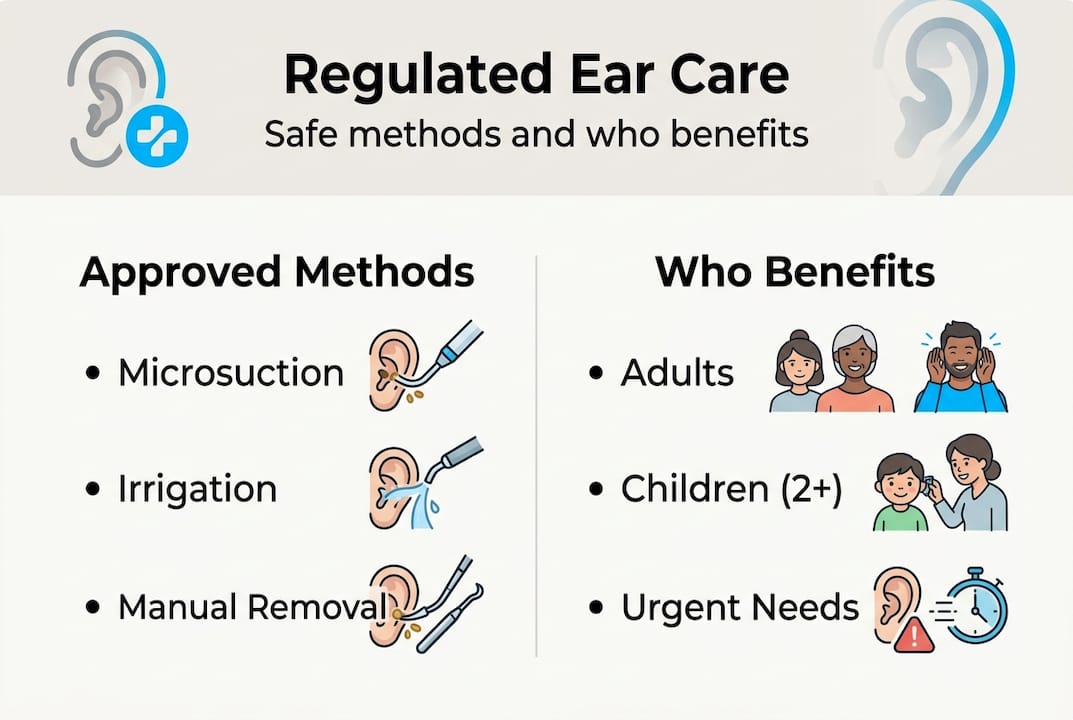
Private regulated clinics in Scotland welcome children from age 2, while the NHS rarely offers wax removal for children unless it is considered clinically essential. This is a significant gap for families whose children are experiencing hearing difficulties, discomfort, or recurrent wax build-up. A regulated private clinic can assess and treat your child safely, with practitioners experienced in working with younger patients.
For adults, the picture is similar. The NHS vs private ear care comparison often comes down to waiting time and access. NHS ear wax removal has been deprioritised in many areas, with some patients waiting months or being turned away entirely. Private regulated clinics offer appointments within days, or even the same day for urgent cases.
Here is a summary of who regulated ear care serves:
Adults experiencing muffled hearing, tinnitus, or a sensation of fullness in the ear
Children aged 2 and above with wax-related hearing difficulties
Patients who have been told by their GP that wax removal is not available on the NHS in their area
Individuals who need a same-day appointment due to sudden hearing loss or discomfort
People with complex ear histories who require specialist assessment before treatment
Important note on costs: At EARS Clinics, ear wax removal costs £60 for adults (over 18), £75 for children (under 18), and £180 for a home visit. These are transparent, fixed fees with no hidden charges.
However, regulated care is not always the right first step. If you or your child experiences severe ear pain, discharge from the ear, sudden and significant hearing loss, or dizziness, contact your GP or NHS 111 before booking a private appointment. These symptoms may indicate infection or another condition requiring medical diagnosis. You can also review the NHS wax removal process to understand when NHS care remains the appropriate route. The RNID’s postcode insights also highlight how access to NHS ear wax removal varies significantly across Scotland.
Risks and pitfalls: The importance of choosing regulated providers
With many families seeking ear care, it is crucial to protect yourself against unregulated providers and the hidden risks they carry.
Unregulated providers operate without HIS oversight. They may lack the training, equipment, or clinical protocols to perform ear wax removal safely. BBC reporting has highlighted injuries caused by poorly trained providers, including beauticians offering ear candling or syringing with minimal healthcare training. These incidents include perforated eardrums, infections, and lasting hearing damage.
“Choosing an unregulated provider to save money or time can result in complications that are far more costly, both financially and in terms of your long-term hearing health.”
Warning signs that a provider may be unregulated:
No mention of HIS registration on their website or premises
Treatment offered in a beauty salon, spa, or non-clinical setting
Staff with no verifiable healthcare qualifications
Use of ear candles (not a clinically approved method)
No patient assessment or medical history taken before treatment
Unusually low prices with no explanation of the method used
To verify a clinic’s status, visit the HIS inspection register and search for the provider by name. You can also ask the clinic directly for their HIS registration number. A legitimate, regulated clinic will provide this without hesitation.
Contraindications are another important consideration. Wax removal should not proceed if you have an active ear infection, a known perforated eardrum, or have undergone recent ear surgery. A regulated practitioner will identify these factors during the initial assessment and refer you appropriately rather than proceeding regardless.
What to do next: Finding regulated care and safer experiences
After highlighting pitfalls and precautions, here is how to confidently access regulated, safe ear care in Scotland.
Follow this checklist before booking any ear wax removal appointment:
Confirm the clinic is listed on the Healthcare Improvement Scotland register
Check that practitioners hold NHS-accredited or equivalent aural care qualifications
Ask which removal method will be used and whether it is appropriate for your situation
Ensure a pre-treatment assessment is included as standard
Verify that the clinic is licensed to treat children if booking for a young patient
Review the pricing structure upfront to avoid unexpected charges
Check whether same-day appointments are available if your need is urgent
For families, it is worth noting that booking a child’s appointment at a regulated clinic is straightforward. You will be asked for a brief medical history, and the practitioner will explain the procedure clearly before beginning. The microsuction procedure is well-established as the safest option, with over 90% effectiveness, making it the preferred choice for children and adults alike.
If your symptoms are severe, including significant pain, discharge, or sudden hearing loss, contact your GP or NHS 111 first. Regulated private clinics are the right choice for wax-related issues, but they are not a substitute for urgent medical care when infection or injury is suspected.
Book safe, regulated ear care with professionals
Now you know what regulated ear care involves, connecting with a clinic that meets every standard is the natural next step. EARS Clinics is one of the few HIS-registered ear care providers in Scotland, serving patients in Glasgow and Edinburgh with NHS-accredited Aural Care Specialists.
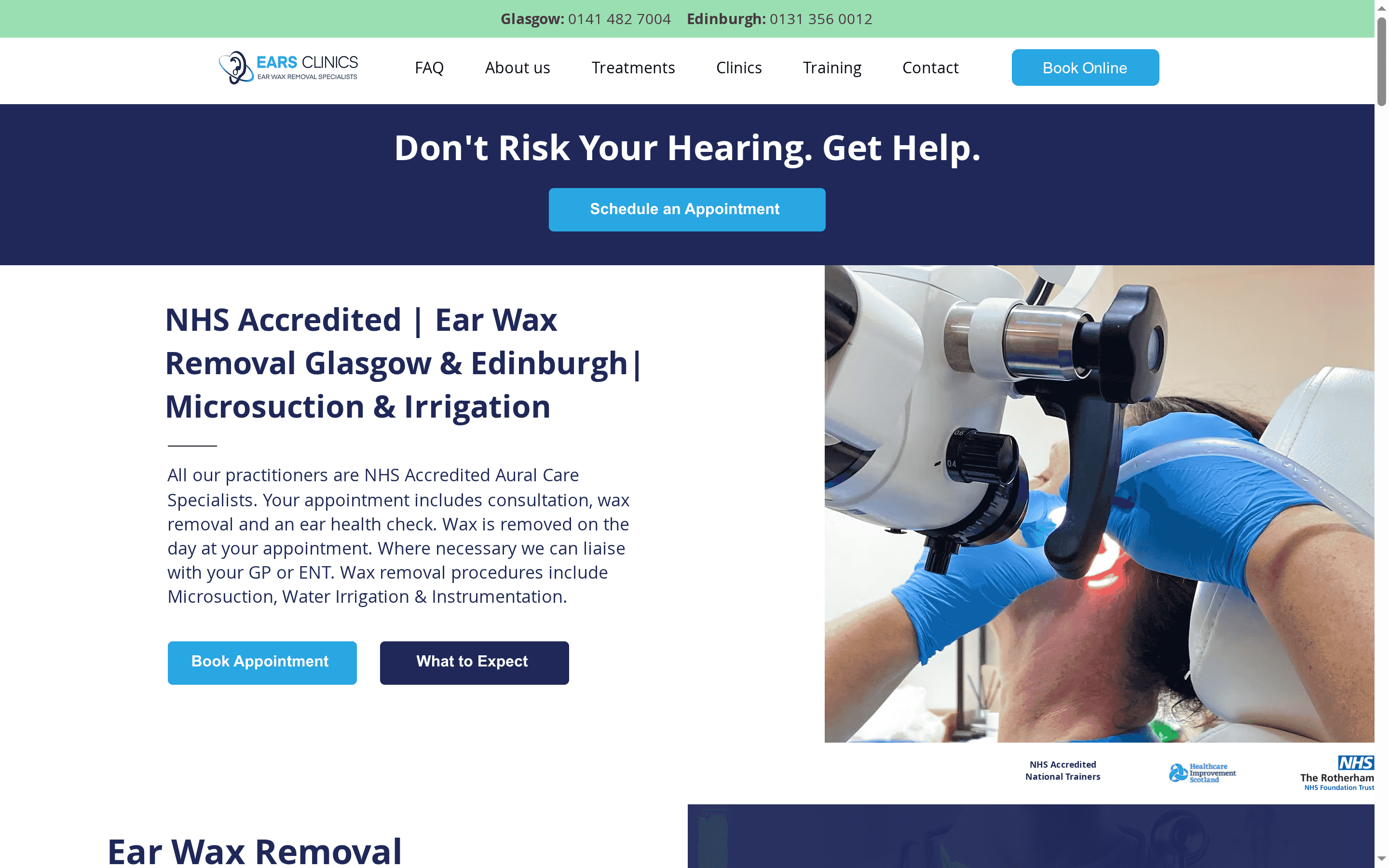
Whether you need wax removal for yourself, your child, or a family member, EARS Clinics offers a full range of approved wax removal procedures using microsuction, irrigation, and instrumentation. You can find out what to expect at your appointment before you arrive, so there are no surprises. Same-day and home visit appointments are available for those who need prompt or accessible care. Visit EARS Clinics today to book with confidence, knowing your ear health is in fully regulated, expert hands.
Frequently asked questions
How do I check if an ear clinic is regulated in Scotland?
Visit the Healthcare Improvement Scotland website and search the register to confirm the clinic’s HIS registration is current and valid. Any legitimate regulated clinic will also provide their registration number on request.
Is microsuction really safer than irrigation?
Yes. Microsuction carries a complication rate below 1% and achieves over 90% success in removing ear wax, making it the preferred method for complex cases, children, and urgent appointments.
Can my child get ear wax removed at a regulated clinic?
Yes. Private regulated clinics treat children from age 2, whereas the NHS rarely provides wax removal for children unless it is considered clinically essential. EARS Clinics is licensed to treat patients from age 2.
What are warning signs of an unregulated provider?
Non-clinical settings such as beauty salons, no HIS registration, staff without verifiable healthcare credentials, and the use of ear candles are all major warning signs. BBC reporting has documented injuries resulting from poorly trained providers.
When should I see a GP or the NHS urgently for ear wax?
If you experience severe ear pain, discharge, or sudden hearing loss, seek GP or NHS 111 advice immediately rather than booking a private clinic. These symptoms may indicate infection or injury requiring prompt medical assessment rather than wax removal.
Recommended