
Microsuction vs Irrigation: Best Choice for Children?

Every parent knows the worry that comes with choosing the safest way to care for their child’s ears, especially when it comes to removing ear wax. Parents in Glasgow and Edinburgh often face a choice between microsuction and irrigation, each with its own advantages and drawbacks. Understanding the safety and effectiveness of microsuction versus irrigation will help you feel confident about your child’s comfort and ear health during removal procedures.
Key Takeaways
Point | Details |
Microsuction is the preferred method for children | It allows for precise visual control and minimal discomfort, making it especially suitable for young patients with specific ear conditions. |
Irrigation may not be suitable for all children | This method carries risks such as discomfort and should be avoided in cases of ear infections or perforated eardrums. |
Manual instrumentation is less commonly used | It requires a steady child and is typically reserved for specific situations involving impacted wax. |
Clinician expertise is crucial | Selecting a qualified professional ensures safe procedures are performed, minimising risks associated with ear wax removal. |
Key Differences in Wax Removal Methods
Each ear wax removal method works differently, and understanding these differences helps you make an informed decision for your child. The three main approaches used by trained clinicians—microsuction, irrigation, and manual instrumentation—vary in technique, effectiveness, and suitability for different situations.
Microsuction: Precision and Control
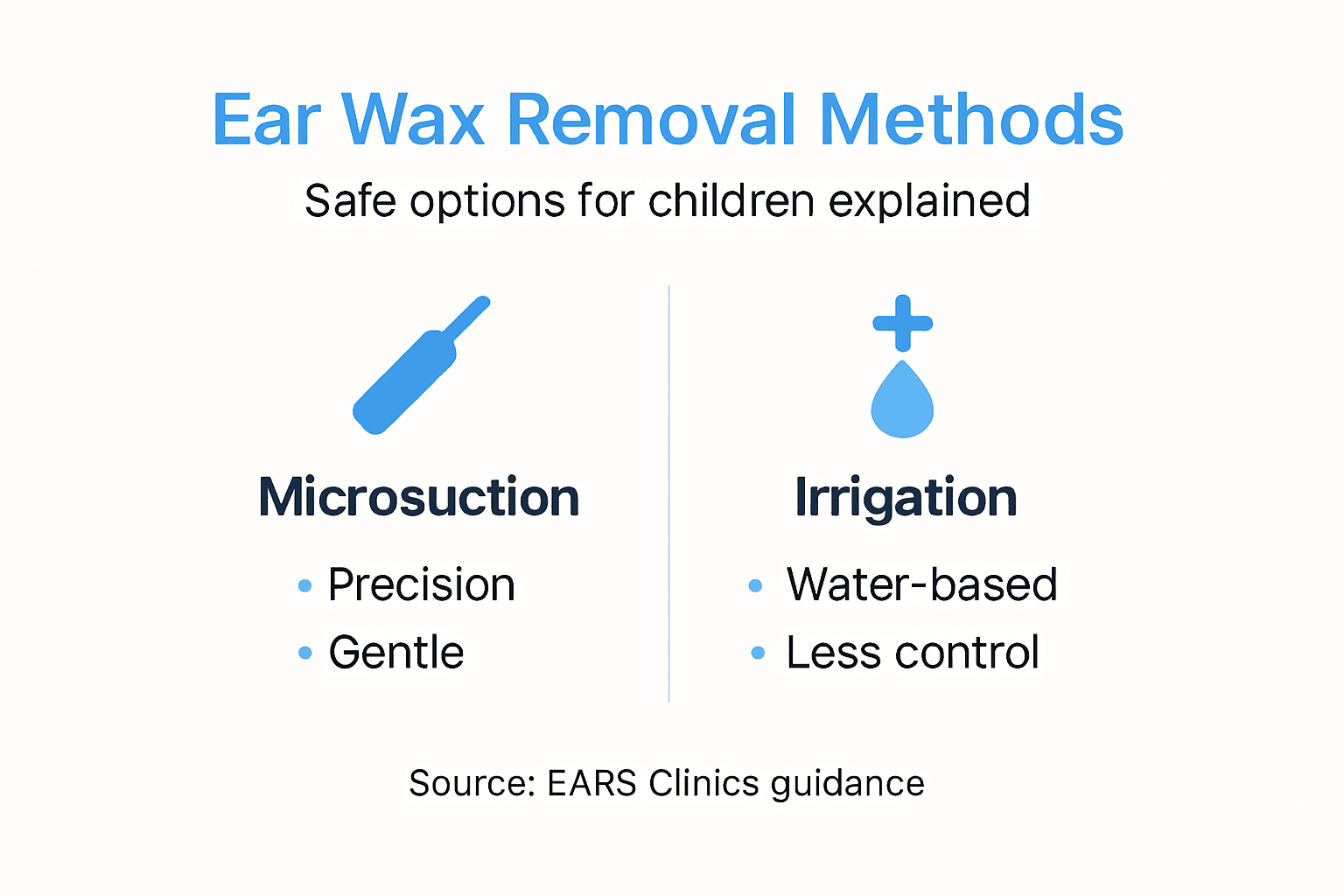
Microsuction uses a fine suction tube combined with magnification to visualise and gently remove wax from the ear canal. The clinician can see exactly what they’re doing throughout the procedure, making it highly controlled and precise.
Key features of microsuction:
Uses gentle suction rather than liquid or tools inserted into the canal
Allows the clinician to work under direct visualisation
Typically takes 15-30 minutes per ear
Produces minimal discomfort for most children
Recommended as the preferred method in current NICE guidelines for many patients
Irrigation: Flushing Away Wax
Irrigation involves using warm water or saline solution to flush wax out of the ear canal. The liquid pressure dislodges the wax, which then flows out with the solution.
Key features of irrigation:
Uses controlled water pressure to remove wax
Generally quick and straightforward
May feel cold or uncomfortable to some children
Requires the child to keep their head tilted during the procedure
Remains a safe and clinically valid option when appropriate
Manual Instrumentation: Careful Removal
Manual instrumentation uses special curettes or hooks to carefully scrape or lift wax from the ear canal. This method requires steady hands and good visualisation.
Key features of manual instrumentation:
Involves small instruments designed for ear wax removal
Provides direct tactile feedback to the clinician
Works well for hardened or impacted wax
Requires excellent hand-eye coordination from the clinician
Remains a safe option when performed by trained professionals
The best method for your child depends on their age, ear canal sensitivity, type of wax buildup, and medical history—not on which method is universally “best.”
Comparing Effectiveness
Microsuction tends to be preferred for children because the clinician can see the entire procedure and adjust their approach in real time. Irrigation works well for softer wax but may be less suitable if your child has a perforated eardrum or grommets. Manual instrumentation requires a very still child and is often reserved for specific situations.
When choosing a method, trained clinicians consider factors like:
Your child’s age and ability to stay still
Type and consistency of the wax buildup
Sensitivity of the ear canal
Any previous ear procedures or conditions
Your child’s comfort level with different sensations
Each method is safe when performed by trained, competent clinicians following best practice standards. At EARS Clinics, our NHS-accredited Aural Care Specialists assess each child individually and select the safest, most suitable approach for their specific situation.
Here’s how the three main ear wax removal methods compare:
Method | Visual Control | Suitability for Young Children | Common Side Effects |
Microsuction | Direct under magnification | Highly recommended | Occasional mild dizziness |
Irrigation | Limited | Less suitable under age 5 | Cold sensation, brief vertigo |
Manual Instrumentation | Requires steady hands | Rarely used in young children | Temporary discomfort |
Pro tip: Ask your clinician to explain which method they recommend for your child and why—understanding their reasoning helps you feel confident about the choice.
How Microsuction and Irrigation Work
Understanding the mechanics of each procedure helps you know what to expect during your child’s appointment. Both microsuction and irrigation are straightforward techniques, but they work in fundamentally different ways to remove ear wax.
Microsuction: Gentle Visualised Removal
Microsuction works by combining gentle suction with magnification to safely remove wax. The clinician uses a small suction tube—about the thickness of a pencil lead—connected to a controlled suction device.
The process follows these steps:
Prepare the ear by softening wax with olive oil drops for several days beforehand
Examine the ear canal using an operating microscope or magnifying loupe
Position the fine suction tip near the wax
Apply gentle suction to gradually draw the wax out
Adjust position and technique as needed based on what the clinician can see
The key advantage is direct visualisation. The clinician watches the entire procedure and can stop immediately if your child feels uncomfortable. There’s no liquid involved, so the ear stays dry throughout.

Irrigation: Flushing with Controlled Water Pressure
Irrigation uses warm water or saline solution to dislodge and flush out wax from the ear canal. The clinician directs a controlled stream of liquid at an angle, allowing wax to float out with the solution.
The irrigation process includes:
Soften wax beforehand using ear drops for several days
Position your child’s head so the ear canal is accessible
Direct warm water into the ear at the correct angle
Allow liquid and wax to drain into a collection vessel
Gently dry the ear canal afterward
Irrigation works well for softer wax but has potential downsides. The liquid can feel cold or cause dizziness in some children. Keeping the ear dry after treatment is crucial to prevent infection.
Microsuction avoids water entirely, making it gentler for nervous children or those with sensitive ears.
Pre-treatment Preparation
Both methods benefit from wax softening before your appointment. Using olive oil or specially formulated ear drops for 3-5 days beforehand makes removal easier and reduces discomfort.
Softening wax:
Takes just minutes each day at home
Makes the wax more pliable and easier to remove
Reduces the time needed during the procedure
Minimises the risk of complications
Which Works Better for Children?
Microsuction is generally preferred for children because there’s no water involved and the clinician maintains complete visual control. Children find it less anxiety-inducing since there’s no sudden liquid or cold sensations. Irrigation can work well too, but requires your child to stay very still and comfortable with water near their ear.
Pro tip: Start softening your child’s wax at least three days before their appointment—this simple step makes the procedure quicker, more comfortable, and often reduces anxiety since they know what to expect.
Safety and Suitability for Children
Safety is paramount when removing ear wax from children. Both microsuction and irrigation are clinically valid, but their suitability depends on your child’s age, ear condition, and medical history.
Why Microsuction Is Preferred for Children
Microsuction stands out as the safer option for most children. The dry technique means there’s no risk of water entering the ear canal, which is particularly important for young patients.
Microsuction works well when:
Your child has had previous ear surgery
There’s a perforated eardrum or eardrum vulnerability
Your child has active ear infections or inflammation
Eczema or sensitive skin affects the ear canal
Your child feels anxious about water or cold sensations
The precision of microsuction allows controlled removal without risking complications, making it ideal for children with complex ear conditions.
When Irrigation May Not Be Suitable
Irrigation carries specific risks for children that make it less appropriate in many situations. Water pressure can cause discomfort, dizziness, or ear pain—particularly distressing for young patients who may panic.
Irrigation is not recommended if:
Your child has a perforated eardrum
There’s a recent ear infection or active inflammation
Your child has grommets or other ear tubes fitted
There’s a history of ear drum damage
Your child has severe anxiety about water in their ears
Microsuction avoids water entry entirely, eliminating risks of infection, dizziness, or drum damage—making it the gentler choice for most children.
Age Considerations
Younger children benefit most from microsuction. They’re less able to stay perfectly still during irrigation, and water sensations can cause panic or head movement. EARS Clinics are licensed to treat children from 2 years of age, with microsuction being the standard approach for this age group.
As children grow older and more cooperative, irrigation becomes more feasible—but only if there are no contraindications like perforations or previous infections.
Individual Assessment Is Key
Your child’s specific circumstances matter far more than a one-size-fits-all approach. A trained, NHS-accredited Aural Care Specialist assesses each child individually before recommending a procedure.
This assessment considers:
Current ear health and any active conditions
Medical history and previous ear procedures
Your child’s temperament and comfort with clinical procedures
Type and consistency of wax buildup
Any known allergies or sensitivities
What Makes a Procedure Safe for Your Child
Safety depends on three factors: the right technique, the right clinician, and the right preparation. Both microsuction and irrigation are safe when performed by trained professionals following best practice standards.
At EARS Clinics, our Healthcare Improvement Scotland registered practitioners follow strict safety protocols. Pre-softening wax with drops beforehand reduces discomfort and risk for both methods. Your clinician will explain their recommendation and answer any concerns before proceeding.
Pro tip: Discuss your child’s ear history—including any previous infections, eardrum issues, or anxieties—with your clinician before the appointment so they can choose the safest method and prepare your child mentally.
Consider these key decision factors when selecting a wax removal method for your child:
Factor | Why It Matters | Questions to Discuss with Clinician |
Ear health history | Certain conditions may limit options | Any past infections or surgeries? |
Child’s temperament | Anxiety impacts cooperation | How does your child react to procedures? |
Wax consistency | Some methods suit soft/hard wax | Has the wax been pre-softened? |
Clinician expertise | Ensures procedure safety | What paediatric ear care training is held? |
Risks, Costs, and Practitioner Expertise
Understanding the potential risks, costs, and importance of clinician expertise helps you make a confident decision about your child’s ear care. Both procedures carry different risk profiles, and costs vary based on where and how you access treatment.
Risk Profile: Microsuction vs Irrigation
Microsuction carries minimal risks when performed by trained professionals. Temporary mild dizziness or brief discomfort are rare occurrences and typically resolve quickly.
Irrigation carries greater risks, particularly for children:
Eardrum perforation from water pressure
Ear infection if the canal isn’t properly dried
Dizziness or vertigo during or after treatment
Worsening tinnitus or ear ringing
Increased discomfort in already-inflamed ears
Risks increase significantly when procedures are performed improperly or by untrained practitioners. This is why choosing a qualified clinician matters far more than choosing the cheaper option.
Cost Considerations for Parents
At EARS Clinics, we offer transparent pricing for Glasgow and Edinburgh residents:
Microsuction for under-18s: £75 per appointment
Home visits: £180 (includes either procedure)
Same-day appointments: Available without waiting lists
Microsuction typically costs more than irrigation due to specialised equipment and the expertise required. However, the investment protects your child from risks associated with less suitable procedures. NHS waiting lists can extend months, whereas private clinics offer rapid access.
Choosing a registered, trained clinician costs more upfront but prevents expensive complications like infections or drum damage later.
Why Practitioner Expertise Matters
The difference between a safe procedure and a problematic one comes down to clinician training and experience. Healthcare Improvement Scotland registered practitioners follow strict guidelines and maintain high safety standards.
Experienced clinicians can:
Assess which method suits your child’s specific situation
Recognise contraindications that make certain procedures unsuitable
Adjust technique in real time if your child becomes uncomfortable
Handle complications if they arise
Communicate clearly before, during, and after treatment
Qualifications to Look For
When selecting a provider for your child, verify they hold:
NHS accreditation or Healthcare Improvement Scotland registration
Specialist training in paediatric ear care
Professional indemnity insurance
Commitment to ongoing professional development
Clear protocols for safeguarding and child welfare
EARS Clinics employs only NHS-accredited Aural Care Specialists who are licensed to treat children from 2 years of age. This expertise ensures your child receives the safest, most appropriate care.
Avoiding False Economy
Cheaper providers may lack proper training, equipment, or insurance. If complications arise—infection, eardrum damage, or psychological distress—costs escalate rapidly. Your child’s hearing and comfort are worth the investment in properly qualified care.
Proper assessment takes time. Clinicians who rush through appointments without discussing your child’s history or concerns are cutting corners on safety.
Pro tip: Ask any ear care provider about their qualifications, registration status, and experience treating children before booking—a reputable clinic welcomes these questions and answers them clearly.
Choose the Safest Ear Wax Removal for Your Child with EARS Clinics
Deciding between microsuction and irrigation for your child’s ear wax removal can feel overwhelming given the importance of safety and comfort. This article highlights key concerns like ear health history, your child’s temperament, and wax consistency—all critical factors in selecting the right method. At EARS Clinics, our NHS-accredited Aural Care Specialists specialise in personalised care, using advanced techniques such as microsuction and irrigation tailored to young patients’ unique needs.

Ensure your child receives expert, gentle ear wax removal in a calm and professional environment. We offer convenient same-day appointments, in-clinic visits in Glasgow and Edinburgh, and at-home care for children from 2 years old. Discover why microsuction is often preferred for sensitive ears and complex conditions through our detailed guidance at EARS Clinics. Book your child’s appointment today with confidence and take the first step toward better ear health by visiting our booking page. Learn more about our expert care and services by exploring how different ear wax removal methods work.
Frequently Asked Questions
What is the difference between microsuction and irrigation for ear wax removal in children?
Microsuction uses gentle suction combined with magnification to precisely remove wax, while irrigation flushes wax out using warm water or saline solution. Each method has its advantages, especially regarding control and comfort for children.
Is microsuction a safer option for children compared to irrigation?
Yes, microsuction is generally considered safer for children because it does not involve water, reducing the risk of complications such as eardrum perforation or infections that can arise with irrigation.
How should I prepare my child for an ear wax removal appointment?
Pre-treatment involves softening ear wax with olive oil or special ear drops for 3-5 days before the appointment. This makes the wax easier to remove and can help reduce discomfort during the procedure.
What factors should a clinician consider when choosing between microsuction and irrigation for my child?
Clinicians evaluate your child’s age, ability to stay still, type of wax buildup, sensitivity of the ear canal, any previous ear procedures, and the child’s comfort level with different sensations before deciding on the most suitable method.
Recommended