
Instrumentation ear removal: your complete 2026 guide
- 2 hours ago
- 8 min read

TL;DR:
Instrumentation ear removal is a safe, precise method performed by trained specialists using specialized tools.
It suits adults with hard, impacted wax and older cooperative children, but is inappropriate for perforated eardrums or infections.
Professional care ensures safer outcomes compared to at-home attempts, reducing risks like trauma and perforation.
Ear wax is something most people rarely think about until it becomes a problem. A blocked ear, muffled hearing, or persistent discomfort can send many Scots reaching for cotton buds, ear candles, or over-the-counter drops, often making things worse rather than better. Instrumentation ear removal is a professional, regulated procedure that offers a safe and effective solution when other methods fall short. This guide explains exactly what it involves, who it suits, how it compares to alternatives, and what you can expect from a regulated clinic appointment, whether you are booking for yourself or your child.
Key Takeaways
Point | Details |
Manual, professional method | Instrumentation ear removal relies on skilled clinicians using specialist tools for safe, effective ear wax or object removal. |
Who and when | Not everyone is suitable—young children, those with ear drum issues, or complex blockages may need alternative methods or referral. |
Safer outcomes at accredited clinics | Professional clinics in Scotland provide the highest success rates, swift relief, and minimise risks, especially for families. |
Risks from DIY | Attempting manual removal at home can lead to serious complications—always seek regulated, expert help. |
What is instrumentation ear removal?
Instrumentation ear removal is not a new concept, but it is frequently misunderstood. Many people assume that any form of manual wax removal is painful, risky, or something only performed in hospital settings. In reality, when carried out by a trained specialist, it is a precise and well-tolerated procedure that can clear even stubborn wax quickly and safely.
According to clinical guidance, instrumentation ear removal refers to the manual removal of ear wax (cerumen) or foreign bodies using specialised instruments such as cerumen loops, curettes, right-angle hooks, bayonet forceps, or alligator forceps under direct visualisation with an otoscope or microscope. Each instrument serves a slightly different purpose depending on the consistency of the wax and where it sits within the ear canal.
This method is distinct from the types of ear wax removal you may have heard of, such as irrigation (where water is used to flush the canal) or microsuction (where a fine suction device draws wax out). Instrumentation relies entirely on direct, controlled physical removal, which makes it particularly well suited to wax that is hard, dry, or positioned in a way that water or suction cannot easily reach.
Here are the key instruments used and what each one does:
Cerumen loop and curette: Scoop or scrape wax away from the canal wall
Right-angle hook: Reaches behind or around a wax plug to dislodge it
Bayonet forceps: Grasp and extract larger pieces or foreign objects
Alligator forceps: Provide a firm grip on soft or irregular material
A common myth is that manual removal is inherently dangerous. The truth is that risk is closely tied to technique and training. As the cerumen removal procedure literature makes clear, complications arise primarily when instruments are used without adequate visualisation or by untrained individuals. In a regulated clinic, direct visualisation ensures the specialist can see exactly what they are doing at every step.
“Professional instrumentation, performed under direct visualisation, is one of the most effective and controlled methods of ear wax removal available. It is the precision of the approach, not the instruments themselves, that determines the outcome.”
How the procedure works in a regulated clinic
Knowing what to expect before you arrive can make a significant difference to your comfort and confidence. The procedure itself is straightforward, and most patients are surprised by how quick and painless it is when performed correctly.
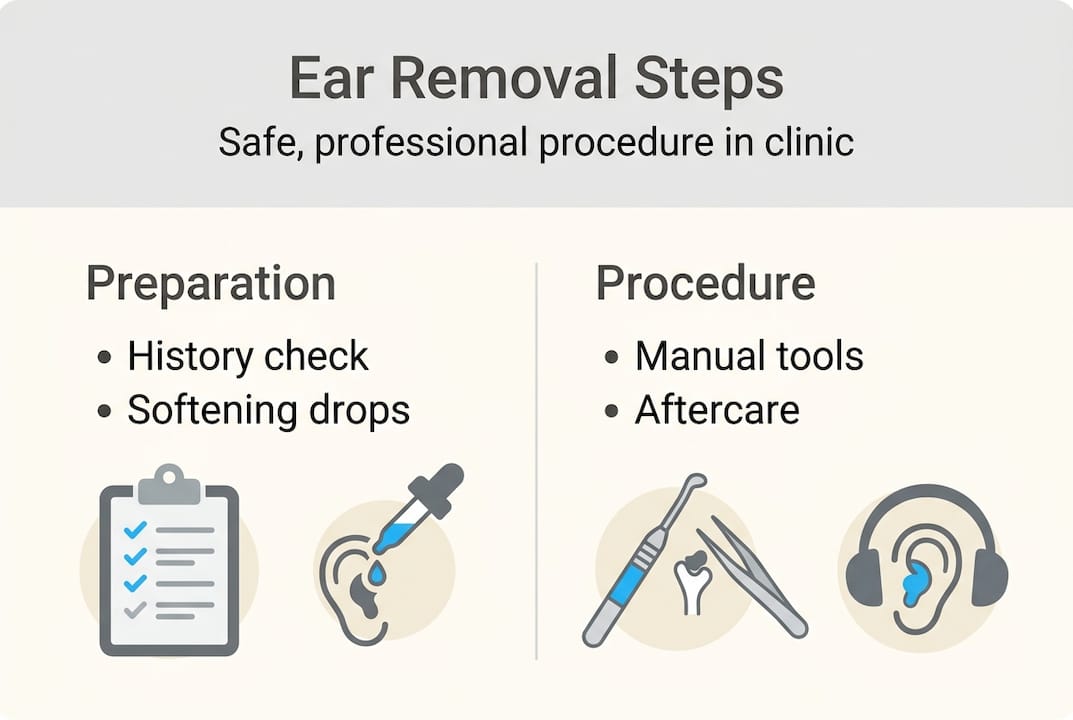
Here is a step-by-step overview of what happens during instrumentation at a regulated Scottish clinic:
Initial assessment: Your specialist will take a brief history of your symptoms and any previous ear treatments.
Otoscopic examination: An otoscope (a small, lighted instrument) is used to examine the ear canal and assess the wax.
Positioning: You will be seated comfortably, and the specialist will gently pull the outer ear (pinna) upward and back to straighten the canal for better access.
Instrument selection: Based on what the otoscope reveals, the appropriate instrument is chosen.
Careful removal: The specialist inserts instruments carefully to scoop, hook, or grasp the wax without contacting the eardrum (tympanic membrane).
Post-removal check: A final otoscopic examination confirms the canal is clear and undamaged.
For children, the process follows the same steps but requires additional patience and communication. Steady cooperation from the child is essential, as movement during the procedure increases risk. For younger or less cooperative children, children’s ear wax removal via microsuction is often preferred because it is faster and requires less stillness.

Pro Tip: If you are bringing a child to a clinic appointment, explain the process to them beforehand in simple terms. Letting them know it is similar to having their ears looked at by a doctor can reduce anxiety and help them stay calm.
The table below compares the three main clinic-based methods:
Method | How it works | Best suited to | Suitable for children? |
Instrumentation | Manual removal with tools | Hard, dry, or accessible wax | Older, cooperative children |
Irrigation | Water flush | Soft or moderate wax | Generally yes, with care |
Microsuction | Gentle suction | Most wax types | Yes, often preferred |
For a more detailed walkthrough of what happens at each stage, the step-by-step ear wax removal guide covers the full process across all methods.
Who should (and should not) have instrumentation ear removal?
Instrumentation is not a one-size-fits-all solution. Understanding whether it is appropriate for your situation, or your child’s, is an important part of making an informed decision.
Who benefits most from instrumentation:
Adults with hard, dry, or impacted wax that has not responded to drops
Patients where irrigation is contraindicated (for example, those with a history of ear surgery or a perforated eardrum)
Individuals with a foreign body in the ear canal
Older, cooperative children with accessible wax
Who should avoid instrumentation:
Patients with a suspected or confirmed perforated eardrum
Those with active ear infection or discharge
Very young or uncooperative children who cannot remain still
Cases involving deep impaction where visibility is poor
As StatPearls clinical guidance confirms, instrumentation is contraindicated where there is poor visualisation, suspected tympanic membrane perforation, an uncooperative patient (especially children), or deep impaction, and ENT referral is recommended in these cases.
For parents, it is worth reading the ear wax removal best practices guide before booking, and understanding the differences covered in the microsuction vs irrigation for children comparison.
The table below offers a quick reference for suitability:
Patient type | Instrumentation suitable? | Recommended alternative |
Adult with hard wax | Yes | N/A |
Adult with active infection | No | Treat infection first |
Child (cooperative, 5+) | Often yes | Microsuction if preferred |
Child (under 5 or uncooperative) | No | Microsuction |
Suspected perforation | No | ENT referral |
Foreign body in canal | Often yes | ENT if deep or complex |
Risks, effectiveness, and safety tips
Every clinical procedure carries some degree of risk, and instrumentation ear removal is no exception. However, the risk profile changes dramatically depending on who performs it and how.
Potential risks when performed incorrectly:
Trauma to the ear canal wall
Bleeding or soreness
Introduction or worsening of infection
Eardrum perforation in severe cases
The manual cerumen removal risks data is striking: success rates reach 92.9% with ENT specialists, compared to just 64.1% with non-specialists. That gap in outcomes is not a minor detail. It reflects the real-world difference that training, equipment, and clinical experience make.
Dos and don’ts for safe ear care:
Do visit a regulated clinic for any wax buildup that causes symptoms
Do ask your specialist about softening drops before your appointment
Do mention any history of ear surgery, perforation, or infection
Don’t attempt manual removal at home with cotton buds, hairpins, or ear candles
Don’t delay if you experience sudden hearing loss, pain, or discharge
Don’t assume that over-the-counter drops alone will resolve significant impaction
Signs you need urgent care:
Sudden or significant hearing loss
Severe ear pain or pressure
Discharge or bleeding from the ear
Dizziness or balance problems linked to ear symptoms
Pro Tip: Applying a cerumenolytic (wax-softening) drop for 15 to 30 minutes before your clinic appointment can make instrumentation easier and more comfortable. Ask your specialist whether this is appropriate for you before trying it.
For a thorough overview of what is safe and what to avoid, the ear wax removal safety guide covers the key principles in plain language.
Why professional care matters more than most realise
There is a tendency to treat ear wax as a minor inconvenience, something to be sorted quickly at home with whatever is to hand. This attitude is understandable but it consistently leads to avoidable complications. We see patients regularly who have spent weeks using cotton buds or ear candles, only to arrive at the clinic with wax pushed deeper and symptoms worsened.
The case for regulated, urgent ear wax treatment is not just about speed. It is about having the right environment, the right tools, and a practitioner who understands the anatomy of the ear canal and the limits of each technique. For parents especially, bringing a child to a clinic where child-specific protocols are in place is a fundamentally different experience from attempting anything at home.
As professional clinical guidance consistently supports, immediate professional care via private regulated clinics is the recommended route for Scotland residents and parents seeking quick, safe relief. The hard truth is this: convenience and speed do not outweigh expertise. The best outcomes come from trained hands, proper equipment, and a regulated setting.
Next steps: expert ear care at your fingertips
If you or your child is experiencing ear wax discomfort, you do not have to wait weeks for an NHS appointment or risk making things worse at home. EARS Clinics offers NHS-accredited, Healthcare Improvement Scotland registered ear wax removal in Glasgow and Edinburgh, with same-day appointments available and home visits for those who need them.

Our trained Aural Care Specialists use the full range of types of ear wax removal procedures, including instrumentation, microsuction, and irrigation, to match the right method to your needs. For families, our children’s ear wax removal service is designed specifically for younger patients from age two upwards. To find out what to expect at EARS Clinics before you book, visit our website. Appointments start from £60 for adults and £75 for under-18s.
Frequently asked questions
Is instrumentation ear removal painful?
When performed by a professional, it is usually painless and well-tolerated. Discomfort typically occurs only if the canal is extremely sensitive or if removal is attempted without proper training or visualisation.
How long does the procedure take for children?
Typically, instrumentation takes just a few minutes in steady, cooperative children. If movement is an issue, the specialist may switch to microsuction, as children require steadiness for safe instrumentation.
What are the main risks of instrumentation ear removal?
The main risks are canal trauma, bleeding, infection, and, rarely, eardrum perforation. These risks are significantly reduced when the procedure is performed by a trained specialist using proper visualisation techniques.
When should I avoid this procedure and seek an ENT clinic?
Avoid instrumentation if there is pain, suspected perforation, active infection, or if the patient is a young child who cannot stay still. In these cases, ENT referral is advised for safe and appropriate management.
Recommended