
Ear Canal Eczema in the UK: Why Debris May Need Removal First

Persistent itching with dry, flaking skin in the ear canal is often a sign of eczema rather than a bacterial infection. If this sounds familiar, stop inserting anything into your ear, including cotton buds, and avoid likely irritants such as sprays or earbuds. Clinicians often treat the condition with emollients or steroid drops, though built-up debris sometimes needs professional removal first.
TL;DR:
Clinicians distinguish gradual itching and scaling from infection, which more often causes severe pain, fever, and tenderness when the outer ear is touched.
Apply unfragranced medical grade emollient at the ear entrance, avoid cotton buds and irritants, and pause or adjust earbuds or hearing aids that worsen symptoms.
Emollients and topical steroid drops or creams are first line; antibiotics are appropriate only when bacterial infection is confirmed or strongly suspected.
Seek same day care for severe pain, fever, spreading redness, facial weakness, or poorly controlled diabetes; book care if symptoms last beyond a couple of weeks.
Symptoms: how ear canal eczema commonly looks and feels
Ear eczema tends to announce itself through a distinctive pattern rather than a single symptom. We see patients describe an itch that feels impossible to ignore, alongside skin that looks dry, scaly or reddened.
Intense, persistent itching that often worsens at night
Dry or scaly skin inside the canal or on the outer ear
Redness, crusting or cracking of the skin
Clear or occasionally purulent discharge
A blocked or full sensation, sometimes affecting hearing
According to the Cleveland Clinic, symptoms can persist for longer than three months in chronic cases, and advanced presentations may crack or weep fluid, occasionally causing a conductive hearing change if debris builds up. This differs from bacterial otitis externa, which tends to come on more rapidly with severe pain, fever and marked tenderness when the tragus or pinna is touched. Eczema, by contrast, usually develops gradually and centres on itch rather than pain.
Causes and common triggers of ear canal eczema
Several distinct forms of eczema can affect the ear canal, each with its own pattern. Atopic eczema often runs alongside eczema elsewhere on the body, seborrhoeic eczema relates to oil-producing skin and tends to flake, contact eczema follows exposure to an irritant or allergen, and asteatotic eczema results from skin that has simply become too dry.
Hair sprays, shampoos and styling products running into the ear
Perfume or nickel in earrings and jewellery
Pressure or moisture trapped by hearing aids or earbuds
Prolonged water exposure from swimming or sweating
The National Eczema Society identifies trigger avoidance as central to managing ear eczema, noting that shampoos, hair spray, earrings and hearing aids are among the most frequent culprits. Checking these everyday products systematically is often as important as any cream or drop a clinician prescribes, since ongoing exposure to an irritant is a common reason treatment appears not to work.
How clinicians diagnose ear eczema and spot red flags
A proper diagnosis starts with a careful look inside the ear. Otoscopic inspection lets a clinician see whether the skin pattern fits eczema or points towards infection, and a swab may be taken if the picture is unclear or if a secondary infection is suspected.
The clinician examines the canal with an otoscope to assess skin changes and rule out infection.
A swab may be sent for analysis when discharge, odour or treatment failure suggest bacterial or fungal involvement.
Referral to ENT or dermatology follows when symptoms persist despite treatment or when the canal has narrowed too much for drops to reach the skin.
Some signs mean a same-day assessment matters more than waiting. NICE guidance lists severe pain, fever, spreading redness, facial nerve weakness, and being immunocompromised or having poorly controlled diabetes as red flags, since rare but serious complications such as necrotising otitis externa can follow. Our warning signs guide sets out these symptoms in more detail for anyone unsure whether their case needs urgent review.
Treatment options clinicians commonly use
Most treatment plans build outward from the skin barrier rather than jumping straight to antibiotics. Emollients come first, used regularly and gently around the outer ear and canal entrance to restore moisture and reduce the dryness that drives itching.
Emollients applied regularly to repair the skin barrier and calm irritation
Topical corticosteroid drops or cream for actively inflamed patches
Combined steroid and antibiotic, or steroid and antifungal, preparations when a mixed or secondary infection is suspected
Specialist referral for widespread or treatment-resistant eczema
NICE CKS notes that topical corticosteroids and emollients are first-line for inflammatory ear eczema, and that antibiotics are appropriate only once a bacterial infection is confirmed or strongly suspected. Reaching for antibiotics when the underlying problem is inflammatory rather than infective rarely helps and can delay proper treatment.
Pro Tip: Keep a short diary of any new hair or skincare products alongside flare-ups: it often reveals the trigger faster than guesswork.

Procedural ear care: microsuction, irrigation and aural toilet explained
Before topical treatment can work, the canal often needs clearing of wax, flaking skin or discharge, a process known as aural toilet. This is done using microsuction, irrigation or manual instrumentation, choosing whichever method suits the clinical picture in front of us.
Microsuction uses gentle suction under direct vision to lift debris without introducing water
Irrigation flushes the canal with warm water, used when the eardrum is confirmed intact
Manual instrumentation removes visible debris directly using fine instruments
Microsuction is the preferred method recommended by current NICE guidelines, particularly for eczema-prone canals where water exposure can aggravate symptoms, though irrigation and manual instrumentation remain safe and clinically valid when appropriate. The National Eczema Society notes that microsuction is often preferred in eczema-prone ears for this reason, while irrigation stays suitable when the eardrum is visualised and intact. The safest and most suitable procedure is selected based on each patient’s medical history and presentation, and appointments are carried out by trained, competent clinicians following best practice standards. The clinics are regulated by Healthcare Improvement Scotland, and same-day assessments and home visits are offered for patients who find it hard to travel. You can read more about how we approach itchy ears and microsuction in a dedicated guide.
Self-care: immediate steps and clear do’s and don’ts at home
Simple changes at home often bring real relief while you wait for or alongside clinical treatment.
Apply an unfragranced, medical-grade emollient to the outer ear and canal entrance rather than olive oil, which is not formulated for eczema-prone skin.
When using prescribed drops, lie still for a minute or two afterwards and gently press the tragus, a technique the Royal Berkshire NHS Trust notes helps the medication reach the canal lining.
Avoid cotton buds, harsh soaps and prolonged water exposure, and consider adjusting a hearing aid’s fit or taking short breaks from it if it seems to aggravate symptoms.
Pro Tip: Dry your ears with a soft towel corner rather than a cotton bud, patting rather than probing.
Our step-by-step ear care guide covers this routine in more depth, and for anyone whose drops do not seem to be working, our piece on why ear drops fail explains the common reasons.
Prevention and when to book a clinic assessment
Keeping ear eczema under control usually comes down to consistency rather than anything dramatic. Managing scalp seborrhoeic dermatitis alongside ear symptoms can help, as explained in this detailed routine for the dermatite seborroica. Drying ears thoroughly after swimming, managing any scalp seborrhoeic dermatitis, and continuing emollient use even between flares all reduce how often symptoms return.
Avoid known triggers identified from your own flare-up pattern
Dry ears gently after swimming or showering
Treat scalp or seborrhoeic dermatitis alongside ear symptoms
Keep using emollient during quiet periods, not just during flares
It is worth booking an assessment if symptoms persist beyond a couple of weeks, if the canal feels blocked or hearing seems muffled, if prescribed drops have not helped, or if any red-flag symptoms appear. Professional aural toilet often makes the real difference, clearing debris so that topical treatment can finally reach the skin it is meant to treat.
Clinician perspective from EARS Clinics
Most people who come to us with itchy, flaking ears are relieved to learn how manageable eczema in the ear canal usually is once the debris is cleared and the right topical routine is in place. Our regulated, NHS-accredited practitioners assess each case individually before recommending a procedure. If your symptoms are persistent or worrying, we would rather see you early than have you wait it out.
— EARS
Booking ear eczema care with EARS Clinics
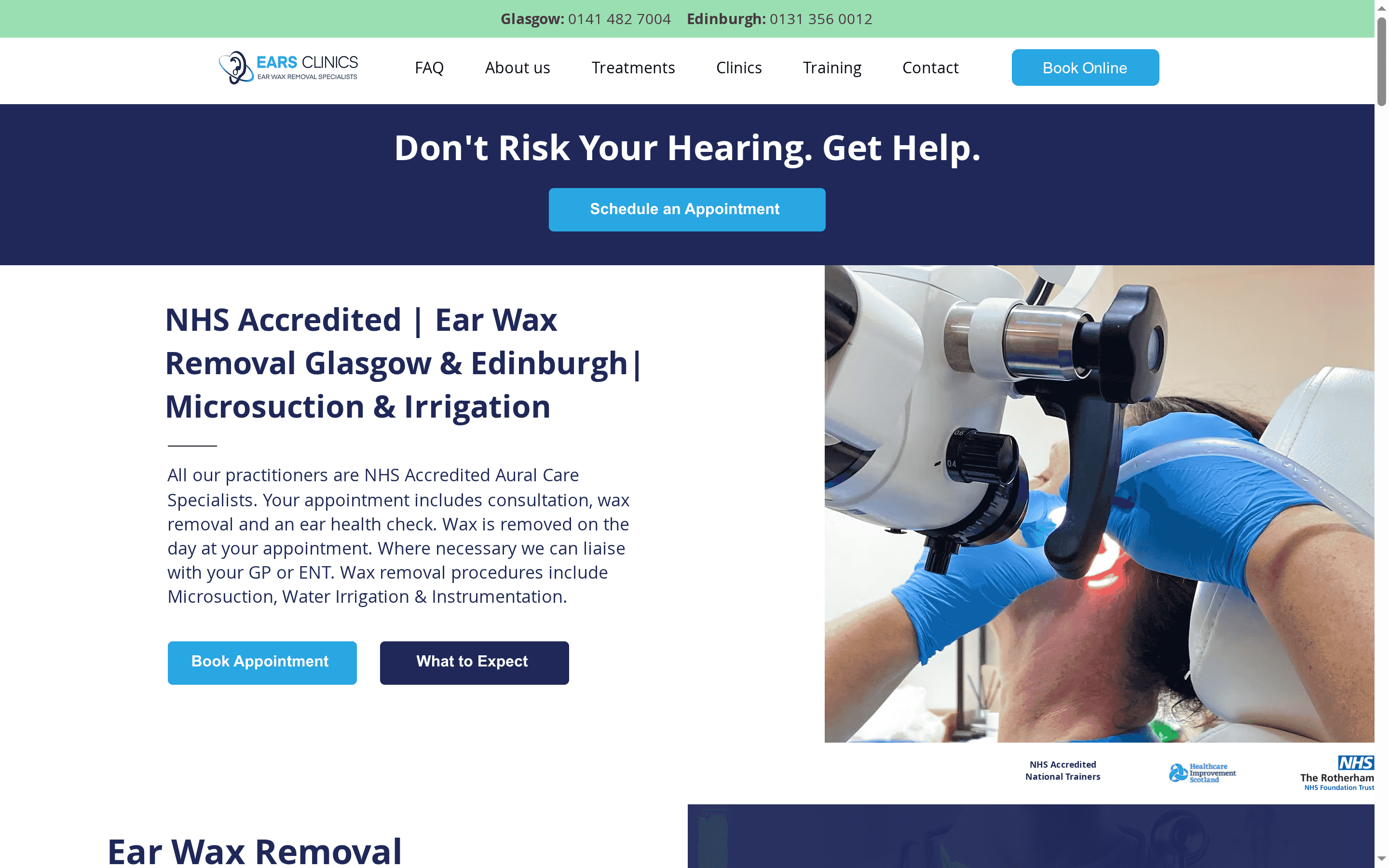
If itching, flaking or blocked ears are not settling, we offer a clear route to assessment and relief rather than another round of guesswork. Book online for a clinical assessment, and we will choose microsuction, irrigation or manual instrumentation based on what we find, never a one-size-fits-all approach.
Clinical assessment and aural toilet to clear debris before topical treatment
Microsuction, irrigation or manual instrumentation, selected to suit your ear
Home visits are available for those who cannot travel to clinic
Same-day and out-of-hours appointments when symptoms need urgent attention
The clinics are regulated and staffed by trained practitioners, so patients are seen by qualified professionals rather than left to manage debris removal themselves. If you notice red-flag symptoms, an obstructing build-up of debris, or drops that are not working, booking promptly is sensible. Start your booking here.
This article is general information, not a substitute for advice from a qualified doctor. Consult a qualified healthcare professional about your own circumstances before acting on anything here.
FAQ
What is seborrhoeic dermatitis in the ears?
Seborrhoeic dermatitis is a common form of eczema linked to oil-producing skin, often causing flaking, redness and mild itching around the ear and scalp. It frequently overlaps with other scalp conditions, which is why managing scalp symptoms alongside ear symptoms tends to help.
What is atopic eczema?
Atopic eczema is a chronic, itchy skin condition that often runs in families and commonly affects the ears alongside other areas such as the hands, elbows and behind the knees. The National Eczema Society notes that ears and the skin behind them are frequently affected in people with atopic eczema, and severe cases may need specialist input.
What is dermatitis?
Dermatitis is a general term for inflamed, irritated skin, of which eczema is one common type. In the ear, dermatitis can result from an allergic reaction, an irritant product or simply chronically dry skin, and the cause shapes which treatment works best.
What are the symptoms of an ear infection in adults?
A bacterial ear infection typically causes more severe, rapid-onset pain, along with fever and marked tenderness when the tragus or outer ear is touched. This pattern differs from eczema, which usually develops more gradually and is dominated by itch rather than pain, according to NICE CKS.
When should I see a clinician about itchy ears?
You should seek assessment if itching or flaking persists beyond a couple of weeks, if your ear feels blocked or your hearing changes, or if you notice severe pain, fever or spreading redness. EARS Clinics offer same-day appointments for anyone unsure whether their symptoms need urgent review.
Sources
Recommended