
NHS accredited care for itchy ears: safe home steps and microsuction

Earwax is the most common reason for itchy ears, and it is usually straightforward to manage. If there’s no pain, discharge, or history of recent ear surgery, a few days of olive oil or pharmacy softening drops often settles things. Stop poking at your ear with anything, and if pain, bleeding, or sudden hearing loss appears, skip the home care and get checked by a clinician instead.
TL;DR:
Home softening drops like olive oil are effective for mild wax-related itch if used consistently for three to five days, but should be stopped if pain or discomfort worsens.
Use of cotton buds and similar rigid objects typically worsens wax build-up and can cause ear irritation, making professional removal necessary if symptoms persist.
Symptoms like sharp pain, discharge, fever, or sudden hearing loss require immediate clinical assessment rather than home treatment.
Microsuction is the preferred in-clinic method for wax removal, especially for patients with a perforated eardrum or recent ear surgery, due to its safety profile.
Regular routine care includes avoiding ear canal disturbance, using occasional oil drops before swimming, and seeking professional cleaning if symptoms recur frequently.
What causes itchy ears (earwax, skin conditions and other triggers)
Your ear canal produces cerumen, the medical term for earwax, constantly. It’s meant to trap dust and bacteria and slowly work its way out on its own. The World Health Organization notes that the ear canal is self-cleaning, which is exactly why poking around inside it so often backfires. Itching happens when this natural system gets disrupted, either by too much wax, wax that’s become dry and compacted, or something else irritating the delicate skin lining the canal.
Several distinct causes tend to overlap:
Excess or hardened earwax pressing against the canal wall and eardrum
Skin conditions such as eczema or psoriasis affecting the ear canal lining
Trapped water after swimming or showering, softening skin and inviting irritation
Allergic dermatitis, sometimes triggered by shampoo, hairspray, or metal in earrings
Foreign bodies, more common in children but not unheard of in adults
Behavioural habits, including cotton bud use, in-ear headphones, and hearing aids, all of which can push wax deeper or block its natural exit
Cotton buds are a particular culprit. Rather than removing wax, they usually compact it further down the canal, which is one reason itchy ears and wax build-up so often go hand in hand.
Is it wax, infection, or something else?
Wax-related itch tends to have a fairly consistent signature. You’ll typically notice itching alongside a sense of fullness, a mild dip in hearing, and sometimes a faint ringing or buzzing (tinnitus). Symptoms like these are among the most commonly reported signs of earwax build-up, and they usually resolve once the wax is cleared.
Other symptoms point somewhere more serious, and home care isn’t the right next step:
Sharp or worsening pain, rather than mild discomfort
Fever alongside ear symptoms
Pus, blood, or an unpleasant odour from the ear
Sudden hearing loss, especially in one ear
Dizziness or a spinning sensation
One symptom alone, like mild itch, rarely needs urgent attention. Pain plus discharge, or sudden hearing changes with dizziness, changes the picture entirely and warrants a same-day assessment rather than a wait-and-see approach.
How to treat itchy ears safely at home
Self-care works well for straightforward wax build-up, provided you follow a few clinically sound steps rather than guessing.
Warm a few drops of olive oil or almond oil and tilt your head so it sits in the ear canal for a few minutes, once or twice a day for three to five days. ENT UK recommends olive oil or sodium bicarbonate drops as the standard first-line softening approach.
Try a pharmacy cerumenolytic if oil alone hasn’t helped after a few days, following the packet instructions on frequency and duration exactly.
Use a bulb syringe with lukewarm water only if genuinely indicated, and never if you suspect a perforated eardrum, have discharge, or have had recent ear surgery.
Stop immediately if pain develops. Softening drops can occasionally make a blockage feel worse before it clears, as the wax expands slightly.
Avoid cotton buds, ear candles, and anything sharp or rigid, including hairpins and pen lids. Cleveland Clinic warns that many home kits are unproven, and methods like ear candling carry real injury risk rather than solving the problem.
Pro Tip: If softening drops make your ear feel fuller or slightly more blocked at first, that’s often the wax expanding, not a sign something’s gone wrong. But if pain joins the picture, stop the drops and get it looked at rather than pushing on.
Professional removal: microsuction, irrigation and manual instrumentation
When home care doesn’t shift things, or red flags rule it out, three clinical techniques cover almost every case. Each works differently, and the right choice depends on your medical history and how your ear presents on the day, not on personal preference.
Microsuction uses gentle suction under magnification, with no water involved. Current NICE guidance favours it where clinically appropriate, largely because it avoids introducing moisture into a canal that might have a perforation or a history of surgery.
Irrigation uses a controlled, pulsed stream of water to flush wax out. It’s effective for many straightforward cases but is contraindicated where a perforated eardrum or active infection is suspected.
Manual instrumentation uses fine curettes or forceps under direct vision, often for wax sitting close to the canal opening.
A proper clinic visit starts with otoscopic inspection, using a lighted instrument to see exactly what’s happening inside the ear before anything is attempted. The clinician then talks you through the chosen method, gets informed consent, carries out the procedure, and checks the canal afterwards to confirm it’s clear and undamaged. For a walkthrough of what each session actually involves, the step-by-step microsuction workflow covers it in more detail.
When to see a clinician about itchy ears
Certain symptoms mean home remedies should be set aside in favour of a proper assessment:
Pain that’s sharp, worsening, or accompanied by fever
Any discharge, bleeding, or foul odour from the ear
Sudden or significant hearing loss
Dizziness, vertigo, or balance problems
A known or suspected perforated eardrum, or recent ear surgery
Start with your GP practice for triage, or contact a regulated ear clinic directly if same-day care is available. Urgent symptoms such as sudden hearing loss or severe pain justify walk-in or urgent care rather than waiting for a routine appointment. If you wear hearing aids or have consistently narrow ear canals, routine clinical check-ups every few months tend to prevent problems building up in the first place.
Preventing itchy ears and repeat wax build-up
Prevention is mostly about restraint rather than extra effort. Clean only the outer ear with a damp cloth, and leave the canal itself alone. Dry your ears carefully with a towel corner after swimming or showering, since trapped moisture softens skin and invites irritation.
Use occasional olive oil drops before swimming season if you’re prone to build-up
Reach for pharmacy cerumenolytics at the first sign of fullness, rather than waiting for full blockage
Book a routine professional clean if you have narrow canals, wear hearing aids, or notice symptoms returning every few months
How regulated clinics assess and treat itchy ears
EARS Clinics is registered with Healthcare Improvement Scotland, and every procedure, microsuction, irrigation, or manual instrumentation, is carried out by NHS-accredited Aural Care Specialists trained to current clinical standards.
Clinicians examine the ear first and choose the safest method based on your history, following NICE’s preference for microsuction where it’s appropriate
Irrigation and manual instrumentation remain valid, clinically sound options when microsuction isn’t the right fit for a particular patient
Appointments are available in-clinic, with same-day slots and home visits for those who can’t easily travel
Ear care of this kind should only ever be performed by trained, competent clinicians working within a properly regulated framework, whether that’s HIS in Scotland or CQC registration elsewhere in the UK, never as a DIY project with makeshift tools.
Why the itchy ears conversation gets stuck on the wrong question
Most advice on itchy ears fixates on which oil or drop works best, as if the product were the decision that mattered. It rarely is. The decision that actually matters is whether your ear history rules certain treatments out, and that’s a clinical judgement, not a shopping choice.
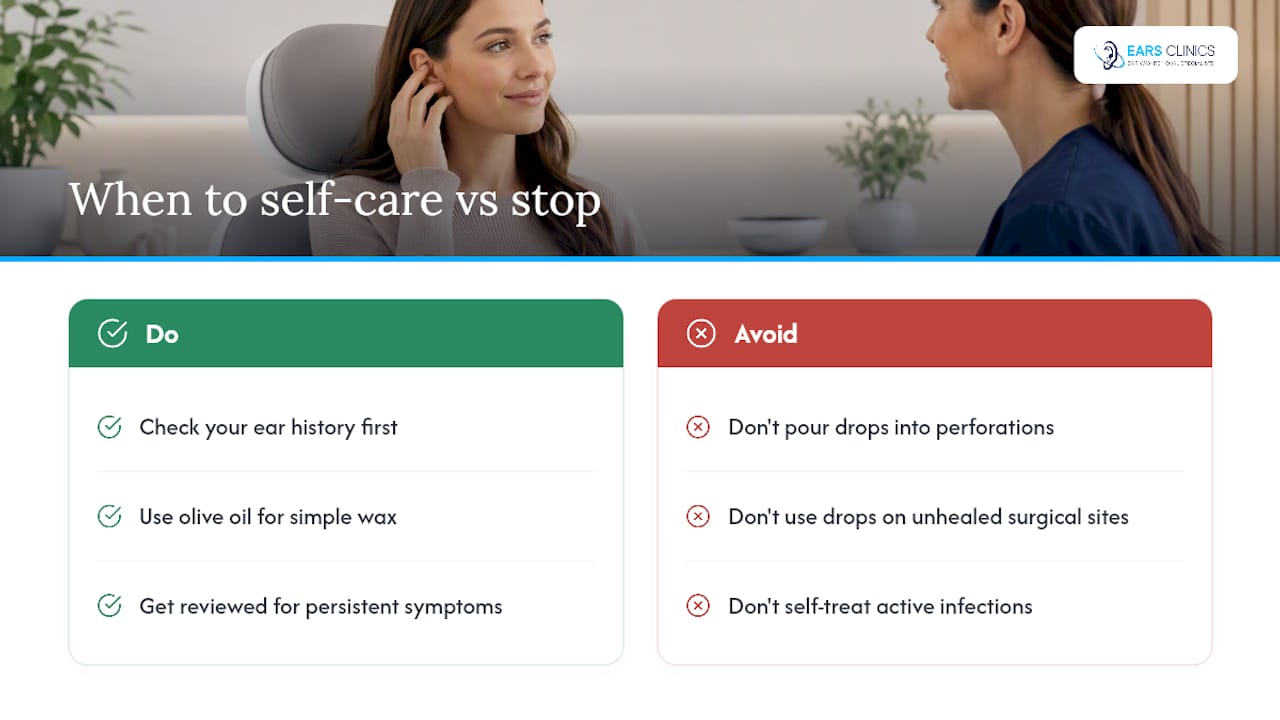
Conventional wisdom also underplays how often mild self-care advice gets applied to ears that shouldn’t have anything poured into them, a recent perforation, an unhealed surgical site, an active infection. The guidance to “try olive oil first” is sound for most people, but it isn’t universal, and articles that treat it as a blanket rule do readers a disservice.
If there’s one thing worth prioritising, it’s this: know your own ear history well enough to recognise when self-care doesn’t apply to you, and treat persistent or unusual symptoms as a reason to get looked at rather than to keep experimenting at home.
— EARS
Ready to deal with itchy ears properly? Book with EARS Clinics
If home softening hasn’t cleared the itch, or your ear history rules out DIY methods altogether, EARS Clinics gives you a faster route to proper removal than waiting on general NHS lists, without any pre-treatment conditions to meet first.
Every appointment is carried out by NHS-accredited Aural Care Specialists, who examine your ear and choose between microsuction, irrigation, or manual instrumentation based on what’s actually safe for you, not a one-size-fits-all script. Clinics in Glasgow and Edinburgh offer same-day slots, and home visits are available if getting to a clinic isn’t practical. Pricing is straightforward: £60 for adults, £75 for under-18s, and £180 for a home visit. If your itchy ears point to wax build-up rather than something needing GP referral, book an appointment and get it resolved this week rather than waiting weeks for a routine slot.
This article is general information, not a substitute for advice from a qualified doctor. Consult a qualified healthcare professional about your own circumstances before acting on anything here.
Sources
Recommended