
Microsuction for diabetes ear wax: avoid irrigation infections

If you have diabetes, the safest way to deal with troublesome ear wax is a regulated clinician, not a cotton bud. Microsuction is usually the preferred technique because it removes wax with gentle suction rather than water, reducing the infection risk that comes with irrigation.[1] Irrigation and manual instrumentation still have a place, but only after a clinician has checked your ear and your diabetes control.
TL;DR:
Microsuction is the preferred ear wax removal method for diabetics due to its dry technique, reducing infection risks associated with moisture and irrigation.
Diabetic patients face higher risks of infections like otitis externa and malignant otitis externa after irrigation, especially if immune response or wound healing is compromised.
Proper preparation includes softening wax with olive oil drops for several days and providing a medical summary, including recent HbA1c levels, to the clinician.
A thorough ear health assessment should confirm no active infection or perforation before any removal, with regulation ensuring safe, evidence-based practice.
Urgent attention is necessary for symptoms like severe pain, bleeding, or sudden hearing loss, particularly in diabetics, to prevent complications from spreading infections.
Diabetes ear wax removal: which method is used and why
Three techniques dominate professional ear care, and the choice between them depends on what a clinician sees when they look in your ear canal, not on personal preference.
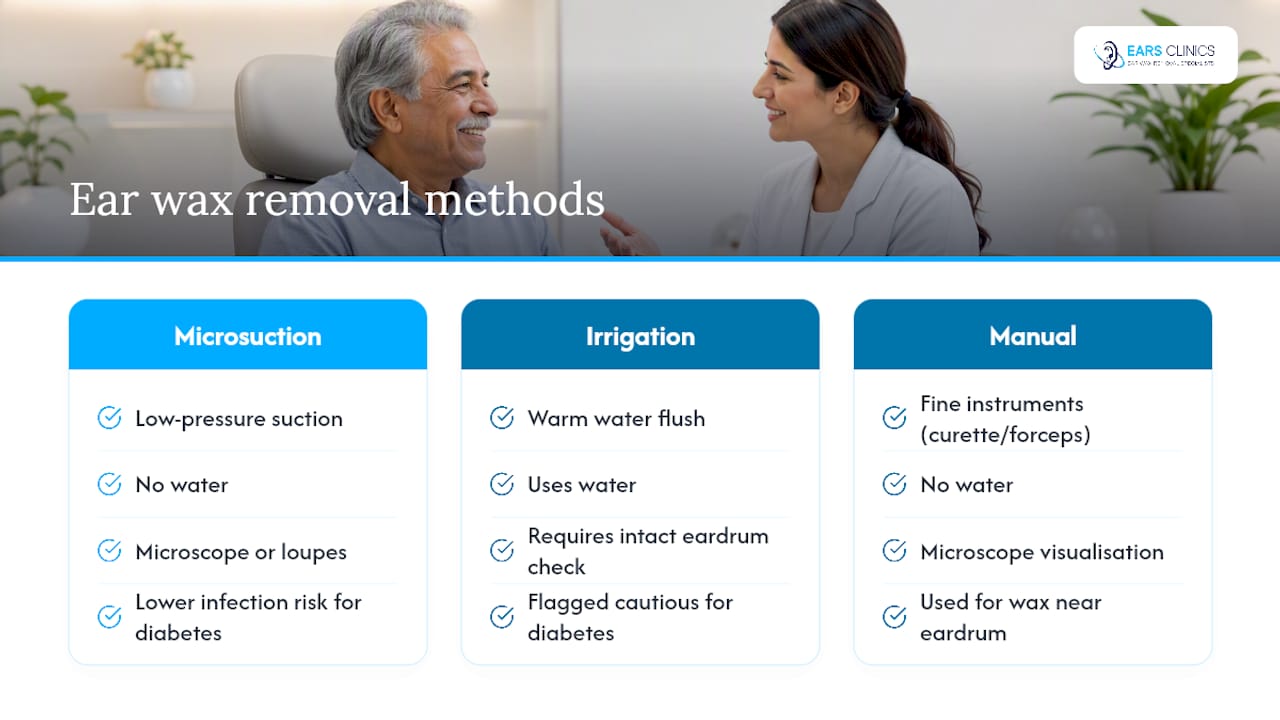
Microsuction uses a fine, low-pressure suction device under magnification, usually through a microscope or loupes. There’s no water involved, so wax is drawn out dry and the clinician can watch the canal clear in real time. Most patients see immediate results, and because nothing is flushed into the ear, there’s no residual moisture sitting against the skin. This matters more than it sounds. For someone with diabetes, skin that stays damp for hours is more vulnerable to bacterial growth, which is one reason microsuction has become the standard approach in many UK clinics for exactly this group of patients.
Irrigation works differently. Warm water, kept close to body temperature to avoid dizziness, is pumped gently into the ear canal to flush wax out. It requires the clinician to confirm the eardrum is intact and to check for any signs of active infection first. Because it introduces water and needs a properly maintained, sterile system, current NHS clinical guidance flags it as something to use with caution in diabetic patients, and only after careful screening.
Manual instrumentation involves a clinician removing wax directly with fine instruments such as a curette or forceps, again under microscope visualisation. It’s often chosen for wax that sits close to the eardrum or for softer, more mobile wax that suction alone won’t shift efficiently.
No single method suits everyone. A trained practitioner examines your ear, reviews your medical history, and picks whichever of the three is genuinely safest for you that day.
Why diabetes changes the risk calculation
Diabetes doesn’t just make ear wax removal more complicated in theory. It changes the actual clinical numbers.
One review found that irrigation causes iatrogenic otitis externa, an infection introduced by the procedure itself, in around 3% of cases overall. That risk rises further for people who are immunocompromised or living with diabetes, and the same review specifically flags a heightened risk of malignant otitis externa, a rare but serious infection that can spread into the bone at the base of the skull.[3] It’s one of the clearest clinical justifications for leaning towards microsuction where appropriate.
Before recommending any method, a clinician will typically check for:
A perforated eardrum or history of ear surgery, which usually rules out irrigation altogether.
Active discharge, pain, or signs of infection in the canal.
Poorly controlled blood glucose, which slows healing and raises infection risk generally.
Use of anticoagulant medication, which can increase bleeding risk with manual instrumentation.
Blood sugar control matters here for a practical reason: higher glucose levels are linked to slower wound healing and reduced immune response, so a clinician needs an honest picture of your diabetes management before choosing a technique.
Pro Tip: When you book, mention your diabetes type, roughly how well controlled it currently is, and any recent HbA1c result if you know it. You don’t need exact figures. “Type 2, generally well controlled” or “recently had some high readings” gives the clinician what they need without turning the conversation into a lab report.
Preparing for your appointment safely
A little preparation makes the appointment quicker and reduces the chance of it being rescheduled.
Use olive oil drops for three to five days beforehand if your clinic advises it. Clinical guidance generally recommends a cerumenolytic like olive oil to soften wax before any removal attempt, but check the exact regimen with your clinic first.
Bring a short medical summary: diabetes type, current medications, any insulin pump or continuous glucose monitor you use, and your most recent HbA1c if available.
Bring your glucose meter or monitor and a snack, particularly if the appointment falls around a mealtime or you’re prone to fluctuations.
Arrange transport if you’ve been told your blood sugar has been unstable recently, just as a precaution.
Never attempt DIY removal beforehand. Cotton buds push wax further in rather than out, and ear candles have no proven clinical benefit and carry a burn risk. Both are discouraged for anyone, but the stakes are higher when healing is already slower.
When to book routinely versus when to seek urgent help
Not every ear symptom needs the same response speed.
Book a routine appointment for muffled hearing, a feeling of fullness, mild tinnitus, or a pattern of frequent wax build-up. These are common, manageable, and rarely need same-day attention.
Seek urgent care instead if you notice:
Severe or worsening ear pain
Fever alongside ear symptoms
Bleeding or pus draining from the ear
Sudden hearing loss
Facial weakness or drooping on one side
Any of these, particularly fever or facial weakness in someone with diabetes, warrants a same-day GP contact or A&E visit rather than a routine booking, since they can signal a spreading infection. Your GP may also refer you to a community microsuction service or ENT specialist if wax build-up keeps recurring or your ear anatomy makes removal more complex.
What regulated ear care actually looks like
Regulation isn’t a formality here. It’s the difference between a trained clinician following an evidence-based protocol and someone using equipment without oversight.
In the UK, ear care providers should be registered with Healthcare Improvement Scotland or the Care Quality Commission, depending on where they operate. That registration means the clinic follows inspected standards for hygiene, equipment maintenance, and practitioner training. Earhealthservice, which operates as EARS Clinics, is Healthcare Improvement Scotland registered and employs NHS-accredited Aural Care Specialists across its Scottish clinics.
What that looks like in practice for a patient with diabetes:
A microsuction workflow used as the default option where clinically appropriate, with irrigation or manual instrumentation used only when suitable.
Documented infection-control protocols between patients, including sterilised or single-use instrumentation.
Same-day appointments and home visits for patients who need prompt treatment or find travel difficult.
Written correspondence with your GP or ENT team when your case needs it, keeping your wider care team informed.
Community microsuction availability varies significantly across the country, which is partly why private, regulated clinics have become a practical option for people who need reliable, prompt access rather than an uncertain wait.
Why the standard advice on this usually misses the point
Most general guidance on ear wax removal treats diabetes as a footnote, a line added at the end saying “consult your doctor if you have a chronic condition.” That undersells the actual clinical picture. Diabetes doesn’t just add a small caveat to the decision, it changes which method is appropriate in the first place, because impaired healing and infection risk are genuinely different when your immune response is compromised.
The bigger gap in most advice is preparation. Readers are told to “book an appointment” without being told what information actually changes how a clinician treats them. Your HbA1c trend, your current medications, and whether your diabetes is stable all shape the decision between microsuction, irrigation, and manual instrumentation. Turning up with that information ready is more useful than any home remedy you could try beforehand.
If there’s one priority worth taking from this: don’t wait until symptoms escalate. Frequent wax build-up in someone with diabetes is worth addressing early and routinely, with a regulated clinician, rather than managed reactively at home.
— EARS
Booking professional ear care with EARS Clinics
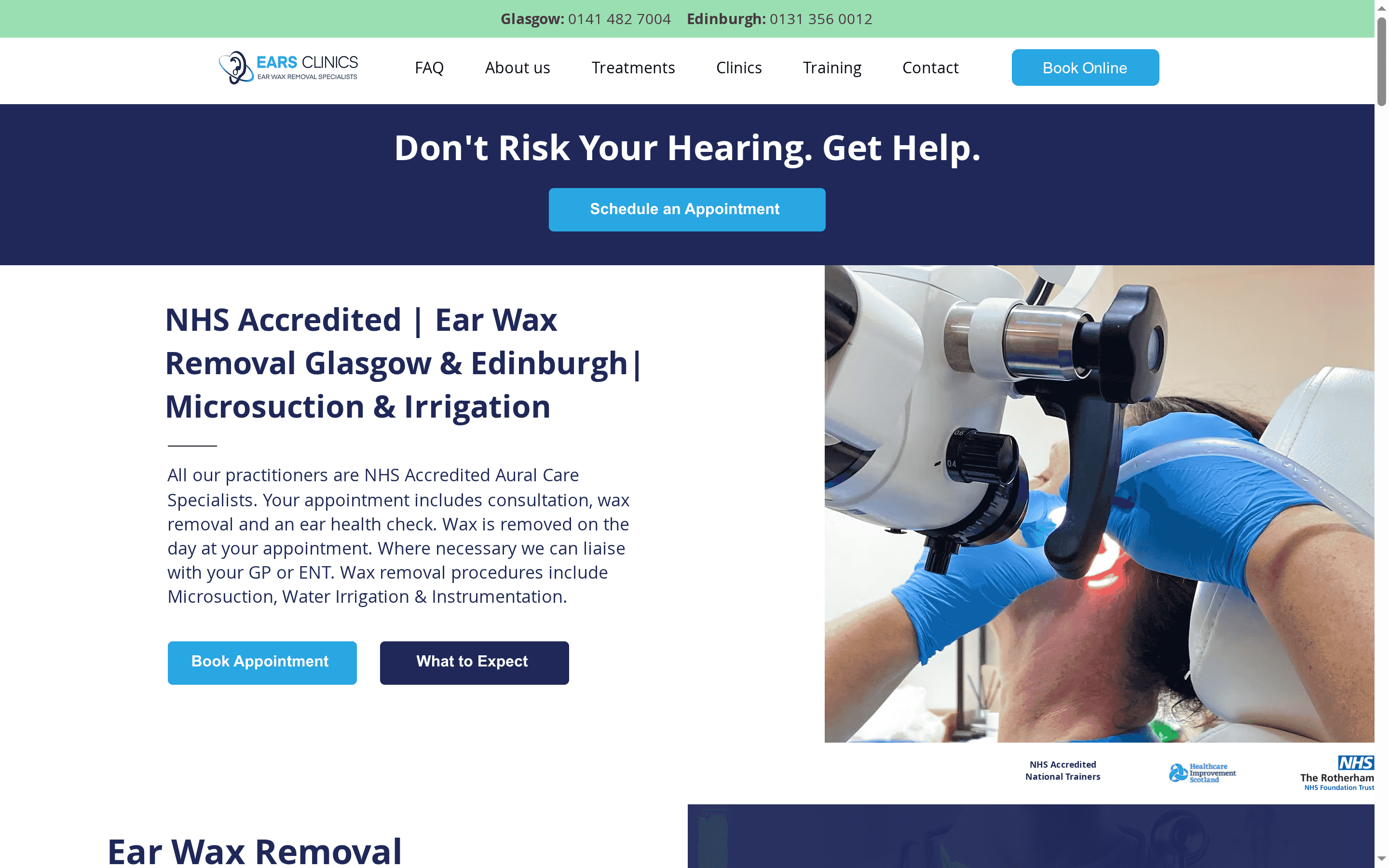
Earhealthservice runs a microsuction-first approach for exactly the reasons covered above, giving people with diabetes a route to ear wax removal that avoids the water-related risks tied to irrigation wherever microsuction is clinically appropriate. Clinics in Glasgow and Edinburgh offer same-day appointments, home visits for those who find travel difficult, and full ear health checks alongside removal.
When you call or book online, mention that you have diabetes and give a brief sense of how well controlled it currently is. That’s enough for the clinical team to plan your appointment properly. At the visit itself, expect an otoscopic examination first to confirm the eardrum is intact and there’s no active infection, before any removal method is used. You can read more about what to expect at an appointment beforehand if you’d like to know the exact flow.
Pricing sits at £60 for adults and £75 for under-18s, with home visits available at £180. Many private health insurance policies allow reimbursement for ear wax removal, so it’s worth checking your policy before you book. If clinic travel isn’t practical, the home visit service covers the same standard of care at your address. Patients in Edinburgh can find full details on the Edinburgh clinic page, and those in Glasgow can see practitioner accreditation on the Glasgow specialists page. Booking online takes a few minutes and typically secures a timely appointment slot.

This article is general information, not a substitute for advice from a qualified doctor. Consult a qualified healthcare professional about your own circumstances before acting on anything here.
Sources
FAQ
What is the 3 hour rule for diabetics?
This term isn’t a recognised clinical guideline for ear care. If you’ve seen it referenced elsewhere, it’s not part of standard diabetes or ear wax removal guidance, so don’t delay a clinic appointment based on it.
What happens if you don’t remove ear wax?
Left untreated, built-up wax can cause muffled hearing, tinnitus, and a feeling of fullness, and in people with diabetes it can raise the risk of skin irritation and infection developing behind the blockage.
Does diabetes affect your ears?
Yes. Diabetes can slow healing and increase infection risk in the ear canal, which is why clinicians often favour microsuction over irrigation for people managing the condition.
Can low blood sugar affect ear pressure?
Low blood sugar can cause dizziness or a sense of imbalance that some people describe as ear pressure, though it isn’t a direct effect on the ear canal itself. Mention any recent glucose instability to your clinician before your appointment.
Is microsuction safe for people with diabetes?
Microsuction is generally considered one of the safest options for people with diabetes because it doesn’t introduce water into the ear, though a clinician will still check your ear and medical history before proceeding.
Recommended