
£40 to £180: Claim ear wax removal costs from Bupa in the UK

Bupa can cover ear wax removal, but only when your specific plan includes an outpatient allowance for ENT or audiology treatment, and even then a GP referral or pre-authorisation is often required first. There’s no blanket “yes” here; it depends entirely on your policy wording. If your ears feel blocked now and you can’t wait for insurance paperwork, a regulated private clinic is a sensible route, provided you keep the invoice and the clinician’s registration details for a claim later.
TL;DR:
Bupa coverage for ear wax removal depends on your outpatient ENT or audiology benefits, often requiring a GP referral or pre-authorization.
Microsuction is the preferred method under NICE guidance and is suitable for patients with ear perforations, previous surgery, or sensitive canals.
Private clinics offer faster access with appointment costs typically between £40 and £180, and claims require detailed invoices and clinician registration.
NHS wax removal services are inconsistent across the UK, with long waits common, making private options more practical for prompt treatment.
Preparing with wax softening drops and understanding the method used can help ensure a smooth procedure and valid insurance claims.
Does Bupa cover ear wax removal?
Cover for ear wax removal under a Bupa policy sits within your outpatient benefit, not as a standalone guarantee, and the details vary from plan to plan. Some policies cap outpatient consultations and treatments at a set annual figure; others apply waiting periods before new claims are accepted at all.
Before assuming you’re covered, check the following:
Outpatient benefit limits: does your plan include ENT or audiology treatment, and is there an annual cap?
GP referral: many Bupa plans require a referral letter before they’ll authorise specialist ear treatment.
Pre-authorisation: some treatments need sign-off from Bupa before you’re treated, not after.
Network status: using an in-network clinician is usually simpler for claims than an out-of-network one.
Excess or copayment: check whether you pay a fixed amount before cover kicks in.
The most reliable approach is to phone Bupa directly and ask three plain questions: is ear wax removal covered under your outpatient ENT or audiology benefit, is microsuction specifically included, and what documentation your policy needs for a claim. If anything is unclear, request the full policy wording in writing rather than relying on a call summary.
NHS or private clinic: which route makes sense?
NHS provision for ear wax removal is patchy across the UK. Many GP surgeries no longer offer routine wax removal in-house, and where local services exist, waiting times can stretch for weeks. The NHS itself acknowledges that removal isn’t always available at surgery level, with irrigation, microsuction and manual instrumentation offered inconsistently depending on where you live.
Private clinics fill that gap with faster access:
Appointments often available promptly, avoiding long waiting times.
Home visits for patients who struggle to travel or need care at short notice.
A wider choice of removal method chosen on clinical grounds, not just what’s available locally.
The possibility of claiming the cost back through Bupa, if your policy allows it.
If your symptoms are mild and you’re not in a hurry, start with pharmacy advice or your GP. If you need prompt resolution, or NHS access in your area is limited, private treatment is worth considering, and it’s worth checking cover with Bupa before or after booking, depending on how urgent things are.
What are microsuction, irrigation and manual instrumentation?
These are the three clinically recognised methods your insurer and clinic will refer to, and understanding what each involves helps you ask the right questions when checking cover.
Microsuction uses a fine suction device under magnified direct vision to lift wax out of the ear canal without introducing any fluid. Current NICE guidance favours it as the preferred method for most patients, largely because the clinician can see exactly what they’re removing throughout. It’s often the best option for people with a history of perforation, previous ear surgery, or a narrow or sensitive canal.
Irrigation uses a gentle, controlled flow of water to flush wax out, and works well for straightforward, softened wax. It isn’t suitable for everyone, though. MedlinePlus notes it should be avoided where there’s a perforated eardrum, active discharge, or recent ear surgery.
Manual instrumentation involves a clinician removing wax directly with fine instruments such as a curette, useful for wax sitting close to the canal entrance.
Before any of these, a competent clinician checks for perforation, discharge, recent surgery and use of blood-thinning medication, then chooses whichever method suits your history and presentation, since NICE-preferred doesn’t mean NICE-only.
Perforated eardrum: usually rules out irrigation.
Active infection or discharge: treatment is often delayed until this clears.
Blood thinners: increases caution around any method that risks minor trauma.
Pro Tip: If you’ve had a perforation or ear surgery in the past, mention it when booking. Clinics can often pre-select the safest method before you even arrive, saving time on the day.
What does private ear wax removal cost, and how do claims work?
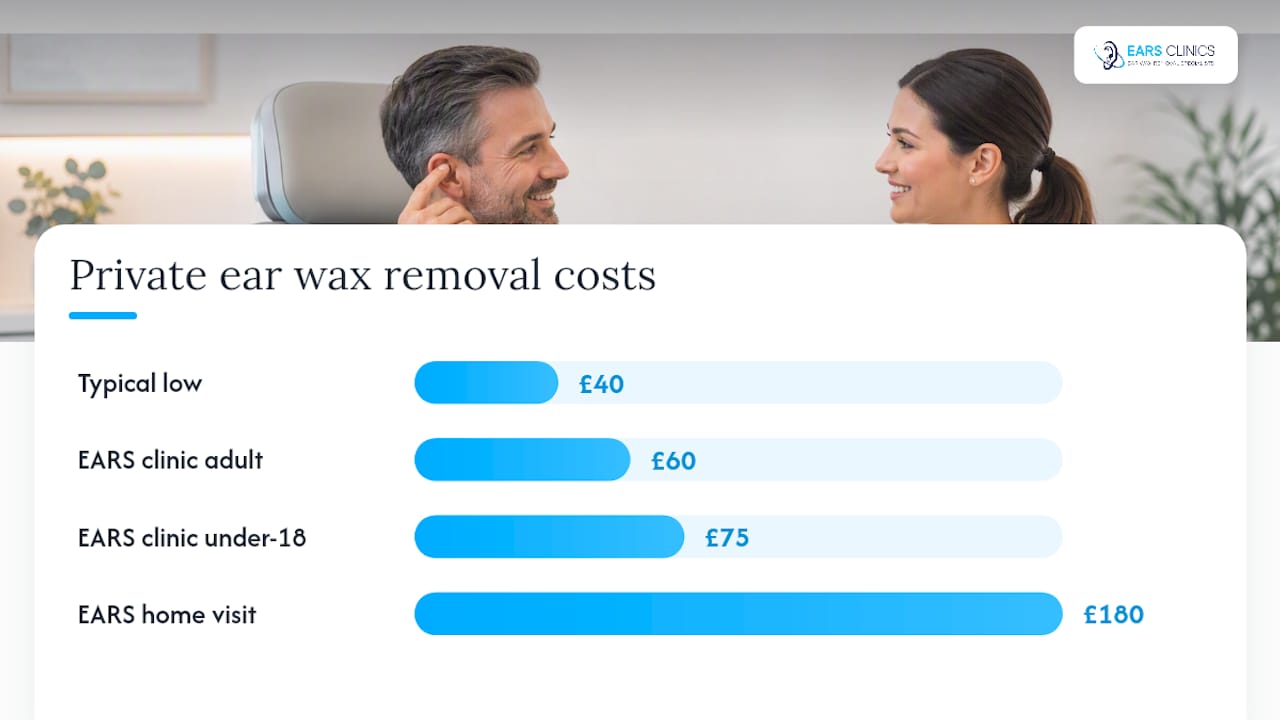
UK private fees for a standard appointment typically sit somewhere between £40 and £180, depending on the clinic, the method used and whether you’re seen in-clinic or at home. EARS Clinics, for example, charges £60 for adults and £75 for under-18s at its Glasgow and Edinburgh clinics, with home visits priced at £180 to reflect travel and time.
For a Bupa claim, you’ll generally need to choose between two routes: pre-authorisation, where Bupa agrees to pay before treatment, or pay-and-claim, where you pay the clinic directly and submit for reimbursement afterwards. Either way, keep:
A detailed invoice showing the treatment, date, and fee.
The treating clinician’s name and professional registration details.
Any referral letter or pre-authorisation reference number Bupa issued.
Claims are commonly rejected when patients skip the referral step, pay without checking their outpatient limit first, or lose the original invoice. Ask the clinic for paperwork formatted for insurer submission rather than a basic receipt.
How should you prepare for an ear wax removal appointment?
Preparation matters more than most patients expect, and skipping it is one of the most common reasons appointments don’t go smoothly.
Soften the wax beforehand, if advised. Some clinicians recommend olive oil or a proprietary softening drop for several days before your visit, particularly where wax is heavily impacted. Cleveland Clinic confirms drops like these can help, though home devices and ear candles generally don’t.
Expect an otoscopic examination first. The clinician looks into your ear canal to assess the wax and choose the safest method for your case.
Treatment itself is usually quick, often under 30 minutes, with before-and-after checks documented for your records.
Aftercare is straightforward in most cases, though you should report any new pain, discharge or dizziness promptly.
Pro Tip: Ask the clinic to note the before-and-after otoscopic findings on your paperwork. Insurers frequently want proof a registered clinician actually carried out the procedure, not just a payment record.
When should you seek urgent care instead of routine removal?
Some symptoms need medical attention faster than a routine booking allows, and home remedies should be avoided entirely in these situations.
Severe ear pain or sudden, significant hearing loss.
Bleeding or discharge from the ear canal.
Fever alongside ear symptoms.
Persistent dizziness or balance problems.
In any of these cases, contact your GP urgently or attend A&E rather than attempting irrigation or drops at home, since these symptoms can point to something other than simple wax build-up. If your hearing hasn’t returned to normal after professional removal, or new symptoms appear afterwards, arrange a prompt follow-up rather than waiting to see if things settle on their own.
Why accreditation matters more than most patients realise
Ear wax removal looks simple from the outside, and that’s precisely why so many patients underestimate how much clinical judgement it requires. Choosing between microsuction, irrigation and manual instrumentation isn’t a matter of preference; it’s a safety decision based on eardrum integrity, infection history and medication use, and getting it wrong can cause real harm.
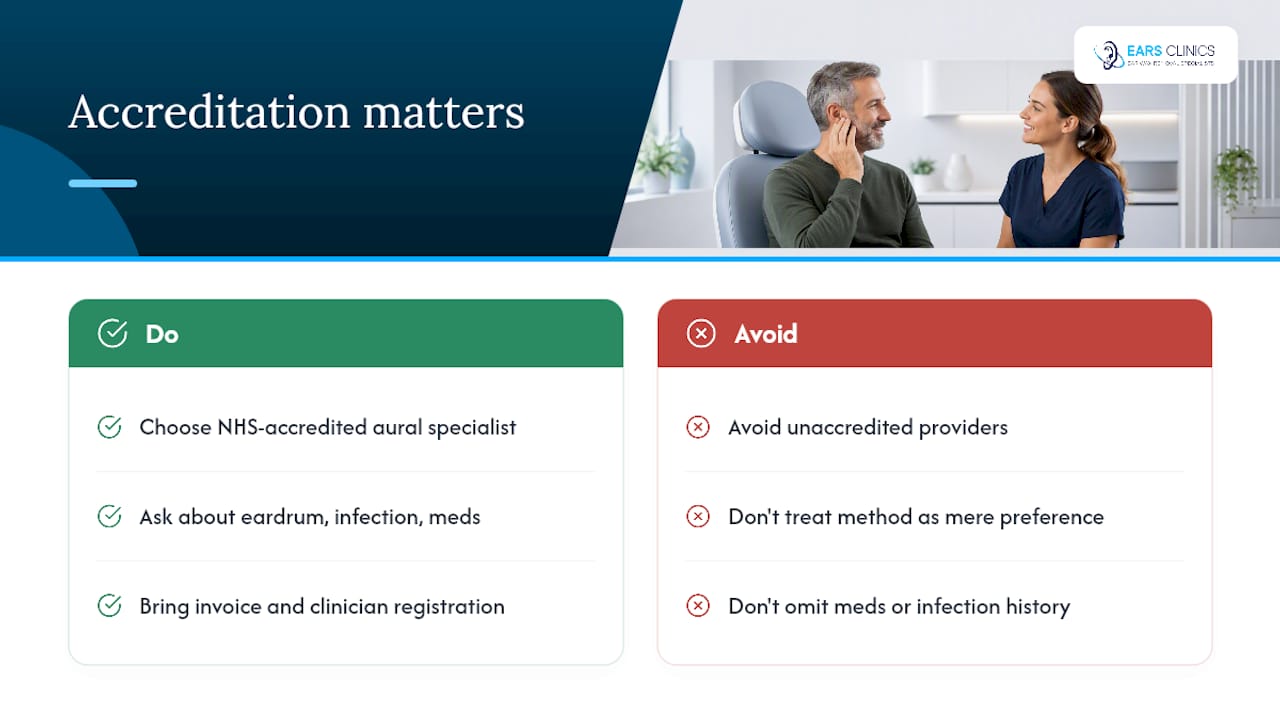
That’s why EARS Clinics operates under Healthcare Improvement Scotland registration, with every procedure carried out by an NHS-accredited Aural Care Specialist. We see this scrutiny as a benefit to patients, not a hurdle, because it means the person examining your ear has met a recognised clinical standard, not just completed a short course.
Patients across Glasgow and Edinburgh can book clinic appointments or home visits with transparent pricing agreed before treatment. If you’re claiming through Bupa, bring your invoice and our clinician’s registration details; we’ll make sure both are ready for you.
— EARS
Book ear wax removal with EARS Clinics
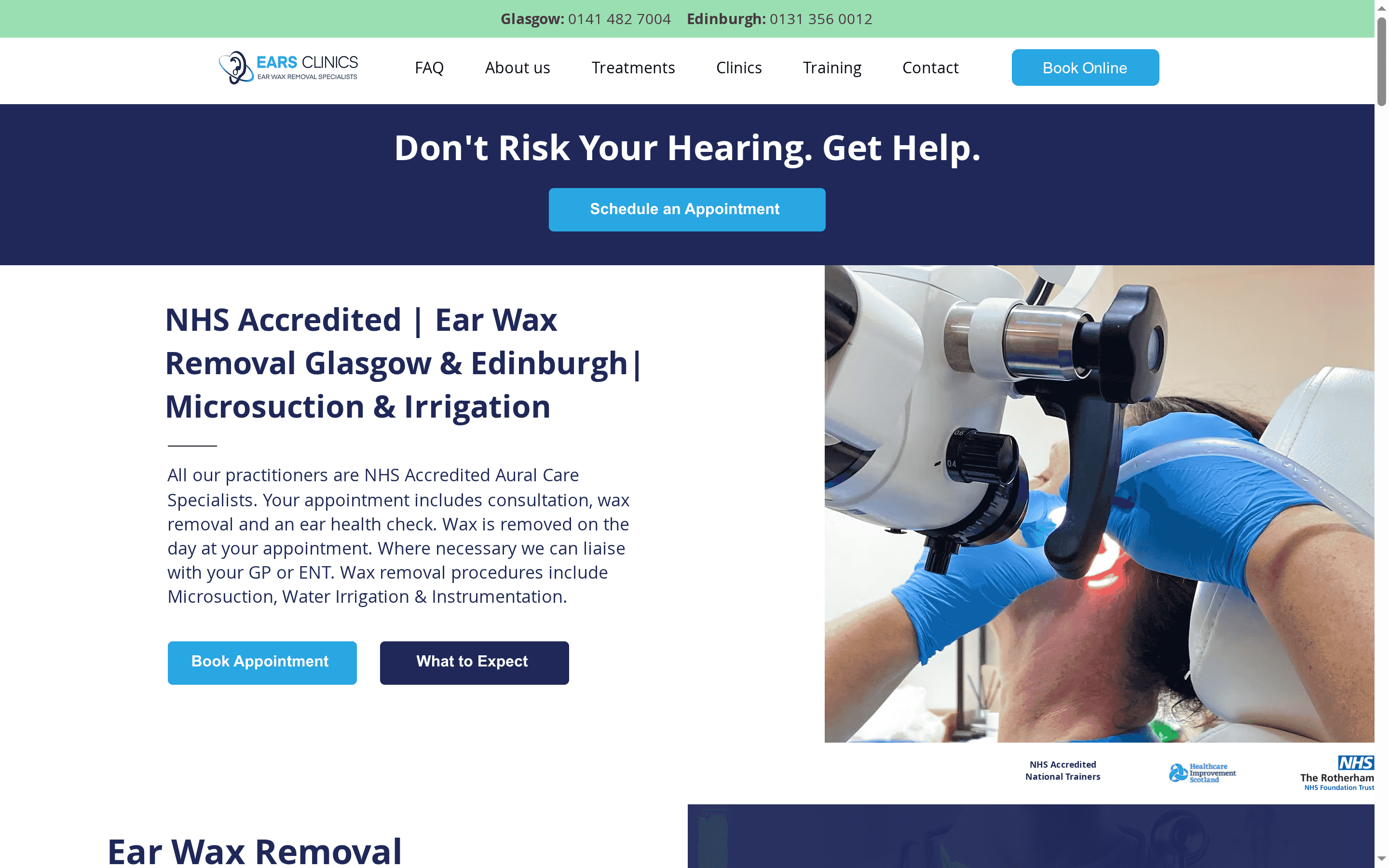
EARS Clinics is the direct alternative to a lengthy NHS waiting list for anyone in Glasgow or Edinburgh who needs their ears seen to now rather than in several weeks. As one of the few Healthcare Improvement Scotland registered clinics offering ear wax removal, every appointment is carried out by an NHS-accredited Aural Care Specialist using microsuction, irrigation or manual instrumentation, whichever suits your history.
Pricing is fixed and stated upfront: £60 for adults, £75 for under-18s, and £180 for home visits if travel to a clinic isn’t practical. Clinics can provide documentation including invoices and clinician registration details to support insurance claims where applicable. It’s worth confirming your outpatient cover with Bupa first if you want to avoid paying out of pocket unexpectedly, but if you’d rather sort your ears out today, you can check availability and book directly through our appointment booking page.
Where to check the clinical and insurance guidance yourself
For readers who want to verify anything covered here against primary sources, the NHS page on earwax build-up sets out UK access and methods in plain terms, while the World Health Organization’s ear care guidance explains why removal is only indicated for symptomatic blockage. For method-specific safety detail, MedlinePlus covers contraindications for irrigation, and Cleveland Clinic explains the limits of home softening drops and devices. For UK pricing context and clinic credentials, EARS Clinics publishes its pricing breakdown and clinical registration details openly.
This article is general information, not a substitute for advice from a qualified doctor. Consult a qualified healthcare professional about your own circumstances before acting on anything here.
Sources
FAQ
Does Bupa always cover ear wax removal?
No. Cover depends on your specific plan’s outpatient benefit, whether a GP referral or pre-authorisation is required, and whether annual limits or waiting periods apply.
What information does Bupa need for a claim?
Typically an invoice detailing the treatment and fee, the treating clinician’s name and registration, and any referral or pre-authorisation reference number.
Is microsuction better than irrigation?
Microsuction is favoured under current NICE guidance because it’s performed under direct vision, but irrigation and manual instrumentation remain safe, valid choices depending on your ear history.
How much does private ear wax removal cost in the UK?
Private fees usually range from £40 to £180. EARS Clinics charges £60 for adults, £75 for under-18s, and £180 for home visits.
Can I get ear wax removed on the NHS?
Sometimes, but availability varies by area and many GP surgeries no longer offer routine wax removal, which often means longer waits than private clinics.
Recommended