
Autism ear wax removal: a sensory-aware safety guide
- 11 minutes ago
- 15 min read
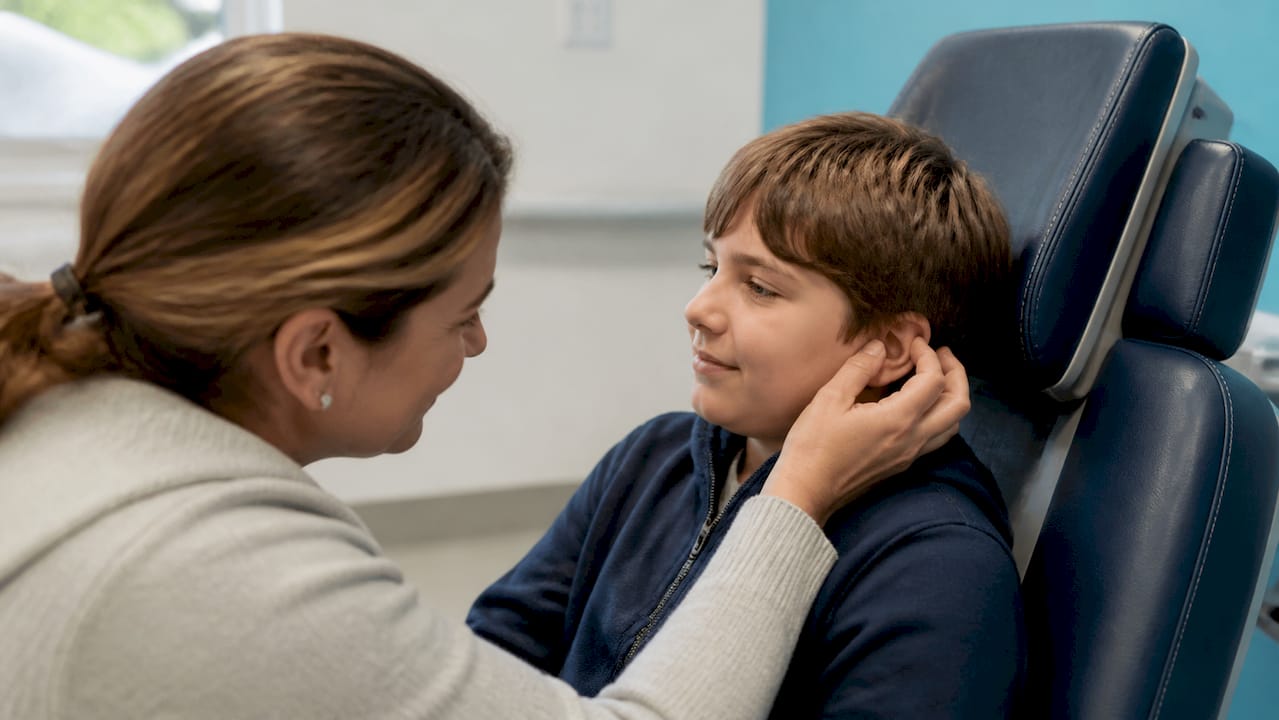
A quick visual check of the ear canal is the right first step whenever a carer suspects wax build-up in an autistic child. If wax is visible, the child is not in pain, and there is no history of ear surgery or perforation, a short course of clinician-recommended softening drops is a reasonable next move. If any of those conditions are unmet, or the drops do not work within a few days, the safest route is professional removal by a trained clinician rather than continued attempts at home.
This matters more for autistic children because behavioural signs of hearing loss (not responding to name, increased frustration, withdrawal from noisy rooms) can look identical to sensory or communication traits already present. Getting the ear checked rather than guessing is what separates a treatable problem from a permanent assumption.
Do this now:
Look into the ear canal in good light (a phone torch works) and note whether wax is visible, whether one or both ears are affected, and whether there is any discharge or bleeding.
Stop using cotton buds immediately if anyone in the household still does, since they pack wax further in rather than removing it.
Do not attempt home irrigation (syringing) if there has been prior ear surgery, a known perforation, current pain, or discharge.
Seek same-day or urgent advice if you see:
Pain, swelling, or bleeding from the ear canal.
Discharge that is foul-smelling, coloured, or persistent.
A sudden change in hearing, especially in one ear only.
A history of grommets, mastoid surgery, or a perforated eardrum.
Current NICE-aligned clinical guidance favours microsuction as the first-line removal method precisely because it does not require fluid in the canal, but irrigation and manual instrumentation remain valid, safe options when a clinician judges them more appropriate for a particular ear or a particular child. StatPearls is explicit that the clinician must visualise the eardrum before choosing irrigation, and NHS guidance is equally clear that wax causing no symptoms is often best left alone entirely.
Pro Tip: Photograph the ear canal on your phone before you call anyone. A clear image lets a clinic or GP triage the urgency of the appointment far more accurately than a description over the phone, and it can save an unnecessary trip if the wax turns out to be minor.
Key Takeaways
Autistic children with suspected earwax build-up need a visual check first, safe softening drops only when there is no pain or surgical history, and professional removal by a regulated clinician for everything else.
Point | Details |
Check before you assume | A visual check and simple sound test help distinguish wax-related hearing loss from stable autism traits. |
Home care has limits | Softening drops for three to five days are reasonable; cotton buds, candling, and home irrigation are not. |
Know the red flags | Pain, discharge, bleeding, sudden hearing loss, or prior ear surgery mean seeking help immediately. |
Method depends on the child | Microsuction, irrigation, and manual instrumentation each suit different sensory profiles and ear presentations. |
Book adapted care | EARS Clinics offers NHS-accredited, HIS-regulated, sensory-aware appointments with same-day and home-visit options. |
Is it earwax or autism? How to tell the difference
Parents often ask whether a child has “gone quieter” because of autism or because they simply cannot hear properly. The distinction matters because one is manageable with support strategies and the other is fixed, in most cases, within a single clinic visit.
Signs that point towards a wax-related hearing problem rather than an autism trait tend to share one feature: they are new, and they are inconsistent with the child’s usual baseline.
Sudden change in responsiveness — a child who previously turned to their name now does not, across multiple settings, not just when distracted.
Unilateral symptoms — cupping, tugging, or tilting the head on one side only, or asking “what?” more when spoken to from a particular side.
Reduced reaction to quiet sounds but a normal reaction to loud ones — a pattern consistent with a physical blockage rather than a processing difference.
Complaints of a blocked or “underwater” feeling, where the child can communicate this, or repeated ear-pulling in younger or non-verbal children.
By contrast, stable social-communication traits, sensory preferences for certain textures or sounds, and repetitive behaviours that have been present for years and do not vary by ear are far less likely to be caused by wax. Research on otological conditions in children with neurodevelopmental differences suggests ear problems are more common in this group and are still worth ruling out even when a child has a well-established autism diagnosis, precisely because the two can be mistaken for one another.
Pro Tip: Try a simple bedside test: stand behind the child, out of their sightline, and make a soft sound (a whisper, a rustle of paper) on one side, then the other. A clear difference in response between sides is a stronger signal than volume alone, and it is worth reporting to a GP or clinic as a specific observation rather than a vague “hearing seems off”. If the difference is marked, ask about an audiogram or an otoscopic check before assuming it is behavioural.
What can you safely try at home before booking help?
Home care has a narrow, genuinely safe lane, and it sits entirely within softening the wax, never removing it manually. Cerumenolytic drops (wax-softening agents) come in two broad types: water-based or saline solutions, and oil-based options such as olive oil or almond oil drops. Both are widely used, but the choice, dose, and duration should follow the product instructions or specific clinician advice rather than guesswork, since overuse can occasionally irritate the canal.
A safe routine, when there is no pain, discharge, or surgical history, generally looks like this:
Warm the drops to body temperature by holding the bottle in your hand for a minute, since cold drops can trigger dizziness.
Tilt the child’s head and instil the recommended number of drops, keeping the head tilted for a minute or two afterwards.
Repeat as directed, typically for three to five days, without expecting the wax to disappear overnight.
Reassess with a torch. If the wax has softened and moved, or symptoms have resolved, no further action may be needed. If nothing has changed, book a professional assessment.
Do not:
Use cotton buds, however gently, since NHS guidance is explicit that they push wax deeper rather than removing it.
Try ear candling, which carries a genuine burn risk and has no clinical backing.
Attempt home irrigation or syringing with a bulb syringe if there is any history of ear surgery, a known perforation, current pain, or discharge.
Continue drops beyond the recommended period if there is no improvement. Persisting with home measures delays proper treatment rather than solving the problem.
Contact a GP or clinic if softening drops make no difference after five to seven days, if the child develops new pain, or if you were never fully confident the eardrum was intact in the first place. Our guide to safe removal techniques for children covers softening options in more detail if you want a fuller walkthrough before you start.
When should you get professional ear wax removal?
Certain symptoms should skip home care altogether and go straight to a clinician, because they suggest either an active infection, a structural problem, or a risk of complication if handled incorrectly.
Ear pain, especially if it is new or worsening.
Discharge, particularly if it is foul-smelling, bloody, or coloured.
Bleeding from the canal.
Sudden or significant hearing loss, in one ear or both.
Fever alongside ear symptoms.
A known or suspected perforated eardrum, or a history of ear surgery such as grommets.
Anticoagulant medication (blood thinners), which raises the risk of bleeding with any instrumentation.
Access routes vary depending on urgency and how the child copes with unfamiliar environments. Many families start with a GP, who can examine the ear and refer on to an NHS audiology or ENT service if the case is complex or if wax removal facilities are not available locally, since NHS earwax removal provision varies significantly between areas and waiting times for routine NHS slots can run into weeks. Direct ENT referral is usually reserved for repeated impaction, suspected structural issues, or where a GP cannot safely assess the ear. For families who need a same-day, sensory-aware appointment without a referral, a private regulated clinic such as EARS Clinics offers a faster alternative, with the added benefit of appointment adjustments built around the child’s needs from the outset. Our step-by-step guide to urgent ear wax treatment pathways breaks down the practical differences between these routes.
Microsuction, irrigation or manual instrumentation: which suits sensory needs?
Three clinical methods dominate professional earwax removal, and a competent clinician chooses between them based on the child’s ear anatomy, medical history, and ability to keep still, not on a fixed default.
Microsuction uses a fine suction device under direct microscope or loupe vision to draw wax out without any fluid entering the ear. It tends to be preferred under current NICE-aligned guidance because the clinician can see the entire canal throughout, which lowers the risk of missing a hidden problem and makes it well suited to children who can tolerate brief, close-range contact but who might struggle with the sensation of water or pressure changes.
Irrigation uses a controlled, pressurised flow of water to wash wax out, guided by direct vision of the eardrum beforehand. It works well for children who dislike close instrument contact but can tolerate a warm water sensation, though it is unsuitable where there is a perforation, prior ear surgery, or active infection.
Manual instrumentation uses small handheld tools (probes, hooks, forceps) to lift or remove wax directly. It suits harder, more localised wax plugs and children who can hold reasonably still for short, precise movements, but it demands more cooperation moment to moment than the other two methods.
Factor | Microsuction | Irrigation | Manual instrumentation |
Typical effectiveness | High, especially for hard or impacted wax | Good, cleaner canal when successful | High, but variable by wax consistency |
Discomfort level | Generally low, brief noise from suction device | Lower discomfort overall | Can be more noticeable, brief pressure |
Suitability for sensory sensitivities | Good if child tolerates instrument sound | Good if child dislikes touch but not water | Best for children who can hold still briefly |
Common contraindications | Rarely restricted, but requires stillness | Perforation, prior ear surgery, infection | Active infection, very soft or liquid wax |
A paediatric comparative study found manual removal showed a higher success rate than irrigation, though irrigation left cleaner canals when it worked and caused less immediate discomfort. Caregiver satisfaction, interestingly, was higher with manual removal despite the marginally higher discomfort, likely because it resolved the problem in fewer attempts. Combining methods, moving from one technique to another within the same appointment if the first does not fully clear the canal, raised overall success to a very high level in that same study.
Pro Tip: Ask the clinic in advance whether they can switch methods mid-appointment if the first approach does not work. A staged approach, trying microsuction first and moving to gentle irrigation or manual instrumentation if needed, avoids a second separate visit and a second round of sensory preparation.
How can clinics make the appointment less distressing?
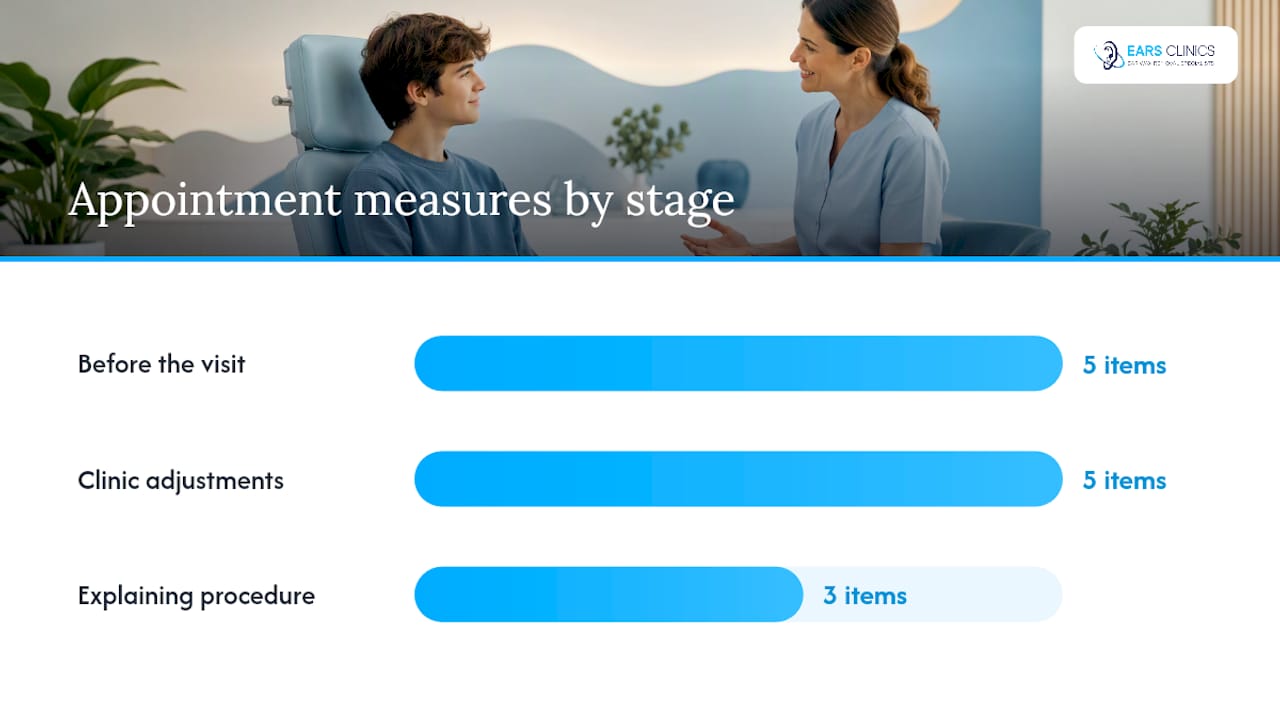
Preparation before the visit does more to reduce distress than anything a clinician can do once the child is in the chair. A short amount of groundwork at home, paired with reasonable adjustments requested from the clinic, turns a potentially frightening appointment into a manageable one.
Before the visit:
Use a visual schedule or social story showing each step of the appointment in order, ideally with photos of the actual clinic if available.
Arrange a short practice visit beforehand, even just sitting in the waiting room, if the clinic allows it.
Bring a familiar comfort object, headphones, or a favourite toy to hold during the procedure.
Plan a small reward for afterwards and mention it to the child beforehand, not as a bribe but as a predictable end point.
Write down known triggers (bright lights, unexpected touch, certain sounds) and share them with reception when booking.
Reasonable adjustments to request from the clinic:
A quiet room away from a busy waiting area, with dimmed or natural lighting where possible.
Permission for a parent or carer to hold the child throughout, rather than the clinician working alone.
A slower pace, with the clinician narrating each step before doing it.
Noise-reducing headphones if the child is sensitive to the suction device’s sound.
Built-in breaks rather than one continuous procedure.
Explaining the procedure needs to match the child’s developmental level. For a younger or non-verbal child, a simple demonstration on a toy or on the carer’s own ear can work better than words. For an older child who understands language well, a plain description of what they will feel (a gentle noise, a cool sensation, no pain) tends to reduce anxiety more than reassurance alone. In a small number of cases, where a child genuinely cannot tolerate any form of contact despite preparation, sedation or general anaesthesia under specialist ENT care may be the only realistic option, and this should be discussed with a GP or ENT rather than attempted repeatedly in a standard clinic setting.
What does a sensory-friendly clinic like EARS Clinics offer?
For families who need a regulated, adaptable option outside the standard NHS waiting list, Earhealthservice’s EARS Clinics provide sensory-aware ear wax removal delivered by NHS-accredited Aural Care Specialists. The clinics are registered with Healthcare Improvement Scotland, which means they operate under the same rigorous safety and governance standards expected of regulated NHS-aligned services, not an unregulated wellness setting.
Licensed and regulated to treat patients from age 2 upwards, which matters for families whose children need care earlier than many services will accept.
Microsuction offered as standard, alongside irrigation and manual instrumentation where a clinician judges either more appropriate for the individual case.
Same-day appointments available in many cases, removing the weeks-long wait that routine NHS referral often involves.
Home visits offered for children or adults who cannot manage a clinic environment at all, bringing the sensory-controlled setting to a familiar space instead.
Clinical letters and correspondence can be shared directly with a GP or ENT, keeping the wider care team informed.
EARS Clinics’ paediatric ear wax removal service is built around exactly this kind of tailored care, and clinicians choose the safest method for each child based on medical history and clinical presentation, never a fixed one-size-fits-all protocol. That also means EARS will not recommend unregulated DIY removal kits or ear candling as substitutes for proper assessment, regardless of what a child’s sensory preferences might make more tempting to try at home.
Pro Tip: When booking, mention any known sensory sensitivities at the point of scheduling, not on arrival. Clinics can often allocate a longer or quieter slot if they know in advance, rather than adapting on the fly.

How safe and effective is professional ear wax removal really?
The evidence base for professional removal is reassuringly consistent, though it does draw clear lines around who should not attempt certain methods at home or even in some clinical settings without extra caution.
Those figures come from a paediatric clinical study directly comparing manual removal and irrigation, and the pattern they show, that combining techniques rather than relying on one, produces the best overall outcome, is one of the more practically useful findings for parents weighing up which clinic or method to choose. Clinical guidance from the American Academy of Family Physicians reinforces that removal is warranted whenever wax causes symptoms or blocks proper examination, and that the choice between cerumenolytics, irrigation, and manual removal depends on the individual presentation rather than a fixed hierarchy.
Rare but genuine risks include tympanic membrane injury (damage to the eardrum) from manual instrumentation performed without adequate visualisation, and infection following irrigation in a canal that was not properly assessed beforehand. This is precisely why StatPearls insists a clinician must visualise the eardrum before attempting irrigation, and why NICE-aligned practice favours microsuction as a first-line option where it is available, since it carries no fluid-related infection risk and gives the clinician continuous direct vision throughout.
What actually happens during a sensory-aware appointment?
Knowing the sequence in advance removes much of the uncertainty that makes appointments harder for autistic children. Most visits follow a broadly predictable structure, even when the method used varies.
Before the procedure:
A brief medical history check, covering anticoagulant medication, prior ear surgery, and any known perforation.
Consent discussion, adapted to the child’s level of understanding, with a parent or carer present throughout.
Otoscopy, a quick look into the ear canal with a lighted instrument, to confirm wax is present and the eardrum is intact.
During the procedure: 4. The clinician selects the most appropriate method (microsuction, irrigation, or manual instrumentation) based on what the otoscopy shows. 5. The chosen method is carried out, typically taking between 15 and 30 minutes per ear depending on wax hardness and the child’s cooperation. 6. Breaks are built in as needed, particularly if a slower, staged approach has been agreed in advance.
Afterwards:
Immediate aftercare advice is given, along with any imaging or before-and-after documentation the clinic provides.
A written summary or letter can usually be sent to the child’s GP or ENT if ongoing care coordination is needed.
Bringing a familiar calming activity for immediately after, rather than only during, the appointment helps many children decompress once the unfamiliar sensations are over. Our what-to-expect guide for ear health checks covers the practical logistics of a typical visit in more depth if you want to plan timings around a school day or other routine.
Aftercare and preventing future wax build-up
Hearing improvement after successful wax removal is often immediate and, for some families, genuinely startling. A child who had adapted to muffled sound may suddenly react to noises they previously ignored, which is a good sign but can itself take some adjusting to.
In the days after treatment:
Watch for any new pain, discharge, or dizziness, and contact the clinic if these appear, since they are uncommon but warrant a quick check.
Expect some residual sound sensitivity for a day or two as the brain readjusts to clearer hearing.
Avoid inserting anything into the ear canal, even to check progress, for at least 24 to 48 hours.
Reducing recurrence without sensory harm:
Gentle weekly use of mineral or olive oil drops, only if the child tolerates the sensation well, can help prevent hard build-up between check-ups for those prone to recurrent impaction.
If the child uses a hearing aid, regular cleaning of the earmould reduces wax accumulation around the device.
Avoid any home mechanical removal attempt, however gentle it seems, between professional visits.
Rebook a follow-up or ask for an audiogram if hearing does not seem to improve within a few days of successful removal, if wax returns rapidly within a matter of weeks, or if the original hearing concern that prompted the visit persists despite a clear canal. Persistent recurrence is sometimes worth a wider ENT assessment rather than repeated removal appointments alone.
A clinician’s view on treating autistic children for ear wax
Every appointment with an autistic child starts with the same quiet calculation: what does safety require, and what does this particular child’s cooperation actually allow, and how do those two things meet in the middle without compromising either? Sometimes that means choosing irrigation over microsuction not because it is more effective, but because a child can tolerate the sensation of water far better than the sound of a suction device close to their ear. Sometimes it means accepting that today’s appointment is only for otoscopy and softening drops, with removal itself booked for a second, calmer visit.
What experienced clinicians resist is the temptation to force a single “gold standard” method onto every child regardless of how they present on the day. Microsuction may be the NICE-aligned first choice in general terms, but the right method for this child, in this appointment, is whichever one a properly trained clinician can complete safely and with the least distress, chosen after a proper look at the ear and a proper read of the room.
How to book sensory-aware ear wax removal with EARS Clinics
If your child needs professional wax removal and a standard clinic environment feels like the wrong fit, Earhealthservice’s EARS Clinics offer a regulated, sensory-aware alternative without the typical NHS wait. Every appointment is led by an NHS-accredited Aural Care Specialist who selects between microsuction, irrigation, and manual instrumentation based on your child’s specific presentation, not a default protocol.
Booking directly gives you access to same-day appointments in many cases, home visits for children who cannot manage a clinic setting at all, and clear before-and-after documentation you can share with your GP or ENT. Pricing is straightforward: £75 for under-18s in clinic, or £180 for a home visit, paid at the point of service, with many private health insurers accepting the invoice for reimbursement. There is no requirement to have tried NHS treatment first and no lengthy pre-treatment checklist to work through.
If you recognise any of the signs covered in this guide, whether that is unilateral hearing changes, a sudden drop in responsiveness, or wax that has not shifted with home softening drops, you can check availability and book a children’s ear wax removal appointment directly with EARS Clinics today.
Frequently asked questions
Does the NHS offer earwax removal for autistic children? Yes, though availability and waiting times vary by area, and most routes start with a GP assessment before any referral to audiology or ENT services.
Is it safe to use olive oil drops at home for an autistic child? Generally yes, if there is no pain, discharge, or history of ear surgery, and you follow the product’s instructions rather than continuing indefinitely without reassessment.
Which removal method is best for a child with sensory sensitivities? There is no single best method. Microsuction suits children who tolerate close instrument sound, irrigation suits those who dislike touch but tolerate water, and manual instrumentation suits children who can hold still briefly. A clinician assesses this on the day.
Can wax build-up genuinely be mistaken for autism-related behaviour? Yes. Sudden, one-sided, or newly onset changes in responsiveness are more consistent with a hearing problem than a stable autism trait, which is why an ear check is worth doing before assuming behaviour alone explains the change.
How quickly can we book with EARS Clinics? Same-day appointments are often available, and home visits can be arranged for children who cannot manage a clinic environment at all.
This article is general information, not a substitute for advice from a qualified doctor. Consult a qualified healthcare professional about your own circumstances before acting on anything here.
Sources
If you need further clinical detail beyond what your GP can provide, EARS Clinics can also produce correspondence for your child’s wider care team or arrange a referral pathway towards audiology or ENT assessment where appropriate.
Recommended