
Advanced ear techniques: safer solutions for ear wax removal

TL;DR:
Professional advanced ear techniques like microsuction, irrigation, and instrumentation are safer and more effective than home remedies.
NHS access to comprehensive ear wax removal varies; private accredited clinics offer quicker, tailored care.
Proper assessment and method selection are essential, especially for children and those with specific ear conditions.
Ear wax blockage is one of the most common ear health complaints in Scotland, yet it remains one of the most mishandled. Many people reach for cotton buds, pour in olive oil, or attempt ear candles at home, convinced they are solving the problem. In reality, these approaches frequently make things worse. Advanced ear techniques, including microsuction, irrigation, and specialised instrumentation, offer a far safer and more effective path. This article explains what those techniques involve, why professional care matters, and how accredited private services in Scotland provide something the NHS often cannot.
Key Takeaways
Point | Details |
Avoid home remedies | DIY removal can worsen the problem and lead to infections or damage. |
Advanced techniques are safer | Methods like microsuction offer precise, effective results when performed by trained professionals. |
Private clinics fill NHS gaps | Accredited private services offer faster access and expert care, especially in complex cases. |
Children need special care | Professional techniques ensure safe, gentle, and age-appropriate treatment for children. |
Understanding ear wax and common misconceptions
Ear wax, known medically as cerumen, is not a sign of poor hygiene. It is a natural substance produced by glands in the ear canal, designed to trap dust, bacteria, and debris before they can reach the eardrum. In most people, the ears are self-cleaning; the jaw movements of talking and chewing gradually move old wax towards the outer ear, where it falls away. The problems begin when this natural process breaks down, causing a wax plug to form deep in the canal.
When that happens, many people instinctively turn to home remedies. Cotton buds are the most common choice. However, professional ear wax removal is consistently recommended over DIY methods because cotton buds typically push wax further into the canal rather than drawing it out. Ear candles, another popular option, have been shown to be both ineffective and genuinely dangerous, with documented cases of burns and perforated eardrums.
The risks of incorrect self-removal are not trivial:
Cotton buds compress wax against the eardrum, potentially causing pain, infection, and temporary hearing loss
Ear candles create no meaningful suction and introduce heat and ash directly into a sensitive canal
Over-the-counter drops can soften wax, but without professional removal, softened wax can feel even more uncomfortable
Children and older adults are especially vulnerable, as their ear canals may be narrower or more easily damaged
What many people miss is that not all ear discomfort is caused by wax at all. Safe ear care at home is possible in mild cases, but an accurate diagnosis using otoscopy (examination of the ear canal with a lighted instrument) is essential to rule out infection, a perforated eardrum, or another underlying condition. As research confirms, DIY risks are high, and professional assessment is vital to avoid misdiagnosis.
“Cotton buds should never be inserted into the ear canal. They push wax deeper rather than removing it, and can cause serious harm to the delicate structures within the ear.”
What are advanced ear techniques?
With the risks and misconceptions clarified, it is worth defining exactly what “advanced ear techniques” mean in clinical and practical terms. These are procedures carried out by trained practitioners using specialist equipment, following evidence-based guidelines. They go well beyond pouring drops in the ear at home and are designed for cases where wax has become impacted, symptoms are persistent, or the ear canal has specific characteristics that require careful management.
The three principal techniques used in clinical practice are:
Technique | Method | Best suited for |
Microsuction | Gentle suction via a fine tube, viewed through a microscope or loupe | Impacted wax, perforated eardrums, hearing aid users |
Irrigation | Controlled flow of warm water to flush the canal | Soft, non-impacted wax in adults |
Instrumentation | Manual removal using fine tools such as a Jobson Horne probe | Visible wax near the outer canal |
Microsuction is widely regarded as the gold standard for safe and precise wax removal. It does not introduce water into the ear, making it suitable even when there is a known perforation or grommets are in place. It also allows the practitioner to see the ear canal clearly throughout the procedure, reducing the risk of trauma.
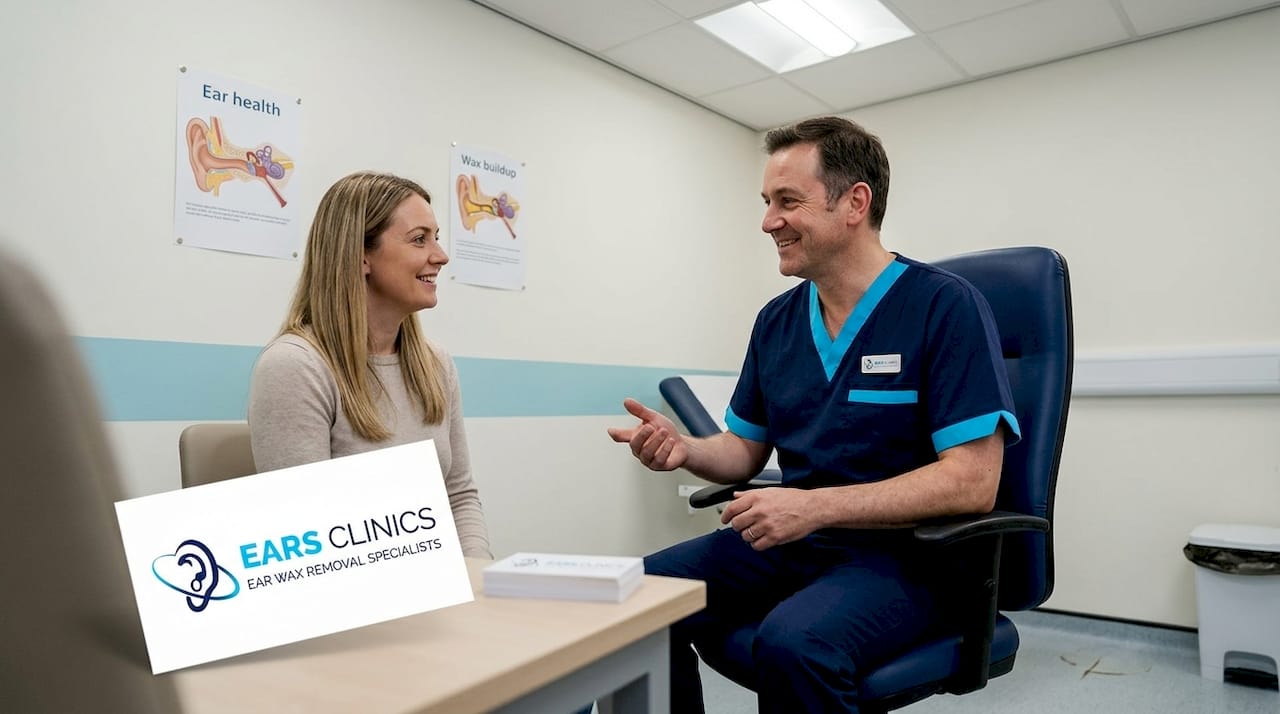
NICE and NHS guidelines advocate a stepped-care approach: softening drops are tried first, and irrigation or microsuction is only used when drops are insufficient or contraindicated. This prevents over-treatment. However, when professional intervention is genuinely needed, microsuction is the preferred method for safety and precision.
Pro Tip: If you are unsure which technique suits your situation, a good specialist will always examine the ear with an otoscope before recommending any procedure. Never accept treatment without an initial assessment.
Advanced techniques also extend to advanced cleaning for children, which requires additional training and a particularly gentle approach because of the smaller and more sensitive anatomy involved.
Why private and accredited services lead in safe ear care
Understanding what advanced techniques are sets up a key question: where should you seek these services for optimal safety, speed, and expertise? For many people in Scotland, the NHS is the first port of call. However, access to professional ear wax removal on the NHS varies considerably across health boards, and the pathway can be slow and restrictive.
NHS Scotland’s approach to ear wax management is conservative by design. Patients are typically advised to use softening drops for several weeks before being considered for irrigation or microsuction. Research shows that only 11 of 14 health boards in Scotland offer a full range of ear wax removal services, meaning that in some areas, patients may not be able to access microsuction through the NHS at all.
This gap in provision is precisely where accredited private clinics deliver measurable value. Consider the practical differences:
Factor | NHS Scotland | Private accredited clinic |
Waiting time | Weeks to months | Same day or next day |
Pre-treatment requirements | Drops required first | Assessment led, flexible |
Microsuction availability | Limited by health board | Consistently available |
Home visit option | Rarely available | Available for those who need it |
Availability for children | Varies significantly | Regulated from age 2 |
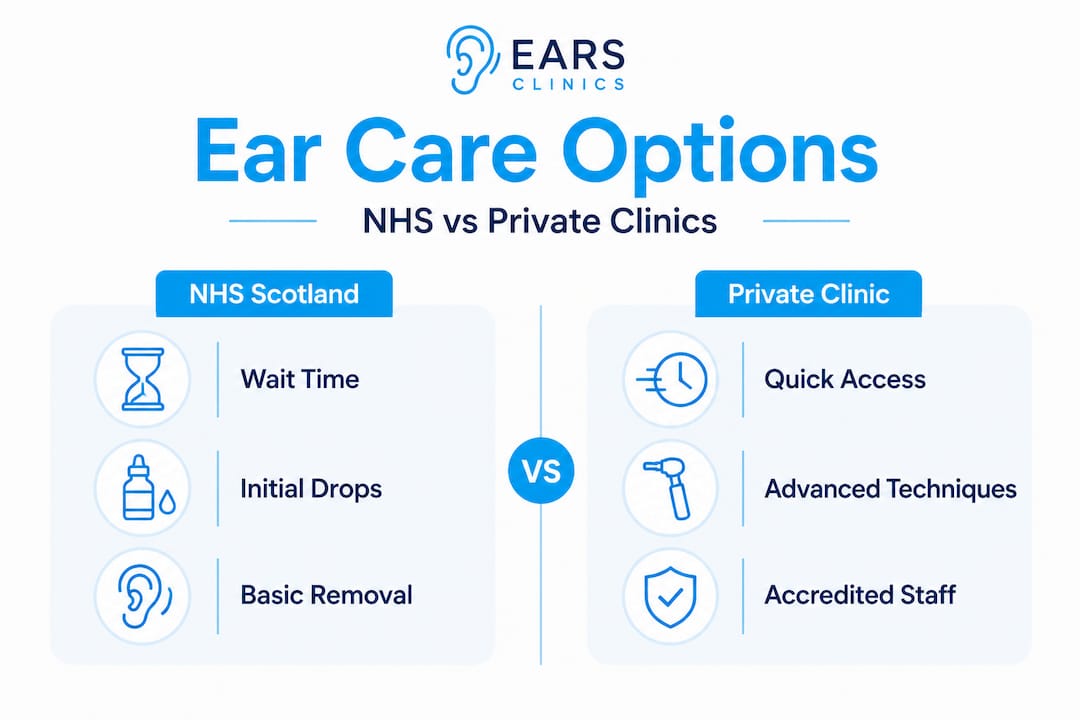
For those choosing professional cleaning through a private route, accreditation matters enormously. Not every private clinic operates under regulatory oversight. Healthcare Improvement Scotland (HIS) registration means a clinic has met rigorous standards for patient safety, clinical governance, and practitioner competence.
Scenarios where private care is particularly well suited include:
Complex or impacted wax that has not responded to drops
Previous ear surgery, perforations, or grommets that make standard irrigation unsafe
Urgent relief needed, such as before a flight, an important event, or a medical procedure
Hearing aid users whose devices frequently contribute to wax build-up
Children requiring specialist care in a calm, child-friendly environment
It is also worth noting that ear wax removal safety in a regulated private setting is not a compromise. When practitioners are NHS-accredited Aural Care Specialists, the standard of care matches or exceeds what a patient would receive in an NHS clinic, without the wait.
Advanced techniques for children and special cases
While anyone can benefit from advanced ear techniques, there are groups, particularly children and those with specific clinical needs, where the right approach is even more critical. Parents often find themselves in an anxious position: their child is clearly uncomfortable, but they are unsure whether to attempt any intervention at home or seek professional help.
The stepped-care principle still applies for children. Softening drops may be used initially, but extra caution is needed because children’s ear canals are narrower, their skin is more delicate, and the procedure requires the child to remain still. Irrigation is often unsuitable for young children because the water pressure can cause distress. This makes microsuction, in the hands of a skilled and experienced practitioner, particularly well suited for paediatric cases.
Signs that your child needs professional ear care include:
Frequently pulling or tugging at one ear
Complaining of a blocked, full, or painful ear
Sudden or gradual decrease in hearing
Repeated wax build-up, especially if a hearing aid or ear mould is worn
A visible dark plug of wax that the child cannot shift naturally
For children with microsuction vs irrigation as the key decision, the choice depends on what the otoscopic assessment reveals, not on a one-size-fits-all policy. Professional children’s ear care from trained specialists ensures that the chosen technique matches the individual child’s needs and anatomy.
Beyond children, there are other groups for whom standard approaches are insufficient. People with narrow or tortuous ear canals may find irrigation causes pain or incomplete clearance. Those with a history of eardrum perforation need a dry technique such as microsuction. Hearing aid users often produce more wax because the device restricts the natural migration process, meaning they benefit from regular professional maintenance rather than infrequent emergency treatment.
As guidelines emphasise, the stepped-care model applies broadly, but it must be adapted to the individual. For vulnerable patients, including young children, the stakes of getting it wrong are higher, and the case for seeking a regulated specialist is even stronger.
Pro Tip: If your child wears hearing aids or ear moulds, schedule regular ear checks every six to twelve months with an accredited specialist, rather than waiting for symptoms to appear. Prevention is far less distressing than treating a significant blockage.
Why most people misunderstand advanced ear care
After examining the facts, it is worth addressing a deeper issue: why do so many people still struggle to get ear care right, even when better options exist?
The core problem is that most people treat ear wax as a minor inconvenience rather than a genuine health matter. This mindset leads to a consistent pattern: discomfort appears, a cotton bud or over-the-counter product is tried, temporary relief may follow, and the underlying issue quietly worsens. By the time professional help is sought, the blockage is often more severe than it needed to be.
What this gets wrong is the assumption that any removal is better than none. In fact, choosing the wrong technique for a specific ear can cause lasting harm. Irrigation used on a perforated eardrum can introduce infection directly into the middle ear. Instrumentation used without a clear view of the canal can graze the delicate skin or push wax closer to the eardrum. As confirmed by clinical evidence, cotton buds and ear candles represent real risks, and professional otoscopic assessment is not optional but essential.
Real safety in ear care comes from matching the right technique to the right ear and the right patient. A practitioner examining the ear under magnification, identifying the type and position of wax, assessing the condition of the eardrum, and then selecting the appropriate tool or method is providing something fundamentally different from a generic product purchased off a shelf. This is the value of a microsuction procedure guide carried out by a qualified clinician: it is individualised, observed, and controlled from start to finish.
We would encourage anyone who has been managing ear discomfort at home for more than a couple of weeks, or whose symptoms include pain, dizziness, or a significant change in hearing, to seek a professional opinion without further delay. The cost of getting it wrong is simply too high.
Next steps: professional ear care you can trust
Knowing the facts about advanced ear techniques is the first step. Taking action is the next.
At EARS Clinics, we offer professional, NHS-accredited ear wax removal across Glasgow and Edinburgh, delivered by trained Aural Care Specialists who follow evidence-based clinical protocols. We are Healthcare Improvement Scotland (HIS) registered and licensed to treat patients from two years of age. Whether you need a same-day appointment for acute discomfort, a planned visit for recurring wax issues, or a home visit for a family member who cannot travel easily, we are here to help. Explore the full range of ear wax removal options available, or find out what to expect at your appointment before you book. Appointments start from £60 for adults and £75 for under-18s, with home visits available from £180. You deserve care that is safe, swift, and tailored to you.
Frequently asked questions
How safe are advanced ear techniques such as microsuction?
When performed by accredited professionals, microsuction is the gold standard for safety and precision, making it suitable even for patients with perforated eardrums or grommets in place.
Is ear wax removal with irrigation or microsuction available on the NHS everywhere in Scotland?
No. Only 11 of 14 health boards in Scotland offer a full ear wax removal service, and NHS care typically starts with drops before advancing to clinical procedures, which means waiting times can be considerable.
Are home remedies like olive oil drops or ear candles effective?
Home remedies are not recommended as a standalone solution; ear candles are ineffective and dangerous, and cotton buds typically push wax deeper into the canal rather than removing it.
What signs suggest professional ear care is needed for a child?
Persistent discomfort, ear pain, sudden hearing loss, or repeated wax build-up should all prompt a professional assessment, as otoscopy is essential to rule out infection or other underlying conditions.
Recommended