
Safe treatment for complex ear conditions in Scotland
TL;DR:
Self-treatment of earwax can cause serious harm, especially with complex ear conditions or perforations.
Microsuction under professional care is safest for high-risk cases due to direct visual assessment.
Private specialist clinics offer faster, safer, and more thorough treatment options for complex ear issues.
Many people assume that earwax is a minor inconvenience, easily managed with a cotton bud or an over-the-counter softening drop. That assumption is not just wrong; it can be genuinely harmful. For individuals with recurring wax buildup, hearing difficulties, or underlying ear health problems, self-treatment carries real risks, including eardrum damage, worsening infections, and persistent hearing loss. Contraindications such as a suspected or perforated eardrum, a history of ear surgery, or an active infection all require specialist assessment before any removal method is attempted.
Key Takeaways
Point | Details |
Specialist care is essential | Complex ear conditions require expert assessment for safe and effective treatment. |
Microsuction is safest | Microsuction is preferred for high-risk cases such as ear surgery history or eardrum concerns. |
Avoid home treatments | Self-removal or ear drops can worsen symptoms or risk infection if contraindications apply. |
Private clinics offer fast access | Specialist clinics in Scotland provide prompt appointments and tailored care for complex needs. |
Know your symptoms | Persistent problems like pain, drainage, or hearing loss warrant specialist attention. |
Understanding complex ear conditions
Not all earwax problems are created equal. A straightforward case of mild buildup in an otherwise healthy adult is very different from a situation involving chronic wax production, recurring infections, or a structurally compromised ear canal. A condition becomes “complex” when standard removal methods carry elevated risk, when symptoms persist despite previous treatment, or when underlying health factors make standard approaches inappropriate.
Understanding what qualifies as a complex case is the first step towards getting the right help. Complex ear care covers a wide spectrum, from patients with hearing aids that accelerate wax accumulation, to individuals with narrow or unusually shaped ear canals, to those recovering from ear surgery.
Common symptoms that indicate a complex or high-risk ear situation include:
Persistent or recurrent hearing loss that returns after previous treatments
A feeling of fullness or pressure deep within the ear that does not resolve
Pain, discharge, or bleeding from the ear canal
A history of perforated eardrum (tympanic membrane perforation)
Recurrent ear infections (otitis externa or otitis media)
Dizziness or tinnitus linked to wax accumulation
Ear conditions associated with hearing aids, mastoid surgery, or cholesteatoma
Each of these symptoms points to a situation where self-treatment is not only inappropriate but potentially dangerous. Earwax drops should not be used with a suspected perforated tympanic membrane; if symptoms persist, referral to ENT (ear, nose, and throat) specialists is warranted. This is not cautious over-stating. Introducing any liquid into a perforated ear can cause infection to spread into the middle ear, with serious consequences for hearing.
“Earwax is a normal and healthy part of the ear’s self-cleaning mechanism, but when that mechanism is disrupted by anatomy, age, or health conditions, professional intervention becomes essential rather than optional.”
Pro Tip: If you wear hearing aids regularly and notice your hearing has become muffled despite your devices working correctly, earwax buildup is often the cause. This is a common but frequently overlooked issue that benefits from regular specialist review, not home removal attempts.
A further pitfall with self-treatment is that people tend to push wax deeper into the canal rather than removing it, particularly when using cotton buds. This compacts the cerumen (the medical term for earwax) against the eardrum, making subsequent professional removal more difficult and increasing the risk of trauma. Our safe wax removal guide outlines the specific scenarios where self-care is simply not appropriate and why specialist involvement makes all the difference.
Safe management options for complex ear conditions
Once a condition is identified as complex, the choice of treatment method matters enormously. The three principal professional methods are microsuction, irrigation (also known as ear syringing or water irrigation), and manual instrumentation. Each carries different risk profiles, and not all are appropriate for every patient.
Method | How it works | Best suited for | Not recommended when |
Microsuction | Gentle suction removes wax under direct vision | Complex cases, surgery history, perforations | Severe ear canal stenosis in rare instances |
Irrigation | Warm water flushes wax from the canal | Mild to moderate cases in healthy ears | Perforated eardrum, surgery history, active infection |
Instrumentation | Manual tools used under direct vision | Hard, dry wax close to canal entrance | Uncooperative patients, very narrow canals |
Ear drops alone | Softens wax for natural expulsion | Very mild, superficial wax only | Suspected perforation, drainage, or infection |
Microsuction is preferred over irrigation for individuals with a history of ear surgery, infection, or suspected eardrum perforation. The reason is straightforward: microsuction is performed under direct vision using a microscope or loupe magnification, meaning the practitioner can see exactly what they are doing at all times. Irrigation, by contrast, introduces water into a space the clinician cannot directly observe during the process, which introduces uncertainty in complex cases.
Reading through our microsuction procedure guide gives a thorough picture of what the process involves and why it is the gold standard for higher-risk presentations. For those weighing up their options, our comparison of microsuction vs irrigation breaks down the suitability of each method clearly, including for younger patients.
Key safety considerations for complex ear conditions:
Never attempt irrigation at home if you have any history of ear surgery or perforation
Over-the-counter ear candles have no clinical evidence of efficacy and carry a burn risk
Softening drops that are left in an infected ear can worsen inflammation
Mayo Clinic warns against self-removal of earwax, particularly for those with eardrum issues, ear pain, or drainage
A clinically important statistic: irrigation performed on an ear with an undetected perforation can push bacteria into the middle ear space, risking acute otitis media or even more serious complications. That risk is eliminated when microsuction is used under direct vision with appropriate pre-assessment. Our full resource on ear wax removal safety tips covers this in greater depth, providing clear guidance on which symptoms should prompt immediate professional contact.
How clinicians decide the best approach
Understanding that specialist care is needed is one thing. Understanding what actually happens during a clinical assessment reassures patients and builds confidence in the process. At EARS Clinics, every patient undergoes a structured assessment before any intervention takes place.
Practitioners rely on patient history, ear examination, and contraindications before selecting a removal method. That assessment process is not a formality. It directly shapes which technique is used, at what pace, and with what level of follow-up.
The clinical decision-making process typically follows these steps:
Full patient history: The clinician asks about previous ear surgeries, recurring infections, tinnitus, dizziness, current medications, and hearing aid use. This information immediately flags contraindications.
Visual examination: An otoscope or video otoscope is used to examine the ear canal and eardrum. This reveals the extent and nature of the wax, as well as any signs of perforation, inflammation, or infection.
Symptom mapping: The clinician correlates what the patient reports with what is visible. Hearing loss combined with a totally occluded (blocked) canal, for example, points clearly to wax as the cause.
Method selection: Based on the above, the most appropriate and safest removal method is chosen. In complex cases, this is nearly always microsuction.
Treatment and review: The procedure is completed with ongoing observation, and the clinician advises on aftercare, prevention, and whether a follow-up appointment is advisable.
Condition or history | Preferred method | Contraindicated method |
Perforated eardrum | Microsuction or instrumentation | Irrigation, ear drops |
Ear surgery history | Microsuction | Irrigation |
Active ear infection | Defer until resolved; refer if needed | All removal methods |
Hearing aid user with impaction | Microsuction | Home drops or cotton buds |
Healthy adult, mild wax | Irrigation or microsuction | None (both appropriate) |
Child under 18 | Specialist microsuction or instrumentation | Irrigation at home |
Pro Tip: If you are attending a private appointment for the first time, bring a list of any ear-related surgeries, medications you take regularly, and any previous diagnoses related to your ears or hearing. This speeds up the assessment significantly and ensures the clinician has everything they need to make the right call.
Our detailed procedure workflow explains each stage in plain language, and our patient safety protocols outline the regulated standards we adhere to as a Healthcare Improvement Scotland (HIS) registered clinic.
What to expect from private specialist care in Scotland
For many patients in Scotland, the NHS pathway for ear care involves long waits, pre-treatment requirements such as extended use of ear drops before being seen, and limited appointment availability. Private specialist care addresses these pain points directly, providing faster, more flexible, and more thorough management for those with complex needs.

ENT referral is recommended when symptoms persist or removal attempts fail. For patients who have already been through NHS processes without resolution, private care offers a meaningful alternative that does not require months of waiting.
What private specialist care at EARS Clinics offers:
Same-day and next-day appointments in Glasgow and Edinburgh
No prerequisite to soften wax for weeks before being seen
Consultation and treatment in a single appointment where appropriate
Advanced video otoscopy so patients can see the condition of their own ear canal
Microsuction and instrumentation performed by NHS-accredited Aural Care Specialists
Home visit appointments available at £180 for patients with mobility challenges
Treatment for patients from 2 years of age, under HIS-regulated conditions
Transparent pricing: £60 for adults over 18, £75 for patients under 18
“What patients often tell us is that they had been struggling with muffled hearing or recurring discomfort for months before seeking private care. Within a single appointment, they can leave with their hearing restored and a clear plan for ongoing ear health.”
For anyone considering their options, our guide to choosing an ear clinic offers practical criteria for assessing whether a provider meets the standards you should expect. Our step-by-step ear wax removal guide also outlines exactly what happens from booking through to aftercare, and our resource on safe microsuction answers the most common patient questions about the procedure itself.
Long-term outcomes for patients with complex ear conditions improve significantly when care is consistent and appropriately matched to their specific situation. Patients who attend regular specialist reviews, particularly those who wear hearing aids or have a documented history of wax impaction, experience fewer acute episodes and report better overall hearing quality over time.
Why specialist treatment is the best solution for complex ear conditions
Here is the uncomfortable truth that most general health resources avoid stating plainly: the majority of people who attempt to manage complex ear conditions at home are not being sensible. They are taking a risk that they do not fully understand, often because they have underestimated how serious the consequences of getting it wrong can be.
We see this regularly in clinic. Patients arrive having used cotton buds for years, convinced they were keeping their ears clean, when in fact they had been pushing wax progressively deeper and compressing it against the eardrum. Others have used ear drops despite experiencing ear pain and drainage, not realising that these are warning signs, not symptoms to soften through. The damage caused by well-intentioned but inappropriate self-management is one of the most common complications we encounter.
The conventional wisdom says: “Try softening drops first, and only see a professional if that does not work.” For uncomplicated cases in adults with no risk factors, that is reasonable guidance. But for anyone with a complex history, the calculus is entirely different. Softening drops do nothing for deeply impacted wax. They can worsen infection. They can introduce fluid into a compromised ear canal. The risks are not theoretical.
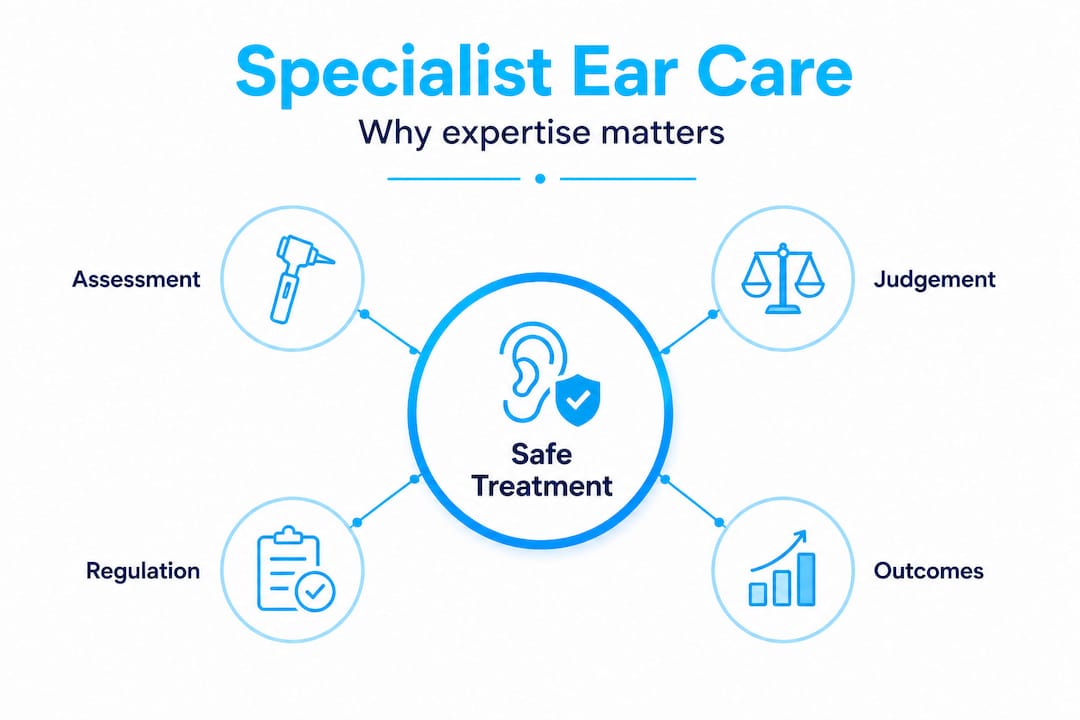
What specialist treatment provides is not just the technical skill to remove wax safely. It is the clinical judgement to know when to remove it, how to remove it, and when to refer onwards rather than proceed. The microscope and suction device are tools. The assessment, the experience, and the regulated standards behind the practitioner are what genuinely protect the patient.
We believe strongly that more people in Scotland should know that regulated, accessible, private specialist care exists and that it is not as costly or complicated to access as many assume. Our thorough approach to ear wax removal safety reflects a commitment not just to clearing wax, but to protecting every patient’s long-term hearing health.
Connect with a specialist for your complex ear condition
If you have been managing a recurring ear issue on your own, or if you have been waiting for an NHS appointment that feels a long way off, EARS Clinics offers an immediate, regulated alternative. Our NHS-accredited Aural Care Specialists are trained in all approved ear wax removal procedures, with clinics in Glasgow and Edinburgh and home visits available across Scotland.
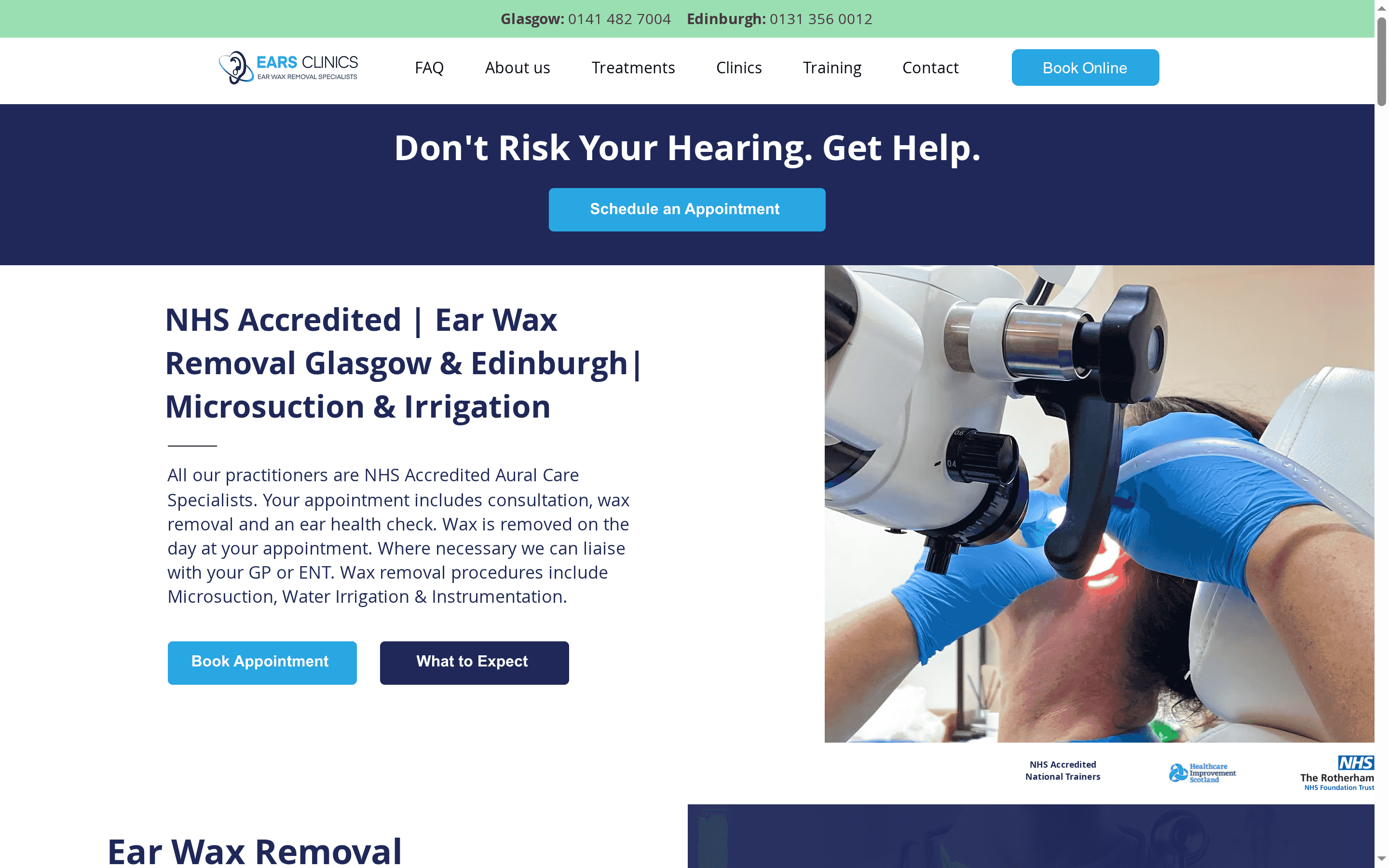
Whether you need a single treatment or ongoing specialist support for a complex condition, getting started is straightforward. We offer same-day and next-day appointments, transparent pricing, and a clinical environment that meets Healthcare Improvement Scotland standards. For those working in primary care who want to expand their skills, our microsuction half-day update course and full microsuction training programme are also available. Take the next step towards clearer hearing and better ear health today by booking online or calling the clinic directly.
Frequently asked questions
When should I seek specialist help for earwax problems?
If you experience pain, drainage, hearing loss, or have a history of ear surgery, you should consult a specialist rather than attempt home removal. Contraindications such as a suspected perforated eardrum or a history of ear surgery make specialist referral essential before any treatment is attempted.
Is microsuction safer than irrigation for complex cases?
Yes, microsuction is generally considered safer and is preferred for complex or high-risk presentations where irrigation may be contraindicated. Microsuction is preferred over irrigation in cases involving a history of ear surgery, infection, or suspected perforation precisely because it is performed under direct visual control.
Can I use ear drops if I have a history of ear infections?
No, ear drops should not be used if you have a history of ear infections or a suspected perforation, as this can introduce fluid into a compromised canal and worsen the condition. Earwax drops should not be used with a suspected perforated tympanic membrane, and specialist assessment is always necessary in these cases.
How quickly can I access treatment at a private clinic?
Private clinics typically offer significantly quicker access than NHS routes, with EARS Clinics providing same-day and next-day appointments in Glasgow and Edinburgh for both adults and children.
Recommended