
Know when to seek professional ear care for safe relief
- Apr 30
- 9 min read

TL;DR:
Self-treatment for ear discomfort carries risks and may worsen conditions or cause injury.
Prompt professional help is essential for persistent pain, hearing loss, bleeding, or signs of infection.
Microsuction is the recommended, safest method for professional ear wax removal in Scotland.
Ear discomfort is easy to dismiss. Many adults reach for a cotton bud, try an over-the-counter drop, or simply wait and hope the problem resolves on its own. Parents often face the same dilemma when their child complains of a blocked or painful ear. The truth is that delay and self-treatment carry real risks, and knowing when to step back and seek professional help can make a significant difference to your long-term hearing health. This guide is designed to help you recognise the signs that matter, understand your options, and feel confident about seeking expert care in Scotland.
Key Takeaways
Point | Details |
Recognise red flag symptoms | Severe pain, hearing loss, or discharge means see a professional promptly. |
Avoid DIY removal | Home remedies often cause harm—leave ear care to specialists for safety. |
Choose the right clinic | NHS-accredited providers offer safe, effective wax removal and expert advice. |
Understand procedure choices | Microsuction is usually the quickest, safest method for most patients. |
Common causes of ear discomfort and risks of self-treatment
Ear discomfort is one of the most common health complaints for both adults and children, yet it remains widely misunderstood. Understanding what lies behind that blocked, painful, or muffled sensation is the first step towards making a safe and informed decision about treatment.
The most frequent cause is earwax build-up, medically known as cerumen impaction. Earwax is completely natural and serves a protective purpose, but when it accumulates excessively it can press against the eardrum, reducing hearing and causing a feeling of fullness in the ear canal. Beyond wax, other common causes include outer ear infections (otitis externa), middle ear infections (otitis media), fluid behind the eardrum, allergic reactions, or in children, small objects that have been accidentally inserted into the ear canal. Each of these conditions requires a different approach, which is precisely why accurate diagnosis matters so much.
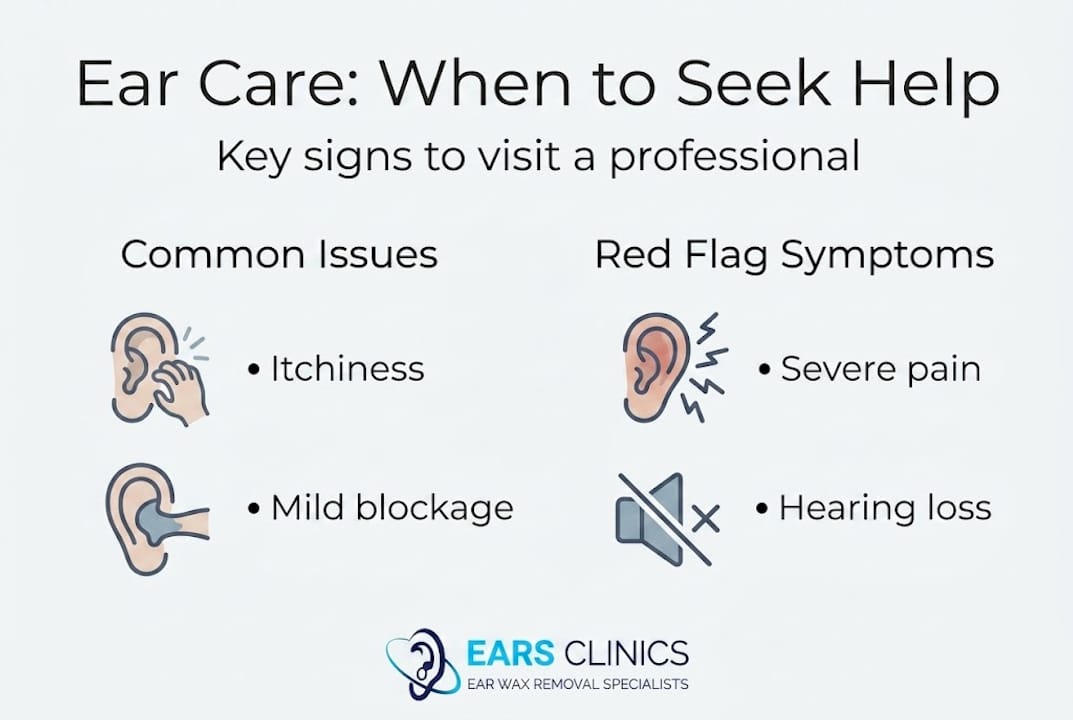
Symptoms that should never be ignored include:
Persistent or worsening pain in or around the ear
A sudden or gradual reduction in hearing in one or both ears
A ringing, buzzing, or hissing sound (known as tinnitus)
Discharge or fluid coming from the ear canal
Itching deep inside the ear that does not settle
A feeling of pressure or fullness that does not clear
Dizziness or balance problems associated with ear symptoms
The temptation to self-treat is understandable. Cotton buds are perhaps the most common DIY tool, yet they are one of the most dangerous. Rather than removing wax, they tend to compact it further into the narrower part of the ear canal, making professional removal harder and more uncomfortable. The risks of DIY removal are well documented, and DIY ear wax removal can cause injury or significantly worsen a blockage. Ear candling, a popular alternative remedy, has no credible clinical evidence supporting its effectiveness and carries a genuine risk of burns.
Even liquid softening drops, while safer than physical tools, can sometimes aggravate an existing infection or cause discomfort if the eardrum is perforated. Reviewing ear wax removal safety information before attempting any home treatment is strongly advised.
“The ear canal is delicate and self-cleaning. Interfering with that process using unvalidated methods can turn a minor inconvenience into a painful and persistent problem. When in doubt, seek a professional opinion before attempting any form of home treatment.”
Pro Tip: If your symptoms have persisted for more than one week, or if you have previously had ear surgery, a perforated eardrum, or a grommets (small ventilation tubes inserted into the eardrum), do not attempt any home treatment. These are situations that always require professional assessment first.
With the risks and difficulties of self-treatment in mind, it is essential to recognise the signs that call for expert help.
Warning signs: When to seek professional ear care
Not every twinge or moment of muffled hearing requires an urgent appointment, but certain symptoms are clear signals that professional assessment is necessary. Acting promptly on these warning signs protects your hearing and prevents complications that could prove difficult and costly to resolve.
The following situations warrant professional attention:
Persistent ear pain lasting more than two to three days. Pain that does not settle on its own, or that worsens over time, is never something to push through. It may indicate infection, inflammation, or structural damage inside the ear.
Sudden or significant hearing loss. A rapid drop in hearing, even in one ear, is a medical concern. Sudden sensorineural hearing loss (SSHL) is a recognised emergency that requires prompt assessment, as outcomes improve significantly with early treatment.
Bleeding from the ear canal. Any bleeding should be considered a red flag and assessed by a professional without delay. It may suggest injury, infection, or a perforated eardrum.
Discharge from the ear. Fluid or pus draining from the ear, particularly if it has an unpleasant odour, usually indicates infection and requires appropriate treatment.
Dizziness or balance problems. The inner ear plays a central role in balance, and symptoms of vertigo or unsteadiness alongside ear discomfort should always be investigated professionally.
A foreign object in the ear. This is particularly common in young children. Attempting to remove it at home can push the object further in or cause damage to the canal or eardrum.
Failed home remedies. If you have tried softening drops for five to seven days and symptoms persist or worsen, it is time to book a professional appointment.
Recurrent ear infections. If ear infections are happening more than two or three times in a year, a specialist assessment can identify underlying causes and suggest preventative strategies.
Children under 12 with ear discomfort should always be assessed by a professional, even when symptoms appear mild. Children are less able to communicate the nature and severity of their symptoms, and their ear canals are narrower and more sensitive than those of adults.
Delayed treatment can lead to infection or more serious hearing issues, particularly in young children whose language and learning development depends on clear hearing. The step-by-step ear wax removal process carried out by a trained specialist is far more thorough and far safer than anything achievable at home.

Pro Tip: Keep a brief note of your symptoms before your appointment, including when they started, whether they are getting better or worse, and any treatments you have already tried. This helps your specialist reach an accurate assessment more quickly.
Recognising these warning signs is vital, but understanding your options for safe and effective wax removal will help you make the best choice for your situation.
Comparing professional ear care options in Scotland
If you have decided to seek professional help, the next question is which treatment method is most appropriate. NHS-accredited clinics in Scotland typically offer three main methods of ear wax removal, each with its own advantages and specific suitability. Understanding these options helps you have a more informed conversation with your specialist.
According to ear wax removal procedures guidance, microsuction is recommended for safe, precise wax removal by professionals, and it is widely regarded as the gold standard technique.
Method | How it works | Best suited for | Considerations |
Microsuction | A fine suction device removes wax under direct visualisation using a microscope or loupe | Most patients including children, those with perforations, or complex ear history | Fast, dry, and precise; considered the safest option |
Irrigation | A controlled flow of warm water flushes wax from the canal | Soft, well-prepared wax in adults with healthy eardrums | Not suitable for perforated eardrums or recent surgery |
Instrumentation | Fine instruments such as a Jobson Horne probe are used to manually remove wax | Wax that is positioned close to the outer ear canal | Requires significant skill; used alongside other methods |
Key points to understand about each method:
Microsuction does not require you to soften wax beforehand, making it ideal for same-day or urgent appointments.
Irrigation works best when wax has been softened with drops for several days beforehand. It is not appropriate if you have an active ear infection or a known perforation.
Instrumentation is rarely used as a standalone technique but is a valuable tool in the hands of a trained Aural Care Specialist when wax is accessible and removal is straightforward.
“The right method is never a one-size-fits-all decision. A trained specialist will examine your ears and recommend the approach that balances safety, comfort, and effectiveness for your specific situation.”
Understanding your options enables you to make the best decision. Next, let us look at what to expect during a professional ear care appointment so you feel prepared and confident.
What to expect during a professional ear care appointment
One of the most common reasons people delay seeking help is uncertainty about what an appointment actually involves. The process is far more straightforward and comfortable than many expect, and knowing what to anticipate can help ease any anxiety.
A typical professional ear care appointment follows these steps:
Initial consultation and symptom review. Your specialist will begin by asking about your symptoms, their duration, any relevant medical history, previous ear conditions or surgery, and any treatments you have already tried. Being honest and thorough here leads to a better outcome.
Otoscopic examination. Using a lighted instrument called an otoscope, the specialist examines the ear canal and eardrum in detail. This step is essential for identifying the type and location of any wax build-up, as well as ruling out infection or structural concerns.
Discussion of treatment options. Before any procedure begins, your specialist will explain which method is most appropriate, what the procedure involves, and what to expect in terms of sensation and outcome. You will always have the opportunity to ask questions.
The procedure itself. Whether microsuction, irrigation, or instrumentation is used, the procedure is typically completed within 15 to 30 minutes. Most patients describe microsuction as producing a mild suction sensation. Irrigation feels like a gentle warm flush. Discomfort is minimal in most cases.
Post-procedure review. After wax removal, the specialist examines the ear again to confirm the canal is clear and assess the health of the eardrum. They will also provide aftercare advice, including guidance on preventing future build-up.
Professional assessment reduces risks and improves outcomes across all ear conditions, not only for wax removal but for the identification of underlying problems that might otherwise go unnoticed.
What to bring or prepare for your appointment:
Preparation item | Why it matters |
List of current medications | Some medicines affect wax production or ear sensitivity |
Details of symptom onset | Helps narrow down the cause and best treatment |
Previous ear history | Informs which methods are safe for you |
Details of any home treatment tried | Prevents duplication and guides specialist approach |
Pro Tip: If you can apply olive oil or sodium bicarbonate drops to both ears for two to three days before your appointment, this can soften the wax and make removal quicker and more comfortable. However, do not use drops if you suspect a perforated eardrum or an active infection.
You have now seen how expert care works and why it is the best response to ear discomfort. Let us address a few critical misconceptions and share practical guidance based on real experience.
The truth about professional ear care: An insider’s view
There is a persistent belief that professional ear care is only necessary in extreme situations, such as a complete blockage or a severe infection. In our experience at EARS Clinics, this view leads to avoidable suffering and, in some cases, lasting harm.
The majority of patients we see who require complex or extended procedures are those who attempted home treatment first. What might have been a straightforward 20-minute microsuction appointment becomes significantly more involved when compacted wax has been pushed deeper by a cotton bud or hardened by ineffective drops.
Early intervention is not over-reaction. It is the most practical and protective choice. Reviewing ear wax removal safety insights reinforces what we see every day in clinic: the ears are resilient, but they are also sensitive to interference. Listening to what your body is telling you, and acting on it promptly, is not just good advice. It is genuinely the difference between a quick, comfortable appointment and a prolonged period of discomfort or hearing difficulty. Your hearing is too important to gamble with.
Your next step: Safe, expert ear care in Scotland
If you or your child is experiencing any of the symptoms described in this article, there is no reason to wait or to risk further discomfort with home remedies.

At EARS Clinics, we are Healthcare Improvement Scotland (HIS) registered and licensed to treat patients from two years of age. We offer appointments in Glasgow and Edinburgh, with costs starting at £60 for adults and £75 for under-18s, with home visits available at £180 for those who need them. You can compare ear wax removal procedures in detail before you book, or if you need urgent attention, our same-day appointments mean you do not have to wait. Safe, effective, and expert ear care is closer than you think.
Frequently asked questions
Can I remove ear wax at home safely?
Most home methods, particularly cotton buds, risk injury or worsening the blockage, and DIY ear wax removal can cause injury or make blockage worse; professional techniques are recommended for both safety and effectiveness.
What are the signs of an ear infection requiring professional help?
Symptoms such as severe pain, hearing loss, discharge, or fever should be assessed by a specialist promptly, as delayed treatment can lead to infection or more serious hearing issues if left unaddressed.
How quickly can I get an appointment for urgent ear wax removal in Scotland?
Many clinics, including EARS Clinics in Glasgow and Edinburgh, offer same-day appointments for urgent wax removal needs, so you can access professional care without a long wait.
Is microsuction suitable for children?
Microsuction is recommended as safe and precise for most children, though a professional assessment is always carried out first to confirm the most appropriate method for your child’s specific needs.
Recommended