
Children's ear care: a parent's guide to safe ear health

TL;DR:
Children’s ear anatomy differs significantly from adults, increasing infection and wax buildup risks.
Microsuction is the safest and most effective method for ear wax removal in children aged two and above.
Preventative measures like vaccinations, breastfeeding, and avoiding smoke reduce ear infections in children.
Children’s ears are not simply smaller versions of adult ears. Their internal anatomy works quite differently, and that distinction matters enormously when it comes to ear wax removal and infection prevention. Because children’s Eustachian tubes are shorter and flatter than those of adults, young children are far more vulnerable to wax build-up and ear infections. Standard advice aimed at adults can be not just unhelpful but genuinely risky when applied to a child. This guide is designed for parents in Scotland who want clear, evidence-backed answers on safe ear wax removal, everyday prevention, and when to seek specialist support.
Key Takeaways
Point | Details |
Children’s ear anatomy | Children’s ear canals and tubes make them more prone to wax and infections than adults. |
Safe removal methods | Microsuction is the safest choice for children, while irrigation is best avoided due to risks. |
Preventative care | Routine ear checks, vaccinations, and avoiding smoke help reduce infection and wax buildup. |
Specialist support | Seek paediatric-accredited clinics if your child has complex ear issues, grommets, or uncooperative behaviour. |
How children’s ear anatomy shapes care
Understanding why children need different ear care starts with their anatomy. A child’s ear canal is narrower and shorter than an adult’s, and the Eustachian tube (the channel that connects the middle ear to the back of the throat) sits at a much flatter angle. In adults, this tube slopes downward, helping fluid drain naturally. In young children, it runs nearly horizontal, making drainage far less efficient.
This anatomical reality has real consequences. Fluid and wax can accumulate more easily, pressure equalisation is harder, and bacteria have an easier path to the middle ear. The result is that children are disproportionately affected by ear infections and wax blockages compared to adults.
The most common condition linked to this anatomy is otitis media, a middle ear infection. The statistical picture is striking. Up to 80% of children under the age of three will experience at least one episode of otitis media. Most cases resolve without intervention, but recurrent infections can affect hearing and speech development if left unmanaged.
Several conditions complicate ear wax removal and make professional assessment essential before any treatment is attempted:
Perforated eardrum: Any hole or tear in the eardrum rules out irrigation entirely.
Grommets: These small ventilation tubes, placed surgically to drain fluid, require specialist-only care.
Otitis externa: Active infection of the outer ear canal must be treated before any removal attempt.
Narrow or unusually shaped canals: More common in young children, these require instruments sized appropriately for paediatric ears.
Advice written for adults, including many online guides and even some general GP leaflets, does not account for these conditions. Following such guidance without professional assessment first is where things can go wrong. To understand what safe ear care for children actually looks like in practice, it helps to look closely at the methods available and their suitability for different ages.
The key takeaway here is that children’s ear health is a specialist area, not a subset of adult ear care. Paediatric-appropriate techniques, correctly sized equipment, and a trained eye make a genuine difference to outcomes.
Safe ear wax removal for children: methods and evidence
Not all ear wax removal methods are equally safe for children, and the differences matter. The three main clinical approaches are microsuction, irrigation, and instrumentation. Each has a distinct profile of safety and suitability when it comes to younger patients.
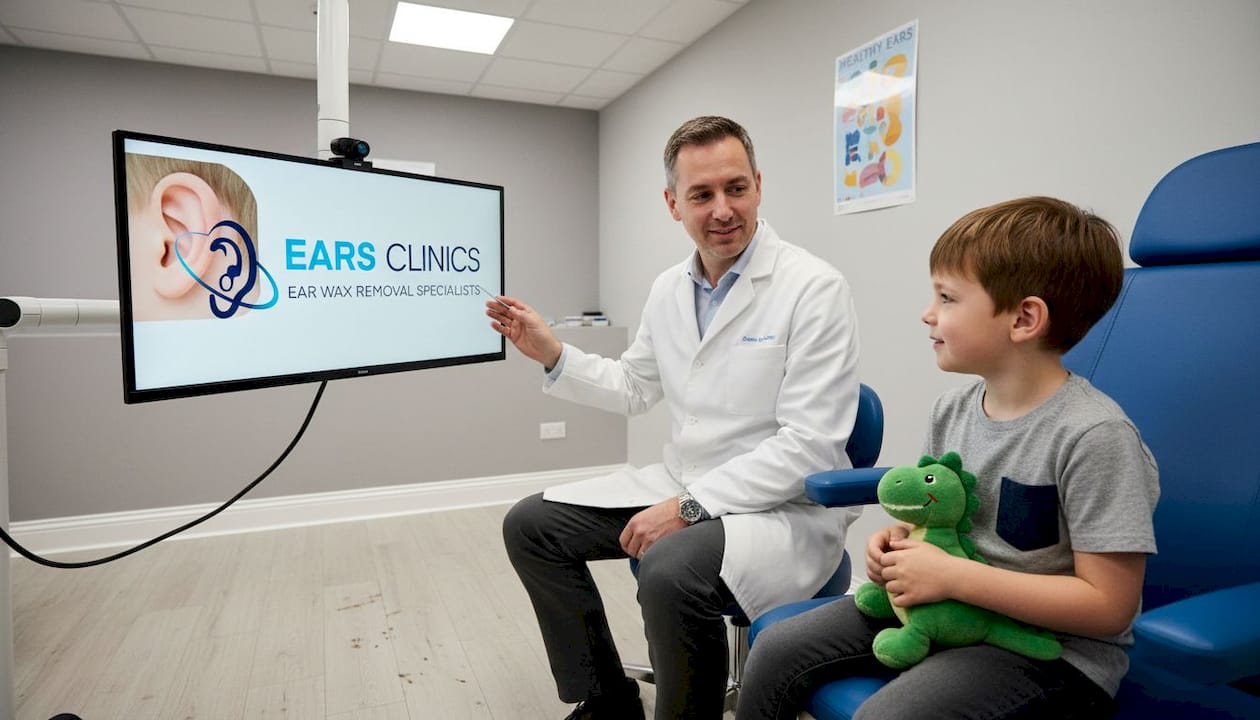
Microsuction is widely regarded as the preferred method for children aged two and above. It uses a fine, low-pressure suction device under direct visualisation, meaning the clinician can see exactly what they are doing at all times. Because no water is introduced into the canal, there is no risk of moisture-related complications or pressure changes that could distress a child or damage delicate structures. Microsuction for children is the method of choice due to its precision and the absence of water involvement.
Irrigation involves flushing the canal with warm water. While effective in adults, it carries a higher risk of complications in children, particularly if there is any undetected perforation or active infection. NHS Lothian ear wax removal guidelines are clear that irrigation should be avoided in children with grommets, perforated eardrums, or a history of ear surgery.
Method | Suitable for children? | Water involved? | Requires visualisation? |
Microsuction | Yes (aged 2+) | No | Yes |
Irrigation | Limited | Yes | Partial |
Instrumentation | Yes, with care | No | Yes |
Before any professional removal, NHS Scotland guidelines recommend self-management with softening drops for several days. Olive oil is the first-line recommendation. Sodium bicarbonate drops are an alternative. Both help soften hardened wax, making removal easier and more comfortable.
A safe, step-by-step approach for parents seeking wax removal for their child:
Use warm olive oil drops twice daily for five to seven days to soften the wax.
Book a professional assessment at an accredited clinic before any removal is attempted.
Ensure the clinician is trained in paediatric ear care and uses appropriately sized instruments.
Choose microsuction over irrigation where possible, particularly for younger or more anxious children.
Follow any post-treatment advice given by the clinician, including hygiene and follow-up timing.
Pro Tip: Never attempt to remove ear wax from a child’s ear at home using cotton buds, ear candles, or any implement inserted into the canal. These approaches push wax deeper and risk injury to structures that are especially fragile in young ears.
For parents in Scotland, seeking NHS-accredited children’s ear wax removal at a specialist clinic is the most reliable path to safe, effective treatment.
Preventative ear care and everyday tips for parents
Prevention is genuinely the most powerful tool available to parents. Several well-evidenced strategies reduce the risk of ear infections and wax-related problems in young children, and many of them cost nothing at all.
Key preventative measures recommended by NHS guidance include:
Vaccinations: The pneumococcal and flu vaccines reduce the bacterial and viral triggers most commonly linked to otitis media.
Breastfeeding: Breastfed infants have notably lower rates of ear infection, likely due to both immune factors in breast milk and the feeding position.
Upright feeding: Whether breast or bottle, feeding babies in an upright position reduces the chance of milk entering the Eustachian tube.
Avoiding second-hand smoke: Exposure to cigarette smoke is one of the most well-established risk factors for recurrent ear infections in children.
Dummy (soother) use after 12 months: Continuing dummy use beyond one year has been associated with increased infection risk. Gradual weaning is recommended.
Preventative measure | Evidence level | Age most relevant |
Vaccinations | Strong | 2 months onwards |
Breastfeeding | Strong | Infancy |
Upright feeding | Moderate | 0 to 12 months |
Avoiding smoke exposure | Strong | All ages |
Limiting dummy use | Moderate | Over 12 months |
Routine checks also matter. If you notice your child frequently tugging at their ears, seeming less responsive to sound, or becoming irritable without obvious cause, these can be early signs of wax build-up or infection. Catching problems early prevents them from becoming more complex.
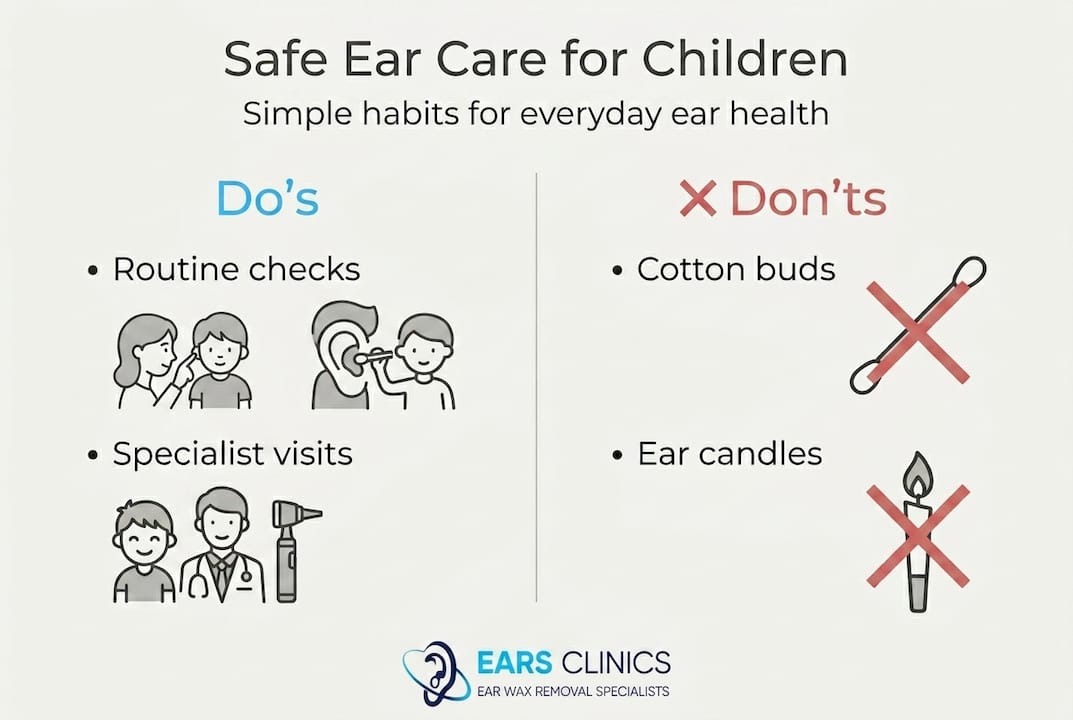
Pro Tip: Keep a simple log of your child’s ear-related symptoms, including dates, duration, and any associated hearing changes. This information is genuinely useful to clinicians during assessment and can help identify patterns, particularly in children prone to recurrent infections.
For further reading, ear wax removal best practices and essential ear health care tips offer practical guidance tailored to Scottish families.
Specialist assessment and handling edge cases
Some children need more than routine ear care. Knowing when to escalate to a specialist is one of the most important things a parent can learn, and it is not always obvious from symptoms alone.
A specialist assessment is warranted in any of the following situations:
Suspected or confirmed perforation: A hole in the eardrum changes everything about how removal should proceed.
Grommets in place: These tubes require clinic-specific protocols and must never be exposed to irrigation.
Recurrent or persistent infections: Three or more infections in six months, or four or more in a year, merit specialist review.
Significant hearing loss: If a child appears to be struggling to hear even after wax concerns are addressed, audiological assessment may be needed.
Failure of drops to resolve blockage: If softening drops have been used correctly for a week without improvement, professional intervention is the next step.
“Up to 80% of children under three experience otitis media at least once. Most cases resolve within a few days, but children with recurrent episodes, structural issues, or associated hearing loss need prompt specialist input.”
Handling an uncooperative child during ear treatment is one of the most practical challenges clinics face. At accredited Scottish clinics, trained Aural Care Specialists use age-appropriate communication, gentle positioning with parental support, and appropriately scaled instruments to make the experience as calm as possible. In rare cases where a child cannot tolerate assessment, a discussion about sedation options with the child’s GP or paediatrician may be appropriate, though this is not a first-line approach.
The microsuction procedure workflow at specialist clinics is adapted for children, with shorter appointment durations, parental presence throughout, and clear explanations given at every stage. For parents wanting a detailed overview, the microsuction procedure guide explains what to expect before, during, and after treatment. Following NHS guidelines for children ensures that care remains within evidence-based boundaries at every step.
Why conventional ear care advice doesn’t work for children
Here is something that doesn’t get said often enough: a great deal of the ear care information circulating online, and even in some clinical settings, was written with adults in mind. It has been loosely adapted for children without the anatomical and clinical nuance that paediatric ear care genuinely requires.
The instinct to reach for cotton buds, ear candles, or over-the-counter irrigation kits is understandable. Parents want to help quickly. But these approaches carry real risks in young ears, where canal dimensions, eardrum fragility, and the likelihood of underlying conditions all shift the risk calculation significantly.
What genuinely works is precise visualisation, correctly scaled instruments, and a clinician who understands that a child’s ear is not a smaller adult ear. That is why safe techniques matter so much in paediatric settings. Misconceptions persist even among some general practitioners, which is why specialist paediatric ear care, delivered by Healthcare Improvement Scotland (HIS) registered clinics, represents the most reliable standard of care available to Scottish families today.
Find expert ear care for your child
If you are concerned about your child’s hearing, ear wax build-up, or recurring infections, expert help is closer than you might think.
EARS Clinics offers dedicated children’s ear wax removal across Glasgow and Edinburgh, carried out by NHS-accredited Aural Care Specialists. We are registered with Healthcare Improvement Scotland and licensed to treat children from two years of age, making us one of the few fully regulated ear healthcare providers in Scotland. Appointments for under-18s are priced at £75, with home visits available at £180 for families who need greater flexibility. To explore all available methods, visit our overview of types of ear wax removal procedures. Book your child’s appointment today through Ear Health Service and take the first step towards better ear health.
Frequently asked questions
Why is microsuction safer than irrigation for children?
Microsuction avoids water entirely and allows the clinician to directly visualise the ear canal throughout, reducing the risk of infection, eardrum damage, and discomfort. Irrigation risks complications that make it unsuitable for most children, particularly those with any history of ear surgery or perforation.
When should a child see a specialist for ear wax removal?
Seek a specialist if your child has ear pain, a perforated eardrum, grommets, or has experienced repeated ear infections, as these conditions require professional assessment before any removal is attempted.
How can parents prevent ear infections in young children?
Vaccinations, breastfeeding, upright feeding, and avoiding cigarette smoke exposure are among the strongest evidence-backed preventative steps available to parents of young children.
Is it safe to use ear drops at home for children?
Warm olive oil or sodium bicarbonate drops can safely soften wax before professional removal, provided there is no known perforation. Always follow NHS guidance on drops and seek advice if you are unsure whether drops are appropriate for your child.
What if my child is upset or uncooperative during ear treatment?
Specialist clinics use gentle, age-appropriate techniques with parents present throughout. In rare cases, sedation options may be discussed with a GP or paediatrician, though this is considered only when all other approaches have been explored.
Recommended