
Why regular ear checkups matter for your health
TL;DR:
Regular ear checkups can detect silent issues that may lead to serious health problems.
Untreated ear conditions can increase risks of dementia, balance problems, and social isolation.
Proper ear hygiene and professional assessments are essential for all ages to maintain overall health.
Most people only think about their ears when something goes wrong. A blockage, a muffled sound, a sudden ringing. But by that point, the issue has often been developing quietly for weeks or even months. Ear health is one of the most overlooked aspects of general wellbeing, yet the consequences of neglect reach far beyond hearing. Research shows that conductive hearing loss linked to dementia raises the odds significantly, and that treating the underlying cause can reduce that risk. Regular ear checkups are not just for people with problems. They are for everyone who wants to stay well.
Key Takeaways
Point | Details |
Silent dangers exist | Ear issues can progress quietly and impact brain health and quality of life. |
Everyone benefits | Regular ear checkups help children, adults, and older people prevent bigger problems. |
Prevention is powerful | Early identification and treatment of ear conditions reduces risk of serious health effects. |
Simple steps help | A few practical habits at home can keep your ears healthy between checkups. |
The hidden risks of skipping ear checkups
Many ear conditions develop without obvious symptoms. Wax builds up gradually. Fluid accumulates silently behind the eardrum in children. Mild hearing loss goes unnoticed until it affects daily conversations. The problem is that people often normalise these changes, assuming that dulled hearing or occasional blockages are just part of getting older or simply part of life.
But the risks of ignoring ear health are genuinely serious. Understanding why ear checks matter for adults means looking beyond the obvious discomfort and recognising that the ear is a gateway to broader health.
Here are some of the key risks associated with skipping regular ear checkups:
Hearing loss progresses silently. People often lose 20 to 30 percent of their hearing before they realise anything is wrong. By then, the impact on communication and quality of life can be substantial.
Children miss critical developmental milestones. Undetected hearing issues in young children can delay speech and language development, affecting their confidence and performance in school.
Wax impaction causes more than discomfort. Impacted cerumen (ear wax) can cause dizziness, tinnitus (ringing in the ears), earache, and even infections if left untreated.
Older adults face heightened risks. The advantages of professional ear care are particularly significant for older people, who are more vulnerable to the wider health consequences of untreated hearing conditions.
Mental health is affected. Social withdrawal, depression, and cognitive decline are all associated with unmanaged hearing loss, particularly in people over 60.
The evidence on dementia risk is especially compelling. Conductive hearing loss raises dementia odds by 1.77 to 2.09 times, and incident hearing loss raises dementia relative risk to 1.34 at eight years. Crucially, treating the underlying cause, whether through surgery, hearing aids, or wax removal, may significantly reduce that risk.
“Ear health is not a luxury or an afterthought. It is a core part of your overall health, and the earlier problems are identified, the better the outcome for everyone involved.”
The message here is clear. Waiting until a problem becomes impossible to ignore is not a strategy. It is a risk. Regular checkups allow trained specialists to spot what you cannot feel or hear yourself, and to act before small issues become serious ones.
Now that you’re aware ear checkups do more than address hearing, let’s explore what actually happens during a typical checkup.
What happens at a regular ear checkup?
Many people avoid ear checkups simply because they do not know what to expect. The process can feel unfamiliar or even slightly daunting if you have never had one before. In reality, a professional ear assessment is straightforward, painless, and often completed within 30 minutes.
Here is what you can typically expect during a professional ear checkup with a trained Aural Care Specialist:
Case history review. The specialist will ask about your symptoms, medical history, and any relevant lifestyle factors such as noise exposure or previous ear conditions. This helps tailor the assessment to your specific needs.
Visual inspection. Using an otoscope (a small, handheld light and magnifying device), the specialist examines the ear canal and eardrum for signs of wax, inflammation, infection, or structural changes.
Wax assessment. If cerumen is present, the specialist will assess its consistency, location, and volume to determine the safest removal method, whether microsuction, irrigation, or instrumentation.
Hearing screening. Some checkups include a basic hearing assessment to identify any changes in hearing ability that warrant further investigation.
Treatment or referral. If wax is found, it can often be removed during the same appointment. If other conditions are identified, you may be referred to a GP or audiologist for further assessment.
Learning what to expect at checkups can genuinely reduce anxiety and encourage more people to seek preventative care rather than waiting for symptoms to escalate. The role of medical providers in diagnosing and managing hearing issues is well established, and a thorough ear assessment is the foundation of that process.
The step-by-step ear care approach used by EARS Clinics is designed to be gentle, informed, and patient-centred. Aural Care Specialists are NHS-accredited and trained to work with patients of all ages, from toddlers to older adults, ensuring the right technique is used for each individual.
Pro Tip: If you are visiting for the first time and feel nervous, let the specialist know. A good clinician will take time to explain each step before proceeding, and you can stop the appointment at any point if you feel uncomfortable.
After seeing how thorough and straightforward ear checkups are, it is important to look at the specific benefits ear health monitoring brings for different age groups.
Why ear checkups matter for all ages: children, adults, and older people
Ear health is not a one-size-fits-all topic. The reasons for having regular checkups differ depending on your age, lifestyle, and individual risk factors. What matters most is that every age group stands to benefit from consistent ear health monitoring.
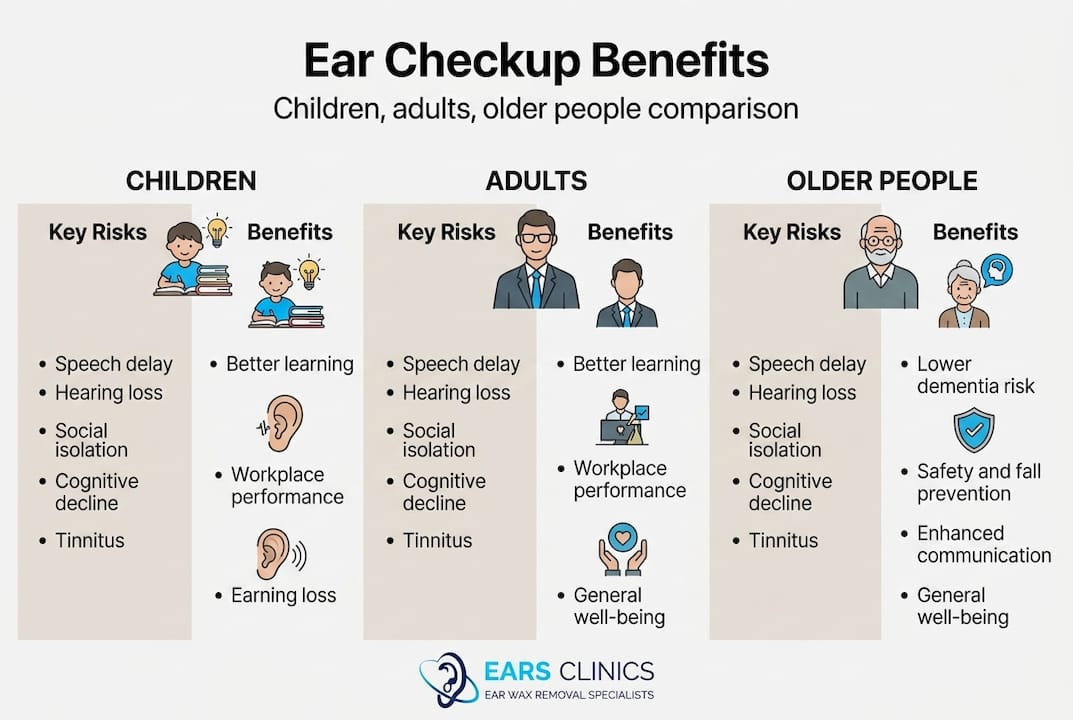
Age group | Key risks of neglect | Primary benefits of regular checkups |
Children (2 to 12) | Speech delay, learning difficulties, social isolation | Early detection of fluid or wax, support for development |
Adults (18 to 60) | Work disruption, social withdrawal, tinnitus | Clear hearing, prevention of wax impaction |
Older adults (60+) | Dementia risk, falls, depression, isolation | Reduced cognitive risk, improved independence |
Children
For young children, hearing is fundamental to learning. A child who cannot hear clearly in a classroom will struggle to follow instructions, participate in conversations, and build friendships. Children’s ear health requires particular attention because children often cannot describe their symptoms accurately. They may not say “I cannot hear well.” Instead, parents notice behavioural changes, inattentiveness, or delayed speech.
Glue ear, a condition where sticky fluid builds up behind the eardrum, is particularly common in children under ten and can cause significant but temporary hearing loss. Regular checkups catch this early. EARS Clinics is licensed to treat patients from the age of two, making professional ear care accessible for even very young children.
Adults
For working-age adults, hearing loss and wax build-up affect productivity, relationships, and mental wellbeing. Many people in this group delay seeking help because they associate ear problems with old age or assume their symptoms are not serious enough. Understanding why ear health matters for children and adults alike reveals a pattern: the longer problems are left, the harder they are to resolve.
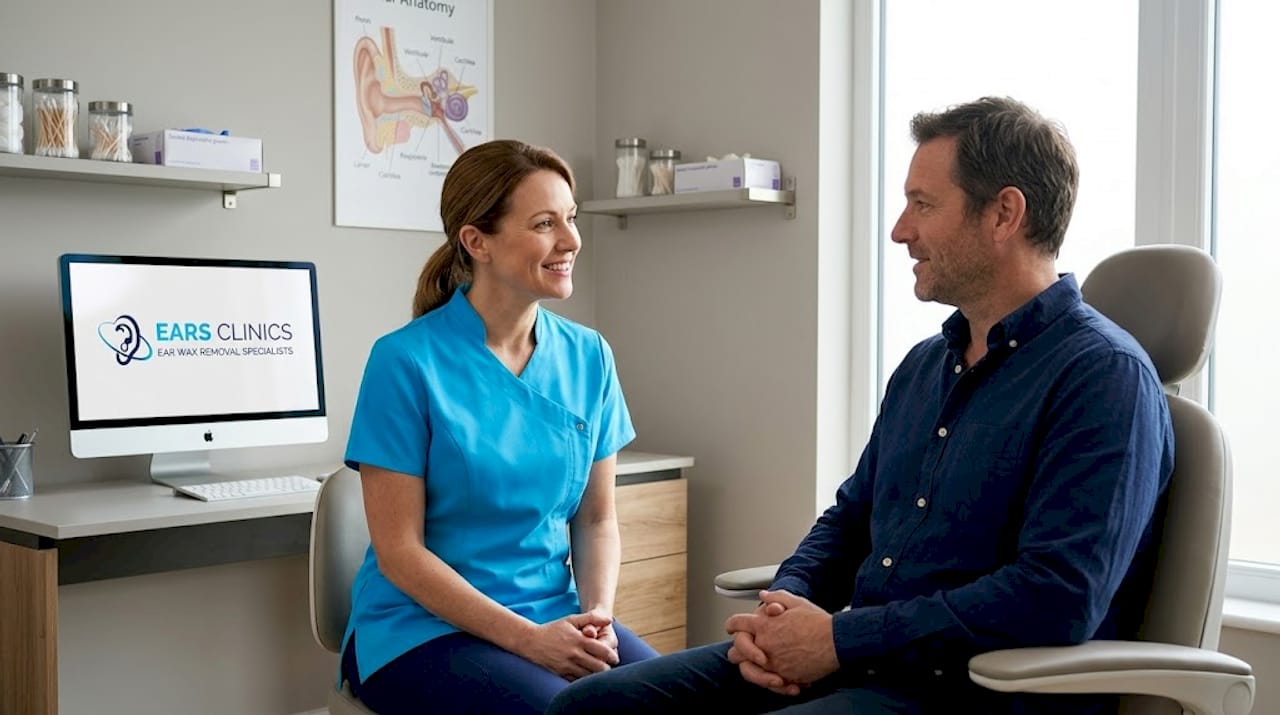
Common signs adults should not ignore include difficulty following conversations in noisy environments, needing to turn up the television volume, and a persistent feeling of fullness in the ear.
Older adults
For people over 60, the stakes are highest. Conductive hearing loss raises dementia odds by nearly double in some cases, and treating the underlying ear condition, whether wax removal or hearing aids, is associated with meaningful reductions in that risk. The benefits of professional care at this stage of life extend well beyond better hearing. They include greater independence, stronger social connections, and a lower risk of falls caused by balance issues linked to ear dysfunction.
With those age-related impacts in mind, let’s turn to practical advice to make ear checkups and at-home ear care more effective and comfortable.
How to maintain healthy ears between checkups
A professional ear checkup once or twice a year is an excellent foundation, but the habits you practise between appointments matter too. Good ear hygiene does not require complex routines. It requires informed, consistent choices.
Here are some practical steps to protect your ear health between checkups:
Do not insert objects into the ear canal. Cotton buds, fingers, and hairpins push wax deeper and can damage the delicate lining of the canal. The ear canal is self-cleaning for most people.
Keep ears dry after swimming or bathing. Excess moisture creates an environment where bacteria thrive. Tilt your head to the side after swimming to allow water to drain naturally.
Use ear protection in noisy environments. Prolonged exposure to loud noise, whether at concerts, construction sites, or through headphones, causes cumulative hearing damage that cannot be reversed.
Soften wax carefully if recommended. Olive oil drops, used for a few days before a professional appointment, can soften hardened wax and make removal easier. Never use them without guidance if you have a perforated eardrum.
Monitor your hearing regularly. Ask people around you if they notice you struggling to hear. Sometimes others spot the changes before you do.
Warning signs that warrant an urgent appointment rather than waiting for a routine checkup include sudden hearing loss in one or both ears, discharge or bleeding from the ear, severe pain, and persistent dizziness or vertigo. These symptoms should never be managed at home.
The role of trained professionals in diagnosing and managing hearing issues is irreplaceable. Home remedies and over-the-counter products have their place, but they are not a substitute for a clinical assessment.
Exploring essential ear care tips and familiarising yourself with ear safety protocols is especially valuable for parents managing the ear health of young children, where the risks of inappropriate home treatment are highest.
Pro Tip: If you use earbuds or in-ear headphones daily, consider switching to over-ear headphones where possible. In-ear devices can accelerate wax build-up by blocking the natural migration of cerumen out of the ear canal.
Now that you have practical advice, let’s reflect on the deeper importance of regular ear checkups and what most people miss.
Why most people underestimate the value of ear checkups
There is a widespread belief that hearing loss and ear wax are things you simply manage, not treat. Many people assume that if their hearing is not severely impaired, there is nothing to be done and nothing to worry about. This mindset is understandable, but it is also genuinely harmful.
At EARS Clinics, we see patients regularly who have been living with preventable symptoms for years. The mental and physical toll of that is real. Social withdrawal, strained relationships, reduced confidence at work, and disrupted sleep are all documented consequences of untreated ear conditions. None of these outcomes are inevitable.
The evidence on dementia is particularly striking. Treatment for hearing loss through surgery or hearing aids is associated with a meaningful reduction in dementia risk. That is not a minor footnote. It is a compelling reason to take ear health seriously at every stage of life.
Understanding Scotland adults’ ear health in this broader context changes the conversation entirely. Prevention is not passive. It requires action, and that action starts with a single appointment.
Take the next step for your ear health
If this article has prompted you to think differently about ear health, the next step is straightforward. EARS Clinics provides NHS-accredited professional ear care in Glasgow and Edinburgh, with same-day appointments available and no lengthy waiting lists.
Whether you are an adult who has noticed changes in your hearing, a parent concerned about your child’s development, or an older person seeking to protect your independence, EARS Clinics is here to help. Appointments for over-18s cost £60, under-18s £75, and home visits are available for £180. Explore the full range of ear wax removal procedures or find out more about what to expect at EARS Clinics before you book. Your hearing is worth looking after.
Frequently asked questions
How often should adults have their ears checked?
Adults should have their ears checked at least once a year, or sooner if they experience changes in hearing, discomfort, or a feeling of blockage.
Can ear wax build-up lead to other health problems?
Yes. Untreated wax build-up can cause hearing loss, tinnitus, and infections, and research shows conductive hearing loss raises dementia odds by 1.77 to 2.09 times compared to those without the condition.
At what age should children start having ear checkups?
Children should have their ears assessed from infancy as part of routine health visits, and whenever parents notice any changes in speech, behaviour, or responsiveness to sound.
What warning signs mean I need an urgent ear checkup?
Sudden hearing loss, ear pain, discharge, bleeding, or persistent dizziness are all signs that warrant prompt professional attention rather than waiting for a routine appointment.
Do hearing aids or surgery reduce dementia risk if hearing loss is diagnosed?
Yes. Evidence suggests that treating hearing loss with hearing aids or surgery may meaningfully lower the elevated dementia risk associated with untreated conductive hearing loss.
Recommended