
How to recognise ear wax symptoms in children safely
- Mar 12
- 8 min read

Noticing your child tugging at their ear or complaining about discomfort can be worrying. Many parents struggle to determine if ear wax is the cause or if it’s something more serious. Understanding the common symptoms of ear wax buildup helps you respond appropriately and know when professional care is needed. This guide explains how to identify ear wax symptoms, why safe recognition matters, and when to seek expert help for your child’s ear health.
Key takeaways
Point | Details |
Common symptoms | Ear wax blockage causes pain, hearing loss, fullness, and ringing in affected ears. |
Avoid home removal | Cotton swabs push wax deeper and worsen blockage, so never insert objects into your child’s ear. |
Professional care safest | Trained specialists use proven techniques like microsuction to remove wax safely, especially for children. |
Prevalence | About 10% of children experience problematic ear wax buildup requiring attention. |
Early action prevents issues | Recognising symptoms quickly helps prevent complications and ensures timely, appropriate care. |
Common symptoms of ear wax blockage in children
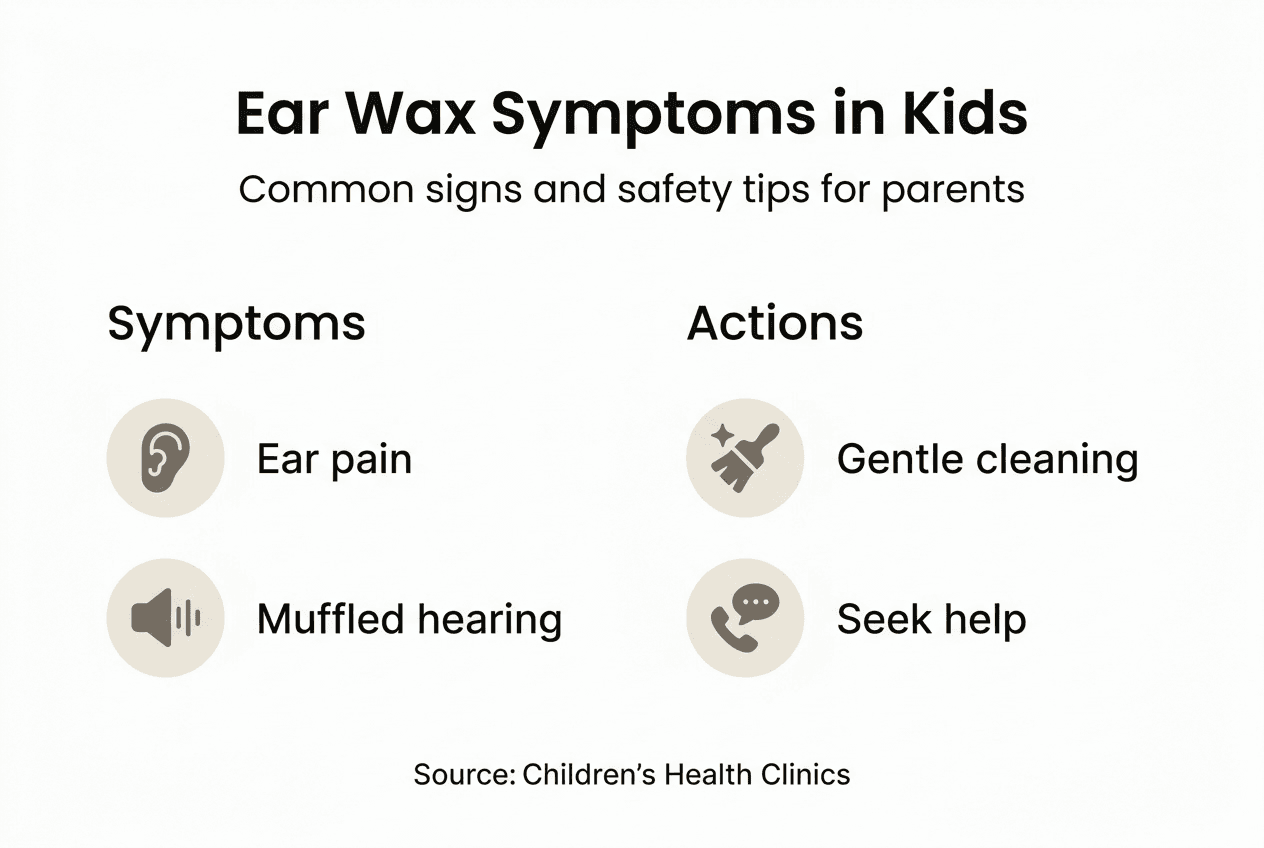
Recognising the signs of ear wax buildup early allows you to address the issue before it causes significant discomfort. Ear wax blockage manifests with pain, hearing loss, and fullness in the affected ear. Children may not always communicate these sensations clearly, so watching for behavioural changes is essential.
The most frequent symptoms parents notice include:
Earache or pain ranging from mild discomfort to sharp, persistent aching
Hearing loss or muffled sounds, often prompting children to ask you to repeat yourself
Tinnitus, which children describe as ringing, buzzing, or humming noises
Itchiness inside the ear canal that children may try to scratch
Discharge or odour from the ear, indicating excess wax or infection
Rarely, persistent cough triggered by wax pressing on nerve endings
These symptoms can mimic ear infections or other conditions, making proper identification crucial. About 10% of children experience ear wax impaction at some point, so understanding these signs helps you determine the appropriate response. If your child exhibits multiple symptoms or seems particularly uncomfortable, it’s time to consider professional evaluation for children’s ear wax concerns.
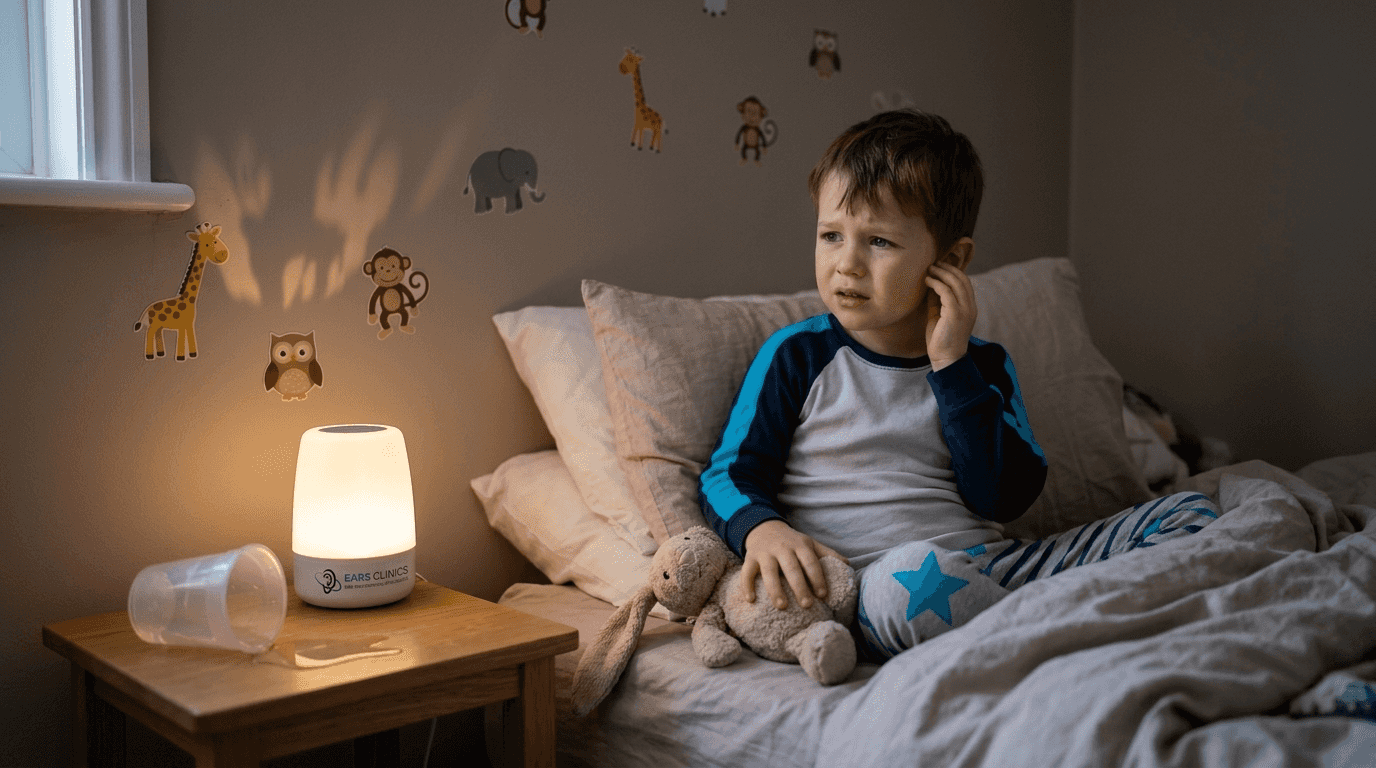
Younger children may express discomfort through irritability, sleep disruption, or repeatedly touching their ears rather than describing specific symptoms. Pay attention to changes in behaviour alongside physical signs to build a complete picture of what’s happening.
Why ear wax is important and natural ear cleaning
Before addressing symptoms, understanding ear wax’s protective role helps you appreciate why careful management matters. Ear wax acts as a protective barrier, repelling water and trapping debris before it reaches sensitive inner structures. Far from being merely waste, this substance serves vital functions for ear health.
Ear wax provides essential benefits:
Traps dust, dirt, and foreign particles before they penetrate deeper into the ear canal
Contains antimicrobial properties that inhibit bacterial and fungal growth, reducing infection risk
Creates a waterproof coating that prevents moisture from damaging delicate ear canal skin
Lubricates the ear canal, preventing dryness, itching, and irritation
Maintains optimal pH balance within the ear environment
Your child’s ears possess a remarkable self-cleaning mechanism. Epithelial migration and jaw movements naturally push wax outward towards the ear opening, where it dries and falls away. This process happens continuously without any intervention needed. Chewing, talking, and normal jaw movement facilitate this migration, making the ear essentially self-maintaining.
Problems arise when well-meaning parents disrupt this natural system through aggressive cleaning attempts. Inserting cotton swabs or other objects pushes wax deeper, compacting it against the eardrum instead of allowing natural expulsion. This interference creates the blockages that cause the symptoms you’re trying to prevent. Understanding safe ear wax removal approaches for children means respecting this natural process and only intervening when genuinely necessary.
Pro Tip: The ear only needs cleaning on the outside. Wipe the outer ear and entrance gently with a damp cloth during bath time, but never insert anything into the ear canal itself.
Safe recognition and prevention of ear wax blockage in children
Recognising symptoms safely means observing without interfering inappropriately. Many parents inadvertently worsen ear wax issues through home removal attempts that seem logical but cause harm. Cotton swabs push wax deeper into the ear canal, creating impaction rather than relieving it.
What to avoid when checking for symptoms:
Never insert cotton swabs, bobby pins, or other objects into your child’s ear canal
Avoid cotton swabs entirely as they compact wax and risk eardrum damage
Don’t attempt to scoop or dig out visible wax, even if it seems easily accessible
Resist the urge to use ear candles or other unproven home remedies
Never irrigate ears at home without professional guidance, especially if symptoms are present
Instead, focus on gentle observation and preventive care. Watch for the symptoms listed earlier and note their severity and duration. You can safely look at the outer ear and entrance to the ear canal, but resist going deeper. If you notice ear wax at the opening, it’s completing its natural journey outward and doesn’t require removal.
Given that approximately 10% of children are affected by ear wax impaction annually, vigilance combined with restraint serves your child best. Maintain gentle hygiene by wiping the outer ear with a damp cloth during regular bathing. Avoid excessive water exposure that might trap moisture behind wax buildup. Monitor symptoms and seek help if they persist beyond a few days or worsen.
Safe prevention practices for parents:
Practice | Why it matters | What to do |
External cleaning only | Prevents pushing wax deeper | Wipe outer ear with damp cloth, never insert anything |
Monitor symptoms | Enables early professional intervention | Note changes in hearing, pain, or behaviour |
Avoid cotton swabs | Prevents compaction and injury | Keep swabs away from ears entirely |
Regular check-ins | Catches issues before they worsen | Ask child about ear comfort weekly |
Pro Tip: If your child uses earbuds or hearing aids regularly, these can interfere with natural wax migration. Check with a professional about appropriate monitoring schedules.
Learn more about ear wax removal best practices parents should follow and safe ear care principles for children to protect your child’s ear health while avoiding common mistakes.
When and how to seek professional ear care for your child
Knowing when home observation should transition to professional evaluation protects your child from complications. Professional ear wax removal by healthcare providers represents the safest approach, especially for children whose ear canals are smaller and more delicate than adults’.
Seek professional help when:
Symptoms persist for more than three to five days without improvement
Your child experiences significant pain or hearing loss affecting daily activities
You notice discharge, bleeding, or foul odour from the ear
Your child has a history of ear problems, perforated eardrums, or ear tubes
Home observation reveals visible wax blockage at the ear canal entrance
Symptoms worsen despite avoiding cotton swabs and practising gentle care
Qualified providers employ proven techniques tailored to children’s needs. Healthcare professionals safely check and remove excess wax during examination appointments using specialised equipment. This professional assessment rules out other conditions that present similar symptoms, such as ear infections or foreign objects.
Professional ear care services like audiologists and specialists offer several safe removal methods:
Method | How it works | Best for |
Microsuction | Uses gentle suction to remove wax under microscopic view | Most children; precise and comfortable |
Irrigation | Flushes wax out with controlled water flow | Older children with no ear damage history |
Instrumentation | Removes wax manually using specialised tools | Stubborn blockages; requires steady cooperation |
Microsuction stands out as particularly effective for children because it provides clear visualisation throughout the procedure and doesn’t introduce water that might cause discomfort. The process takes just minutes and offers immediate relief from symptoms. Understanding the differences between microsuction and irrigation for children helps you discuss options with your provider.
During professional appointments, specialists examine the entire ear canal and eardrum to assess overall health. This comprehensive approach identifies any underlying issues contributing to wax buildup, such as narrow ear canals or excessive wax production. Early professional intervention prevents complications like temporary hearing loss, ear infections from trapped bacteria, or eardrum damage from excessive pressure.
Pro Tip: Book appointments before symptoms become severe. Many clinics offer same-day services, so you don’t need to wait weeks while your child suffers discomfort.
Explore specialised children’s ear wax removal services designed specifically for young patients’ needs and comfort.
Safe ear wax removal services in Glasgow and Edinburgh
When your child needs professional care, choosing a qualified provider ensures both safety and effectiveness. EARS Clinics deliver NHS-accredited ear wax removal services throughout Glasgow and Edinburgh, specialising in gentle techniques appropriate for children from age two upwards.

Our trained Aural Care Specialists use advanced ear wax removal procedures including microsuction, carefully adapted for children’s comfort and safety. As one of Scotland’s few Healthcare Improvement Scotland registered ear care clinics, we follow strict protocols that prioritise your child’s wellbeing. Same-day appointments mean you don’t endure long waits while your child experiences discomfort.
Every children’s ear wax removal appointment includes thorough examination before and after treatment, ensuring complete blockage resolution. Our specialists explain each step to both you and your child, creating a calm, reassuring environment. With convenient locations in Glasgow and Edinburgh plus home visit options, accessing professional care fits easily into your family schedule. Learn more about what to expect during ear health checks to prepare your child for their appointment.
How to recognise ear wax symptoms in children: FAQs
What are the most common signs my child has ear wax buildup?
The most frequent signs include complaints of ear pain, asking you to repeat yourself due to muffled hearing, and describing a plugged or full sensation in the ear. You might also notice your child frequently touching or tugging at their ear, or becoming irritable without obvious cause.
Can I safely remove ear wax at home if I see it in my child’s ear?
No, you should never attempt home removal using cotton swabs or other objects. What appears accessible often extends deeper than visible, and insertion attempts push wax further in, worsening blockage. Professional removal is always safest for children.
How quickly should I seek help after noticing ear wax symptoms?
If symptoms are mild, monitor for three to five days while avoiding cotton swabs and practising gentle external cleaning. Seek professional care for children’s ear concerns promptly if pain is significant, hearing loss affects daily activities, or symptoms worsen rather than improve.
At what age can children safely have professional ear wax removal?
Children as young as two years old can safely receive professional ear wax removal from qualified specialists using appropriate techniques. EARS Clinics are licensed and regulated to treat patients from age two upwards, with procedures adapted to suit young children’s needs and comfort levels.
Will ear wax removal hurt my child?
Professional removal using modern techniques like microsuction is typically painless and quick. Children may feel slight tickling or unusual sensations, but the procedure causes no pain when performed by trained specialists. Most children tolerate it well, especially when reassured throughout the process.
How can I prevent ear wax buildup in my child?
You cannot completely prevent ear wax, as it serves protective functions. Focus on avoiding interference with natural cleaning by never using cotton swabs, maintaining gentle external hygiene, and seeking professional assessment if your child experiences recurring issues that might indicate narrow ear canals or excessive wax production.
Recommended