
Preventing ear wax buildup: your practical guide

TL;DR:
Earwax naturally protects the ear and usually cleans itself without intervention.
However, buildup occurs when the ear’s self-cleaning process is disrupted or overwhelmed.
Earwax, known clinically as cerumen, is a natural defence mechanism that protects the ear canal from dust, bacteria, and debris. For most adults, the ear cleans itself through a gradual outward migration of cerumen, requiring no intervention at all. Yet cerumen impaction affects around 5% of adults and up to 10% of children, making it one of the most common ear complaints seen in clinical practice. Preventing ear wax buildup is less about aggressive cleaning and more about understanding what the ear does naturally, and knowing when to step back.
What causes ear wax buildup?
Earwax accumulates when the ear’s natural self-cleaning process is disrupted or overwhelmed. Several factors contribute to this, and recognising them is the first step towards avoiding ear wax buildup.
Common causes include:
Narrow or unusually shaped ear canals, which slow the outward migration of wax
Frequent use of earplugs, in-ear headphones, or hearing aids, which physically block wax from moving outward
Cotton buds and other objects inserted into the canal, which push wax deeper rather than removing it
Overproduction of cerumen, which can occur naturally in some adults and tends to increase with age
Dry or flaky skin conditions, such as eczema or psoriasis, which alter the texture of wax and make migration harder
The consequences of untreated buildup extend beyond mild discomfort. Compacted wax can cause temporary hearing loss, a sensation of fullness, tinnitus, and in some cases, ear infections. Hearing aid wearers often mistake whistling feedback or muffled sound for a device fault, when hardened wax creating an acoustic leak is frequently the true cause.
How to prevent ear wax buildup at home

The most effective prevention strategy is to leave the ear canal alone. The ear’s self-cleaning mechanism works well for the majority of adults when it is not disrupted. That said, certain habits support healthy wax migration and reduce the risk of problematic buildup.
Safe daily habits
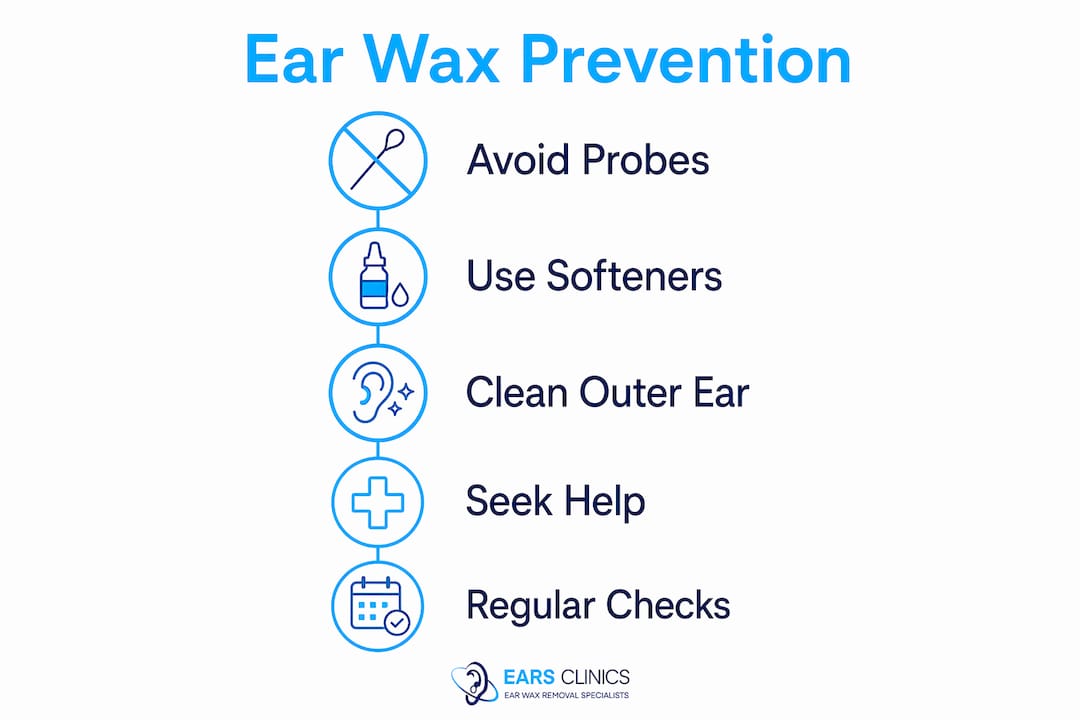
Clean only the outer ear with a warm, damp washcloth. Never insert the cloth, a finger, or any object into the canal itself.
Keep ears as dry as possible after swimming or bathing. Tilt your head to drain water and dry the outer ear gently.
Limit continuous use of in-ear devices. Wearing earbuds or hearing aids for extended periods reduces the ear’s ability to ventilate and self-clean.
Avoid wearing earplugs more than necessary. If you need hearing protection at work, use over-ear defenders where possible.
Using softening agents safely
Ear drops containing olive oil, almond oil, or sodium bicarbonate can soften wax and support its natural exit from the canal. These are available without prescription and are appropriate for adults without a history of ear surgery, perforated eardrums, or active infections. Practitioners recommend a baseline ear examination before starting any at-home softening treatment, as underlying canal issues can make such drops inappropriate or even harmful.
Safe practice | Benefit |
Clean outer ear with warm washcloth | Removes surface wax without disturbing the canal |
Use olive oil or sodium bicarbonate drops | Softens wax to support natural migration |
Limit in-ear device use | Allows the ear canal to ventilate and self-clean |
Keep ears dry after swimming | Reduces risk of infection and wax softening in canal |
Avoid inserting objects into the canal | Prevents impaction and eardrum damage |
Pro Tip: Apply olive oil drops to the affected ear at night, lying on your side for five to ten minutes. This allows the oil to reach deeper wax before you sleep. Do this for five to seven consecutive nights rather than sporadically for the best result.
When should you seek professional ear cleaning?
Professional care is the right choice when symptoms appear or when at-home softening has not resolved the issue within two weeks. Attempting to remove wax yourself when symptoms are present carries a real risk of making the problem worse.
Microsuction is the preferred removal method according to current NICE guidelines. It uses gentle suction to draw wax out of the canal without introducing water, making it suitable for most patients including those with a history of ear surgery. Irrigation, which uses a controlled flow of warm water to flush the canal, and manual instrumentation, which uses fine tools under direct visualisation, are both clinically valid alternatives. Practitioners select the most appropriate method based on each patient’s medical history and the condition of the canal.
Method | How it works | Best suited for |
Microsuction | Gentle suction removes wax under direct view | Most patients; preferred by NICE guidelines |
Irrigation | Warm water flushes the canal | Soft wax; no history of perforation or surgery |
Manual instrumentation | Fine tools remove wax under direct visualisation | Hard or impacted wax; complex presentations |
Certain conditions make at-home irrigation unsafe. Patients with perforated eardrums, chronic ear infections, previous ear surgery, or those taking blood thinners should always seek professional care rather than attempting self-treatment.
Pro Tip: When choosing a clinic, confirm that practitioners are NHS-accredited Aural Care Specialists and that the clinic is regulated by Healthcare Improvement Scotland (HIS) or the Care Quality Commission (CQC). Regulation is not universal in the private sector, and it matters for your safety.
Common myths and mistakes about ear wax prevention
Several widely held beliefs about ear hygiene cause more harm than the wax they are meant to address. Understanding what not to do is as important as knowing what to do.
Cotton buds do not clean ears. Inserting cotton buds pushes wax deeper into the canal, compacting it against the eardrum. Most patients who use them regularly believe they are removing wax, but they are creating plugs that are harder to remove professionally.
Ear candles are ineffective and dangerous. Ear candles pose serious safety risks including burns to the face and ear canal, and can deposit candle debris inside the ear. Clinical evidence does not support their use for wax removal.
Frequent ear cleaning is not necessary or beneficial. The ear does not need to be cleaned internally on a regular basis. Routine cleaning of the canal can strip protective wax and disrupt the skin’s natural barrier.
At-home irrigation kits carry real risks. Without proper training and equipment, water can be directed at the wrong angle, causing pain, dizziness, or eardrum damage.
“The healthiest approach for most people is to simply leave the ear canal alone. The ear is a self-cleaning organ, and interference, however well-intentioned, is often the root cause of the problem we are trying to prevent.” Clinical consensus, UCHealth and Henry Ford Health, 2026
For parents concerned about their children’s ear health, ear safety protocols for children follow the same core principle: avoid inserting anything into the canal and seek professional advice when symptoms arise.
What are the signs of problematic ear wax buildup?
Recognising the signs of ear wax buildup early allows you to seek appropriate care before the problem worsens. Not all earwax is problematic. The presence of wax alone is not a reason for concern. Symptoms that indicate a blockage requiring attention include:
Muffled or reduced hearing in one or both ears, not explained by illness
A sensation of fullness or pressure inside the ear
Tinnitus, a ringing, buzzing, or hissing sound with no external source
Earache or mild discomfort, particularly after using in-ear devices
Itching inside the canal, which can indicate dry or irritated skin from disrupted wax
Hearing aid performance issues, such as whistling or reduced amplification
If you experience any of these symptoms, avoid attempting self-removal at home. Inserting objects to investigate or relieve symptoms is the most common way patients worsen a manageable blockage into a more complex impaction. Consult a GP, ENT specialist, or a regulated ear care clinic promptly. For symptoms that appear suddenly or are accompanied by pain, dizziness, or discharge, treat the situation as requiring urgent assessment.
Key takeaways
The most effective approach to preventing ear wax buildup is to support the ear’s natural self-cleaning process and avoid any practice that interferes with it.
Point | Details |
Leave the canal alone | The ear self-cleans naturally; interference is the leading cause of impaction. |
Avoid cotton buds and objects | Inserting anything into the canal pushes wax deeper and risks eardrum damage. |
Use softening drops carefully | Olive oil or sodium bicarbonate drops help, but get a professional check first. |
Know the warning signs | Muffled hearing, fullness, or tinnitus are signals to seek professional care. |
Choose regulated practitioners | Ensure your clinic is HIS or CQC registered for safe, accredited treatment. |
What we have learned from years of treating earwax
At EARS Clinics, the pattern we see most often is not complicated. Patients arrive with wax that has been compacted by weeks or months of cotton bud use. They are often surprised to learn that the very habit they believed was keeping their ears clean was the direct cause of their blockage.
The ear is genuinely remarkable in its design. For the vast majority of adults, cerumen migrates outward on its own, carrying debris with it, without any help from us. The clinical evidence supporting minimal intervention has only strengthened over time, and the 2026 consensus from bodies including UCHealth and Henry Ford Health reinforces what we have observed in practice: the ear works best when left to its own devices.
Where I would push back against conventional advice is on the idea that softening drops are always a safe first step. They are useful, but only when the canal is intact and there is no underlying condition. Patients sometimes use them for weeks without improvement and then arrive at clinic with wax that has swelled and become harder to remove. A brief professional assessment before starting any treatment at home saves time and prevents that outcome.
The technology available for professional removal has also improved considerably. Microsuction under direct visualisation gives practitioners a clear view of the canal throughout the procedure, making it far safer than older syringing methods. Irrigation and manual instrumentation remain valuable tools, but the ability to see exactly what is happening in real time is what makes microsuction the preferred choice in current guidelines.
If you are prone to recurrent buildup, a twice-yearly professional check is a sensible routine. It is a small investment that keeps the canal clear, protects your hearing, and avoids the discomfort of waiting until symptoms become severe.
— EARS
Professional ear wax removal at EARS Clinics

Earhealthservice offers NHS-accredited ear wax removal at EARS Clinics in Glasgow and Edinburgh, carried out by trained Aural Care Specialists regulated by Healthcare Improvement Scotland (HIS). If you are experiencing muffled hearing, ear fullness, or tinnitus, a professional assessment is the safest next step. The team uses microsuction, irrigation, and manual instrumentation, selecting the most appropriate method for your individual presentation. Appointments cost £60 for adults, £75 for under-18s, and £180 for home visits. Same-day and home visit appointments are available, with no requirement for pre-treatment drops before attending.
FAQ
What is the best way to prevent ear wax buildup?
The best prevention is to avoid inserting anything into the ear canal and to leave the ear’s natural migration process undisturbed. Clean only the outer ear with a warm, damp cloth.
Are cotton buds safe for cleaning ears?
Cotton buds are not safe for cleaning inside the ear canal. They push wax deeper, increasing the risk of impaction and eardrum damage, and clinical guidance strongly discourages their use.
How often should I use olive oil drops to prevent wax buildup?
A course of five to seven consecutive nights is typically sufficient to soften wax and support its natural exit. Always have a professional check the ear first if you have a history of ear surgery or perforated eardrums.
When should I see a professional about ear wax?
Seek professional care if you experience muffled hearing, a feeling of fullness, tinnitus, or earache. These are signs of ear wax buildup that warrant clinical assessment rather than self-treatment.
Are ear candles effective for removing wax?
Ear candles are not effective and carry genuine safety risks including burns and debris entering the canal. Clinical experts advise against their use entirely.
Recommended