
Emergency ear wax care: when to act and what to do

TL;DR:
Emergency ear wax care involves immediate professional treatment when symptoms such as sudden hearing loss, severe pain, or discharge occur. Mild blockages can often be managed at home with olive oil drops, but unsafe practices like cotton swabs and ear candles should be avoided. Professional removal methods include microsuction, irrigation, and manual instruments, with microsuction being the safest choice for many patients.
Emergency ear wax care is the process of safely managing sudden ear wax blockage or discomfort to restore hearing and prevent complications. Clinically, this condition is known as cerumen impaction, and when it causes abrupt hearing loss, severe pain, or dizziness, it demands immediate attention. The three professional methods used to resolve it are microsuction, irrigation, and manual instrumentation, each selected by a trained clinician based on your medical history. Knowing which symptoms require urgent help and which respond to careful home care can protect your hearing and spare you from unnecessary harm.
What counts as emergency ear wax care?
Emergency ear wax care applies when cerumen impaction produces symptoms that go beyond mild muffling or fullness. Sudden hearing loss in one or both ears is a medical emergency. The RNID states that sudden hearing loss requires immediate contact with NHS 111 or attendance at A&E. That guidance matters because sudden hearing loss can signal conditions beyond wax, including nerve damage or infection, and delay worsens outcomes.
Not every blocked ear is an emergency, but some symptoms should never be waited out. Seek professional help without delay if you experience any of the following:
Sudden or rapidly worsening hearing loss in one or both ears
Severe ear pain that does not settle within a few hours
Vertigo or a spinning sensation linked to ear symptoms
Discharge from the ear canal, particularly if it is coloured or foul-smelling
Tinnitus that appears suddenly alongside blocked hearing
Facial weakness or numbness on the same side as the affected ear
These symptoms can indicate conditions such as eardrum perforation, middle ear infection, or labyrinthitis. A wax blockage alone rarely causes facial weakness. If you notice that combination, go directly to A&E rather than waiting for a clinic appointment.
Safe at-home steps for mild ear wax blockage

Mild cerumen impaction, where hearing is slightly reduced but there is no pain, discharge, or dizziness, can often be managed safely at home before seeking professional removal. NHS guidelines recommend using olive oil drops three to four times daily for three to five days to soften wax, which may then fall out naturally over approximately two weeks. This approach is gentle, low-risk, and clinically supported.
Follow these steps to apply drops correctly:
Warm the olive oil bottle in your hands for one to two minutes. Cold oil causes brief dizziness when it contacts the ear canal.
Lie on your side with the affected ear facing upward.
Place two to three drops into the ear canal using a clean dropper.
Stay in that position for five to ten minutes to allow the oil to reach the wax.
Sit up slowly and allow any excess oil to drain onto a tissue.
Repeat three to four times daily for up to five days.
Pro Tip: If your symptoms worsen at any point during home treatment, stop immediately and contact a clinician. Softening drops are not appropriate if you have a perforated eardrum or a history of ear surgery.
Three practices cause more harm than good and must be avoided entirely. Cotton swabs pack wax deeper into the canal rather than removing it, which complicates professional treatment later. Ear candling is unsafe and ineffective; the debris it produces is residue from the candle itself, not extracted wax. Over-the-counter ear cameras and visualisation gadgets carry a real risk of eardrum perforation if the device slips, and the wax they appear to remove is often not genuine. None of these methods belong in a safe home care routine.
Professional removal methods: microsuction, irrigation, and instrumentation
When home softening fails or symptoms are more severe, professional removal is the correct next step. Clinicians select the most appropriate technique based on your ear anatomy, medical history, and clinical presentation. No single method suits every patient.
Microsuction
Microsuction is the preferred technique recommended by current NICE guidelines. A clinician uses a fine suction device under a microscope or loupe magnification to draw wax directly from the canal without introducing any fluid. This makes it the safest option for patients with a perforated eardrum, a history of ear surgery, or active infection. The procedure is quick, clean, and provides immediate visual feedback. You can read a detailed overview in this microsuction procedure guide.
Irrigation
Irrigation uses a controlled flow of warm water to flush softened wax from the canal. Water must be at body temperature (37°C) to prevent vertigo or dizziness. Water that is cooler or warmer than this stimulates the balance organs and causes distressing side effects. Irrigation is contraindicated in patients with a perforated eardrum, active infection, diabetes, immune disorders, or a history of head and neck radiation. A clinician will screen for these conditions before proceeding.
Manual instrumentation
Manual instrumentation involves removing wax using specialised tools such as curettes or fine forceps, sometimes combined with suction. It is particularly useful when wax is hard and impacted against the canal wall. This technique requires direct visualisation and a steady hand. It is always performed by a trained Aural Care Specialist.
Procedure | How it works | Best suited for | Contraindications |
Microsuction | Fine suction under magnification | Most patients, perforated eardrum, post-surgery | Very narrow or inflamed canals |
Irrigation | Warm water flush at 37°C | Soft, mobile wax in healthy ears | Perforation, infection, diabetes, immune disorders |
Manual instrumentation | Curettes or forceps under direct vision | Hard, impacted wax | Uncooperative patients, very young children without sedation |
Pro Tip: Always confirm that your clinician is regulated by Healthcare Improvement Scotland (HIS) or the Care Quality Commission (CQC). Regulation means the clinic follows nationally mandated safety standards and is subject to independent inspection.
Ear irrigation requires precise conditions and is not suitable for all patients. Microsuction under magnification is safer and more effective for many, particularly those who are immunocompromised or have complex ear histories.
Step-by-step guide for managing urgent ear wax blockage
Acting quickly and correctly makes a significant difference when ear wax causes sudden or severe symptoms. Follow this sequence to manage the situation safely.
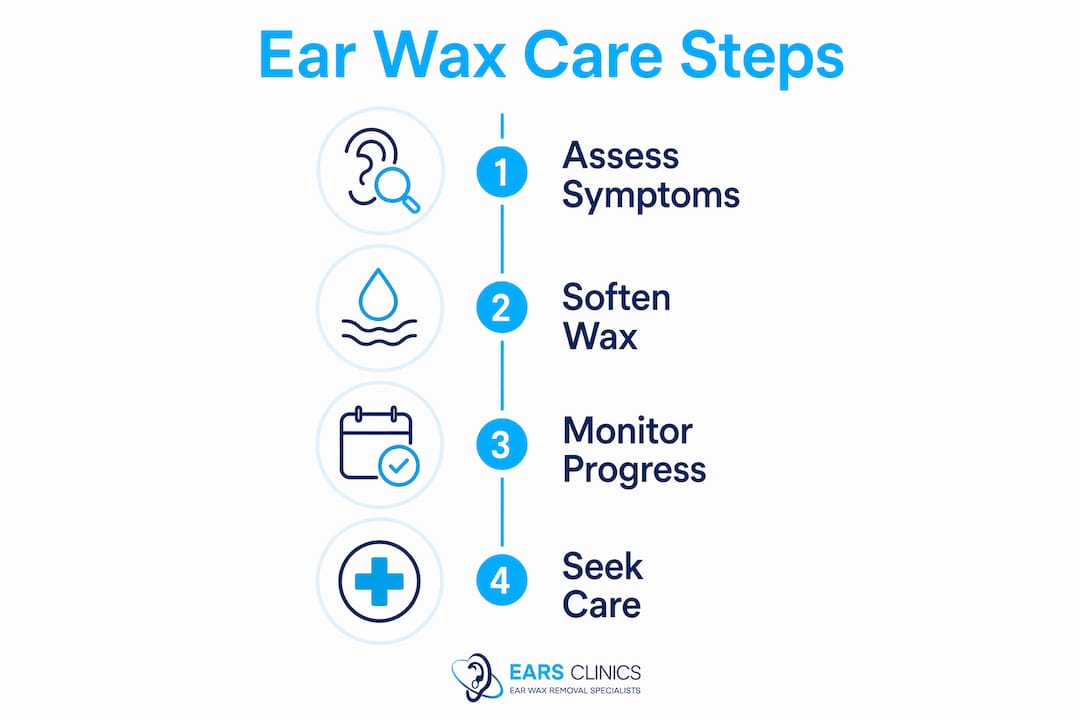
Step 1: Assess your symptoms. If you have sudden hearing loss, severe pain, vertigo, or discharge, contact NHS 111 immediately or attend A&E. Do not attempt home treatment.
Step 2: For mild symptoms only, begin softening. Apply warm olive oil drops as described above. Use a step-by-step removal guide to follow the correct technique.
Step 3: Monitor daily. If symptoms worsen, stop home treatment and seek professional care. If symptoms remain mild and stable, continue drops for up to five days.
Step 4: Book professional removal. If wax has not cleared after two weeks of softening, or if symptoms are not improving, book an appointment with a regulated clinic. Earhealthservice offers same-day appointments and home visits for patients who cannot travel.
Step 5: Follow post-treatment advice. After professional removal, keep the ear dry for 24 hours. Report any new pain, discharge, or hearing change to your clinician promptly.
A baseline professional examination before any home treatment helps avoid masking or worsening conditions such as eardrum perforation. Experts recommend professional evaluation first to confirm that home remedies are safe for your specific situation.
Safe practices | Unsafe practices |
Warm olive oil drops, 3–4 times daily | Cotton swabs or cotton buds |
Lying on your side when applying drops | Ear candles |
Booking a regulated clinic for persistent blockage | Unverified OTC ear cameras or gadgets |
Contacting NHS 111 for sudden hearing loss | Attempting irrigation at home without clinical guidance |
Following post-treatment care instructions | Ignoring worsening symptoms during home treatment |
Most ear wax is self-cleaning, and unnecessary intervention risks pushing wax deeper or causing damage. That fact should reassure you that restraint is often the right first response. Act only when symptoms are present and genuine.
Key takeaways
Effective emergency ear wax care combines accurate symptom assessment, safe home softening for mild cases, and prompt professional removal when symptoms are severe or persistent.
Point | Details |
Recognise true emergencies | Sudden hearing loss, vertigo, or discharge require NHS 111 or A&E, not home treatment. |
Use olive oil drops correctly | Apply warm drops three to four times daily for up to five days to soften mild blockages safely. |
Avoid harmful DIY methods | Cotton swabs, ear candles, and unverified gadgets worsen impaction and risk injury. |
Choose regulated professional care | Microsuction, irrigation, and instrumentation must be performed by HIS or CQC-regulated clinicians. |
Act on worsening symptoms | If home treatment does not improve symptoms within two weeks, book professional removal promptly. |
What I have learned from years of treating ear wax emergencies
Patients often arrive at clinic having already made the situation worse. The most common error is reaching for a cotton bud the moment they notice muffled hearing. DIY ear cleaning is frequently counterproductive, packing wax further into the canal and turning a straightforward removal into a more involved procedure. I see this pattern regularly, and it is entirely avoidable.
The second mistake is waiting too long. Patients with sudden hearing loss sometimes spend days trying olive oil drops before contacting us or NHS 111. Sudden hearing loss is a medical emergency. Every day of delay reduces the likelihood of full recovery. If your hearing drops sharply and unexpectedly, that is not a job for home remedies.
What I would encourage every patient to do is seek a professional baseline assessment before starting any home treatment. A proper professional evaluation detects underlying ear pathology that can make home remedies dangerous. A perforated eardrum, for example, is not always obvious without examination, and olive oil in a perforated ear causes real harm.
Microsuction remains the method I trust most. It is dry, precise, and works under direct magnification. For patients with complex histories, it is simply the safest choice. Regulated clinical care, delivered by a trained Aural Care Specialist, prevents the complications that turn a manageable blockage into a lasting problem. Timely professional treatment is not overcaution. It is the most efficient path back to clear hearing.
— EARS
Professional ear wax removal at Earhealthservice
Earhealthservice operates EARS Clinics in Glasgow and Edinburgh, providing NHS-accredited ear wax removal for patients of all ages, including children from two years old.
Clinicians at Earhealthservice are trained Aural Care Specialists registered with Healthcare Improvement Scotland (HIS), one of the few regulated ear health providers in Scotland. Appointments are available in clinic, on the same day, or as home visits for patients who cannot travel. Pricing is straightforward: £60 for patients over 18, £75 for under-18s, and £180 for home visits. For patients with urgent symptoms or persistent blockage, early booking prevents complications. Review the full range of ear wax removal procedures offered by Earhealthservice and book at a time that suits you.
FAQ
What are the signs that ear wax needs emergency treatment?
Sudden hearing loss, severe ear pain, vertigo, or coloured discharge from the ear canal all require immediate contact with NHS 111 or attendance at A&E. These symptoms can indicate conditions beyond wax impaction that need urgent clinical assessment.
Can I use olive oil if I think my eardrum is perforated?
No. Olive oil drops are only safe when the eardrum is intact. A professional evaluation before starting home treatment confirms whether drops are appropriate for your situation.
Why is microsuction preferred over irrigation?
Microsuction uses dry suction under magnification and introduces no fluid into the ear, making it safe for patients with perforations, infections, or complex medical histories. Irrigation requires water at precisely 37°C and is contraindicated in several patient groups.
How long does olive oil take to clear ear wax?
Olive oil drops used three to four times daily for three to five days soften wax, which may then fall out naturally over approximately two weeks. If the blockage persists beyond two weeks, book professional removal.
Are over-the-counter ear cleaning gadgets safe to use at home?
OTC cerumen removal devices do not show meaningful superiority over standard methods and often fail to reduce wax burden significantly. Ear cameras and similar gadgets carry a risk of eardrum perforation and are not recommended by clinicians.
Recommended