
£45–£75 Microsuction in Scotland: What That Price Covers

Microsuction in Scotland typically costs between £45 and £75 for a single in-clinic appointment, with home visits and children’s treatments priced higher. Prices for microsuction in Scotland vary, with adult, children’s, and home visit appointments generally costing more; exact fees can be found on providers’ websites. If you’re comparing quotes, check what’s included before you book, then choose a Healthcare Improvement Scotland registered clinic for regulated, same-day care.
TL;DR:
Private microsuction prices in Scotland range from £45 to £75 for in-clinic treatment, with higher costs for children, home visits, and additional services.
The choice of removal method depends on ear health, with microsuction preferred for straightforward cases, irrigation suitable for softened wax, and manual tools used for complex or localized wax.
Additional costs may arise from factors like multiple ears, complex cases, equipment, clinic credentials, and logistical premiums such as home visits or out-of-hours appointments.
Ensuring the provider is regulated by Healthcare Improvement Scotland or the CQC offers safety benefits that outweigh small differences in quoted prices or convenience.
A typical appointment includes an examination, procedure, and aftercare, with regulated clinics providing clear, transparent pricing and documented safety protocols.
How much is microsuction in Scotland?
Prices for microsuction pricing in Scotland sit within a fairly narrow band once you strip away the marketing. Most private clinics charge between £45 and £75 for treating one or both ears in a single visit, and many now bundle the examination and aftercare advice into that headline figure rather than charging separately.
EARS Clinics lists its adult appointment at £60 for over-18s, which sits comfortably within that typical range and covers both ears in the same visit rather than charging per ear. Under-18 appointments run at £75, reflecting the extra time and care that treating a child’s ear canal usually requires.
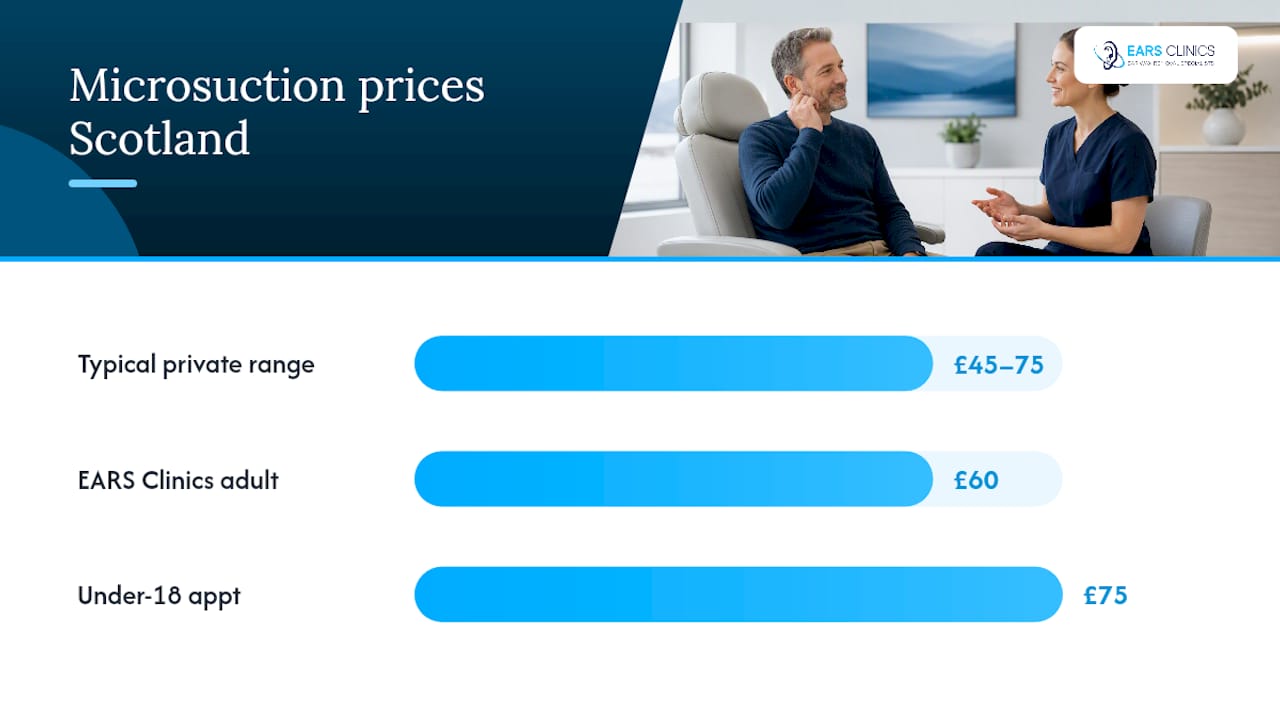
Home visits cost more everywhere, because a practitioner has to travel with portable equipment rather than working from a fixed treatment room. Home visits are usually priced higher to cover travel and portable equipment costs, with fees covering the full appointment rather than separate travel charges.
A “no wax found” fee is worth asking about before you book. Many clinics reduce the charge if the examination shows no wax buildup requiring removal, since the appointment becomes a consultation rather than a procedure.
One ear or both ears (in-clinic): varies by clinic and inclusions
Home visit: generally higher to cover travel and equipment
Children’s appointments: typically more than adult rates
Consultation-only / no wax found: often a reduced fee at some clinics
Every figure above is quoted in pounds sterling and applies specifically to private microsuction pricing across Scotland, not the rest of the UK, where regional variation can push prices slightly higher in London and the South East.
What is microsuction and how does it compare to other methods?
Microsuction uses a fine suction device under magnified, direct vision to remove earwax, allowing the practitioner to see exactly what they’re removing throughout the procedure. Current NICE guidance identifies it as recommended for most patients.
Irrigation uses pulsed water to flush wax from the ear canal and remains a safe, clinically valid option when microsuction isn’t suitable or available. Manual instrumentation, meanwhile, involves specialist tools like curettes or probes to lift wax out directly, and it’s often used for wax sitting close to the eardrum or for smaller pockets that suction alone won’t shift.
Microsuction: dry procedure, direct visualisation, generally quicker for straightforward cases
Irrigation: water-based, gentle for softened wax, unsuitable if there’s a history of perforation
Manual instrumentation: precise for localised wax, often used alongside the other two methods
A practitioner’s choice between these three approaches depends on your ear health history and what they see during examination, not on price alone.
Pro Tip: If a clinic won’t explain why they’re recommending one method over another for your ears, ask. A competent practitioner should be able to justify the choice in plain terms.
Method choice also affects appointment length. A complex case needing manual instrumentation alongside suction can run longer than a straightforward two-ear microsuction visit, and some clinics reflect that in their pricing.
What factors change your microsuction quote?
Quoted prices for the same procedure can vary by £20 or more between clinics, and the reasons usually come down to a handful of predictable factors.
Clinical complexity and age. Impacted wax, narrow ear canals, or a history of ear surgery can extend appointment time, and children generally need a slower, more careful approach that clinics price accordingly.
Whether both ears are included. Some clinics charge per ear rather than per visit, so a “cheap” headline price can end up costing more once you factor in both ears.
What’s bundled into the fee. Imaging, before and after photos of the ear canal, a written report for your GP, or a prescription if infection is found may be included or charged as extras.
Logistical premiums. Home visits, out-of-hours slots and same-day appointments typically carry a premium over a standard weekday booking.
Equipment and credentials. Clinics using higher-specification microscopes and suction units, staffed by NHS-accredited specialists, sometimes price slightly above the market average, and that difference often reflects genuine investment in safety.
When you’re comparing quotes, ask what the number actually buys before assuming the cheapest option is the best value.
How do you choose a safe, fairly priced provider?
Price alone tells you very little about safety or standards, so a short set of questions during booking can save you from a poor experience.
Ask exactly what the quoted fee includes: examination, the procedure itself, imaging, and any written aftercare advice.
Ask what happens if no wax is found, and whether a reduced consultation fee applies.
Check the practitioner’s qualifications and confirm the clinic’s regulatory status with Healthcare Improvement Scotland or the Care Quality Commission if the provider operates south of the border too.
Ask how the clinic handles a suspected infection or perforation found during the appointment, since a well-run clinic will have a clear escalation route to a GP or ENT.
Pro Tip: A clinic that hesitates when asked about its regulatory registration is a red flag worth walking away from, regardless of how competitive its price looks.
Value isn’t just about the lowest number on the price list. A slightly higher fee that includes documented safety protocols, faster appointment availability, and clear aftercare guidance is often the better deal once you weigh up what you’re actually paying for.
What happens during a microsuction appointment?
A typical microsuction appointment follows a predictable sequence, and knowing the steps helps you judge whether a quoted price genuinely covers everything you’ll experience.
Case history. The practitioner asks about your symptoms, any previous ear problems, and relevant medical history before touching an otoscope.
Examination. A visual check of the ear canal and eardrum confirms whether wax removal is needed and which method suits your case best.
The procedure. If wax is present, microsuction, irrigation, or manual instrumentation is carried out under magnification, usually taking between 15 and 30 minutes for both ears.
Aftercare advice. You’ll typically receive guidance on hearing changes to expect and when to seek further help.
Clinics often advise using olive oil drops for several days beforehand to soften wax, which can shorten the procedure and improve comfort, though this isn’t suitable for everyone and a clinic should confirm before recommending it. If you notice sudden hearing loss, severe pain, or discharge, contact your GP rather than waiting for a booked appointment. EARS Clinics sets out its full appointment process and what’s included so you know exactly what to expect before you arrive.
Why does clinic regulation matter more than the price tag?
Regulation is the detail that separates a genuinely safe provider from one simply offering a cheap slot. EARS Clinics is Healthcare Improvement Scotland registered and its aural care specialists are NHS-accredited, which means the clinic operates under scrutiny most unregulated providers never face.
That regulatory status translates into practical benefits you’ll notice at the point of care, not just paperwork on a website.
Shorter waiting times than many NHS pathways, without sacrificing clinical oversight
A clear escalation route to a GP or ENT if something unexpected turns up during examination
Same-day appointments and home visits for patients who can’t easily travel
Documented patient safety protocols covering infection control and equipment sterilisation
Before you book with any provider, ask them directly whether they’re HIS or CQC registered and whether their practitioners hold recognised aural care qualifications. A regulated clinic should answer both questions without hesitation.
What actually matters when you’re comparing quotes
Most guidance on this topic focuses purely on finding the cheapest appointment, and that’s the wrong starting point. A £15 saving means very little if the practitioner lacks proper training or the clinic can’t tell you what happens if they find an infection rather than wax.
The conventional advice, “shop around for the lowest price,” skips the harder question: what is that price actually buying you? Two clinics both charging £60 can offer very different levels of safety, documentation and aftercare, and the only way to tell the difference is to ask the questions this article has laid out rather than simply comparing headline figures.
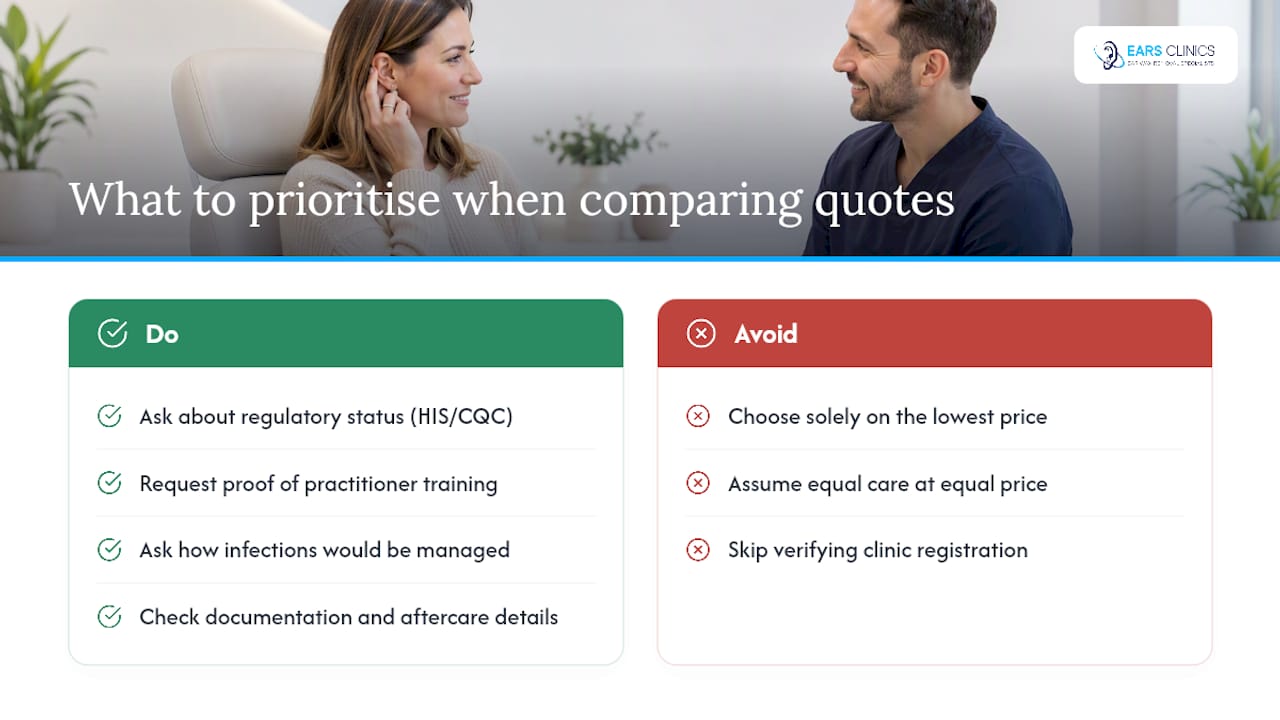
If there’s one priority worth putting above cost, it’s regulatory status. A clinic registered with Healthcare Improvement Scotland or the Care Quality Commission has already been checked against standards that an unregulated provider hasn’t. Everything else, speed, convenience, even the exact price, matters less than knowing the person examining your ear canal is qualified to do so safely.
Scotland’s private microsuction market is competitive enough that transparent pricing and proper credentials shouldn’t be a compromise you have to choose between. Look for both.
— EARS
Ready to book microsuction with EARS Clinics?
Earhealthservice offers something most patients struggle to find elsewhere in Scotland: a fixed, published price with no hidden extras and no waiting list stretching into months. Ear Wax Removal for adults costs £60, under-18 appointments are £75, and home visits within 20 miles of Glasgow are priced at £180.
Every fee covers the full appointment: examination, the procedure itself using microsuction, irrigation or manual instrumentation as clinically appropriate, imaging where needed, and aftercare advice before you leave. If your ear canal doesn’t need treatment after examination, you’ll be told plainly rather than talked into an unnecessary procedure. Booking is straightforward through the online booking page, with same-day slots often available and home visits arranged for patients who can’t travel easily. Many private health insurance policies also reimburse the cost of treatment, so check your policy documents before you pay. Book your appointment today and get a clear diagnosis from an NHS-accredited specialist.
Where to check prices and safety standards yourself
Before booking anywhere, it’s worth confirming the details directly rather than relying on a search result alone.
The what to expect page sets out the full appointment process, so you know what a quoted price should include.
Healthcare Improvement Scotland publishes guidance on regulated healthcare providers if you want to confirm a clinic’s registration independently.
This article is general information, not a substitute for advice from a qualified doctor. Consult a qualified healthcare professional about your own circumstances before acting on anything here.
FAQ
How much does microsuction cost in the UK?
Private microsuction typically costs between £45 and £75 per appointment across the UK, though home visits and children’s treatments are usually priced higher. EARS Clinics charges £60 for adults, £75 for under-18s, and £180 for home visits within 20 miles of Glasgow.
What are NHS Scotland’s guidelines for ear wax removal?
NHS Scotland generally reserves ear wax removal for cases causing hearing loss, pain, or other symptoms, and self-care with drops is often advised first. Waiting times through NHS pathways can be lengthy, which is why many patients choose regulated private clinics for faster access.
How much is microsuction at Boots?
Boots and other large retail healthcare providers typically price in-store microsuction similarly to independent clinics, though exact fees vary by location and should be confirmed directly with the provider. Comparing what’s included, examination, aftercare, and any reduced “no wax found” fee, matters as much as the headline price.
Is ear microsuction worth it?
For most patients with symptomatic earwax buildup, microsuction is worth it because it offers direct visualisation, a dry procedure, and generally faster relief than waiting for NHS availability. Current NICE guidance recommends it precisely because of its safety profile when performed by a trained practitioner.
Recommended