
From £60: Is Cochlear Implant Ear Wax an Accessory Problem?
Ear wax outside the ear canal cannot damage or interfere with the internal parts of a cochlear implant, but a build-up can still muffle sound or clog an external accessory. If your hearing changes, check your wax guard or dome first, never insert anything into your ear canal, and book a professional assessment if the problem does not clear. Persistent symptoms deserve a proper look, not guesswork at home.
TL;DR:
Ear wax buildup in the ear canal can interfere with external cochlear implant accessories, causing muffled sound or feedback, but cannot affect the internal hardware.
If hearing changes occur, check and replace filters or domes first, and book a professional assessment if symptoms persist or worsen, especially if infection signs are present.
Microsuction is the preferred safe removal method, especially for recent surgical sites, while irrigation and manual instruments are valid but require a trained clinician’s oversight.
Do not attempt DIY removal with objects, candles, or unprescribed drops, as these can cause injury or worsen wax impaction, especially in implant users.
Routine professional checks every 3 to 12 months can help prevent recurrent wax-related issues, and in-clinic or home appointments are available for quick, regulated care.
Can ear wax affect a cochlear implant’s performance?
A cochlear implant works by bypassing damaged parts of the ear entirely, sending electrical signals directly to the auditory nerve. The surgical components sit inside the cochlea and beneath the skin, well away from where wax naturally forms. Ear-canal wax cannot touch or affect that internal hardware.
What it can do is interfere with anything sitting in or near the ear canal itself, such as an acoustic component, an earmould, or a microphone port on certain hybrid devices. A build-up here can leave sound feeling muffled, reduce clarity, or create odd feedback-like effects that feel like a device fault even when the implant itself is working perfectly.
There’s a clinical reason to take this seriously beyond comfort. Wax impaction can mask an underlying ear infection, and for implant users, unresolved infection near the surgical site carries real risk. That’s why a change in sound quality is worth investigating properly rather than dismissing as “just wax.”
Wax impaction or device fault? How to tell the difference
Distinguishing the two matters because the fix is completely different, and getting it wrong wastes time you’d rather spend hearing clearly.
Typical signs of wax impaction include:
A blocked or full sensation in the ear canal
Muffled or “underwater” hearing that builds gradually
Occasional mild dizziness or a feeling of pressure
Sound that improves slightly after yawning or jaw movement
Signs pointing towards a device or accessory issue instead:
Sound loss appears suddenly rather than building over days
An otoscopic look shows a clear canal, yet hearing hasn’t improved
Swapping the wax guard or dome makes no difference at all
The problem is intermittent and linked to weather, sweat, or moisture
If a simple filter or dome swap doesn’t restore normal sound, that’s a reasonable signal to stop troubleshooting and book an assessment. Certain symptoms need urgent attention regardless of the cause: pain, pus or discharge, fever, or any sudden worsening following ear surgery. These aren’t wait-and-see signs, and South Tees Hospitals NHS Foundation Trust is explicit that implant users should stay alert to infection near the implanted side specifically.
Safe professional removal methods for cochlear implant users
Not every removal technique suits every patient, and that’s precisely why a trained clinician examines your history and your ear before choosing one. NICE guidelines currently favour microsuction as the preferred first-line method, though irrigation and manual instrumentation both remain safe, valid options when the clinical picture calls for them.
Microsuction. Wax is drawn out under direct vision using a microscope or loupes, with no fluid involved. This is generally considered the lowest-risk option for anyone with a recent surgical site or an implant, because the clinician can see exactly what they’re doing and control suction pressure precisely.
Irrigation. Warm water gently flushes softer wax from the canal. It works well for straightforward cases but carries a small risk of eardrum perforation, so it’s avoided when recent surgery or a suspected perforation is in the picture.
Manual instrumentation. Curettes or fine forceps remove wax directly, particularly useful for impactions sitting close to the eardrum. This demands a steady hand and proper training, which is why it’s reserved for clinicians competent in the technique.
Pro Tip: Always mention any ear surgery, however long ago, at the start of your appointment. It’s the single detail that most changes which removal method a clinician will choose for you.
The right choice ultimately depends on your medical history, current symptoms, and what the practitioner sees on examination. That decision belongs to a trained clinician, not a checklist you follow at home.
Checking your device accessories before you assume it’s wax
Before booking anything, it’s worth ruling out the simplest explanation. Wax guards, domes, and filters clog with debris over time, and that clogging looks and feels remarkably similar to canal impaction from the user’s end.
Check your wax guard or filter and replace it if it looks discoloured or blocked
Most manufacturers recommend changing filters regularly every few weeks, though this varies by device
Give the dome a quick visual inspection for cracks, tears, or trapped debris
If a fresh accessory doesn’t restore normal sound, the cause likely sits elsewhere
Routine accessory checks resolve a surprising number of “sudden hearing loss” scares before anyone needs to pick up the phone. If it doesn’t, that’s your cue for a proper clinical exam rather than another accessory swap.
What not to do: DIY methods to avoid
The instinct to fix a blocked ear yourself is understandable, but for cochlear implant users it carries added risk that’s worth taking seriously.
Never use cotton buds, bobby pins, or any similar object in the ear canal. They typically push wax deeper rather than removing it, and can perforate the eardrum.
Ear candles have no proven benefit and can cause burns or push debris further into the canal.
Skip unprescribed ear drops or home irrigation kits if you’ve had recent ear surgery or suspect a perforation. The wrong approach here can do genuine harm.
The ear canal is largely self-cleaning, so intervention should generally be left to a professional rather than attempted at home.
Certain symptoms mean stop and seek help immediately: severe pain, discharge that doesn’t clear, fever, or any sudden deterioration following a DIY attempt. Cotton buds and candles remain two of the most common causes of avoidable ear canal injury, and that risk only increases when there’s an implant to protect.
What regulated ear care actually looks like in practice
Ear wax removal for cochlear implant users should only ever be carried out by trained, competent clinicians working to recognised best practice standards, under Healthcare Improvement Scotland or Care Quality Commission regulation. That oversight exists precisely because the margin for error near a surgical site is smaller than most people assume.
A proper appointment follows a consistent pattern: assessment of your history and symptoms, otoscopic examination, selection of the safest removal method for your specific presentation, and aftercare advice. Where something more serious is suspected, clinical correspondence goes to your GP or ENT team directly rather than leaving you to chase it up yourself. Same-day appointments and home visits are available where a same-day slot isn’t practical, which matters when symptoms are worsening and waiting isn’t appealing.

A practitioner’s view: speed matters, but safety comes first
Clinicians treating implant patients lean towards the least invasive safe option available, and irrigation is set aside entirely wherever recent surgery or perforation risk is on the table. That caution isn’t slowness for its own sake.
Most patients regain normal hearing clarity almost immediately once wax is safely cleared, though genuine infections or complications need proper ENT management rather than a repeat removal appointment. Anyone who finds wax builds up repeatedly might benefit from routine professional checks every 3 to 12 months, simply to catch it early rather than waiting for symptoms to interfere with daily listening.
— EARS
Book professional ear wax removal with EARS Clinics
Professional clinics offer same-day, NHS-accredited assessment and removal for cochlear implant users, providing faster access than typical NHS waiting lists when hearing changes affect daily life. Our Aural Care Specialists choose between microsuction, irrigation, and manual instrumentation based on your medical history and what they find on examination, never a one-size-fits-all approach.
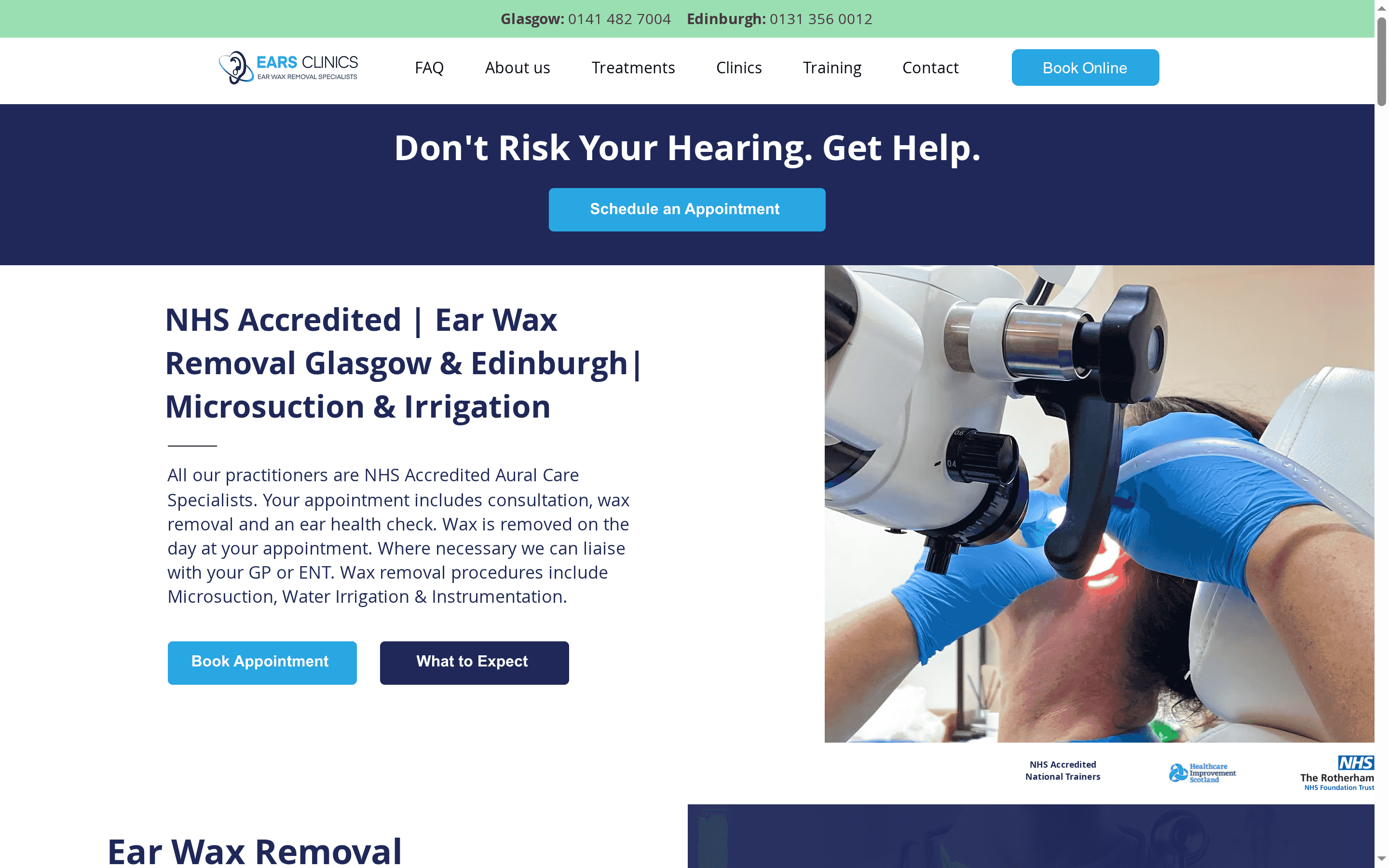
Bring your device accessories, any recent surgical notes, and a quick description of your symptoms to your appointment so the clinician has the full picture from the outset. In-clinic microsuction is available for £60 for adults and £75 for under-18s, and home visits within 20 miles of Glasgow cost £180 when getting to a clinic isn’t practical. If symptoms have appeared suddenly or you need to be seen quickly, same-day appointments are available too. You can book your appointment online directly, at a time that suits you.
Sources
For further reading beyond this guide, South Tees Hospitals NHS Foundation Trust covers cochlear implant wax management directly, the World Health Organization sets out general ear care guidance, and MedlinePlus explains standard wax blockage treatment. Our own ear facts resource covers symptoms and safety in more detail.
This article is general information, not a substitute for advice from a qualified doctor. Consult a qualified healthcare professional about your own circumstances before acting on anything here.
FAQ
Can a cochlear implant cause an ear infection?
The implant itself doesn’t cause infection, but the surgical site and surrounding tissue can become infected, particularly if wax or debris traps moisture or bacteria near the ear. Persistent discharge or swelling on the implanted side needs urgent clinical review rather than home treatment.
Will deep ear wax eventually come out on its own?
Often, yes. The ear canal is largely self-cleaning and wax normally migrates outward naturally. Deeply impacted wax that’s causing symptoms or affecting sound quality is unlikely to clear by itself and generally needs professional removal.
What are the long-term effects of living with a cochlear implant?
Most implant users adapt well and maintain stable hearing outcomes over years of use, though ongoing care around ear hygiene and accessory maintenance remains important throughout. Rare surgical complications, such as retained material near the implant site, can cause persistent symptoms that need ENT investigation if standard treatments don’t resolve things.
What can’t you do with a cochlear implant?
You should avoid inserting anything into your ear canal, including cotton buds or ear candles, and should not attempt home irrigation if you’ve had recent surgery. Certain activities involving strong magnets or unshielded MRI scanners also need discussion with your clinical team beforehand.
How much does professional ear wax removal cost?
Earhealthservice charges £60 for adults and £75 for under-18s for standard in-clinic removal, with home visits within 20 miles of Glasgow priced at £180. Full current pricing and booking details are available on the Earhealthservice booking page.
Recommended