
Importance of early detection in children: 2026 parent guide
Updated: Sep 13

TL;DR:
Early detection in children is vital because it enables interventions during the brain’s most adaptable period, improving long-term developmental outcomes. Recognizing subtle developmental red flags and seeking prompt evaluations can provide families with certainty, support, and better care planning. Acting early through regular checkups, parental observation, and accessible services significantly reduces future health, educational, and emotional challenges for the child.
Early detection in children is the process of identifying developmental delays, health conditions, or sensory impairments as early as possible so that targeted support can begin before problems become entrenched. The first three years of life represent the most critical window for brain development, and the importance of early detection in children cannot be overstated during this period. Research from Stanford and the CDC confirms that children who receive timely diagnosis and intervention achieve significantly better developmental outcomes than those who wait. This guide gives you the practical knowledge to act with confidence.
Why does early detection in children matter so much?
Early detection is the single most effective tool parents have for protecting their child’s long-term development. The brain is at its most adaptable during the first three years of life, a quality known as neuroplasticity. During this window, targeted therapies and support programmes can redirect developmental trajectories in ways that become far harder to achieve later.
A January 2026 Stanford study found that children aged 3–4 who attended public preschool were significantly more likely to receive early diagnosis and access to support services for a range of developmental conditions. That finding matters because it shows that structured environments accelerate identification, not just learning. The earlier a child is assessed, the sooner the right support begins.
The benefits of early diagnosis extend beyond the child. Research from UMC Utrecht published in December 2025 found that parents often find a confirmed diagnosis less distressing than the prolonged uncertainty of unexplained symptoms. Knowing what you are dealing with allows you to plan, connect with the right community, and access reliable care. That certainty is itself a form of support.
What developmental signs indicate early intervention is needed?
Recognising the signs of early intervention need is one of the most valuable skills a parent can develop. Developmental red flags do not always look dramatic. Many appear as subtle absences: a child who does not babble, does not point, or does not respond to their name.
The CDC identifies the following as key warning signs warranting professional consultation:
No babbling by 12 months
No single words by 16 months
No two-word phrases by 24 months
Not walking by 18 months
Loss of previously acquired skills at any age
Poor or inconsistent eye contact
Feeding aversions or significant mealtime difficulties
Limited response to their own name
Reduced interest in social interaction with familiar adults
No single sign confirms a developmental delay. However, any combination of these signs, or a persistent gut feeling that something is not quite right, is reason enough to seek a professional evaluation. You do not need to wait for a formal diagnosis before accessing support.
Pro Tip: Keep a short written log of specific behaviours you observe, including dates and contexts. Healthcare providers use parental reports as a primary assessment tool, and documented observations help clinicians understand urgency and prioritise evaluation.
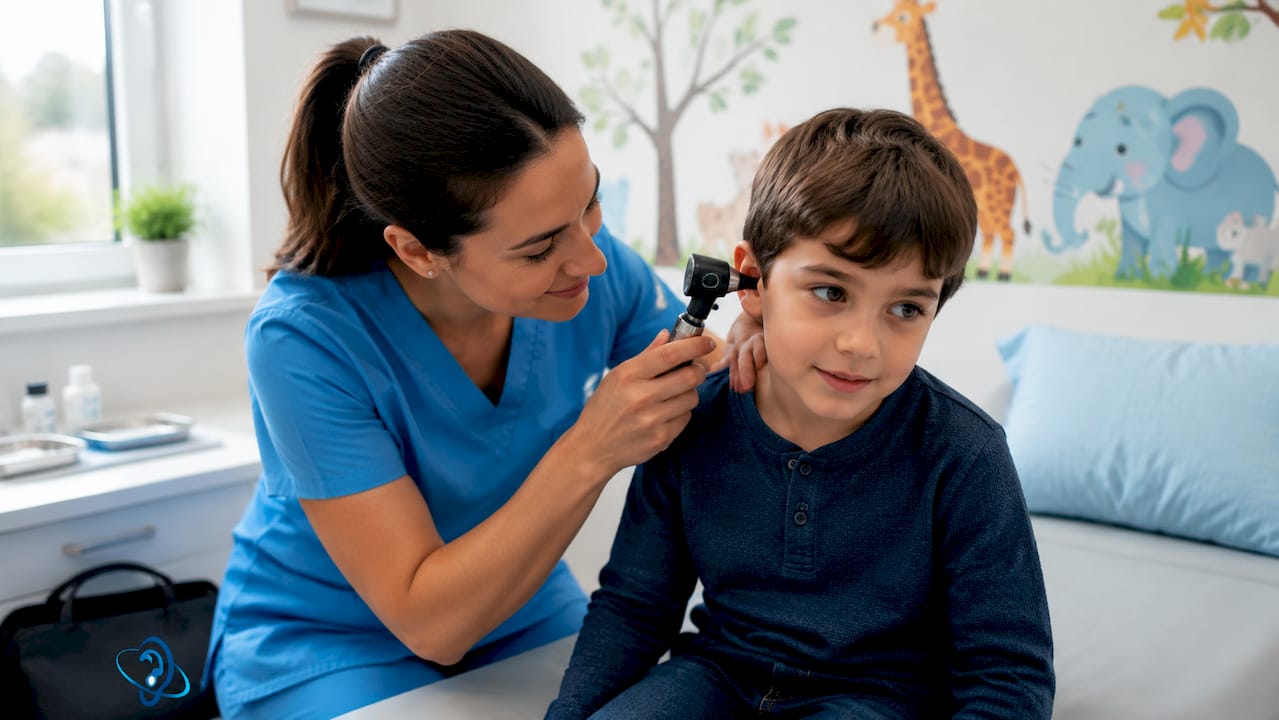
For children with ear-related concerns, warning signs of ear problems such as tugging at ears, delayed speech, or not responding to sound at normal volumes are worth flagging to a specialist promptly.
How does early detection improve long-term outcomes?
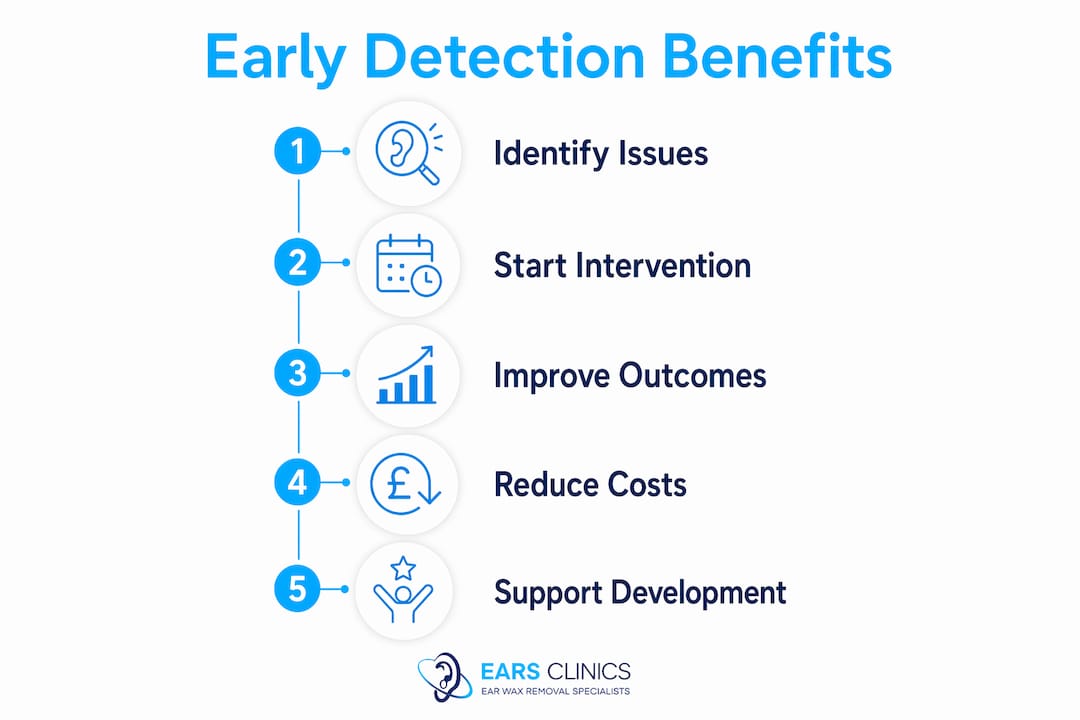
The science behind early intervention is grounded in one core principle: the brain responds to stimulation most powerfully when it is still forming. Intervening during this critical period produces gains that are disproportionately large compared to the same effort applied years later.
“Early diagnosis provides families with certainty, enabling better care planning, community connections, and emotional adaptation. The psychosocial benefits for both child and family are substantial and well-documented.” — UMC Utrecht research, December 2025
The economic case is equally clear. Children who receive early support are less likely to require intensive specialist services, special educational provision, or long-term mental health support in later life. The cost of early intervention is consistently lower than the cost of remediation.
A March 2026 study on structured screening programmes, including early detection for Type 1 Diabetes, found that children identified through screening had better long-term clinical outcomes, improved glycaemic control, and lower levels of parental stress compared to those diagnosed following a crisis presentation. That pattern holds across conditions: earlier identification produces better management and less family disruption.
Condition | Benefit of early detection | Recommended action |
Speech and language delay | Faster progress with speech therapy | Refer to speech and language therapist by age 2 |
Autism Spectrum Disorder (ASD) | Improved social and communication skills | Developmental paediatrician assessment from 18 months |
Hearing loss | Prevents secondary speech delay | Newborn hearing screening; audiologist review if concerns arise |
Type 1 Diabetes | Better glycaemic control, reduced crisis risk | Structured screening if family history present |
Developmental coordination disorder | Supports motor skill development | Occupational therapy referral from age 3 |
Child health monitoring across these conditions shares a common thread: the sooner you act, the more options you have.
What practical steps can parents take to detect issues early?
Acting early does not require specialist knowledge. It requires consistent observation, clear communication with healthcare providers, and the confidence to push for answers when something feels wrong.
Attend all routine developmental checks. In the UK, the Healthy Child Programme includes scheduled reviews at 6–8 weeks, 9–12 months, and 2–2.5 years. These appointments are specifically designed for child health monitoring and developmental screening.
Use the CDC’s “Learn the Signs. Act Early.” resources. These free tools provide age-by-age developmental milestones and help you identify gaps between expected and observed development.
Speak directly and specifically to your GP or health visitor. Do not minimise your concerns. Say clearly: “My child is not doing X, and I am worried.” Vague concerns are harder to act on than specific ones.
Request a referral without waiting for certainty. The outdated “wait and see” approach delays effective therapy and risks allowing delays to become more complex. Current CDC and primary care guidance recommends acting on the first developmental concern rather than monitoring passively.
Access early intervention services without a formal diagnosis. Early intervention services are typically free or low cost, and eligibility is based on developmental evaluation rather than a confirmed medical diagnosis. You do not need a label to get support.
For children aged 3 and over, contact your local school. School systems provide developmental evaluations for children aged 3 and above, and parents can request these even if the child is not yet enrolled. This route is frequently overlooked but offers a direct path to special educational support.
Pro Tip: If your child’s GP dismisses your concerns, ask for a second opinion or request a direct referral to a community paediatrician. Parental instinct is a clinically recognised and respected source of information in developmental assessment.
For families preparing a young child for their first health appointment, guidance on preparing your child for an appointment can reduce anxiety for both parent and child.
How does early detection differ across common childhood conditions?
The importance of timely treatment varies in its urgency and method depending on the condition. Understanding how detection works across different health areas helps parents know where to focus their attention.
Hearing loss is one of the most consequential conditions to detect early because untreated hearing loss directly causes speech and language delay. The UK Newborn Hearing Screening Programme tests babies within the first few weeks of life. However, hearing loss can also develop gradually in older children, often due to recurrent ear infections or ear wax build-up. Parents should watch for essential ear health signs such as inattentiveness, asking for repetition, or turning up the volume on devices.
Autism Spectrum Disorder (ASD) can be reliably screened from 18 months using tools such as the M-CHAT-R (Modified Checklist for Autism in Toddlers, Revised). Early diagnosis enables access to Applied Behaviour Analysis, speech therapy, and occupational therapy during the years when these interventions are most effective.
Mental health conditions including anxiety and ADHD are increasingly recognised in early childhood. Early screening for children in structured settings such as nursery and preschool allows educators and clinicians to identify patterns that parents may not see at home.
Sensory impairments beyond hearing, including visual problems, are routinely screened through the Healthy Child Programme. Conditions like amblyopia (lazy eye) respond well to treatment before age 7 but become significantly harder to correct after that point.
The common thread across all these conditions is that preventive health screenings and structured monitoring programmes consistently outperform reactive diagnosis in terms of outcomes, cost, and family wellbeing.
Key takeaways
Early detection in children is most effective during the first three years of life, when brain plasticity is highest and targeted intervention produces the greatest developmental gains.
Point | Details |
Act on the first concern | Do not wait for certainty; early intervention services do not require a formal diagnosis to begin. |
Know the red flags | No babbling by 12 months, no words by 16 months, and loss of skills at any age all warrant prompt evaluation. |
Use available systems | The Healthy Child Programme, school evaluations, and free early intervention services are all accessible routes to support. |
Diagnosis reduces stress | Research shows parents experience less distress after diagnosis than during the period of unexplained uncertainty. |
Ear health affects development | Undetected hearing loss or ear wax build-up can directly delay speech and language acquisition in young children. |
Our perspective on early detection and parental confidence
At EARS Clinics, we see the real-world consequences of delayed detection regularly. Parents come to us having noticed something was off with their child’s hearing for months, sometimes longer, but having been reassured it would resolve on its own. In many cases, a simple ear wax build-up was affecting their child’s ability to hear clearly, and that had quietly begun to affect their speech development and classroom engagement.
What strikes us most is not the clinical picture but the parental experience. The relief on a parent’s face when they finally have an explanation is something we witness consistently. That relief is not just emotional. It is the starting point for effective action. When you know what you are dealing with, you can make decisions, seek the right support, and stop second-guessing yourself.
The research supports what we observe clinically. Timely diagnosis reduces parental stress and enables families to connect with communities and services that genuinely help. The families who fare best are not necessarily those whose children have the mildest conditions. They are the ones who acted early, asked direct questions, and trusted their instincts when something did not feel right.
Our advice is straightforward: if you are concerned, act now. Do not wait for the concern to become undeniable. The earlier you seek an assessment, the more options you and your child will have.
— EARS
How Earhealthservice supports children’s ear health
Hearing is foundational to speech, language, and learning. When ear wax build-up or infection goes undetected in a young child, the consequences can ripple through their development in ways that are not always immediately obvious.
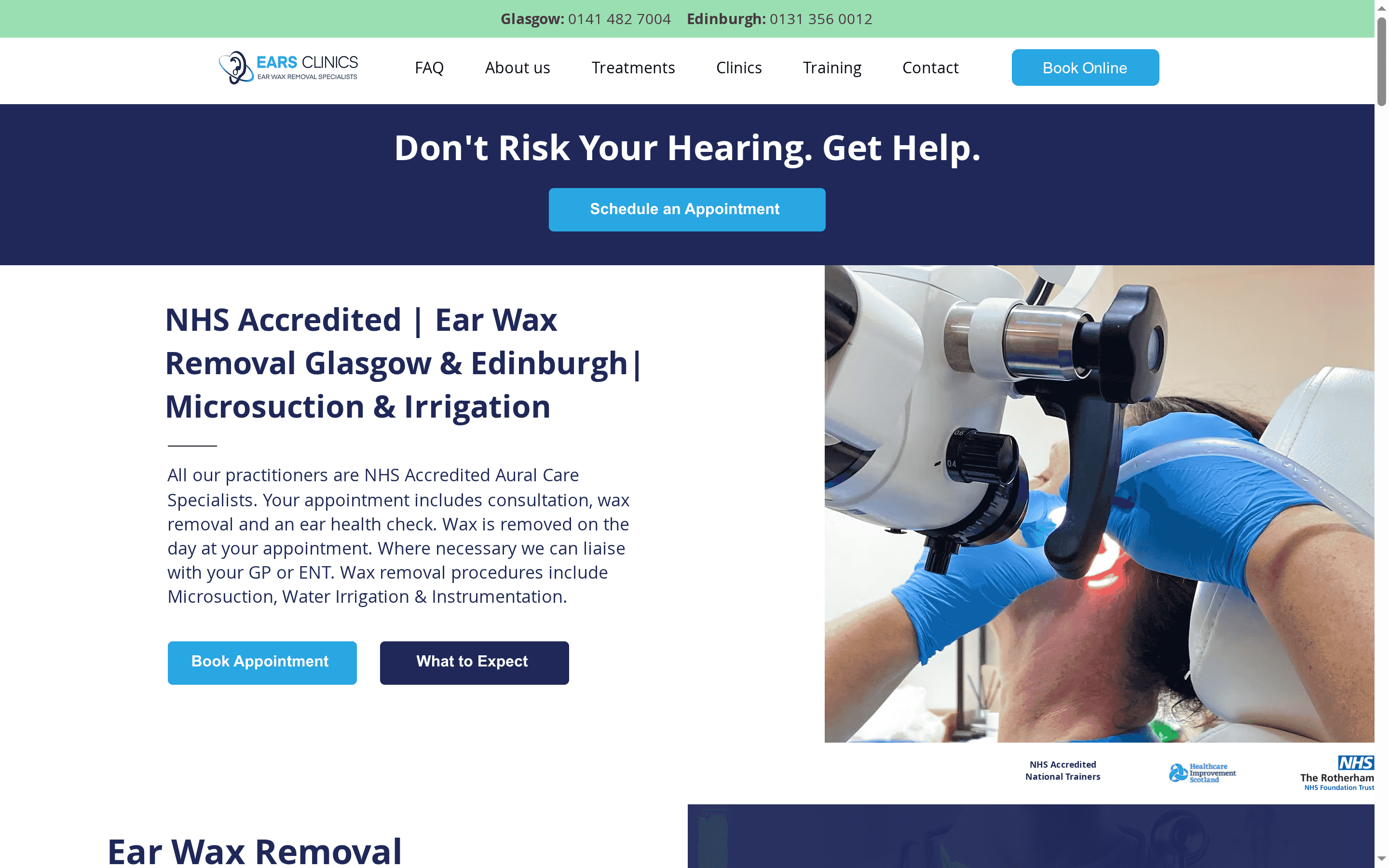
Earhealthservice operates EARS Clinics in Glasgow and Edinburgh, offering professional ear wax removal for children from the age of 2. All procedures, including microsuction, irrigation, and manual instrumentation, are performed by NHS-accredited Aural Care Specialists and follow current NICE guidelines. Microsuction is the preferred method, though practitioners select the most appropriate technique based on each child’s clinical presentation and medical history. EARS Clinics are registered with Healthcare Improvement Scotland (HIS), making them one of the few fully regulated ear care providers in Scotland. Same-day appointments are available, and the cost for under-18s is £75. Book directly at www.earhealthservice.co.uk.
FAQ
What age should children have their first developmental screening?
Developmental screening begins at birth with the Newborn Hearing Screening Programme, with further reviews at 6–8 weeks, 9–12 months, and 2–2.5 years through the UK Healthy Child Programme. Parents can request additional evaluations at any point if they have concerns.
Can I access early intervention without a formal diagnosis?
Yes. Early intervention services are available based on developmental evaluation alone, without a confirmed medical diagnosis. The CDC confirms that eligibility is determined by functional assessment rather than a diagnostic label.
What are the most common signs of developmental delay in toddlers?
Key signs include no babbling by 12 months, no single words by 16 months, no two-word phrases by 24 months, loss of previously acquired skills, poor eye contact, and limited response to their own name.
How does hearing loss affect child development if undetected?
Undetected hearing loss directly impairs speech and language acquisition, which can affect literacy, social development, and academic progress. Early identification through screening and specialist assessment prevents these secondary delays.
How is ear wax removal performed safely in children?
At EARS Clinics, ear wax removal for children aged 2 and above is performed by NHS-accredited Aural Care Specialists using microsuction, irrigation, or manual instrumentation, depending on the child’s clinical needs. All procedures follow NICE guidelines and are delivered in a regulated, HIS-registered clinical environment.
Recommended