
Signs your child needs ear cleaning: 2026 guide
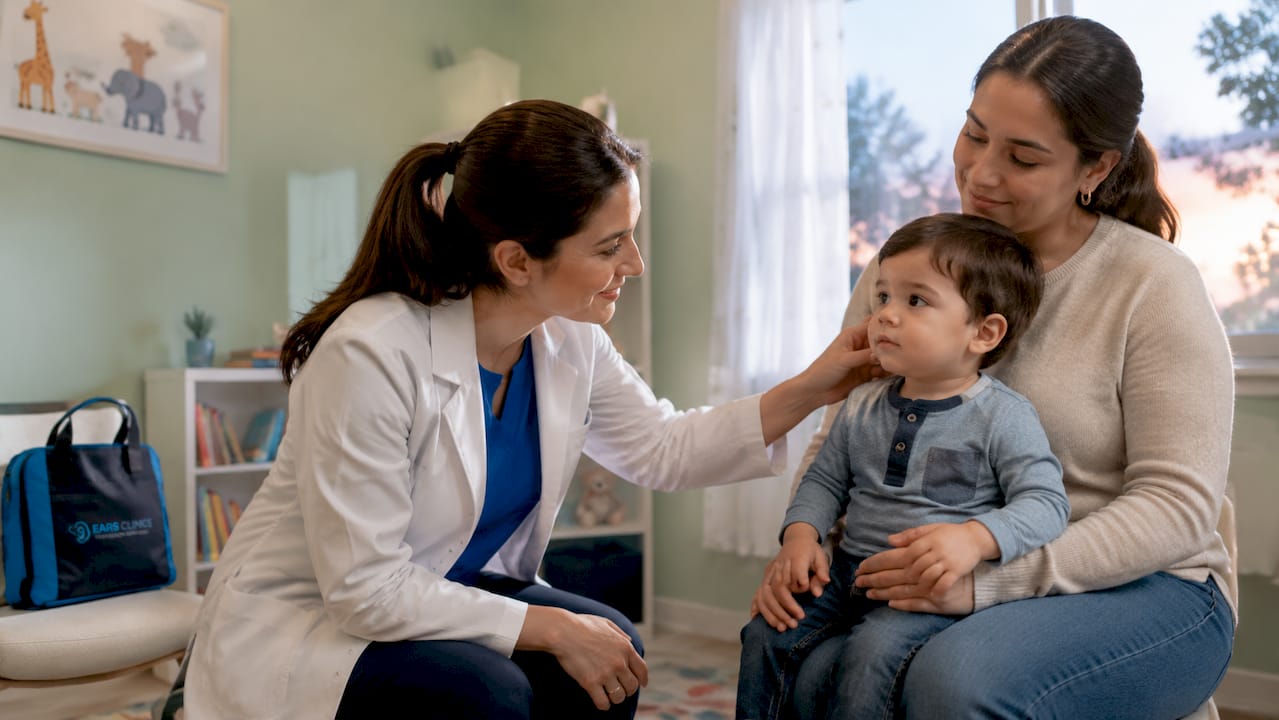
TL;DR:
Childhood earwax buildup often causes hearing and behavior changes, but visible wax alone is usually normal. Recognizing signs like hearing difficulty, ear tugging, or persistent discomfort should prompt professional assessment rather than home cleaning efforts. Microsuction, irrigation, and manual removal by trained clinicians are the safest methods, with urgent care needed if infection symptoms or worsening conditions appear.
Earwax buildup in children, known clinically as cerumen impaction, is one of the most common and frequently misunderstood ear health concerns parents face. Recognising the signs your child needs ear cleaning is the starting point for safe, appropriate care. Earwax is a natural secretion that protects the ear canal and does not require routine removal unless it causes symptoms. Acting on the wrong signs, or cleaning ears incorrectly, can cause more harm than the wax itself. This guide covers every key symptom, explains how to tell wax buildup apart from infection, and sets out the safest treatment options available for children in 2026.
1. signs your child needs ear cleaning: the core symptoms
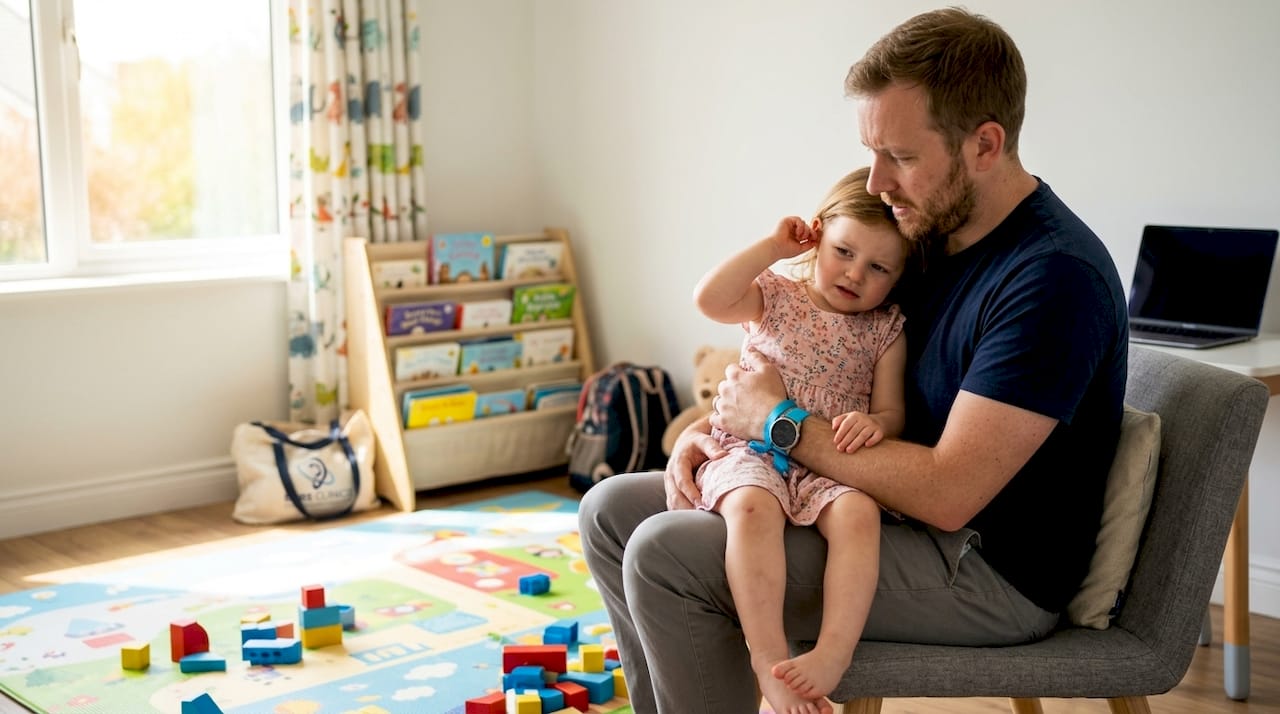
The clearest indicator that your child’s ears need attention is a change in their hearing or behaviour, not simply the presence of visible wax. Symptoms can range widely, and some children have large amounts of wax with no symptoms at all. That variability is exactly why symptom recognition matters more than visual inspection alone.
Parents should watch for these primary signals:
Frequently asking for things to be repeated
Turning up the volume on the television or tablet beyond their usual level
Complaints of a blocked, full, or “funny” feeling in the ear
Visible dark or hardened wax at the entrance of the ear canal
Itchiness inside the ear that persists over several days
Discharge or crusting around the outer ear
No single symptom confirms a blockage on its own. The clearest case for professional assessment is when two or more of these signs appear together, particularly if they persist for more than a week.
2. behavioural signs that point to ear discomfort
Behavioural changes are often the first thing parents notice, especially in younger children who cannot describe what they are feeling. Ear tugging, irritability, and disturbed sleep are listed by NSW Health’s Sydney Children’s Hospitals Network as recognised signs of ear problems in children. These behaviours are worth taking seriously, but they are also common in teething, tiredness, and general illness.
The key is to look for patterns rather than isolated incidents. A child who pulls at one ear repeatedly over several days, and who also seems to hear less clearly, is showing a more meaningful cluster of signs. A child who tugs an ear once during a tantrum is not. Context and consistency are what separate a genuine ear concern from normal childhood behaviour.
Pro Tip: Keep a brief note on your phone when you notice ear-related behaviour. Three or four logged observations over a week give a clinician far more useful information than a general description of “she’s been pulling her ear a lot.”
3. auditory symptoms: when hearing changes are a warning sign
Hearing difficulties are the most clinically significant sign of earwax blockage in children. A child who struggles to follow conversation, mishears words consistently, or seems inattentive in noisy environments may have a wax-related hearing reduction rather than a behavioural issue. Earwax removal is advised only when it is causing hearing loss, according to 2026 WHO guidance. That guidance reinforces the principle that symptoms, not appearance, drive the decision to treat.
Physical symptoms that accompany hearing changes include:
Symptom | What It May Indicate |
Muffled or distant sounds | Wax partially blocking the ear canal |
Sensation of fullness in the ear | Wax pressing against the eardrum |
Ringing or buzzing (tinnitus) | Pressure from significant wax buildup |
Itching deep inside the ear | Dry or hardened wax irritating the canal lining |
Visible crust or dark wax at the canal entrance | Wax migrating outward, which is normal self-cleaning |
One important distinction: visible wax at the outer ear is usually the ear doing its job correctly. The ear canal is self-cleaning, and wax naturally moves outward. Wax that stays deep in the canal and causes symptoms is the concern, not wax you can see at the surface.
4. how to tell earwax buildup apart from an ear infection
Earwax blockage and ear infections share some symptoms, but they have distinct differences that help parents decide how urgently to act. Earwax blockage does not cause fever or upper respiratory infection symptoms, according to University of Utah Health. Fever alongside ear pain is a strong signal of infection, not wax, and requires prompt medical attention.
Feature | Earwax Blockage | Ear Infection |
Fever | No | Often present |
Ear pain | Mild pressure or fullness | Sharp or throbbing pain |
Discharge | Possible, odourless | Often present, may have odour |
Hearing loss | Common | Possible |
Respiratory symptoms | No | Often present (cold, sore throat) |
Onset | Gradual | Often sudden |
Fever alongside ear symptoms usually signals infection rather than wax issues, which helps parents triage urgency correctly. If your child has a temperature above 38°C alongside ear pain or discharge with an odour, contact your GP or paediatrician the same day. An ENT specialist may be needed if infections recur or if hearing loss persists after treatment.
5. safe ear cleaning options and treatments for children
The safest approach to children’s ear wax removal is one led by a trained clinician, not a home remedy. Cotton swabs are the most common cause of ear canal injury in children and should never be inserted into the ear. Home cleaning attempts can worsen wax blockage or injure the ear canal, which is why WHO guidance limits parental involvement to gentle cleaning of the outer ear only.
For mild wax buildup, a clinician may recommend wax-softening eardrops as a first step. Mineral oil or diluted hydrogen peroxide drops can soften wax and support natural expulsion, but these should only be used on professional advice and never if there is any suspicion of a perforated eardrum.
When drops are insufficient, professional removal is the appropriate next step. The three clinically recognised methods are:
Microsuction: A fine, low-pressure suction device removes wax under direct visualisation. This is the method preferred by current NICE guidelines and is safe for children when performed by a trained Aural Care Specialist.
Irrigation: Warm water is gently introduced into the ear canal to flush out softened wax. This method is clinically valid in suitable cases and is selected based on the child’s history and clinical presentation.
Manual instrumentation: A clinician uses small, specialised instruments to carefully remove wax under direct view. This is appropriate for certain wax types or canal shapes where suction or irrigation is less suitable.
The choice of procedure depends on the child’s clinical presentation and medical history. A trained practitioner assesses each case individually rather than applying a single method to every patient.
Pro Tip: Before any professional appointment, use clinician-recommended softening drops for three to five days. Softened wax is significantly easier and more comfortable to remove, which makes the appointment quicker and less distressing for your child.
6. when to see a healthcare professional for your child’s ears
Persistent symptoms are the clearest reason to seek professional assessment. If your child’s hearing has not improved after a week of wax-softening drops, or if symptoms are worsening, a clinician should examine the ear. Waiting too long risks further compaction of the wax, which makes removal more complex.
Seek professional care without delay if your child has:
Ear pain that is sharp, throbbing, or worsening
A fever alongside any ear symptom
Discharge from the ear, particularly if it has an odour
Sudden or significant hearing loss
Any suspicion that a foreign object may be in the ear canal
Foreign objects in children’s ears require urgent professional removal, often under sedation or anaesthesia, to prevent injury. This is entirely distinct from routine wax removal and should never be attempted at home. Some children also require routine professional cleaning due to anatomical differences or skin conditions that cause wax to accumulate more rapidly. In these cases, a clinician will advise on the appropriate frequency of treatment.
Earhealthservice is licensed and regulated to treat patients from two years of age, making it one of the few regulated ear healthcare clinics in Scotland. Appointments for children are priced at £75, with home visits available at £180 for families where clinic attendance is difficult.
Key takeaways
Recognising the right symptoms is the single most reliable way to determine whether your child’s ears need professional attention, not the presence of visible wax alone.
Point | Details |
Symptom-led decision making | Act on hearing changes and behavioural signs, not visible wax at the outer ear. |
Fever signals infection, not wax | Fever alongside ear pain requires same-day GP contact, not ear cleaning. |
Cotton swabs cause harm | Never insert cotton swabs into a child’s ear canal; they compact wax and risk injury. |
Professional methods are safest | Microsuction, irrigation, and manual instrumentation are the only clinically safe removal options. |
Regulated clinics matter | Choose a clinic regulated by HIS or CQC for paediatric ear care to protect your child’s safety. |
What we have learned from treating children’s ears
Parents often come to us convinced their child needs their ears cleaned because they can see wax. The reality is that visible wax at the entrance of the ear canal is almost always normal. The ear is doing exactly what it should. What concerns us clinically is wax that has compacted deep in the canal and is causing symptoms the child cannot always articulate clearly.
The most common mistake we see is parents using cotton swabs in an attempt to help. Cotton swabs do not remove wax. They push it further in, compact it against the eardrum, and sometimes cause small abrasions that become infected. We see this regularly, and it is entirely preventable.
We also see children who have been living with reduced hearing for months because a parent assumed the symptoms would resolve on their own, or because they were unsure whether the signs were serious enough to act on. Hearing matters enormously during the years when children are developing language and learning in school. A wax blockage that goes untreated for several months is not a minor inconvenience.
Our advice is straightforward: observe your child’s behaviour and hearing carefully, avoid inserting anything into the ear canal, and seek a professional assessment if symptoms persist beyond a week or worsen at any point. Regular ear health checks are worth considering for any child who has had recurrent blockages, as some children simply produce wax faster than their ears can clear it naturally.
— EARS
Professional ear wax removal for children at EARS clinics
If your child is showing signs of earwax buildup, professional assessment is the safest and most effective next step.

Earhealthservice offers specialist ear wax removal for children using microsuction, irrigation, and manual instrumentation, all performed by NHS-accredited Aural Care Specialists. Every procedure is selected based on your child’s clinical presentation and medical history. EARS Clinics are registered with Healthcare Improvement Scotland (HIS) and are licensed to treat children from two years of age. Same-day appointments are available at clinics in Glasgow and Edinburgh, and home visits are available for families who need them. Children’s appointments are priced at £75. Book directly at earhealthservice.co.uk and get your child’s hearing back on track.
FAQ
What are the main signs a child’s ears need cleaning?
The main signs include difficulty hearing, frequently asking for repetition, ear tugging, complaints of fullness or blockage, and visible hardened wax at the canal entrance. Two or more of these signs appearing together over several days warrants professional assessment.
Is it safe to clean a child’s ears at home?
Parents should only clean the outer ear gently with a soft cloth. Inserting objects or fluids into the ear canal without professional guidance risks injury and wax compaction.
How do i know if my child has an ear infection rather than wax buildup?
Ear infections typically cause fever, sharp pain, and discharge with an odour, whereas wax blockage does not cause fever or respiratory symptoms. If fever is present, contact your GP promptly.
What is the safest way to remove earwax from a child’s ears?
Microsuction is the method preferred by current NICE guidelines, though irrigation and manual instrumentation are also clinically valid options. A trained Aural Care Specialist selects the most appropriate method based on your child’s individual presentation.
How old does a child need to be for professional ear wax removal?
Earhealthservice is regulated to treat children from two years of age and is one of the few HIS-registered clinics in Scotland offering paediatric ear care at this level of clinical governance.
Recommended