
£180 Home Visit for Ear Wax Removal? What UK Patients Actually Pay

Private home-visit ear wax removal in the UK typically costs a premium amount reflecting travel and equipment use, depending on your location and the clinician’s travel radius. One clinic charges £180 for a home visit within 20 miles of Glasgow, covering consultation, examination and treatment using microsuction, irrigation or manual instrumentation. Expect the final figure to shift slightly with distance, appointment complexity, and whether the patient is a child or an adult.
TL;DR:
Travel distance, urgency, and patient complexity are the main factors that influence the higher costs of private home-visit ear wax removal compared to clinic prices.
Most home visits last 30 to 45 minutes and include consultation, examination, treatment, and aftercare, but complex cases or multiple patients can extend appointment times.
The standard fee for a home visit within 20 miles of Glasgow is £180, covering all essential procedures, with additional charges possible for distance or treatment complexity.
NHS ear wax removal services are inconsistent and often require prior self-care or GP referrals, making private home visits a preferred option for quick, direct treatment.
Proper assessment of ear health by trained clinicians using microsuction, irrigation, or manual tools is essential, as DIY approaches pose significant risks and are not advisable.
What does home visit ear wax removal cost include?
Home-visit pricing sits above clinic pricing for good reason: you’re paying for the clinician’s travel time, portable equipment, and the flexibility of being treated in your own home rather than a waiting room. Across the UK, private home visits generally command higher fees due to travel, equipment, and clinician expertise, with the higher end reflecting rural locations, same-day requests, or clinics that carry advanced video-otoscopy kit.

EARS Clinics publishes its fees clearly rather than leaving patients to guess: a home visit within 20 miles of Glasgow costs £180, while in-clinic appointments are £60 for adults and £75 for under-18s. That gap between clinic and home-visit pricing isn’t arbitrary. It reflects the practical cost of bringing a fully equipped mobile service to your door instead of asking you to travel.
A typical home-visit fee usually covers:
A full consultation and medical history check before any treatment begins
Otoscopic examination of both ears using a handheld or video otoscope
Treatment itself, whether that’s microsuction, irrigation or manual instrumentation
Aftercare advice and, where relevant, before-and-after imaging of the ear canal
What it doesn’t always cover is worth checking before you book. Some providers add a distance surcharge once you’re outside a defined postcode radius, and a genuinely complex removal (heavily impacted wax, a nervous child, or a second visit because the wax hadn’t softened enough) can sometimes carry an additional charge. Ask directly what’s included in the quoted price so there are no surprises at the door. For a broader sense of the private market, EARS Clinics’ pricing overview sets out how clinic and home-visit costs compare, and a wider look at UK-wide ear wax removal prices shows how much variation exists between providers.
What happens during a home visit appointment?
A home visit follows a structured process, even though it happens in your living room rather than a clinic. Knowing the sequence helps you understand exactly what that fee is paying for.
Pre-visit screening. The clinic asks about your medical history, current symptoms, and any factors that might rule out certain methods, such as a history of ear surgery, a perforated eardrum, or a pacemaker.
Arrival and setup. The clinician brings portable equipment: an otoscope or video otoscope, and either a microsuction unit or an irrigation system, depending on what’s clinically appropriate.
Examination. A visual check of the ear canal confirms the extent of the wax build-up and rules out infection or other issues before treatment starts.
Treatment. The clinician performs microsuction, irrigation or manual instrumentation, selecting whichever method suits your ear health and history.
Aftercare. You’ll usually receive practical advice on preventing future build-up, and some clinics provide photos of your ear canal before and after treatment, plus a letter for your GP if needed.
Most home visits take between 30 and 45 minutes, though a complex case or two patients at the same address can extend that slightly.
Pro Tip: If you’ve been given wax-softening drops beforehand, use them exactly as directed. Wax that hasn’t softened properly is the single biggest reason a home visit ends without full removal, which can mean a second appointment.
Why do home visit quotes vary so much?
Two providers quoting for what sounds like the same job can land on very different figures, and the difference usually comes down to a handful of practical factors rather than one clinic simply overcharging.
Travel distance. Most clinics set a radius (some clinics cover within 20 miles of Glasgow) and charge extra, or decline the visit, beyond it.
Urgency. Same-day or out-of-hours requests attract a premium because they disrupt a clinician’s planned schedule.
Patient complexity. Children, patients with a history of ear surgery, a pacemaker, or a suspected perforation often need extra time and a more cautious approach.
Method and seniority. Microsuction equipment costs more to maintain than a basic irrigation kit, and a more experienced Aural Care Specialist may command a higher fee.
Cancellations. Many providers charge a fee for late cancellation or a missed appointment, since a home visit blocks out dedicated travel time that can’t easily be reused.
None of these factors should come as a surprise on the day. A reputable provider explains its pricing structure, including any surcharges, before you confirm the booking.
How does NHS provision differ from private home visits?
NHS ear wax removal exists, but access is inconsistent and rarely immediate. Most integrated care boards restrict routine wax removal to patients who’ve already tried self-care measures like softening drops, and many require a GP referral before any clinical treatment is offered.
Policy context: NHS England’s commissioning guidance shows that integrated care boards set their own eligibility criteria for microsuction and irrigation services, which means provision varies significantly between regions. Some local services do commission home-based irrigation, but only under specific eligibility rules, not as a general walk-in option.
NICE guidance states that adults with symptomatic earwax should be treated in primary or community services using irrigation, microsuction or manual removal, whichever suits the case. In practice, that often means a wait. A private home visit sidesteps the referral pathway entirely, which is precisely why many patients choose it when they need prompt relief rather than routine care on the NHS timeline.
Which removal methods are used, and why does safety matter?
Three clinical methods dominate professional ear wax removal, and the right one depends on your ear health rather than personal preference alone.
Microsuction uses gentle suction under direct vision to lift wax from the canal. Current NICE guidance and supporting clinical evidence identify it as the often-preferred method for precision and control, particularly in complex cases.
Irrigation uses a controlled flow of water to flush wax out, and remains a safe, clinically valid option when microsuction isn’t necessary or appropriate.
Manual instrumentation involves specialist tools to remove wax directly, useful for firmer or more localised blockages.
A trained clinician doesn’t default to one technique. They assess your history, check for a perforated eardrum, active infection, or previous ear surgery, and choose whichever method is safest for that specific ear on that specific day.
That judgment call is exactly why DIY approaches are discouraged. Cotton buds tend to push wax deeper rather than remove it, and ear candles have no clinical backing at all. Home syringing kits sold for self-use carry a real risk of pushing wax against the eardrum or causing injury without the visual control a trained clinician has. If you notice sudden hearing loss, pain, discharge, or dizziness, that’s a signal to seek clinical assessment rather than attempt removal yourself.
When is a home visit actually the right choice?
Home visits earn their price when mobility, timing, or comfort make a clinic trip genuinely difficult, not simply inconvenient. We see this most with elderly patients who struggle to travel, parents managing a child who finds new environments distressing, and people with health conditions that make sitting upright in a waiting room impractical.
Certain clinics are Healthcare Improvement Scotland registered, regulated ear healthcare providers in Scotland, with clinicians who are NHS-accredited. That regulatory oversight matters more in a home setting, where there’s no clinic infrastructure around the appointment. It’s the standard patients should expect wherever ear care happens.
— EARS
Book a home visit with EARS Clinics
Earhealthservice gives you a fixed, published price instead of the vague “from” figures many home-visit services quote before assessing your case. A home visit within 20 miles of Glasgow costs £180, while clinic appointments are £60 for adults and £75 for under-18s, and every price is confirmed before you book, not after a clinician has already arrived.
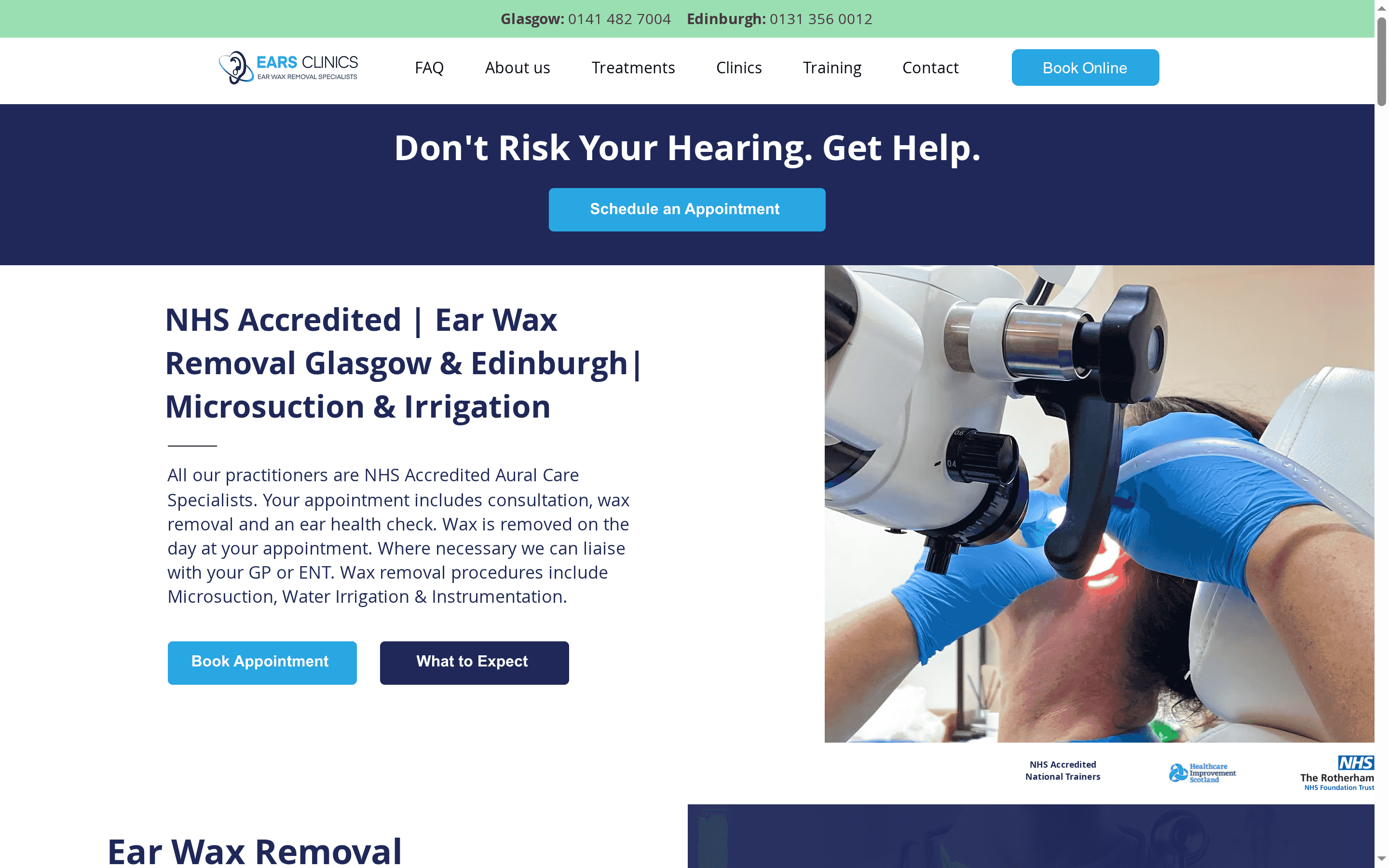
Home visits are carried out by trained Aural Care Specialists using microsuction, irrigation or manual instrumentation, whichever suits your ear health and history. Before your appointment, have any current medications and your GP’s details ready, since these details help the clinician assess suitability on the day. If your circumstances change, get in touch as early as possible, since late cancellations affect a clinician’s dedicated travel slot for that visit. To arrange a home visit or a clinic appointment, book online directly and select the service that fits your situation, whether that’s a standard removal, a child’s appointment, or a same-day slot.
Sources
This article is general information, not a substitute for advice from a qualified doctor. Consult a qualified healthcare professional about your own circumstances before acting on anything here.
FAQ
Does the NHS offer free ear wax removal?
The NHS can provide free ear wax removal, but access depends on your local integrated care board’s eligibility criteria and usually requires trying softening drops first. It’s not a routine walk-in service, and many patients need a GP referral before treatment is arranged.
How much do pharmacy chains charge for ear wax removal?
Pharmacy-based ear wax removal prices vary by chain and location, and figures change frequently, so it’s best to check current pricing directly with the pharmacy you’re considering. EARS Clinics publishes fixed prices instead: £60 for adults and £75 for under-18s in clinic, or £180 for a home visit.
Can I have my ears syringed at home by myself?
Self-syringing at home isn’t recommended, because without direct visual control there’s a real risk of pushing wax further against the eardrum or causing injury. Professional irrigation, microsuction or manual instrumentation, carried out by a trained clinician, is the safer route for effective and safe removal.
How long does a home visit for ear wax removal take?
A typical home visit lasts between 30 and 45 minutes, covering consultation, examination, treatment and aftercare advice. More complex cases, such as heavily impacted wax or treating two people at once, can extend that slightly.
What should I check before booking a home visit provider?
Check that the clinic is regulated, either by the Care Quality Commission or Healthcare Improvement Scotland, and that clinicians are appropriately trained and NHS-accredited. Ask what the quoted price includes, whether there’s a distance surcharge, and what the cancellation policy is before you confirm the booking.
Recommended